Food and Drug Toxicology
Psilocybin Gummies Contaminated with Dangerous Synthetic Compounds
Amirhosein Shabrang
Post on 22 Jun 2026 · Updated 26 Sept 2026 · 11 min read
Amirhosein Shabrang
Post on 22 Jun 2026 · Updated 26 Sept 2026 · 11 min read
 Medical Toxicologymedicaltoxic.com
https://medicaltoxic.com/blogs/psilocybin-gummies-synthetic-compounds
An Oregon study examining commercially available psychedelic edibles has uncovered a serious and systematic problem within the unregulated psychedelic gummies market: products marketed as containing natural psilocybin frequently contain none whatsoever, placing consumers at documented and measurable risk.
Zero psilocybin found in tested products: Oregon researchers analyzed 12 "magic mushroom" gummies sourced from Portland retail outlets and found none contained actual psilocybin or any naturally occurring mushroom compounds.
Dangerous synthetic compounds detected: Seven products contained undisclosed substances—including synthetic psychedelics ("syndelics"), cannabis extracts, and kava—none of which were listed on product labels, each carrying unknown safety profiles and toxicity risks.
Diamond Shruumz outbreak triggered a national crisis: 180 severe illness cases across 34 states resulted in 73 hospitalizations and three deaths, exposing fundamental safety failures endemic to unregulated markets.
Mislabeling undermines public health and therapeutic trust: The absence of regulatory oversight exposes consumers to poisoning risks from unidentified chemical combinations, while systematic product deception erodes confidence in legitimate psychedelic-assisted therapies.
The unregulated psychedelic edibles market functions without enforceable safety standards, leaving consumers exposed to potentially lethal chemical agents of unknown origin and composition. These products present unpredictable health risks that cannot be adequately assessed without proper regulatory infrastructure.
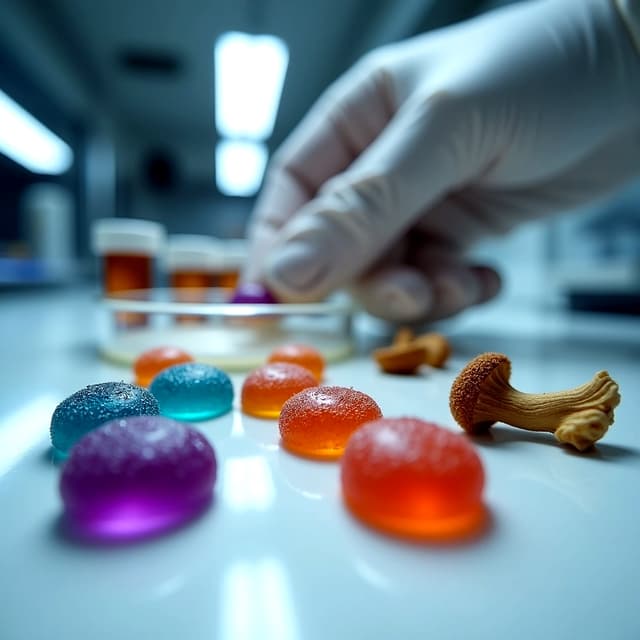
Psilocybin gummies emerged as a focal point of national public health concern following 180 documented severe illness cases across 34 states in 2024, with outcomes including 73 hospitalizations and three deaths123. Among confirmed cases, 43.7% of affected individuals required hospitalization, with complications such as seizures and respiratory failure necessitating intensive medical intervention1. Concurrent laboratory analysis of psychedelic mushroom gummies sold in Portland produced findings of significant concern: researchers detected zero psilocybin across all tested products, while seven samples contained undisclosed active ingredients not reflected on their labels4. Several of these undisclosed substances were synthetic compounds engineered to replicate natural psychedelic effects. This article examines the Oregon study's analytical methodology, identifies the hazardous substances detected within commercially sold psilocybin mushroom gummies, and assesses how the Diamond Shruumz outbreak laid bare the structural safety failures of the unregulated psychedelic gummies market. The Diamond Shruumz outbreak became one of the clearest examples of this failure, and Diamond Shruumz™ Brand: A Growing Public Health Concern provides deeper context on how one contaminated product line turned into a national toxicology warning.
"We found no evidence of mushroom compounds of any kind, coming from any species." — Richard van Breemen, Pharmaceutical sciences professor at Oregon State University
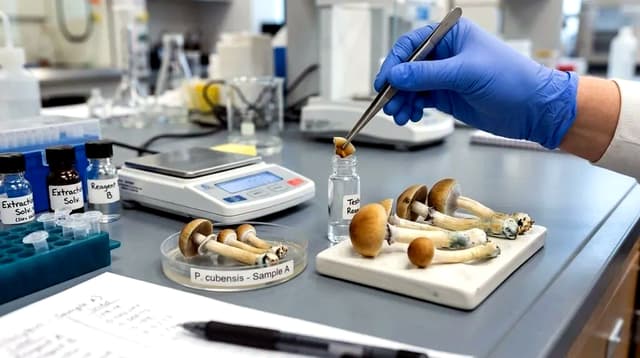
Image Source: Contract Laboratory
Richard van Breemen, professor of pharmaceutical sciences at Oregon State University's College of Pharmacy and researcher at the Linus Pauling Institute, led the study examining psychedelic mushroom gummies sold throughout Portland. The research team acquired 12 edible products—11 gummies and one chocolate bar, all marketed as containing magic mushrooms—from smoke shops, vape shops, gas stations, and convenience stores across the city34.
Rose City Laboratories, the Oregon State-certified facility responsible for testing and standardizing psilocybin content for regulated medical use, conducted the initial product analysis5. Subsequent testing employed advanced analytical methods, including dispersive solid-phase extraction followed by gas chromatography-mass spectrometry (GC-MS), ultra-high performance liquid chromatography (UHPLC) with high-resolution mass spectrometry, and tandem mass spectrometry across three distinct analytical platforms6.
None of the 12 products contained any detectable psilocybin—the hallucinogenic compound characteristic of Psilocybe species mushrooms3. Laboratory analysis further confirmed the complete absence of muscimol, a psychoactive compound associated with Amanita muscaria7. The finding carries particular weight given that several products bore misleading packaging featuring psychedelic imagery and mushroom graphics, with certain labels explicitly claiming the presence of the drug8.
This distinction between true mushroom exposure and mislabeled products is also important in Mushroom Poisoning in the TikTok Era: When Foraging Goes Wrong, where mushroom-related harm is driven by misidentification, misinformation, and delayed recognition of toxicity.
Seven of the tested products contained undisclosed active ingredients absent from their labels entirely4. Identified substances included caffeine, kava extract—a legal herbal supplement recognized for its anxiolytic and hallucinogenic properties—and cannabis extract containing tetrahydrocannabinol (THC)4. Four products yielded no detectable active ingredients of any kind, rendering them pharmacologically equivalent to ordinary confectionery4. Two gummies did test positive for psilocin, a compound that occurs naturally in certain mushroom species in trace quantities, yet is considerably less complex to synthesize in a laboratory setting than psilocybin itself4.
Two of the tested gummies contained synthetic psychoactive tryptamines that researchers classified as "syndelics" — a term denoting synthetic psychedelics engineered to mimic the pharmacological properties of naturally occurring compounds2. Both Gummy 8 and Gummy 9 were found to contain mipracetin (4-acetoxy-N-methyl-N-isopropyltryptamine) and 4-hydroxy-diethyltryptamine, alongside structural isomers of each substance2 — none of which occur naturally within Psilocybe species mushrooms2.
Van Breemen noted that syndelics represent a rapidly expanding domain of drug design, wherein medicinal chemists engineer novel molecular entities drawing structural inspiration from established psychedelic agents such as psilocybin and LSD3. While this avenue of research holds theoretical therapeutic value for addressing mental health conditions, each new drug entity demands years of rigorous clinical development before its safety and efficacy profiles can be established in human populations3. Consumers exposed to these compounds outside of controlled research settings face substantial pharmacological risks, given that neither the toxicity thresholds nor the interaction profiles of these substances are currently understood3.The discovery of novel synthetic tryptamines in consumer gummies fits a larger toxicology pattern described in Inside the Synthetic Drug Surge: Why 2025's New Threats Are Different.
Gummy 4 tested positive for a Cannabis sativa extract, confirmed through the detection of multiple distinct cannabinoids: cannabidiol, cannabidivarin, cannabichromene, Δ9-tetrahydrocannabinol, and cannabinol2. Separately, Gummy 2 contained an extract of kava (Piper methysticum Forst.)2 — an herbal preparation used for its anxiolytic and mild hallucinogenic properties, though one with a documented association with hepatotoxicity2. Neither substance appeared on product labeling, leaving consumers entirely unaware of what they were ingesting. Undisclosed cannabinoid exposure adds another layer of risk, especially because Synthetic Marijuana Unmasked: The Deadly Truth Behind K2, Spice, and Paper Dope explains how cannabinoid-like products can produce unpredictable clinical toxicity when consumers do not know what they are taking.
Synthetic psilocin presents a particularly instructive case among the study's findings. Gummy 6 tested positive for psilocin yet showed no detectable psilocybin or its biosynthetic precursors, baeocystin and norbaeocystin2. When psilocin derives from natural mushroom sources, the presence of these chemically related compounds is expected as a matter of biosynthetic logic4. Their complete absence led van Breemen and colleagues to conclude that the psilocin detected in this product was almost certainly of synthetic origin4 — a finding that further undermines any claim of natural mushroom content across the product range.
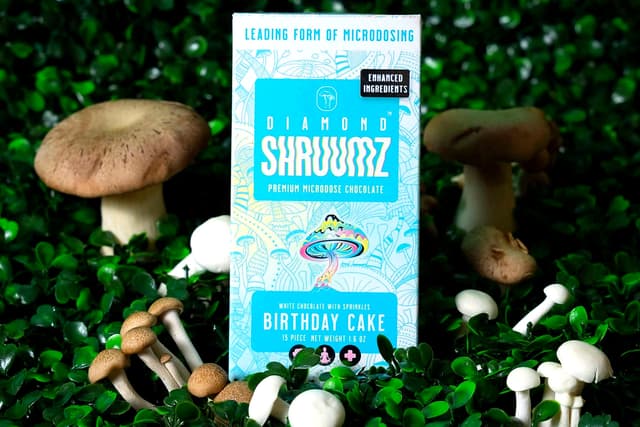
Image Source: NBC News
The crisis began on May 27, 2024, when Prophet Premium Blends received two consumer complaints following severe illness after the consumption of Diamond Shruumz chocolate bars9. What initially appeared to be isolated incidents escalated into a geographically widespread public health emergency, with confirmed cases spanning Alabama, Arizona, California, Colorado, Florida, Georgia, Iowa, Idaho, Illinois, Indiana, Kansas, Kentucky, Maryland, Michigan, Minnesota, Missouri, Montana, North Carolina, North Dakota, New Jersey, Nevada, New York, Ohio, Oklahoma, Oregon, Pennsylvania, South Carolina, South Dakota, Tennessee, Texas, Virginia, Washington, Wisconsin, and West Virginia10. Poison centers across the country recorded 198 exposure reports, of which 108 involved cases classified as more severe in clinical presentation11. These early exposure reports show why The Role of Poison Center Calls: Managing Poisoning Cases from Emergency Calls to Critical Decisions is central to detecting emerging toxic products before their full risk profile is understood.
The clinical outcomes documented among affected individuals reflected the severity of the toxic exposure. Among cases with available outcome data, 23.2% required admission to an intensive care unit, while 17.5% required endotracheal intubation1. Statistical analysis revealed a strong association between Diamond Shruumz chocolate bar consumption and hospitalization risk, with an odds ratio of 3.29 when compared to other mushroom-containing chocolate products1. Seizure incidence demonstrated an even more pronounced elevation, recording an odds ratio of 8.45, with endotracheal intubation similarly elevated at an odds ratio of 8.041. The scale of the local regulatory response was considerable; health authorities in Washington State alone removed over 1,000 Diamond Shruumz products from retail shelves12.
An internal review of the products' Certificates of Analysis conducted by Prophet Premium Blends following the initial complaints identified abnormally elevated levels of Muscimol9. The FDA formally contacted the brand owner on June 18, requesting a voluntary recall of all Diamond Shruumz products1. Prophet Premium Blends complied on June 27, 2024, initiating a nationwide recall and ceasing both production and distribution across the entire product line913. Subsequent FDA laboratory analysis identified a range of undisclosed chemical constituents within the products, including 4-acetoxy-N,N-dimethyltryptamine, desmethoxyyangonin, dihydrokavain, kavain, psilocin, and pregabalin—none of which were declared on product labeling1415.
"If someone is consenting to a psychedelic experience, they have a right to know what substance they are taking and receive accurate information about its potential health benefits and health risks." — Eric Leas, Ph.D., M.P.H., Assistant Professor, UC San Diego Herbert Wertheim School of Public Health and Human Longevity Science
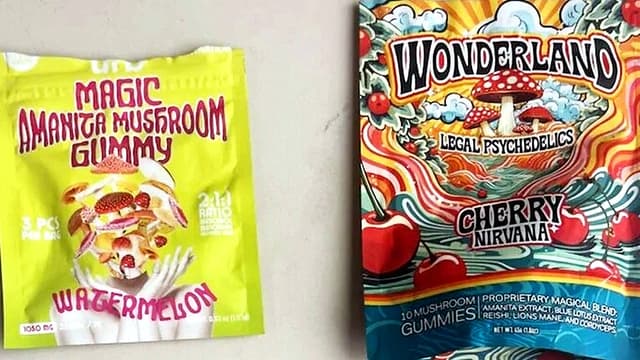
Image Source: Medicine in Motion News - - The University of Virginia
Poisoning risks associated with mushroom-containing edibles stem from three principal factors: variability in ingredient composition across products, the absence of standardized regulatory oversight for sampling and testing finished goods, and the potential toxicity of compounds engineered to produce psychoactive effects1. The Diamond Shruumz cases demonstrated precisely how multiple undisclosed substances, acting on CNS modulatory neurotransmitters simultaneously, can produce cascading physiological failure1. Muscimol and certain kavalactones—both identified in contaminated products—act on the GABA-A receptor, producing CNS depression, while Amanita muscaria poisoning has been independently associated with seizure activity1.
The absence of ingredient transparency renders any safety assessment essentially impossible. Without definitive knowledge of what these products contain, no clinician or toxicologist can establish with confidence that consumption is without risk16. The potential for misuse, dose miscalculation, or adverse interactions with prescription medications remains substantial, particularly absent medical supervision or professional consultation17.
The financial barrier presented by the regulated psilocybin market partially explains why consumers turn to unregulated alternatives. A single supervised psilocybin therapy session carries a cost of up to $1,200 for individual sessions and $750 for group formats18, with the mean planned session price reaching $1,38819. Facilitator training costs alone approach $10,000—a financial burden that the majority of respondents in relevant surveys classified as a moderate to severe strain19. These cost structures, while reflective of the clinical rigor required for legitimate therapeutic delivery, inadvertently drive demand toward cheaper, unlicensed products carrying far greater health consequences.
The documented pattern of ingredient substitution and inaccurate labeling extends beyond individual consumer harm—it actively undermines confidence in psychedelic-assisted therapy as a legitimate and emerging clinical discipline2. Inaccurate labeling remains pervasive throughout the mushroom edibles market16, conflating products that contain no verifiable psychoactive compounds with those carrying undisclosed synthetic agents. This systematic deception complicates the public health effort to distinguish evidence-based therapeutic applications of psilocybin from products that pose measurable danger to consumers who may have no means of identifying what they are actually ingesting. This is why separating regulated psychedelic care from unregulated retail products matters, a theme explored further in Psychedelics in 2025: What’s Evidence-Based, What Isn’t, and How to Counsel Patients.
The evidence we examined reveals a troubling reality: psychedelic gummy products routinely contain dangerous synthetic compounds rather than advertised natural ingredients. On the whole, this unregulated market places consumers at severe risk, as demonstrated by the Diamond Shruumz crisis that hospitalized 73 people and claimed three lives. Consequently, anyone considering these products must recognize they face unknown chemical exposure, potentially life-threatening reactions, and zero guarantee of receiving what labels promise.
© All copyright of this material is absolute to Medical toxicology
As the Growth & Content Lead at MedicalToxic.com, I work on content strategy, development, and digital growth. My focus is on making MedicalToxic’s content clear, practical, and accessible, while helping expand the platform’s reach and strengthen its position as a trusted resource in clinical toxicology.
[1] - https://www.cdc.gov/mmwr/volumes/75/wr/mm7513a2.htm
[2] - https://pmc.ncbi.nlm.nih.gov/articles/PMC12426793/
[3] - https://news.oregonstate.edu/news/analysis-%E2%80%98magic-mushroom%E2%80%99-edibles-finds-no-psilocybin-many-undisclosed-active-ingredients
[4] - https://www.scientificamerican.com/article/magic-mushroom-edibles-found-to-contain-no-psilocybin/
[5] - https://www.opb.org/article/2025/09/12/magic-mushroom-edibles-psilocybin/
[6] - https://theanalyticalscientist.com/issues/2025/articles/september/most-magic-mushroom-products-contain-no-psilocybin/
[7] - https://www.kxl.com/oregon-state-researchers-find-synthetic-drugs-not-psilocybin-in-magic-mushroom-edibles/
[8] - https://www.thelundreport.org/content/oregon-researchers-say-some-magic-mushroom-edibles-sold-stores-contain-no-psilocybin
[9] - https://www.fda.gov/safety/recalls-market-withdrawals-safety-alerts/prophet-premium-blends-recalls-diamond-shruumz-products-because-possible-health-risk
[10] - https://www.fda.gov/food/outbreaks-foodborne-illness/investigation-illnesses-diamond-shruumz-brand-chocolate-bars-cones-gummies-june-2024
[11] - https://www.marlerblog.com/case-news/180-sick-with-73-hospitalizations-and-three-deaths-linked-to-diamond-shruumz/
[12] - https://doh.wa.gov/you-and-your-family/illness-and-disease-z/foodborne-illness/outbreaks/2024-multistate-investigation-linked-diamond-shruumztm-brand-products
[13] - https://www.cdc.gov/environmental-health-studies/outbreak-investigation-diamond-shruumz-products/index.html
[14] - https://cdphe.colorado.gov/press-release/state-officials-advise-of-nationwide-diamond-shruumztm-recall-following-reports-of
[15] - https://www.marlerblog.com/case-news/3-deaths-with-175-illnesses-linked-to-to-diamond-shruumz/
[16] - https://www.acmt.net/news/time-are-mushroom-edibles-safe-and-legal/
[17] - https://www.cdph.ca.gov/Programs/OPA/Pages/NR25-024.aspx
[18] - https://www.opb.org/article/2024/05/28/a-year-later-psilocybin-assisted-therapy-is-more-accessible-in-oregon-but-remains-costly/
[19] - https://pmc.ncbi.nlm.nih.gov/articles/PMC12304229/
Keep reading
 Food and Drug Toxicology
Amir Mohammad Mottaghi
 Food and Drug Toxicology
Amirhosein Shabrang
 Food and Drug Toxicology
Amirhosein Shabrang
 Food and Drug Toxicology
Amirhosein Shabrang