Public Health and Poison Prevention
Mushroom Poisoning in the TikTok Era: When Foraging Goes Wrong
Omid Mehrpour
Post on 25 Dec 2025 · Updated 01 Oct 2026 · 5 min read
Omid Mehrpour
Post on 25 Dec 2025 · Updated 01 Oct 2026 · 5 min read
 Medical Toxicologymedicaltoxic.com
https://medicaltoxic.com/blogs/mushroom-poisoning-in-the-tiktok-era-when-foraging-goes-wro
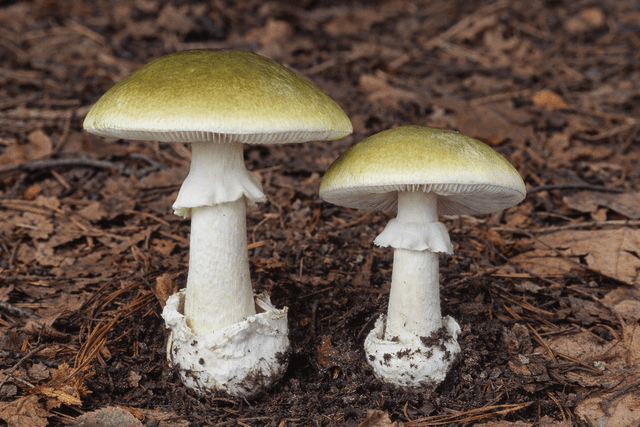
In late 2025, California health officials reported a group of severe mushroom poisonings linked to wild foraging. More than twenty people were hospitalized after eating toxic mushrooms, later identified as death caps (Amanita phalloides). Several patients developed acute liver failure. Two people needed liver transplants, and at least one person died. Poison Control centers saw a sharp increase in calls during this period, prompting a statewide warning against eating wild mushrooms. (1–3)
This outbreak was not random. It happened after a period of heavy mushroom growth and growing interest in foraging, fueled by social media. These factors combined to create a dangerous situation.
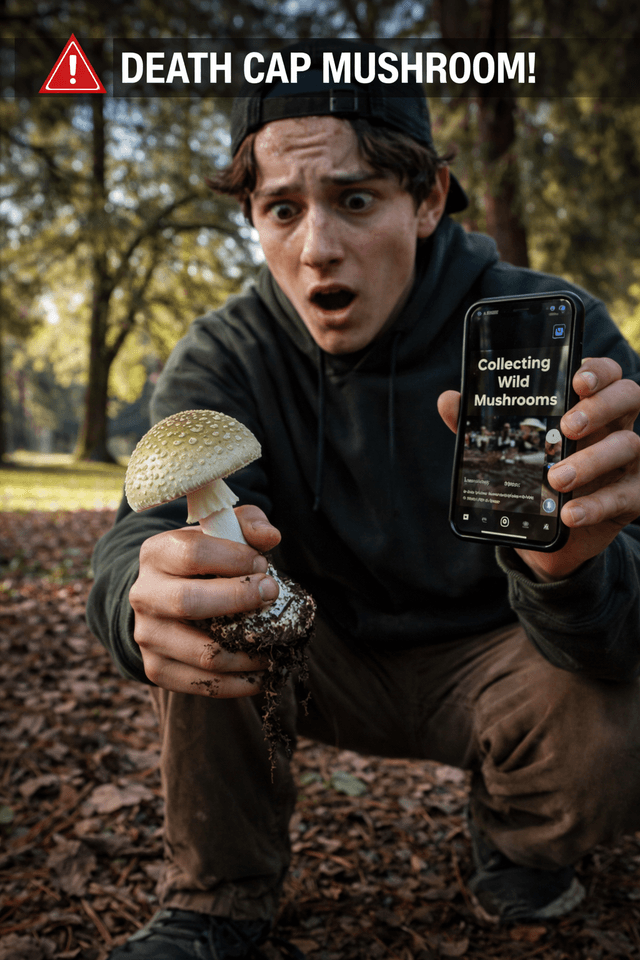
Wild mushroom poisoning has been around for a long time, but how people get exposed has changed. Short videos on TikTok and Instagram make foraging look easy and safe, the same attention-driven dynamic behind dangerous social media challenges that send teens to emergency rooms . Viewers see quick tips and are told that identifying mushrooms is simple. Many people use phone apps to decide what is safe to eat. This gives people confidence without real knowledge.
Public health experts and Poison Control centers have repeatedly warned that mushroom identification apps are not reliable enough to prevent poisoning. Things like lighting, camera angle, growth stage, and where the mushroom grows can all confuse the apps. (4) People who are new to foraging may miss important details.
In 2025, California experienced weather that led to an unusually large growth of death cap mushrooms. Local news called it a “super-bloom,” which made accidental poisonings more likely. (2)
Amanita phalloides, known as the death cap mushroom, causes the most fatal mushroom poisonings worldwide. (5) It often looks harmless and can be mistaken for edible mushrooms. It grows in parks, gardens, and wooded areas, not just in remote forests.
Many people wrongly believe that cooking makes wild mushrooms safe. This is not true. The toxins in death caps can survive boiling, frying, and baking. (5)
Death cap mushrooms contain amatoxins, potent toxins that block RNA polymerase II. This stops the body from making proteins, leading to cell death, especially in the liver. (5,6)
Amatoxin poisoning is dangerous because it does not act like regular food poisoning. Early symptoms can be severe but are not specific. Later, when symptoms improve for a short time, people may wait to seek help. During this period, liver damage gets worse.
Amatoxin poisoning usually follows a set pattern. Stomach symptoms such as vomiting and diarrhea typically start 6 to 24 hours after eating the mushroom. After a day or two, symptoms may get better. This so-called “honeymoon phase” is misleading, and patients may think they are recovering.
Within 48 to 96 hours, lab tests start to show problems. Liver enzymes rise, clotting factors decline, and low blood sugar or confusion can develop. Acute liver failure may follow. At this point, there may be little time left for effective treatment. (5,6)
The California Department of Public Health reported that the 2025 outbreak included more than twenty confirmed cases of amatoxin poisoning. All patients needed to be hospitalized. Two had liver transplants, and one person died. (1)
UCSF and local Poison Control centers received hundreds of calls about wild mushroom ingestion during the same season. Many people needed medical evaluation, even if their symptoms seemed mild at first. (3,7)
These reports show how quickly a seasonal trend and social media interest can become a public health crisis.
One dangerous myth is that cooking destroys mushroom toxins. It does not. Another is that eating only a small amount is safe. Even a little can cause serious liver damage. (5)
Many people also assume that improvement after vomiting means the danger has passed. In amatoxin poisoning, improvement can signal that the most dangerous phase is about to begin. (6)
Finally, depending on apps or social media advice instead of expert identification is a common factor in severe cases. (4)
If you eat a wild mushroom and develop nausea, vomiting, diarrhea, stomach pain, or weakness, get medical help right away. Waiting for symptoms to get better is not safe.
In the United States, Poison Control (1-800-222-1222) offers expert help 24 hours a day. Calling early can help guide testing, monitoring, and referrals. (7)
For clinicians, taking a careful exposure history is crucial. Always ask about recent foraging, mushrooms collected at home, and shared meals. Early lab tests may be normal, so repeated monitoring is important.
Treatment may include supportive care, early decontamination in some cases, N-acetylcysteine, and silibinin if available. If there are signs of liver failure, refer to a transplant center as soon as possible. ToxAssist can help analyze symptoms and lab results to identify amatoxin patterns during high-volume outbreaks rapidly. (5,6)
Poison Control centers played a key role in spotting the 2025 outbreak and coordinating care, as detailed in "The Role of Poison Center Calls: Managing Poisoning Cases from Emergency Calls to Critical Decisions". They provide real-time advice to clinicians and the public using MedSpeech for instant transcription of complex exposure calls into SOAP notes, track emerging exposure patterns through systems like NPDS—processing 2.2 million annual exposures from 61 U.S. centers for toxicosurveillance and early threat detection, per "Hidden Patterns in National Poison Data System"—and support early intervention, including triage of home-manageable overdoses amid overdose trends highlighted in "Thanksgiving 2025: Overdose Death Trends in the United States". Their involvement often means the difference between delayed recognition and timely, life-saving care.
Mushroom poisoning is not rare and not harmless. In the TikTok era, more people are foraging without sufficient knowledge, increasing the risk of deadly mistakes.
If you are not completely sure about a wild mushroom, do not eat it. If you might have been exposed and have symptoms, get medical help right away.
© All copyright of this material is absolute to Medical toxicology
Dr. Omid Mehrpour (MD, FACMT) is a senior medical toxicologist and physician-scientist with over 15 years of clinical and academic experience in emergency medicine and toxicology. He founded Medical Toxicology LLC in Arizona and created several AI-powered tools designed to advance poisoning diagnosis, clinical decision-making, and public health education. Dr. Mehrpour has authored over 250 peer-reviewed publications and is ranked among the top 2% of scientists worldwide. He serves as an associate editor for several leading toxicology journals and holds multiple U.S. patents for AI-based diagnostic systems in toxicology. His work brings together cutting-edge research, digital innovation, and global health advocacy to transform the future of medical toxicology.
California Department of Public Health. Health advisory: Wild mushroom (amatoxin) poisoning outbreak. 2025.
https://www.cdph.ca.gov
KQED. Death cap mushroom super-bloom fuels California poisoning outbreak. 2025.
https://www.kqed.org
University of California San Francisco. Poison Control reports surge in severe death cap cases. 2025.
https://www.ucsf.edu
National Capital Poison Center. Why mushroom identification apps are dangerous.
https://www.poison.org
Diaz JH. Amatoxin-containing mushroom poisoning: species, toxicology, diagnosis, and treatment. J La State Med Soc. 2018.
https://pubmed.ncbi.nlm.nih.gov/
Garcia J, et al. Clinical management of amatoxin-induced liver failure. Clin Toxicol. 2020.
https://pubmed.ncbi.nlm.nih.gov/
America’s Poison Centers. Poison Help and exposure guidance.
https://poisoncenters.org
Keep reading
 Public Health and Poison Prevention
Omid Mehrpour
 Public Health and Poison Prevention
Omid Mehrpour
 Public Health and Poison Prevention
Sherika Whitelocke
 Public Health and Poison Prevention
Omid Mehrpour