Food and Drug Toxicology
Cherry Pit Poisoning: Cyanide Risk, Symptoms, and What to Do
Amirhosein Shabrang
Post on 05 Aug 2026 · Updated 01 Oct 2026 · 17 min read

Amirhosein Shabrang
Post on 05 Aug 2026 · Updated 01 Oct 2026 · 17 min read
 Medical Toxicologymedicaltoxic.com
https://medicaltoxic.com/blogs/cherry-pit-poisoning-cyanide-risk-symptoms-and-what-to-do
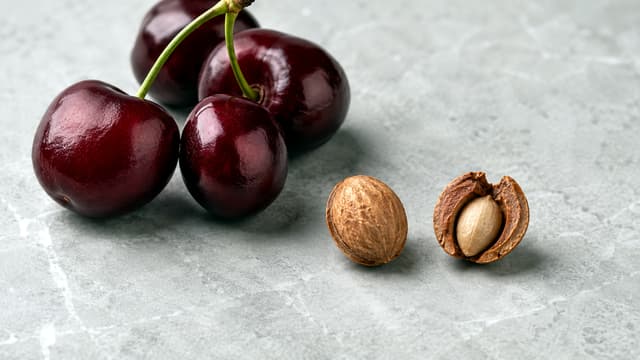
A child swallows a cherry pit at the kitchen table. An adult accidentally bites down on one while eating fruit. Someone blends whole cherries into a drink and later realizes several pits may have been crushed.
All three situations sound similar. Toxicologically, they are not.
The most useful question is not simply, “How many pits were swallowed?” It is this:
Did the hard shell stay closed, or was the inner kernel exposed and disrupted?
Cherry kernels contain cyanogenic glycosides, including amygdalin, that can release hydrogen cyanide after plant cells are damaged and the compounds undergo enzymatic breakdown. A hard, intact stone usually keeps that seed tissue enclosed. Chewing, grinding, pulverizing, or blending changes the exposure because it can make the kernel available for cyanide release. [C] [J] [K]
That leads to the practical rule at the center of this guide:
Pit integrity outranks arithmetic.
Most accidental ingestions of one or a few intact cherry pits are unlikely to cause systemic cyanide poisoning. By contrast, a visibly exposed or chewed kernel, several crushed kernels, intentional ingestion, uncertain wild species, or compatible symptoms deserves prompt Poison Control or medical-toxicology assessment. [K]
An intact swallowed cherry pit is usually low risk for cyanide poisoning because the kernel remains enclosed inside the hard shell. [K]
A cracked shell is not the same as a chewed kernel. Determine whether the inner white or tan seed was visible, missing, bitten, crushed, ground, or blended.
No validated number of chewed cherry kernels reliably predicts toxicity. Species, cultivar, pit composition, mechanical disruption, gastrointestinal release, and absorption all vary. [C] [J]
Do not use the EFSA acute reference dose as an emergency-department cutoff. It is a conservative food-safety benchmark, not a clinical symptom, antidote, or referral threshold. [F] [G]
Do not induce vomiting. Keep any remaining pits or packaging and contact Poison Control for case-specific guidance. [L]
Call emergency services immediately for collapse, seizure, trouble breathing, severe confusion, fainting, cardiovascular instability, or inability to awaken. [D] [M]
Clinicians should treat a credible cyanide syndrome on clinical grounds. Oxygenation, resuscitation, seizure and shock management, and hydroxocobalamin should not wait for a delayed cyanide concentration. [D] [E]
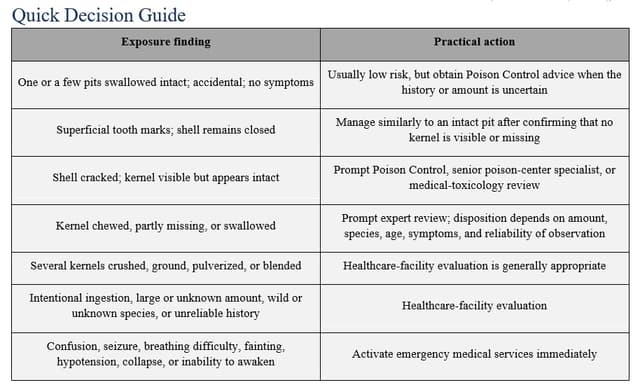
This is a conservative, evidence-informed framework. It is not a validated dose-based guideline and does not replace case-specific toxicology consultation.
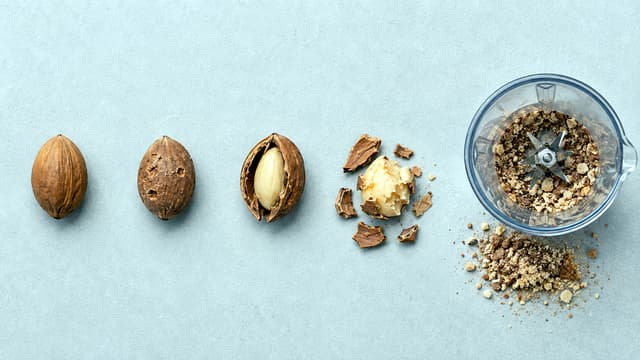
The answer depends on what part of the pit was actually exposed.
A cherry “pit” is not simply a seed. The hard outer stone, called the endocarp, surrounds the true seed or kernel. Cyanogenic glycosides are concentrated in seed tissue. When that tissue is crushed or chewed, plant cells rupture and cyanogenic compounds can contact enzymes that promote cyanide release. Additional hydrolysis may occur during digestion. [C] [J]
This is why an intact pit is generally reassuring while a chewed kernel is not. The pit’s shell functions as a physical barrier. Swallowing the shell whole does not guarantee that every exposure is harmless—choking and, rarely, gastrointestinal obstruction remain separate concerns—but it usually limits access to the cyanogenic seed tissue. [K]
The broader toxicology lesson is that “natural” does not mean harmless. Botanical origin tells us where a substance came from, not whether a particular dose or route is safe. MedicalToxic explores that same principle in Are Essential Oils Really Safe?, where concentration, dose, route, and patient factors matter more than a natural label.
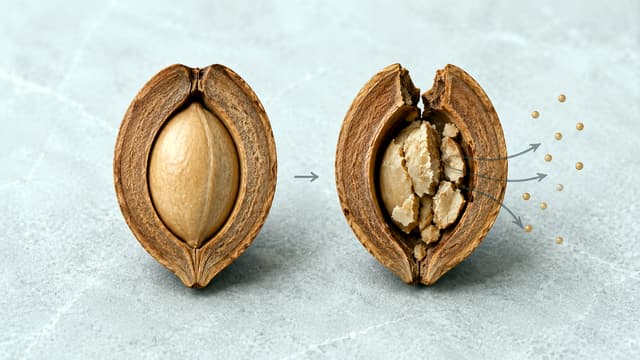
During a telephone call or emergency assessment, the language used by the patient or caregiver can be misleading. “The pit was chewed” might mean there are shallow tooth marks on the shell—or it might mean the inner seed was crushed and swallowed.
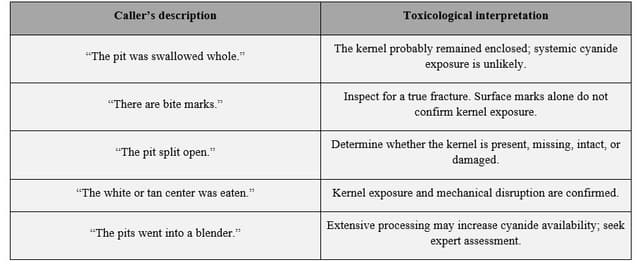
A photograph of recovered pits can be surprisingly useful. It may help a poison specialist distinguish a scuffed shell from a true fracture, or confirm that the kernel is still present and undamaged.
In toddlers and young children, a whole pit can be a choking hazard even when systemic toxicity is unlikely. A large number of pits could also raise a mechanical gastrointestinal concern. Toxicity and obstruction are different problems and should not be collapsed into one risk calculation.
For another example of an ingestion that may be described as “non-toxic” but still cause serious mechanical harm, see Understanding the Risk of Water bead (Orbeez) Ingestion in Children.
“Cherry” is not a precise toxicological identification.
The available analytical data are limited to particular plant populations and methods. The 2022 study most directly examining cherry pits analyzed 30 Prunus avium breeding accessions derived from ‘Regina’ × ‘Lapins’ crosses. Those results should not automatically be applied to sour cherries, chokecherries, black or wild cherries, ornamental Prunus species, apricot kernels, peach kernels, homemade extracts, or concentrated amygdalin products. [J]
Cyanogenic content can vary with species, cultivar, plant tissue, growing conditions, and analytical technique. Bolarinwa and colleagues also found substantial differences in amygdalin content across seeds and kernels from Rosaceae species. [C]
Unknown wild fruit deserves a lower threshold for expert review because identification is uncertain and the available cherry data may not apply. This is similar to the identification problem discussed in Mushroom Poisoning in the TikTok Era: When Foraging Goes Wrong: a familiar appearance is not a reliable substitute for species-level information.
Food preparation also changes the exposure. Cooking, fermenting, grinding, blending, prolonged soaking, and homemade extraction may alter how much seed material is disrupted and how cyanogenic compounds become available. A person who accidentally swallows a firm commercial sweet-cherry pit is not equivalent to someone who intentionally pulverizes kernels into a powder or drink.
This is where apparently precise numbers can become misleading.
Grgurič and colleagues cracked, freeze-dried, finely ground, and enzymatically processed whole-pit material from 30 sweet-cherry breeding accessions. The measured total cyanide content ranged from approximately 19.6 to 167 micrograms per gram of dry whole-pit material, with a median of 61 micrograms per gram. [J]
Those values demonstrate two important facts:
1. Cherry-pit cyanogenic potential varies substantially between accessions.
2. The laboratory method does not reproduce an ordinary accidental ingestion.
The samples were deliberately processed to release analytically measurable cyanide. The results therefore describe potential cyanide liberated under the study’s laboratory conditions—not the amount released by a brief bite, not the amount absorbed by a patient, and not a clinical dose per pit.
The study also did not provide a directly matching dry mass for each individual pit. Combining its dry-weight cyanide concentration with a pit weight taken from a separate population would create a mismatch in plant material, moisture basis, and sampling. That is not a reliable way to calculate “milligrams of cyanide per cherry pit.”
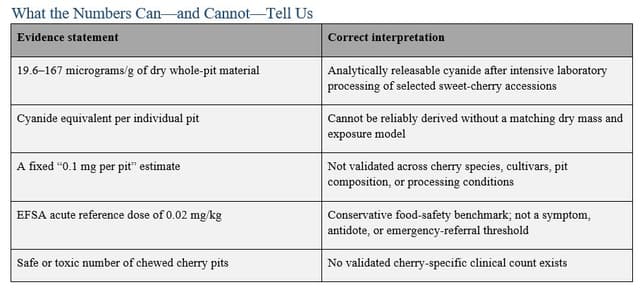
EFSA derived an acute reference dose of 0.02 mg cyanide per kilogram of body weight using uncertainty factors intended for food-safety risk assessment. [F] [G]
Exceeding that benchmark does not mean cyanide poisoning is expected. Falling below it does not independently prove that a particular clinical exposure is safe. It should not be converted into an emergency-department cutoff, a hydroxocobalamin threshold, or a fixed number of chewed pits.
Likewise, historical estimates of potentially lethal cyanide doses should not be back-calculated into a “lethal cherry-pit count.” Such calculations stack uncertain assumptions about pit mass, cyanide content, release, absorption, and patient susceptibility until the final number appears more certain than the evidence allows.
Cyanide interferes with cellular oxygen use. The brain and cardiovascular system are especially vulnerable when exposure is clinically significant. Early features may include headache, dizziness, anxiety, nausea, vomiting, weakness, rapid breathing, shortness of breath, chest tightness, confusion, tachycardia, and sometimes early hypertension. Severe poisoning can progress to altered mental status, seizures, coma, respiratory depression or apnea, hypotension, dysrhythmia, severe lactic acidosis, and cardiovascular collapse. [D] [I]
These findings are not specific to cyanide. Vomiting and dizziness have many causes. The symptoms become more concerning when they occur after a credible disrupted-kernel exposure and worsen over time.
There is no validated cherry-specific study defining the onset of symptoms or the ideal observation period after a chewed cherry kernel.
In a retrospective pediatric series of 13 apricot-kernel poisonings, symptoms began between about 20 minutes and 3 hours after ingestion, with serious cases including coma, convulsions, hypotension, lactic acidosis, and mechanical ventilation. [A]
Apricot-kernel data demonstrate that cyanogenic stone-fruit seeds can cause severe toxicity, but they cannot establish a safe or toxic cherry-pit count. Apricot and cherry kernels differ, and the amount of cyanide released depends on the product and preparation.
For selected asymptomatic patients with a disrupted cherry kernel, a poison center or medical toxicologist may consider a 4- to 6-hour observation period. That interval is an extrapolation from apricot-kernel timing and direct-cyanide practice—not a validated cherry-specific rule. Observation should be extended when symptoms develop, timing is uncertain, the amount or species is unclear, co-ingestants are possible, laboratory findings are abnormal, or reliable follow-up is not available.
First, look at the person—not the theoretical cyanide calculation.
If the person has collapsed, is having a seizure, has trouble breathing, cannot be awakened normally, has fainted, or appears cardiovascularly unstable, call emergency services immediately. [M]
For an awake, stable person:
3. Remove remaining pits and stop further exposure.
4. Do not induce vomiting. Induced vomiting can cause aspiration and does not reliably remove the exposure. [L]
5. Identify the fruit or product. Note whether it was a commercial sweet cherry, sour cherry, wild cherry, ornamental fruit, apricot kernel, supplement, extract, or unknown item.
6. Inspect the pits. Look for cracks, split shells, visible kernels, missing seed material, grinding, or blending.
7. Estimate the worst plausible amount. Count what was present, what was recovered, and what may be missing.
8. Record the time and symptoms. Note vomiting, dizziness, weakness, behavior change, unusual drowsiness, breathing difficulty, chest symptoms, fainting, or confusion.
9. Keep evidence. Save remaining pits, the container, a photograph, or the recipe used.
10. Contact Poison Control promptly for a confirmed or possible disrupted-kernel exposure, an uncertain amount, a young child, an unknown species, or any symptoms.
In the United States, call 1-800-222-1222. The national line routes callers to their regional poison center. MedicalToxic’s Poison Control: Your Lifeline in Emergencies explains how this system supports both the public and healthcare professionals.
A useful history answers six questions:
· Who? Age, weight, pregnancy when relevant, important heart, lung, neurologic, kidney, or metabolic disease, and baseline ability to communicate symptoms.
· What? Fruit species, commercial or wild source, supplement or food product, and possible co-ingestants.
· What happened to the pit? Intact, superficially marked, cracked, kernel exposed, kernel missing, chewed, ground, or blended.
· How much? Definite amount, possible amount, number recovered, and worst plausible amount.
· When and why? Time since exposure and whether it was accidental, experimental, or intentional.
· What is happening now? Gastrointestinal, neurologic, respiratory, and cardiovascular symptoms.
For households with young children, broader storage and supervision strategies are covered in How to Prevent Poisoning at Home: A Parent's Essential Safety Guide.
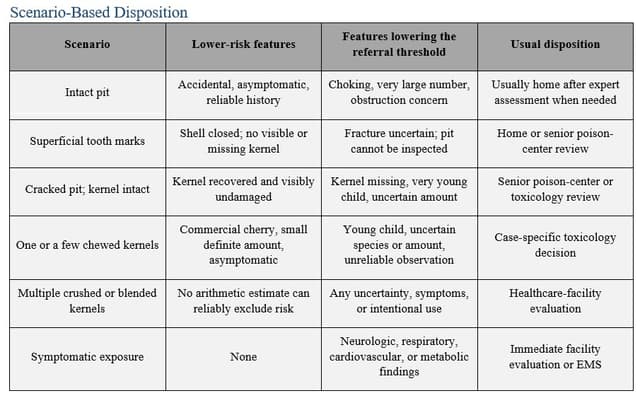
Risk assessment is case-specific, but the referral threshold should be lower when any of the following are present:
A young child with a missing or chewed kernel
Several crushed, ground, pulverized, or blended kernels
An intentional ingestion
A large or unknown amount
An unknown, wild, ornamental, or poorly identified species
Unreliable history or inability to inspect the remaining pits
Poor access to observation or emergency care
Cardiopulmonary, neurologic, or significant metabolic disease
Any evolving neurologic, respiratory, cardiovascular, or severe gastrointestinal symptoms
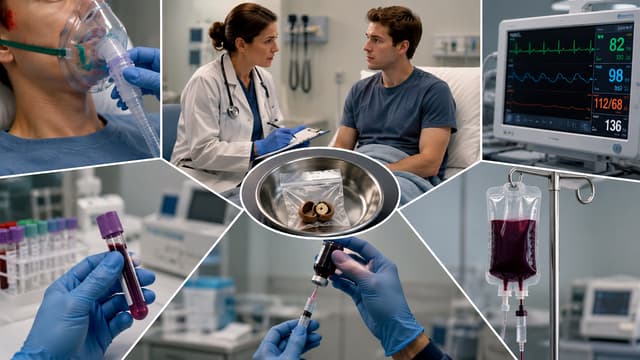
For a clinically concerning disrupted-kernel ingestion, management begins with airway, breathing, circulation, high-concentration oxygen, cardiac monitoring, bedside glucose, vascular access in an ill patient, and prompt treatment of seizures and shock. Supportive care should not be delayed while someone searches for the exact cherry species or calculates a theoretical cyanide dose. [D]
Useful investigations may include:
Venous or arterial blood gas
Lactate
Serum electrolytes and bicarbonate
Anion gap
Glucose
Renal function
ECG
Continuous cardiac monitoring in a symptomatic patient
A pretreatment cyanide sample may be collected if local testing is available, but rapid results are uncommon. Treatment of a credible life-threatening cyanide syndrome should not wait for that concentration.
A markedly elevated lactate can support the presence of severe cellular hypoxia, but it is not specific for cyanide.
In a retrospective series of 11 patients with acute non-fire cyanide poisoning, a plasma lactate concentration of at least 8 mmol/L was 94% sensitive and 70% specific for a blood cyanide concentration of at least 1 mg/L. [B]
Those test characteristics should not be transferred directly to mild plant-kernel exposures. A high lactate can have other causes, while a normal early result should not overrule a highly concerning history or worsening neurologic or cardiovascular findings.
Hydroxocobalamin is an antidote for known or suspected serious cyanide poisoning. It binds cyanide to form cyanocobalamin, which can be eliminated from the body.
It should be administered promptly when a credible exposure is accompanied by severe features such as altered mental status, seizures, respiratory failure, profound lactic acidosis, hypotension, shock, or cardiovascular collapse. Treatment should be based on the clinical syndrome and toxicology guidance rather than delayed for laboratory confirmation. [D] [E]
The U.S. labeled adult starting dose is 5 g intravenously over approximately 15 minutes. Depending on severity and clinical response, a second 5-g dose may be given, for a total of 10 g. [E]
The European product information lists a pediatric initial dose of 70 mg/kg intravenously, up to 5 g, with a possible additional dose according to severity and response. [H] The U.S. label states that pediatric safety and effectiveness have not been established, so pediatric treatment should follow poison-center, medical-toxicology, and local institutional protocols. [E]
Hydroxocobalamin can cause red discoloration of the skin and urine, increased blood pressure, and interference with colorimetric laboratory tests and some dialysis equipment. The label also describes renal impairment, acute renal failure, and urinary calcium oxalate crystals. [E] These considerations matter, but they should not delay antidotal treatment when life-threatening cyanide poisoning is credibly suspected.
Activated charcoal is not indicated for an intact-pit exposure and should not be given routinely at home.
There is no direct evidence that charcoal improves outcomes after cherry-kernel ingestion. In a very recent, potentially serious exposure to finely pulverized cyanogenic material, a poison center or medical toxicologist might consider charcoal in a healthcare facility when the airway is protected. This is a case-specific extrapolation from direct-cyanide management, not a cherry-specific evidence base.
Decontamination must never delay oxygenation, resuscitation, seizure control, shock management, or hydroxocobalamin.
Prevention does not require treating every cherry like hazardous material. It requires controlling the situations in which pits can be hidden, crushed, or confused with food.
Remove pits before giving cherries to toddlers or anyone with swallowing difficulty.
Supervise young children while they eat stone fruit.
Do not let children play with recovered pits.
Check blender recipes carefully; use pitted fruit rather than assuming a blender will safely process whole cherries.
Do not grind or intentionally consume cherry kernels.
Avoid homemade powders, extracts, tinctures, or “natural remedy” products made from unknown stone-fruit kernels.
Label pitted and unpitted fruit clearly during food preparation.
Keep a photograph or botanical identification when wild fruit is used.
Save the U.S. Poison Help number, 1-800-222-1222, in household phones.
Cherry pits are one example of naturally occurring food toxins whose risk changes with preparation. MedicalToxic’s Cucurbitacin Poisoning: Hidden Dangers in Common Garden Vegetables explains another situation in which an ordinary food can become toxic because of plant chemistry rather than contamination by bacteria.
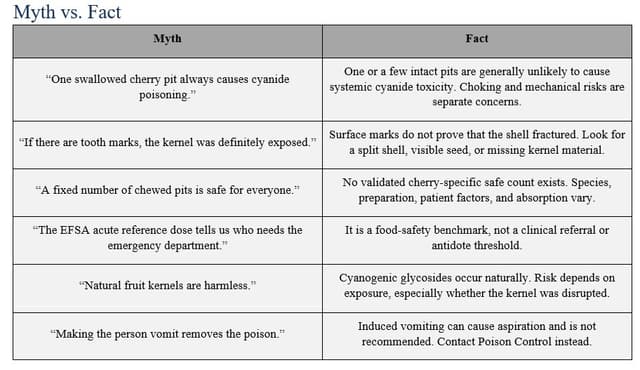
Ask what happened to the kernel, not only what happened to the pit. “White center visible or missing?” is often more useful than “Was it chewed?”
Do not combine unrelated studies to manufacture a dose per pit. Dry-weight concentration from one plant population and wet pit mass from another cannot produce a reliable clinical estimate.
Use apricot-kernel cases to understand possible severity, not to define a cherry cutoff. The exposure materials are not interchangeable.
Lactate is supportive, not definitive. Interpret it with the exposure history and clinical trajectory.
Treat the severe syndrome, not the delayed laboratory result. A cyanide concentration is rarely available quickly enough to guide initial antidotal care.
Keep mechanical and toxicologic risks separate. An intact pit may be low risk for cyanide but still dangerous as a choking foreign body.
A whole, unbroken pit usually passes through the gastrointestinal tract without releasing a clinically important amount of cyanide. The immediate concern in a young child is choking. Contact Poison Control for case-specific advice when the amount is uncertain, the child is very young, the pit may have cracked, or any symptoms are present. [K] [M]
Tooth marks alone do not prove that the seed was exposed. Inspect the shell for a real crack or split and look for a visible white or tan kernel or missing seed material. A closed shell with superficial marks is much less concerning than a damaged or chewed kernel.
Contact Poison Control promptly. Grinding, blending, or thoroughly chewing the kernel can increase cyanide availability. Several disrupted kernels, an unknown amount, an unknown species, or any symptoms generally justify a lower threshold for healthcare-facility evaluation. [C] [J]
No. Inducing vomiting can cause aspiration and does not reliably reduce the risk. Remove remaining material, preserve any pits or packaging, and obtain expert guidance. [L]
Call emergency services for difficulty breathing, collapse, seizure, fainting, severe confusion, cardiovascular instability, or inability to awaken normally. [D] [M]
No validated safe or toxic count exists for chewed cherry kernels. A clinically meaningful assessment must consider kernel exposure, degree of crushing, species, amount, intent, symptoms, time since ingestion, patient factors, and the reliability of observation.
Most accidental ingestions of intact cherry pits are low risk for systemic cyanide poisoning because the hard shell keeps the seed tissue enclosed. The risk changes when the shell fractures and the inner kernel is exposed, chewed, crushed, ground, or blended.
A fixed pit count cannot replace a careful exposure history. Do not convert food-safety benchmarks into emergency cutoffs, and do not calculate a “toxic number” by combining incompatible laboratory studies.
The practical approach is simple:
confirm whether the kernel was actually exposed or disrupted.
Identify the fruit and the worst plausible amount.
Watch for neurologic, respiratory, cardiovascular, and severe gastrointestinal symptoms.
Do not induce vomiting.
Contact Poison Control for disrupted kernels, uncertainty, high-risk patients, or symptoms.
Activate emergency services for collapse, seizure, breathing difficulty, severe confusion, fainting, cardiovascular instability, or inability to awaken.
Integrity outranks arithmetic.
© All copyright of this material is absolute to Medical toxicology
As the Growth & Content Lead at MedicalToxic.com, I work on content strategy, development, and digital growth. My focus is on making MedicalToxic’s content clear, practical, and accessible, while helping expand the platform’s reach and strengthen its position as a trusted resource in clinical toxicology.
References
[A] Akyildiz, B. N., Kurtoğlu, S., Kondolot, M., & Tunç, A. (2010). Cyanide poisoning caused by ingestion of apricot seeds. Annals of Tropical Paediatrics, 30(1), 39–43. https://doi.org/10.1179/146532810X12637745451951
[B] Baud, F. J., Borron, S. W., Mégarbane, B., Trout, H., Lapostolle, F., Vicaut, E., Debray, M., & Bismuth, C. (2002). Value of lactic acidosis in the assessment of the severity of acute cyanide poisoning. Critical Care Medicine, 30(9), 2044–2050. https://doi.org/10.1097/00003246-200209000-00015
[C] Bolarinwa, I. F., Orfila, C., & Morgan, M. R. A. (2014). Amygdalin content of seeds, kernels and food products commercially available in the United Kingdom. Food Chemistry, 152, 133–139. https://doi.org/10.1016/j.foodchem.2013.11.002
[D] Centers for Disease Control and Prevention, National Institute for Occupational Safety and Health. (2011, May 12). Hydrogen cyanide (AC): Systemic agent. https://www.cdc.gov/niosh/ershdb/emergencyresponsecard_29750038.html
[E] DailyMed. (2021). CYANOKIT—hydroxocobalamin injection, powder, lyophilized, for solution: Prescribing information. https://dailymed.nlm.nih.gov/dailymed/drugInfo.cfm?setid=d56fcc8d-bd64-46ab-b0c0-2124bd745a6b
[F] EFSA Panel on Contaminants in the Food Chain. (2016). Acute health risks related to the presence of cyanogenic glycosides in raw apricot kernels and products derived from raw apricot kernels. EFSA Journal, 14(4), 4424. https://doi.org/10.2903/j.efsa.2016.4424
[G] EFSA Panel on Contaminants in the Food Chain, Schrenk, D., Bignami, M., Bodin, L., Chipman, J. K., del Mazo, J., et al. (2019). Evaluation of the health risks related to the presence of cyanogenic glycosides in foods other than raw apricot kernels. EFSA Journal, 17(4), 5662. https://doi.org/10.2903/j.efsa.2019.5662
[H] European Medicines Agency. (2025, December 16). Cyanokit: EPAR product information. https://www.ema.europa.eu/en/medicines/human/EPAR/cyanokit
[I] Geller, R. J., Barthold, C., Saiers, J. A., & Hall, A. H. (2006). Pediatric cyanide poisoning: Causes, manifestations, management, and unmet needs. Pediatrics, 118(5), 2146–2158. https://doi.org/10.1542/peds.2006-1251
[J] Grgurič, L., Kraner Šumenjak, T., & Kristl, J. (2022). Cyanide contents in pits of cherries, gages and plums using a modified sensitive picrate method. Agricultura Scientia, 19(1), 43–50. https://doi.org/10.18690/agricultura.19.1.43-50.2022
[K] National Capital Poison Center. (n.d.). Are cherry pits really poisonous? Poison Control. https://www.poison.org/articles/i-swallowed-a-cherry-pit-184
[L] National Capital Poison Center. (n.d.). First aid: Act fast! Poison Control. https://www.poison.org/first-aid-for-poisonings
[M] Poison Help. (n.d.). When to call the Poison Help Line. America’s Poison Centers. https://www.poisonhelp.org/when-to-call-the-poison-help-line/
Keep reading
 Food and Drug Toxicology
Amir Mohammad Mottaghi
 Food and Drug Toxicology
Amirhosein Shabrang
 Food and Drug Toxicology
Amirhosein Shabrang
 Food and Drug Toxicology
Amirhosein Shabrang