Food and Drug Toxicology
Are Psilocybin Mushroom Gummies Safe? What Toxicology Testing Reveals
Post on 26 Jun 2026 · Updated 30 Sept 2026 · 3 min read
Post on 26 Jun 2026 · Updated 30 Sept 2026 · 3 min read
 Medical Toxicologymedicaltoxic.com
https://medicaltoxic.com/blogs/are-psilocybin-mushroom-gummies-safe
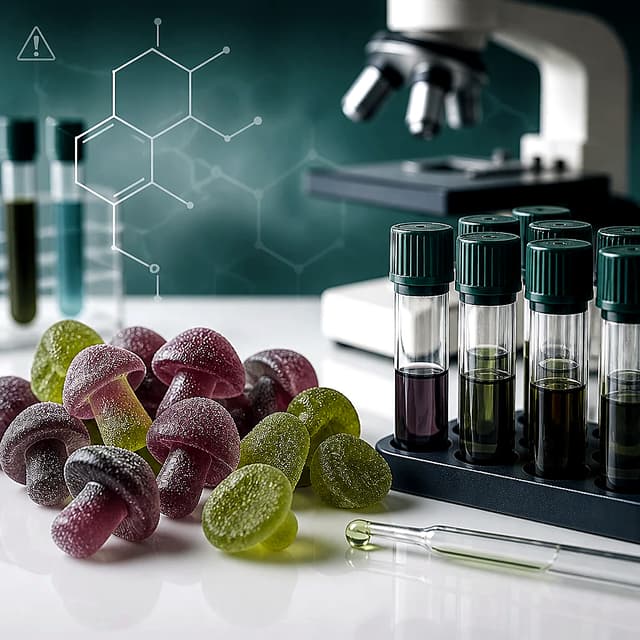
Psilocybin mushroom gummies are not automatically safe just because they are marketed as natural or wellness-oriented. Testing has shown that some products may contain no detectable psilocybin while carrying hidden or undisclosed compounds. For medical toxicology, the central question is simple: what was the real exposure?
Psilocybin mushroom gummies are often marketed as natural, plant-based, or wellness-oriented products. Their packaging may suggest a controlled psychedelic experience, but recent toxicology findings show that consumers cannot assume these products contain what the label claims.
Psilocybin mushroom gummies are often marketed as natural, plant-based, or wellness-oriented products. Their packaging may suggest a controlled psychedelic experience, but recent toxicology findings show that consumers cannot assume these products contain what the label claims [1,2].
For readers trying to separate evidence-based psychedelic care from risky retail products, Psychedelics in 2025: What’s Evidence-Based, What Isn’t, and How to Counsel Patients provides useful background.
In one analysis of commercially available “magic mushroom” edibles, researchers tested 12 products sold as mushroom gummies or mushroom-containing edibles. None contained detectable psilocybin, the classic psychedelic compound found in Psilocybe mushrooms [1,2]. Muscimol, the psychoactive compound associated with Amanita muscaria, was also not detected [1].
That finding matters because many consumers may buy these products expecting a psilocybin effect. Instead, several tested products contained undisclosed active ingredients. These included caffeine, hemp or cannabis-related compounds, kava extract, and synthetic psychedelics sometimes described as “syndelics” [1,2].
The appearance of hidden synthetic psychedelics in consumer products also fits the broader pattern described in Inside the Synthetic Drug Surge: Why 2025's New Threats Are Different.
From a medical toxicology perspective, mislabeled psychedelic gummies create several problems. First, the consumer cannot give informed consent if the true ingredients are hidden. Second, dose prediction becomes unreliable. Third, clinicians may struggle to identify the real exposure when a patient presents with confusion, vomiting, agitation, sedation, seizures, abnormal vital signs, or mixed toxidrome features after using a mislabeled edible [1,3].
Undisclosed cannabinoid exposure is also clinically relevant, and Synthetic Marijuana Unmasked: The Deadly Truth Behind K2, Spice, and Paper Dope explains why cannabinoid-like products can produce unpredictable toxic effects.
In toxicology, one principle is especially important: the label is not always the exposure. Psilocybin mushroom gummies may look simple, but without reliable testing and regulation, their contents can be unpredictable.
The Diamond Shruumz outbreak made this issue visible at a national level. Severe illness reports were linked to mushroom-containing products sold in the United States, with hospitalizations, ICU-level complications, intubations, and deaths reported during the investigation [3,4]. Testing identified multiple psychoactive substances in some products, and different samples did not always contain the same ingredients [3,4].
For more detail on that product line and its public-health impact, read Diamond Shruumz™ Brand: A Growing Public Health Concern.
The key point is not that all psychedelic research is unsafe. Regulated psilocybin therapy, clinical trials, and supervised treatment protocols are very different from unregulated retail gummies. In regulated settings, patients are screened, doses are controlled, and monitoring is built into the process. In contrast, unregulated mushroom gummies may contain no psilocybin, hidden synthetic compounds, cannabis extract, kava, or other undeclared substances [1,2,4].
Consumers should be cautious with any product marketed as a psychedelic edible, microdosing gummy, mushroom candy, or “magic mushroom” supplement. Attractive packaging, professional branding, and online availability do not guarantee safety or accuracy [1,4].
The public-health risks of casual microdosing products are discussed further in Hidden Dangers of Microdosing Psilocybin: New Research Reveals Unexpected Risks.
If someone develops severe symptoms after taking one of these products, they should seek urgent medical care or contact poison control. Clinicians should ask about the brand, product form, packaging, dose, timing, co-ingestants, and whether other people used the same product [3,4].
© All copyright of this material is absolute to Medical toxicology
[1] - Oregon State University analysis of magic mushroom edibles.
[2] - .Active Constituents of Psilocybin Mushroom Edibles.
[3] - .CDC Diamond Shruumz investigation.
[4] - .FDA Diamond Shruumz recall and safety information.
Keep reading
 Food and Drug Toxicology
 Food and Drug Toxicology
 Food and Drug Toxicology
 Food and Drug Toxicology