Most U.S. Overdose Deaths Occurred in Isolation, CDC Study Finds
post on 05 Aug 2026 · Updated 01 Oct 2026
post on 05 Aug 2026 · Updated 01 Oct 2026
 Medical Toxicologymedicaltoxic.com
https://medicaltoxic.com/news/us-overdose-deaths-isolation-cdc-study
Most U.S. Overdose Deaths Occurred in Isolation, CDC Study Finds
An analysis of 191,577 overdose deaths found that three in four occurred while the person was isolated, often inside a home.
A naloxone kit can reverse an opioid overdose.
It cannot notice that someone has stopped breathing.
That difference sits at the center of a new analysis from researchers at the U.S. Centers for Disease Control and Prevention. The study examined 191,577 unintentional or undetermined-intent drug overdose deaths reported across 46 states and Washington, DC, from January 2022 through December 2024.
Of those deaths, 75.5%—144,607 people—were classified as occurring in isolation. More than half of all deaths in the analysis, 55%, occurred while the person was isolated inside a house or apartment. [C]
The findings do not establish that every death could have been prevented by naloxone or by placing another person in the room. The study included deaths involving different drug classes—not only opioids—and it did not test a specific prevention program.
What it reveals is a major weakness in overdose response: treatment cannot begin until someone recognizes that an emergency is happening.
The report was published in NEJM Evidence on July 22, 2026. Researchers used data from the CDC’s State Unintentional Drug Overdose Reporting System, or SUDORS.
SUDORS combines information from death certificates, medical examiner and coroner reports, scene investigations, and postmortem toxicology findings to describe the circumstances surrounding fatal drug overdoses. [B]
The analysis included deaths classified as:
unintentional; or
having undetermined intent.
It did not include every overdose death that occurred in the United States during the study period, and it was not restricted to deaths involving fentanyl or other opioids.
Researchers classified a death as occurring in isolation when there was no evidence that a potential bystander was immediately present or when another person was nearby but spatially separated from the individual—for example, in another room.
That distinction matters.
A person does not have to live alone to experience an overdose in isolation.
Among the 191,577 overdose deaths examined:
75.5% occurred in isolation;
55% occurred in isolation inside a house or apartment; and
72.9% of all deaths classified as isolated took place in a house or apartment. [C]
Among isolated deaths inside houses or apartments, no potential bystander was identified in 70.4% of cases.
In another 20.2%, an intimate partner or family member was somewhere in the home but spatially separated from the person who died. A roommate, friend, or another type of potential bystander was spatially separated in 8.8%.
The pattern was different in nonresidential settings. Among isolated deaths occurring in places such as vehicles, streets, businesses, or other locations, no potential bystander was identified in 86.3% of cases. [C]
The home, in other words, was not necessarily empty.
In some cases, help may have been only one room away—but no one knew that it was needed.
Overdose is a time-sensitive toxicologic emergency.
Opioids can suppress the brain’s drive to breathe. Illegally manufactured fentanyl may cause rapid respiratory depression, while other opioids, sedatives, stimulants, and unpredictable drug combinations can complicate both recognition and treatment.
MedicalToxic’s overview, The Alarming Rise of Synthetic Opioids: What Healthcare Professionals Should Know, explains how synthetic opioids have changed the clinical and public-health landscape.
The current drug supply is also not limited to opioids. Emerging Toxicological Threats in the U.S.: Xylazine, Nitazenes, Novel Sedatives, Synthetic Cannabinoids, Fentanyl Analogues, and Toxic Mushrooms describes how opioids, non-opioid sedatives, stimulants, and other substances may appear in unexpected combinations.
That complexity is one reason the new report should not be interpreted as a simple naloxone study.
Naloxone can reverse opioid effects when administered in time. It cannot treat every type of poisoning, and it cannot help if nobody recognizes that an overdose is occurring.
Naloxone is a safe opioid antagonist that can reverse an overdose involving opioids such as fentanyl, heroin, and prescription opioid medications. It can restore breathing when opioid toxicity has caused severe respiratory depression, although more than one dose may sometimes be required with potent opioids such as fentanyl. [A]
MedicalToxic’s clinician-focused guide, Naloxone in Xylazine, Nitazenes, and Fentanyl Analogue Overdose, reviews the need to prioritize ventilation, recognize recurrent respiratory depression, and account for opioid effects that may outlast the initial naloxone response.
But naloxone must be physically accessible, and someone must:
recognize the overdose;
reach the person;
administer the medication;
call emergency services; and
provide appropriate support until help arrives.
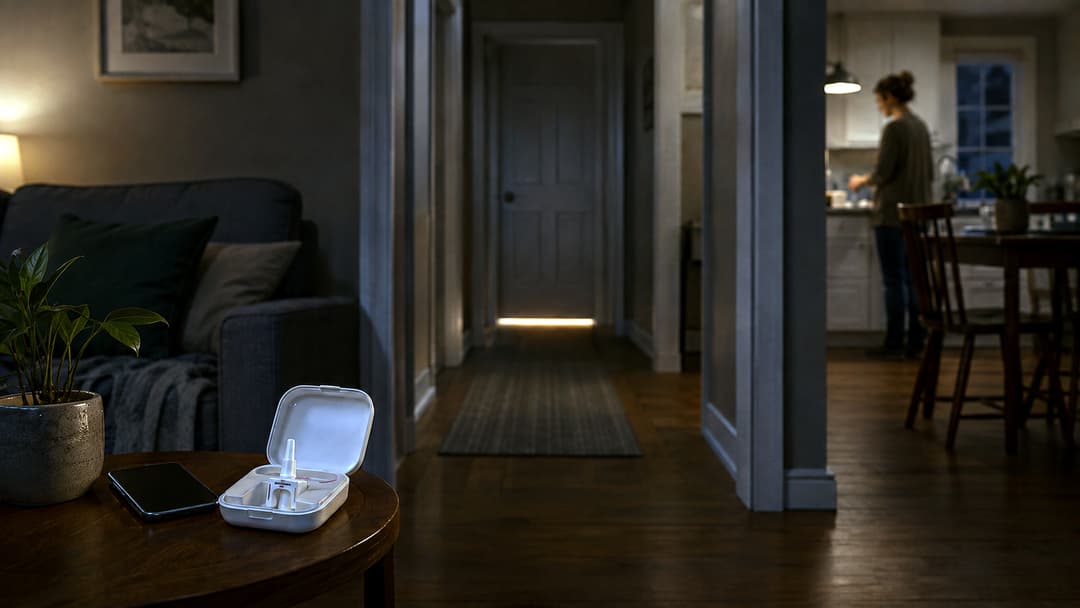
A naloxone kit stored in another room may not help if nobody hears a fall, notices abnormal breathing, or checks on the person.
This is why overdose prevention cannot end with medication distribution. Naloxone access must be accompanied by recognition training, communication, rapid emergency activation, and response planning.
The headline figure—75.5%—applies to all qualifying drug overdose deaths in the analysis, not just deaths involving opioids.
That limitation is essential because naloxone reverses opioid-mediated toxicity. It does not reverse overdoses caused solely by stimulants, non-opioid sedatives, or other toxic substances.
Some deaths may also involve multiple substances. Even when opioids are part of the exposure, naloxone may address only one component of a complex poisoning.
For example, Fentanyl + Xylazine (‘Tranq’): Why Naloxone Alone Isn’t Enough explains that naloxone can reverse the opioid component of a fentanyl–xylazine exposure but does not directly reverse xylazine’s non-opioid sedative effects.
The new study therefore supports a broader conclusion:
Rapid recognition and an immediate human response matter across the overdose spectrum—even when naloxone is not the complete treatment.
Public-health professionals have long warned that using drugs alone can delay overdose detection.
The new contribution is the scale and detail of the analysis.
Researchers quantified isolation across a large multistate dataset and distinguished among several circumstances:
no potential bystander was identified;
a family member or intimate partner was elsewhere in the home; or
a roommate, friend, or other person was nearby but spatially separated.
This shows that “using alone” is not always the same as living alone or being the only person inside a building.
A closed bedroom door, a bathroom, a basement, a detached area, or simply a lack of awareness may be enough to delay recognition.
The study also places the home at the center of the prevention challenge. More than half of all overdose deaths examined occurred in isolation inside a house or apartment. [C]
That shifts the prevention question from only:
Who carries naloxone?
to the equally important question:
Who will recognize the emergency in time to use it?
SAMHSA’s overdose-prevention guidance recommends avoiding drug use while alone. When that cannot be avoided, it advises using with a trusted person who remains alert and can respond, or arranging for a trusted person to check in. [D]
Practical risk-reduction measures include:
avoiding drug use while alone;
ensuring that a trusted person knows where and when use is occurring;
keeping naloxone visible and immediately accessible;
teaching household members how to recognize slowed or stopped breathing;
avoiding simultaneous use when more than one person is present;
calling emergency services promptly after a suspected overdose;
remaining with the person until help arrives; and
connecting people with evidence-based treatment for substance use disorders.
The broader unpredictability of the current illicit market is examined in Inside the Synthetic Drug Surge: Why 2025's New Threats Are Different, which discusses rapid changes in synthetic drugs, adulterants, and polysubstance exposures.
These measures may reduce risk. They do not make drug use safe.
The study’s authors identified emerging technologies as a possible part of future overdose-prevention strategies for people who use drugs in isolation.
Potential approaches include:
smartphone-based monitoring;
scheduled remote check-ins;
wearable respiratory or motion sensors;
devices designed to detect prolonged immobility; and
systems that alert another person or emergency responder when someone becomes unresponsive.
The rationale is understandable: shortening the interval between respiratory depression and intervention may create a better opportunity for rescue.
However, the study did not test these technologies.
It did not determine:
which systems are effective;
how often they produce false or missed alarms;
whether users will accept continuous monitoring;
how reliably emergency services can locate the person; or
how privacy and health information should be protected.
These technologies should therefore be described as emerging or potentially helpful—not as proven replacements for human contact, naloxone access, emergency activation, or evidence-based addiction treatment.
From a toxicology perspective, the study highlights a problem that begins before the patient reaches an emergency department.
Clinicians can provide oxygen, ventilatory support, naloxone, cardiovascular care, and other treatments only after an overdose is recognized and the emergency system is activated.
The interval before recognition may determine whether a reversible episode of respiratory depression progresses to severe hypoxic injury, cardiac arrest, or death.
Effective overdose prevention must therefore address both:
the toxicity and unpredictability of the substance or mixture; and
the circumstances that determine whether someone notices the emergency and responds in time.
Drug-supply surveillance remains important. Naloxone distribution, treatment access, stigma reduction, and medications for opioid use disorder remain essential.
None of those measures, however, removes the danger created when an overdose occurs unseen.
The results require careful interpretation.
First, SUDORS relies on information obtained from death certificates, medical examiner and coroner reports, scene investigations, and postmortem toxicology records. Documentation may differ between cases and jurisdictions. [B]
Second, the analysis included 46 states and Washington, DC. It was geographically extensive but was not a complete census of every U.S. overdose death during the study period.
Third, the study examined fatal overdoses. It cannot determine how frequently overdoses occurring in isolation were discovered and successfully reversed.
Fourth, a bystander’s presence does not guarantee an effective response. A nearby person may not recognize overdose signs, may also be intoxicated, may not have naloxone, or may delay calling emergency services.
Fifth, the study included different types of drug overdose deaths. The findings should not be interpreted as showing that all cases involved fentanyl, that every case was responsive to naloxone, or that naloxone could have prevented every death.
Finally, this was a descriptive surveillance analysis. It identified patterns but did not prove that any particular app, device, policy, or household intervention would prevent a specific percentage of deaths.
The latest CDC analysis does not reduce overdose prevention to a single instruction, device, or medication.
Its central finding is more fundamental: most fatal overdoses in the study occurred without an immediately available responder.
Naloxone remains one of the most important tools for reversing opioid overdose. Evidence-based treatment for substance use disorder remains essential. Public education, emergency-response training, and safer-use planning also matter.
But a medication cannot administer itself.
Preventing overdose deaths in isolation will require systems that help someone recognize the emergency, reach the person quickly, and begin an appropriate response before the opportunity for rescue closes.
[A] Centers for Disease Control and Prevention. (2025, June 11). Lifesaving naloxone.
[B] Centers for Disease Control and Prevention. (2026, May 28). SUDORS dashboard: Fatal drug overdose data.
[C] Quader, Z. S., Tanz, L. J., Gladden, R. M., & Asher, A. (2026). U.S. drug overdose deaths that occurred in isolation, 2022–2024. NEJM Evidence, 5(8), EVIDpha2600113. https://doi.org/10.1056/EVIDpha2600113
[D] Substance Abuse and Mental Health Services Administration. (2025). Overdose Prevention and Response Toolkit (Publication No. PEP23-03-00-001).
Keep reading
Substance Abuse and Overdose
07 Oct 2026 · Updated 09 Oct 2026
Substance Abuse and Overdose
05 Oct 2026
Substance Abuse and Overdose
25 Sept 2026 · Updated 01 Oct 2026
Substance Abuse and Overdose
20 Sept 2026 · Updated 01 Oct 2026