Cychlorphine Emerges in the Illicit Opioid Supply as Toxicology Testing Finds Unrecognized Exposure
post on 07 Oct 2026

post on 07 Oct 2026
 Medical Toxicologymedicaltoxic.com
https://medicaltoxic.com/news/cychlorphine-emerging-synthetic-opioid-toxicology
Cychlorphine Emerges in the Illicit Opioid Supply as Toxicology Testing Finds Unrecognized Exposure
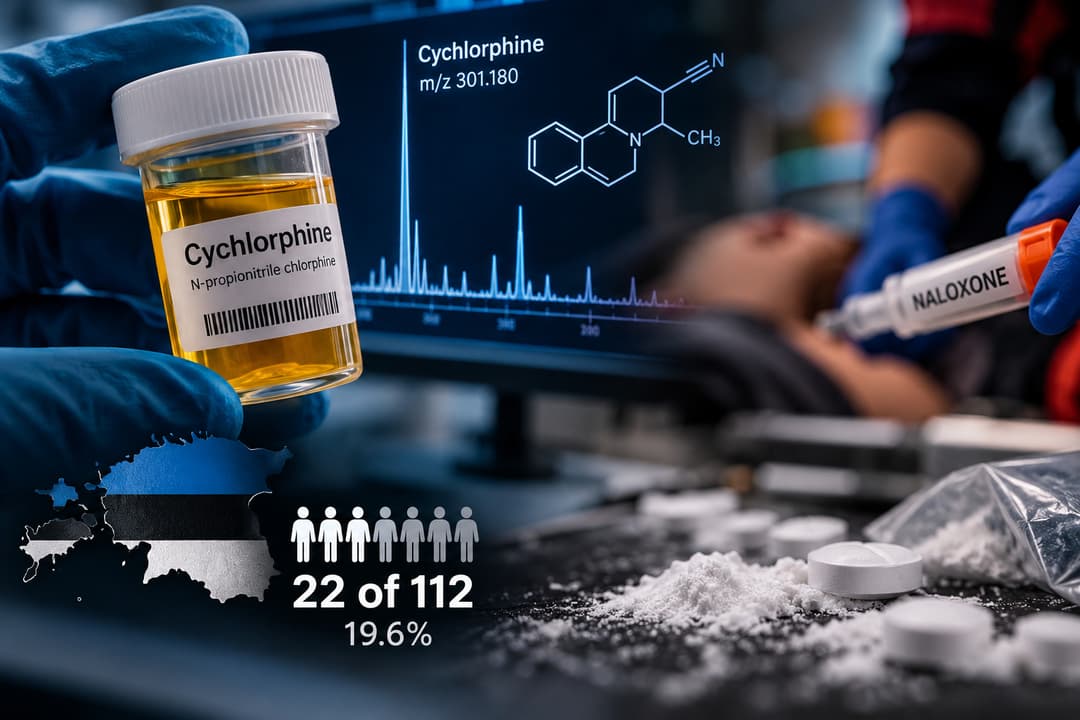
An Estonia toxicology study found cychlorphine in 22 of 112 participants, while a U.S. overdose case shows how the novel opioid can evade routine fentanyl and opiate screening.
An emerging non-fentanyl synthetic opioid is becoming harder to dismiss as an isolated forensic signal.
In a study published online September 22, 2026, researchers in Estonia used high-resolution mass spectrometry to compare reported drug use with substances actually detected in urine among people who inject drugs.
Cychlorphine was detected in 22 of 112 participants—19.6% of this specific toxicology sample. 1
The finding does not establish a 19.6% prevalence in Estonia generally, much less in Europe or the United States.
What it does show is clinically important: in a rapidly changing synthetic-opioid market, people may not know which opioid they have actually used.
That message is reinforced by a 2026 U.S. case report in which a patient who believed she had taken alprazolam developed an opioid toxidrome, responded to naloxone and was later found by advanced serum testing to have been exposed to cychlorphine. 2
Cychlorphine, also called N-propionitrile chlorphine, is an emerging non-fentanyl synthetic opioid.
It has been described within the newer “orphine” group of synthetic opioids and has no established therapeutic role in routine human medicine. 2
Its clinical importance comes from the same fundamental pharmacologic risk shared by other potent opioid agonists:
central nervous system depression and potentially life-threatening respiratory depression.
Cychlorphine should not, however, be described as a fentanyl analogue.
It represents a chemically different synthetic-opioid threat within an increasingly diverse illicit supply.
The new study examined a cross-sectional bio-behavioural survey of people who inject drugs in Kohtla-Järve, Estonia.
Of 350 survey participants, 112—32%—consented to the toxicology substudy, providing urine and reporting substances used during the previous seven days. Researchers analyzed the samples using liquid chromatography–quadrupole time-of-flight mass spectrometry, or LC-Q-TOF-MS. 1
Self-reported use of synthetic opioids—including fentanyl, nitazenes and drugs described locally as “heavy”—was reported by 33.9% of the toxicology participants.
But toxicological findings frequently did not match the substance people believed they had used.
Among participants reporting synthetic-opioid use, 50% had cychlorphine detected.
Across the entire 112-person toxicology sample, cychlorphine was detected in 22 participants, or 19.6%. 1
The researchers interpreted this discordance as evidence of substantial drug misidentification and possible substitution within that local opioid market.
The Estonia result is notable, but its denominator matters.
It does not mean:
19.6% of people who use drugs in Estonia are exposed to cychlorphine;
19.6% of Estonia's opioid supply contains cychlorphine;
cychlorphine has reached the same frequency in the United States; or
one in five opioid overdoses now involves the drug.
The 19.6% figure applies only to the 112 participants who elected to provide urine in this specific study.
The researchers also collected only a single toxicology sample per participant, meaning detection depends partly on when exposure occurred relative to specimen collection. 1
The study is therefore most useful as evidence of unexpected exposure and rapidly changing drug identity, not as a population prevalence estimate.
A separate 2026 Journal of Medical Toxicology case report adds the clinical piece.
A woman in her 20s reportedly believed she had ingested alprazolam.
She subsequently became unresponsive and developed respiratory depression. Emergency medical services administered 6 mg of intranasal naloxone before she reached the emergency department. 2
The authors described the presentation as a naloxone-responsive opioid toxidrome.
But the initial hospital urine testing was negative for both opiates and fentanyl.
Comprehensive serum toxicology subsequently identified cychlorphine. 2
That discrepancy is one of the most important practical lessons in the emerging cychlorphine literature.
Routine hospital drug screens are usually targeted immunoassays.
They do not comprehensively identify every drug capable of activating opioid receptors.
In the cychlorphine case, the initial fentanyl and opiate screens were negative even though advanced analysis later confirmed cychlorphine exposure. 2
That does not mean every routine assay will behave identically.
It does mean that a negative routine opioid or fentanyl result should not override an opioid toxidrome when the patient's respiratory physiology suggests otherwise.
This principle is discussed in detail in Drug Screens Lie: A Clinician’s Guide to Interpreting Toxicology Tests Safely.
Definitive identification of emerging synthetic opioids may require chromatography and mass-spectrometry-based testing that is not available rapidly in many emergency departments.
The U.S. case is useful evidence that an opioid toxidrome occurred in a patient with biologically confirmed cychlorphine exposure and improved after naloxone.
It does not establish that cychlorphine specifically requires 6 mg of naloxone.
The patient had multiple substances detected, including bromazolam and several other drugs. 2
Because of those co-exposures, every clinical feature cannot be attributed solely to cychlorphine.
Nor can one case define a universal dose-response relationship.
The clinically appropriate takeaway is narrower:
When opioid-mediated respiratory depression is present, naloxone remains appropriate even if routine opioid testing is negative.
For broader clinical context on naloxone in complex modern opioid exposures, see Naloxone in Xylazine, Nitazenes, and Fentanyl Analogue Overdose.
The new Estonia study is not the first evidence that cychlorphine has entered illicit markets.
On May 12, 2026, the U.S. Drug Enforcement Administration included cychlorphine in a public-safety advisory on emerging substances found in the illicit fentanyl environment.
DEA identified cychlorphine and nitazenes as potent, unregulated synthetic opioids and warned that people may be exposed to emerging substances without knowing they are present. 3
That surveillance evidence should not be conflated with the Estonia study.
The Estonia findings describe one specific population in one European location.
DEA's advisory provides separate U.S. drug-supply context.
Together, however, they show that cychlorphine is no longer confined to a single analytical report or jurisdiction.
The central problem is not simply the appearance of another chemical name.
It is the increasing failure of reported drug identity to predict actual pharmacology.
A person may believe they used:
fentanyl;
a nitazene;
a benzodiazepine;
a counterfeit prescription tablet; or
another street product,
while laboratory analysis identifies a different synthetic opioid.
That matters because clinicians initially work with imperfect information.
When history, bedside physiology and rapid toxicology disagree, the observed toxidrome remains critical.
The existing MedicalToxic overview Emerging Toxicological Threats in the U.S.: Xylazine, Nitazenes, Novel Sedatives, Synthetic Cannabinoids, Fentanyl Analogues, and Toxic Mushrooms describes the broader shift toward increasingly unpredictable synthetic-drug mixtures.
Cychlorphine is a new example of that problem.
This News does not establish a new cychlorphine treatment protocol.
In suspected opioid poisoning, immediate priorities remain the patient's physiology:
assess airway and ventilation;
provide respiratory support when needed;
administer naloxone when opioid-mediated respiratory depression is suspected;
reassess ventilation rather than relying solely on level of consciousness; and
consider unexpected or novel opioids when the toxidrome conflicts with the reported exposure or routine screen.
Advanced toxicology testing may later identify the exposure, but emergency treatment should not wait for definitive mass spectrometry when respiratory depression is present.
Cychlorphine had already been identified in forensic surveillance and fatal overdose investigations before September.
The new Estonia study adds something different:
systematic biological testing in a defined group of people who inject drugs showed cychlorphine exposure even when participants did not necessarily know they had used it.
The 22 detections among 112 toxicology participants move the evidence beyond isolated case identification.
The earlier U.S. case provides complementary clinical evidence:
an opioid toxidrome, naloxone response, negative routine fentanyl/opiate testing and subsequent biological confirmation of cychlorphine. 1 2
Together, the studies illustrate both sides of the same emerging problem:
people may not know what opioid they were exposed to, and routine testing may not tell clinicians either.
Important uncertainties remain.
The Estonia study involved only 112 toxicology participants from a specific population in Kohtla-Järve and should not be generalized to national or international prevalence.
Urine detection depends on timing and analytical methods.
The study does not establish how much cychlorphine was present in the drugs consumed or whether cychlorphine caused an overdose in each person in whom it was detected.
The U.S. nonfatal-overdose report is a single case with multiple co-exposures and cannot define the full human toxicity profile or a cychlorphine-specific naloxone requirement.
DEA surveillance establishes presence in the U.S. illicit-drug environment but does not establish clinical incidence.
Cychlorphine is moving from an obscure forensic signal toward a more credible emerging synthetic-opioid concern.
A September 2026 Estonia study detected the drug in 22 of 112 participants undergoing advanced urine toxicology and found substantial disagreement between reported synthetic-opioid use and laboratory findings. 1
Separately, a U.S. case provided direct biological confirmation of cychlorphine in a nonfatal opioid overdose despite negative initial opiate and fentanyl screening. 2
Neither finding establishes population-wide prevalence or a unique treatment protocol.
But both reinforce a clinically important rule for the modern drug supply:
A patient's reported substance—and a routine drug screen—may not identify the opioid actually driving respiratory depression.
Abel-Ollo, K., Riikoja, A., Barndõk, T., Vorobjov, S., Oja, M., Des Jarlais, D., Reile, R., & Uusküla, A. (2026). Discordance between self-reported and detected synthetic opioids reveals cychlorphine emergence among people who inject drugs in Estonia. International Journal of Drug Policy, 157(Pt A), 105520. https://doi.org/10.1016/j.drugpo.2026.105520
Kusko, R., Liss, D., House, S. L., House, S. B., Krotulski, A., Aldy, K., & Toxicology Investigators Consortium Fentalog Study Group. (2026). An Emerging Synthetic Opioid in the Drug Supply: A Case of Opioid Overdose with Biological Confirmation of Cychlorphine. Journal of Medical Toxicology. https://doi.org/10.1007/s13181-026-01146-4
U.S. Drug Enforcement Administration. (2026, May 12). Heightened Threat: Fentanyl Mixed with Emerging Synthetic Drugs.
Keep reading
Substance Abuse and Overdose
05 Oct 2026
Substance Abuse and Overdose
25 Sept 2026
Substance Abuse and Overdose
20 Sept 2026
Substance Abuse and Overdose
09 Sept 2026