Substance Abuse and Addiction
Fentanyl + Xylazine (‘Tranq’): Why Naloxone Alone Isn’t Enough
Omid Mehrpour
Post on 13 Dec 2025 · 17 min read
Omid Mehrpour
Post on 13 Dec 2025 · 17 min read
 Medical Toxicologymedicaltoxic.com
https://medicaltoxic.com/blogs/fentanyl-xylazine-tranq-why-naloxone-alone-isnt-enou
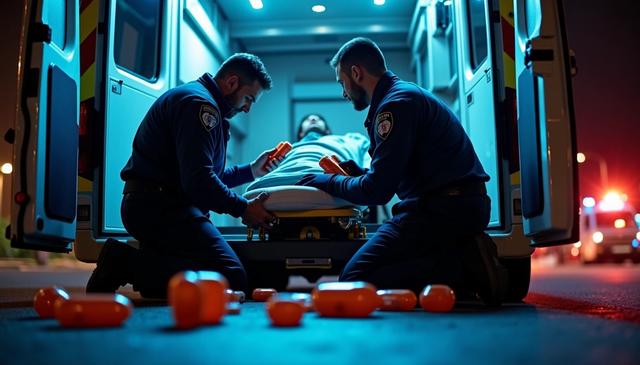
America faces a public health crisis as powerful synthetic opioids increasingly combine with non-opioid sedatives (e.g., xylazine), leading to overdoses where naloxone might restore breathing. However, sedation can still pose risks that persist. Drug poisonings claimed 107,735 American lives between August 2021 and August 2022, with synthetic opioids like fentanyl responsible for 66% of these deaths. The situation has become more dangerous as xylazine—a non-opioid veterinary sedative—continues to infiltrate the drug supply.
In toxicology, we teach the oldest rule in the book: the dose makes the poison (Paracelsus). The problem in today’s street supply is that the dose is unknowable. Xylazine and fentanyl mixtures are not standardized products, and “hot spots” can turn a familiar amount into a lethal exposure. That’s why overdose response has to focus on breathing support and emergency activation, not assumptions about what was used.
Recent DEA data shows xylazine and fentanyl combinations have appeared in 48 states, suggesting this threat's national reach. The question of Narcan's effectiveness against fentanyl mixed with xylazine raises serious concerns. Naloxone (Narcan) cannot reverse xylazine's effects since it isn't an opioid. The DEA's 2022 seizures revealed xylazine in 23% of fentanyl powder and 7% of fentanyl pills. First responders and healthcare providers now face a deadly challenge from this fentanyl-xylazine combination, known as "tranq."
This piece explains why standard opioid-overdose tools (especially naloxone) may be insufficient on their own when non-opioid sedatives like xylazine are involved. We'll learn about xylazine's health risks in fentanyl and explore emergency protocols and harm reduction strategies that might help tackle this evolving crisis. For a broader overview of other emerging toxicology threats (nitazenes, novel sedatives, synthetic cannabinoids, fentanyl analogues, toxic mushrooms), see our overview blog: ‘Emerging Toxicological Threats in the U.S.: Xylazine, Nitazenes, Novel Sedatives, Synthetic Cannabinoids, Fentanyl Analogues, and Toxic Mushrooms'.

The US faces a rapidly growing crisis as xylazine infiltrates illicit drug supplies nationwide. This veterinary tranquilizer, not approved for use in people, is increasingly found mixed with fentanyl. The combination creates deadly risks and makes overdose prevention much harder.
DEA lab results paint a worrying picture. Their tests showed xylazine in about 23% of fentanyl powder and 7% of fentanyl pills seized in 2022 [1]. The numbers keep climbing - 30% of seized fentanyl powder contained xylazine in 2023, up from 25% in 2022 [2]. The presence in fentanyl pills dropped slightly from 7% to 6% between 2022 and 2023 [2].
This fentanyl-xylazine combination has spread far and wide. The DEA found these dangerous combinations in all but two US states [1]. The pattern looks like fentanyl's spread - starting in white powder heroin markets in the Northeast before moving south and west across the country [3].
Lab tests show big differences between regions. The Northeast sees it most often, but the South saw xylazine cases jump by 193% from 2020 to 2021. The West wasn't far behind with a 112% increase [4]. In Philadelphia, xylazine was detected in ~2% of heroin and/or fentanyl overdose deaths (2010–2015), rising to ~31% in 2019. By 2021, xylazine was found in >90% of Philadelphia’s lab-tested street opioid samples [5].
Drug users know xylazine by several nicknames that describe what it does:
"Tranq" or "Tranq Dope" - Most people use these names because it knocks you out [6][7]
"Zombie Drug" - Named for how it leaves users in a zombie-like state [5][8]
"Sleep-cut" or "Philly Dope" - Local names, with Philadelphia's name showing how common it is there [7][5]
These names have caught on as xylazine spreads through drug markets everywhere. Many users don't know their drugs contain it until they feel its effects or face its unique health problems.
The crisis worsens because many people are exposed to xylazine without knowing it [6]. Dealers mix it into other drugs—usually fentanyl, but also heroin, cocaine, and other substances. They do this to make the effects stronger or to add weight and make more money [3][7].
The DEA finds evidence of local mixing, discovering xylazine vials in stash houses and polydrug dealers' homes [4]. People using stimulants can experience unexpected opioid exposure when supplies are contaminated or misrepresented (e.g., stimulants mixed with fentanyl)[9].
In April 2023, ONDCP designated fentanyl adulterated or associated with xylazine as an emerging threat. They labeled fentanyl mixed with xylazine as an emerging drug threat, noting the higher risk of fatal drug poisoning [2]. These mixtures change overdose response: naloxone still treats the opioid component, but patients may remain dangerously sedated and require ventilatory support and monitoring.
Toxicologists repeatedly see the same painful lesson: these exposures don’t discriminate. People outside stereotyped “risk groups” can be affected, sometimes because they did not realize what was in the supply. That’s exactly why the safest approach is simple: if someone is unresponsive or breathing abnormally, treat it as an emergency, give naloxone if opioids are possible, and support breathing until help arrives.
Fentanyl-xylazine combinations are spreading through drug supplies across the country. First responders face a harsh reality: naloxone may restore breathing, yet sedation and cardiorespiratory depression can persist when xylazine (or other depressants) is present. Fentanyl mixed with xylazine (“tranq dope”) creates overdoses where naloxone treats the opioid component, but does not reverse xylazine’s effects.
Naloxone (Narcan) blocks opioids from affecting the brain and helps restore breathing. Naloxone can reverse the opioid component, but it does not reverse xylazine, so the overall clinical response may be incomplete. Xylazine isn't an opioid, so naloxone can't reverse its sedative effects [10]. Medical experts still recommend using naloxone in suspected xylazine overdoses because it counteracts the opioid component usually present [11].
Naloxone stays active for just 30-90 minutes, but opioids, while many opioids can outlast it, so recurrent respiratory depression can occur [12]. This creates a dangerous situation where overdose symptoms can return once naloxone wears off [13]. Strong opioids like fentanyl might need several doses of naloxone to work effectively [12].
Xylazine's biggest problem lies in how it works - it acts on alpha-2 adrenergic receptors instead of opioid receptors [14]. Naloxone does not reverse xylazine’s effects (including sedation and slowed breathing), because xylazine is not an opioid [4]. Polysubstance overdoses are common; naloxone only reverses the opioid component of an overdose.” [13].
Clinical reports suggest that people exposed to fentanyl-xylazine can experience more complex withdrawal, often requiring symptom-directed management beyond MOUD alone [14]. This collaborative effect makes treatment harder, especially when patients don't respond to naloxone as expected [3]. Clinical reports suggest that withdrawal from xylazine-fentanyl needs different treatment approaches compared to just fentanyl [14].
Rescue breathing becomes crucial because naloxone has limits with xylazine. Opioid overdoses reduce breathing, which leads to oxygen loss and ended up causing cardiac arrest and death [15]. Rescue breathing can save lives when naloxone doesn't completely reverse an overdose [8].
Here's how to do rescue breathing during a suspected xylazine overdose:
Clear the person's mouth
Tilt their head back, lift their chin, and pinch their nose
Provide rescue breathing at about 1 breath every 5–6 seconds (about 10–12 breaths/min), watching for visible chest rise [16]
Continue rescue breathing until the person resumes adequate breathing or EMS takes ove [16]
Community-based naloxone programs teach responders rescue breathing techniques [15]. If there is no pulse, start CPR with chest compressions; if there is a pulse but breathing is inadequate, provide rescue breaths. Whatever the case, experts agree that keeping airways open through rescue breathing is vital when naloxone alone isn't enough [3].
The key message is clear: give naloxone first, then help them breathe if someone might have a xylazine-fentanyl overdose. This two-step approach gives them the best chance to survive [15].
The mix of fentanyl and xylazine creates health hazards beyond regular opioid risks. Users know this deadly combination as "tranq dope." The mixture produces complex effects on the body that make both emergency response and long-term treatment difficult.
Fentanyl and xylazine work together to create dangerous effects on breathing patterns. Fentanyl and xylazine depress breathing through different mechanisms; available evidence (including preclinical data) suggests the combination can worsen respiratory depression compared with fentanyl alone [2]. Available evidence (including preclinical studies) suggests fentanyl-xylazine exposure can produce more severe or prolonged respiratory depression than fentanyl alone [17].
Some preclinical work suggests xylazine may prolong hypoxic risk when combined with fentanyl, reinforcing the need for ventilation support even after naloxone [2]. The heart rate drops much more over time with xylazine than with fentanyl alone [2]. These effects on the heart make things worse because users face both breathing and heart problems at once.
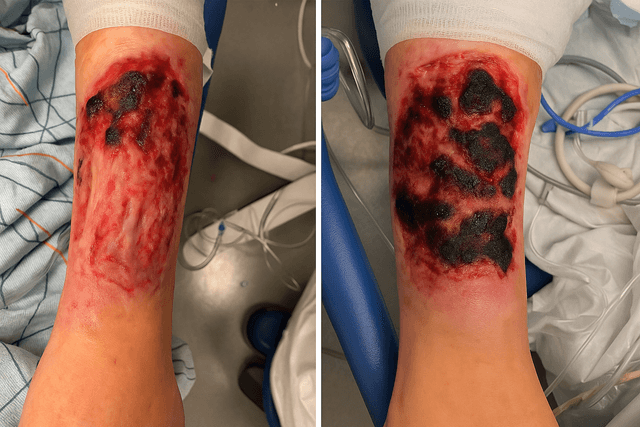
The most visible health effect of xylazine use shows up as severe skin ulcerations. Xylazine-associated wounds are thought to relate in part to vasoconstriction and reduced tissue perfusion, though pathogenesis is likely multifactorial[18].
These wounds follow a troubling pattern:
Wounds may begin as small lesions and can progress to larger, necrotic ulcers [6]
Painful, slow-healing necrotic ulcers develop next [18]
In severe cases, ulcers can extend into deep tissue and expose tendon or bone, sometimes requiring surgical care [6]
The ulcers show up both where people inject and on other body parts [18]. Clinically, xylazine-associated wounds may appear at injection sites and at non-injection sites, and they can be difficult to heal. Users really want to avoid these skin problems - 89% of illicit opioid users who know about xylazine contamination say they don't want it in their drugs because of these ulcers [2].
Clinicians have described fentanyl-xylazine exposure as producing complex withdrawal and pain management needs, sometimes contributing to premature discharge and poor follow-up [5]. MOUD (e.g., methadone or buprenorphine) treats opioid withdrawal and OUD, but it does not treat xylazine withdrawal; patients may need additional symptom-directed therapy (e.g., alpha-2 agonist strategies described in case reports) [18].
Xylazine withdrawal feels worse than opioid withdrawal, with users reporting sharp chest pains and seizures [7]. This often creates a dangerous cycle - about half of all hospital patients with xylazine exposure leave against medical advice [6].
These combined health risks make fentanyl-xylazine exposure especially dangerous because naloxone cannot reverse the xylazine component. Healthcare providers need new ways to handle both emergency cases and long-term care.
Specific protocols help address the unique challenges of fentanyl-xylazine overdoses. First responders should anticipate naloxone-incomplete overdoses and prioritize ventilation support (rescue breaths/airway management) alongside naloxone.
Professionals who work with highly potent drugs in healthcare and industry design workplaces to keep exposure below risk-relevant levels. In community overdose response, the goal is the same: help the patient while using standard precautions.
Wear gloves if available (standard body-fluid precautions still matter most).
Avoid aerosolizing powders (no shaking/bag dumping); keep unknown powders contained.
Wash hands after the encounter and avoid touching your face.
If you feel unwell after an exposure event, seek evaluation, but note that serious toxicity from brief incidental contact is uncommon.
Naloxone plays a vital role even when xylazine is involved. Naloxone can't reverse xylazine's effects but medical professionals should still use it in any suspected overdose to fight the opioid component [1]. Xylazine is most often detected alongside illicit fentanyl in overdose deaths, so naloxone should still be administered while providing ventilatory support [19]. Medical staff should give one dose every 2-3 minutes. If breathing does not improve after appropriate naloxone dosing, assume co-intoxicants and prioritize airway/ventilation support while awaiting EMS [20]. It's worth mentioning that using awakening as the endpoint for naloxone dosing can result in overadministration and unnecessary withdrawal [21]. The focus should be on getting breathing back to normal.
Clinicians: for ED titration and infusion strategy when recurrent hypoventilation occurs, see our companion post on naloxone dosing in the xylazine/nitazene/fentanyl-analogue era.
Rescue breathing becomes essential in xylazine overdoses. Because xylazine can depress breathing, rescue breaths can be lifesaving when naloxone produces only partial improvement [1]. Here's how to perform rescue breathing:
Clear the airway
Tilt the head back, lift the chin, pinch the nose
Give one breath every five seconds
Watch for chest rise [1]
Put unconscious people in the recovery position—slightly on their side with bent knee and face turned sideways. This prevents choking [8]. You should call 911 right away since xylazine effects might continue after naloxone administration [1]. Give dispatchers exact details about the substances involved and how the person responded to naloxone [8].
Good Samaritan laws enable people to seek help during overdoses safely. Many states have these laws that protect people from arrest, charges, or prosecution for drug possession when they report overdoses [22]. Protection levels vary by state. Some states only protect from prosecution while others offer broader protection from arrest [23]. Research shows states with arrest protection GSLs had 7% lower rates of all overdose deaths [23]. Drug users often fear law enforcement [23]. Knowledge about these laws affects whether people call for help. People who understand Good Samaritan laws are three times more likely to call 911 [22].
The rise of xylazine-laced fentanyl creates a serious threat to public health. Community-based harm reduction strategies are a great way to get protection for people at risk. These approaches save lives despite the challenges posed by fentanyl mixed with non-opioid sedatives like xylazine.
Naloxone plays a vital role even when xylazine is present. Anyone can carry naloxone, especially when you have people who use drugs or know someone who does [24]. The nasal spray works best when you insert the device into either nostril and press the plunger firmly [25]. You should call 911 right after administration [24]. Fentanyl and tranq combinations might need several doses [24].
Test strips help detect dangerous substances before use. The xylazine testing process is straightforward. Follow the manufacturer/public-health instructions; many guides use ~5–10 mg of sample (not micrograms) mixed with water. Dip to the wavy line for ~15 seconds, then read results at the specified window (often ~3–5 minutes) and do not read after 10 minutes [26]. A single band shows xylazine presence, while two bands indicate its absence [26].
The Never Use Alone hotline runs 24/7 at 800-484-3731 or 877-696-1996 [9]. The process works like this: callers share their location and use substances during the call. Operators will contact EMS if the person stops responding [9]. Every operator has lived experience and keeps all information confidential [9].
Xylazine wounds need specific care. Clean your wounds with soap and water every 2-3 days. Put ointment on gauze and cover with dry gauze [27]. You should get medical help quickly if wounds look unusual or show signs of infection [27].
Fentanyl-xylazine combinations mark a vital shift in America's drug crisis. This veterinary tranquilizer now shows up in almost a quarter of fentanyl powder seizures found in nearly a quarter of fentanyl powder seizures across 48 states. The drug's presence has changed our approach to overdose response completely.
Naloxone remains our primary defense, but it can't fight xylazine's non-opioid effects. Medical teams need to adjust their protocols and expectations. Rescue breathing plays a life-saving role in these complex overdoses, especially when narcan doesn't fully reverse breathing problems.
The health risks go way beyond immediate overdose dangers. The synergistic respiratory depression from this mix is lethal, while xylazine leaves behind painful skin ulcers and tissue death that last long after use. The withdrawal from this combination is incredibly hard to treat because current medications for opioid use disorder don't work on xylazine dependence.
Some practical solutions give us hope. First responders should continue using naloxone while recognizing its limitations. Communities do better with easy access to naloxone and proper training. Drug testing strips help users know what's in their supply. Never Use Alone hotlines provide a vital safety net. Teaching proper wound care helps deal with xylazine's unique skin damage.
We must act now on the fentanyl-xylazine crisis. Public health officials, medical providers, harm reduction specialists, and communities should collaborate to address this growing threat. Incomplete naloxone overdoses pose new challenges, but updated protocols and community education can save lives from this evolving drug supply. People's lives depend on how effectively we understand and respond to this altered landscape with evidence-based, compassionate approaches.
The rise of xylazine-laced fentanyl is creating a deadly crisis that traditional overdose treatments cannot fully address, requiring new emergency protocols and harm reduction strategies.
• Naloxone has critical limitations: While Narcan reverses fentanyl effects, it cannot counteract xylazine's sedative properties, making rescue breathing essential for survival.
• Xylazine contamination is widespread: 23% of seized fentanyl powder contains xylazine across 48 states, often without users' knowledge of this "tranq" mixture.
• Unique health risks emerge: Fentanyl-xylazine combinations cause severe skin ulcerations, enhanced respiratory depression, and withdrawal symptoms unresponsive to standard medications.
• Emergency protocols must adapt: First responders should still administer naloxone, but must prioritize rescue breathing and expect prolonged recovery times.
• Harm reduction saves lives: Drug testing strips, Never Use Alone services, proper wound care, and widespread naloxone access remain crucial despite treatment limitations.
The fentanyl-xylazine crisis represents an unprecedented challenge requiring immediate adaptation of overdose response protocols, enhanced community education, and comprehensive harm reduction approaches to prevent deaths from this increasingly common but dangerous drug combination.
Nalmefene (Opvee) is FDA-approved and longer-acting than naloxone, but major medical toxicology organizations state it should not replace naloxone as the primary opioid antidote at this time. However, it's important to note that, like Narcan, nalmefene is only effective against opioids, not other substances like xylazine.
If Narcan isn't available, performing rescue breathing is crucial. Clear the person's airway, tilt their head back, lift their chin, and give one breath every five seconds. This can provide life-saving oxygen until emergency services arrive. Always call 911 immediately in any suspected overdose situation.
Narcan remains partially effective against fentanyl-xylazine mixtures, but it has limitations. It can reverse the opioid effects of fentanyl but cannot counteract xylazine's sedative properties. Multiple doses of Narcan may be needed, and rescue breathing is often necessary to support the person's breathing.
Fentanyl-xylazine mixtures pose several distinct health risks. These include severe skin ulcerations and necrosis, enhanced respiratory depression due to the drugs' synergistic effects, and withdrawal symptoms that don't respond to standard opioid use disorder medications. The combination also increases the risk of fatal overdose.
Key harm reduction strategies include carrying and knowing how to use naloxone, utilizing drug test strips to detect fentanyl and xylazine, accessing Never Use Alone services for support during use, and learning proper wound care techniques. Community education and widespread naloxone distribution are also crucial in addressing this crisis.
© All copyright of this material is absolute to Medical toxicology
Dr. Omid Mehrpour (MD, FACMT) is a senior medical toxicologist and physician-scientist with over 15 years of clinical and academic experience in emergency medicine and toxicology. He founded Medical Toxicology LLC in Arizona and created several AI-powered tools designed to advance poisoning diagnosis, clinical decision-making, and public health education. Dr. Mehrpour has authored over 250 peer-reviewed publications and is ranked among the top 2% of scientists worldwide. He serves as an associate editor for several leading toxicology journals and holds multiple U.S. patents for AI-based diagnostic systems in toxicology. His work brings together cutting-edge research, digital innovation, and global health advocacy to transform the future of medical toxicology.
[1] - https://www.cdc.gov/overdose-prevention/about/what-you-should-know-about-xylazine.html
[2] - https://pmc.ncbi.nlm.nih.gov/articles/PMC11370410/
[3] - https://www.health.state.mn.us/communities/ep/han/2023/dec11xyl.pdf
[4] - https://www.aahealth.org/behavioral-health/prevention-and-education/naloxone-frequently-asked-questions
[5] - https://www.sciencedirect.com/science/article/pii/S0735675724004303
[6] - https://www.facs.org/for-medical-professionals/news-publications/news-and-articles/bulletin/2025/october-2025-volume-110-issue-9/surgeons-handle-new-and-alarming-pathology-xylazine-wounds/
[7] - https://pubmed.ncbi.nlm.nih.gov/35020700/
[8] - https://harmreduction.org/issues/overdose-prevention/overview/overdose-basics/responding-to-opioid-overdose/
[9] - https://neverusealone.com/
[10] - https://www.dea.gov/sites/default/files/2022-12/The Growing Threat of Xylazine and its Mixture with Illicit Drugs.pdf
[11] - https://nida.nih.gov/research-topics/xylazine
[12] - https://nida.nih.gov/publications/drugfacts/naloxone
[13] - https://www.samhsa.gov/sites/default/files/resourcefiles/sptac-understanding-naloxone-use-and-access.pdf
[14] - https://www.sciencedirect.com/science/article/abs/pii/S0376871624013759
[15] - https://www.health.ny.gov/diseases/aids/general/opioid_overdose_prevention/docs/resuscitation_training.pdf
[16] - https://open.northeastern.edu/aod/opioid-overdose-response-and-prevention/
[17] - https://our.unc.edu/abstract/cline-xylazine-induced-respiratory-depression-potential-additive-effects-with-fentanyl-and-potential-treatments/
[18] - https://www.jaad.org/article/S0190-9622(23)00594-7/fulltext
[19] - https://www.cdph.ca.gov/Programs/CCDPHP/sapb/CDPH Document Library/Issue-Brief-Xylazine_ADA.pdf
[20] - https://www.dhs.state.il.us/page.aspx?item=154552
[21] - https://www.acep.org/painmanagement/newsroom/june-2025/reining-it-in-xylazine-overdose2
[22] - https://www.countyhealthrankings.org/strategies-and-solutions/what-works-for-health/strategies/good-samaritan-drug-overdose-laws
[23] - https://pmc.ncbi.nlm.nih.gov/articles/PMC9529169/
[24] - https://www.cdph.ca.gov/Programs/CCDPHP/sapb/pages/naloxone.aspx
[25] - https://narcan.com/en/
[26] - https://health.oswegocountyny.gov/new_page/fentanyl_test_strips.php
[27] - https://www.oregon.gov/oha/PH/PREVENTIONWELLNESS/SUBSTANCEUSE/OPIOIDS/Documents/200-299810_Individual Xylazine Wound Management Guidelines Final.pdf
Keep reading
 Substance Abuse and Addiction
Amirhosein Shabrang
 Substance Abuse and Addiction
Omid Mehrpour
 Substance Abuse and Addiction
Omid Mehrpour
 Substance Abuse and Addiction
Omid Mehrpour