New Poisoning Research Could Improve Diagnosis and Treatment Decisions
post on 30 Jun 2026 · Updated 18 Sept 2026
post on 30 Jun 2026 · Updated 18 Sept 2026
 Medical Toxicologymedicaltoxic.com
https://medicaltoxic.com/news/new-poisoning-research-diagnosis-treatment
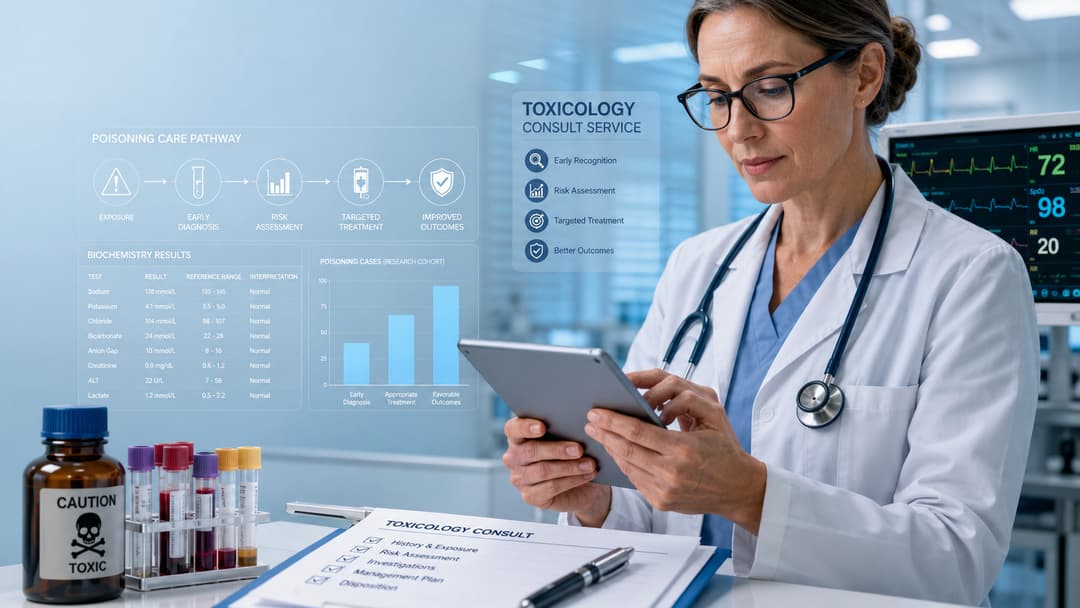
New Poisoning Research Could Improve Diagnosis and Treatment Decisions
New human studies suggest doctors may soon have better tools to identify high-risk poisoning patients earlier, using routine emergency department tests and clearer monitoring timelines.
Poisoning remains one of the most urgent problems in emergency medicine. Doctors often have to decide quickly who can be safely observed, who needs intensive care, and who may deteriorate despite looking stable at first.
A new group of human studies, identified through a PubMed poisoning update, points to a growing shift in toxicology: faster diagnosis, earlier risk assessment and more targeted treatment decisions. This shift toward mechanism-based decision-making also connects with How Mechanistic Medical Toxicology Is Shaping Next-Generation Patient Care.
Most of the research is retrospective, meaning it should not yet be treated as definitive guidance. But several studies offer practical findings that could help poison centres, emergency departments and intensive care teams improve the way poisoning cases are managed.
One of the most important studies developed a clinical score to predict multiple organ dysfunction syndrome after acute poisoning [A].
The study included 362 patients and found that pesticide poisoning, Glasgow Coma Scale score, neutrophil count, blood lactate and creatinine were linked with the risk of organ failure. These factors were combined into a score called P-GNLS.
The score performed strongly in the study, but the authors said it needs external validation before it is used widely.
The finding matters because these are routine emergency department measurements. A reliable score could help clinicians identify patients who need early intensive care review, closer monitoring or transfer to a specialist centre.
Another study focused on acute diquat poisoning, a serious herbicide poisoning that can be difficult to assess when specialist toxin levels are unavailable. For broader context on why herbicide identity matters in clinical risk assessment, see Herbicides: Why the Name on the Bottle Is Not Enough.
Researchers developed a bedside prognostic model using five clinical factors: white blood cell count, lactate, renal insufficiency, respiratory failure and myocardial injury [B].
The model showed good performance in both training and validation groups. For hospitals without rapid access to plasma diquat testing, this type of tool could help doctors make earlier decisions about escalation of care.
The study does not prove that the model is ready for routine use everywhere, but it highlights a practical direction for resource-limited settings.
Methanol poisoning can cause blindness, organ failure and death if treatment is delayed.
A retrospective study of adults with methanol poisoning found that patients who died had higher lactate levels at presentation and poorer lactate clearance over time [C].
The study also found that anion gap and base excess may help predict intensive care need and possible discharge.
These findings support the use of routine blood gas and biochemical markers as part of early risk stratification. They do not replace antidotes, dialysis decisions or specialist toxicology advice, but they may help clinicians recognise deterioration sooner.
A case series from the 2024 Oregon paralytic shellfish poisoning outbreak gives practical information on how symptoms progress after saxitoxin exposure [D].
In the analysed cases, symptoms began up to 3.5 hours after ingestion. Severe progression occurred within six hours, and no patient had further symptom progression after 13 hours.
This could help poison centres and emergency departments think about observation periods after suspected paralytic shellfish poisoning. For another seafood-toxin example relevant to public health monitoring, see Domoic Acid Poisoning: Hidden Dangers in Seafood You Need to Know.
Because the study was small, it should not be used as a universal rule. But it provides useful real-world data for a condition where monitoring decisions can be difficult.
A study of Gelsemium elegans poisoning used advanced mass spectrometry to identify toxic alkaloids in infused wine and patient samples [E].
The researchers found several toxic compounds and reported that humantenine was detected in urine from all poisoned individuals in the study.
This finding may be important for public health laboratories and toxicology services investigating plant-related poisoning outbreaks, especially where homemade infused drinks or traditional preparations are involved.
It is not yet a standard bedside diagnostic test, but it could improve laboratory confirmation in suspected cases.
Carbon monoxide poisoning can appear to improve before delayed neurological problems develop. A practical overview of diagnosis and treatment is available in Understanding Carbon Monoxide (CO) Poisoning: Diagnosis, Symptoms, and Treatment.
Two studies examined prediction of delayed encephalopathy after acute carbon monoxide poisoning. One found that cognitive reserve, C-reactive protein, hyperbaric oxygen sessions and glucocorticoid treatment were associated with delayed encephalopathy risk [F]. Another developed a prediction model using length of stay, comorbidities, carboxyhaemoglobin and post-discharge hyperbaric oxygen therapy [G].
These studies do not settle treatment debates in carbon monoxide poisoning. However, they underline the importance of follow-up and early identification of patients at risk of later cognitive decline.
A paediatric paracetamol poisoning study found that most children presented early, many were asymptomatic and serious outcomes were not seen in the cohort [H].
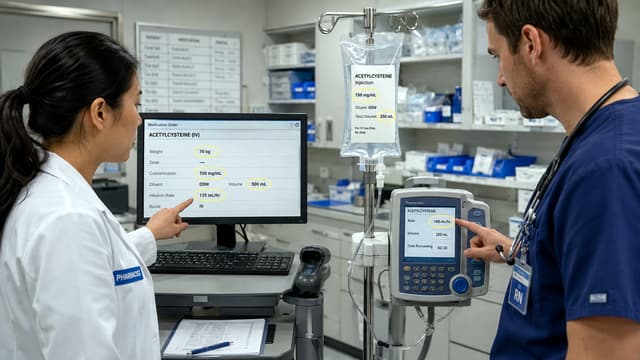
Only a small number had serum paracetamol concentrations above the Rumack–Matthew treatment line, while some received N-acetylcysteine.
The study supports careful early assessment, timed paracetamol levels and appropriate use of established treatment pathways. For acetaminophen-specific risk assessment, RumackCalc: Fast, Accurate Acetaminophen Overdose Assessment provides a focused clinical companion. It also highlights the need to avoid both missed toxicity and unnecessary treatment.
The most important message from these studies is not that poisoning treatment has suddenly changed. It is that clinicians may soon have better ways to make early decisions.
The strongest themes are:
using routine blood tests and clinical signs to predict deterioration;
identifying patients who need intensive care earlier;
improving observation periods after specific toxin exposures;
strengthening laboratory confirmation for unusual poisonings;
recognising delayed complications after carbon monoxide exposure.
Most of the evidence still needs prospective, multi-centre validation. But the direction is clear: poisoning care is becoming more data-driven, earlier and more precise.
Ye S, Gui J, Zhou P, Shi Y, Tang H, Zhang D, et al. Development and internal validation of a parsimonious clinical score for multiple organ dysfunction syndrome following acute poisoning: a retrospective cohort study. BMC Emerg Med. 2026;26(1):146. doi:10.1186/s12873-026-01576-x. PMID:41942846.
Zhang Y, Chen X, Zhao M, Du H, Jiang X, Cai X, et al. Development and validation of a bedside prognostic model for in-hospital mortality in acute diquat poisoning. BMC Emerg Med. 2026;26(1):80. doi:10.1186/s12873-026-01503-0. PMID:41699477.
Ermete Güler E, Bora ES, Efgan MG, Bilgin S. Beyond lactate: prognostic value of metabolic and biochemical parameters in methanol poisoning — a retrospective observational study. BMC Emerg Med. 2026;26(1):71. doi:10.1186/s12873-026-01492-0. PMID:41654740.
Horowitz KM, Cowdery CP, Hendrickson RG. Clinical features of paralytic shellfish poisoning: a case series from the 2024 Oregon outbreak. J Med Toxicol. 2026;22(1):39-43. doi:10.1007/s13181-025-01112-6. PMID:41315144.
Lu Z, Ye L, Anzhong W, Junfei H, Runsang P, Hua G, et al. Identification and detection of toxic substances involved in Gelsemium elegans Benth poisoning case. Sci Rep. 2026;16(1):12087. doi:10.1038/s41598-026-39403-9. PMID:41786808.
Chen S, Yu J, Wang M, Ren Y. Effect of cognitive reserve on delayed encephalopathy after acute CO poisoning occurrence and developmental trajectories of cognition. Neurol Sci. 2026;47(5):443. doi:10.1007/s10072-026-09033-0. PMID:42002680.
Gong H, You C, Chen X, Zhu Y, Wang Y. Study on the construction of a predictive model for delayed encephalopathy after acute carbon monoxide poisoning. BMC Neurol. 2026;26(1):158. doi:10.1186/s12883-026-04714-x. PMID:41654772.
Karabacak B, Özaydın E. Clinical characteristics and outcomes of pediatric paracetamol poisoning presenting to the emergency department. BMC Pediatr. 2026;26(1):505. doi:10.1186/s12887-026-06885-5. PMID:41998668.
Keep reading
Latest Research and Studies
29 Sept 2026 · Updated 02 Oct 2026
Latest Research and Studies
19 Sept 2026 · Updated 01 Oct 2026
Latest Research and Studies
05 Aug 2026 · Updated 01 Oct 2026
Latest Research and Studies
27 Jul 2026 · Updated 01 Oct 2026