Environmental and Occupational Toxicology
Herbicides: Why the Name on the Bottle Is Not Enough
Omid Mehrpour
Post on 16 Apr 2026 . 11 min read.

Omid Mehrpour
Post on 16 Apr 2026 . 11 min read.
Every spring, the same little drama returns.
People head out to the garden, the driveway, the fence line, the farm, the flower beds, and that one patch of earth where weeds seem to grow with personal ambition.
Then the bottles come out.
Herbicides.
For most people, herbicides are just practical tools. Something for the yard. Something for the field. Something to make unwanted green things stop being green. But in toxicology, “herbicide” is not the name of one poison. It is the name of a crowded chemical family. Some members are mostly irritants. Some are troublemakers. Some are severe. And some can be devastating.
So let’s bury the first misconception right away.
No, herbicides are not all basically the same. No.
A lot of people assume that if one herbicide mostly causes nausea and vomiting, the rest are just variations on that theme. Or they assume the opposite: if one herbicide is notorious, then they must all be equally terrifying.
Neither version holds up.
Real-world toxicity depends on the agent, the dose, the route, the time since exposure, co-ingestants, the patient’s underlying condition, and something else people often overlook: what else is in the bottle besides the “active” ingredient.
That last part matters more than it sounds.
The issue is the poison… wait, the issue is the formulation, not just the poison.
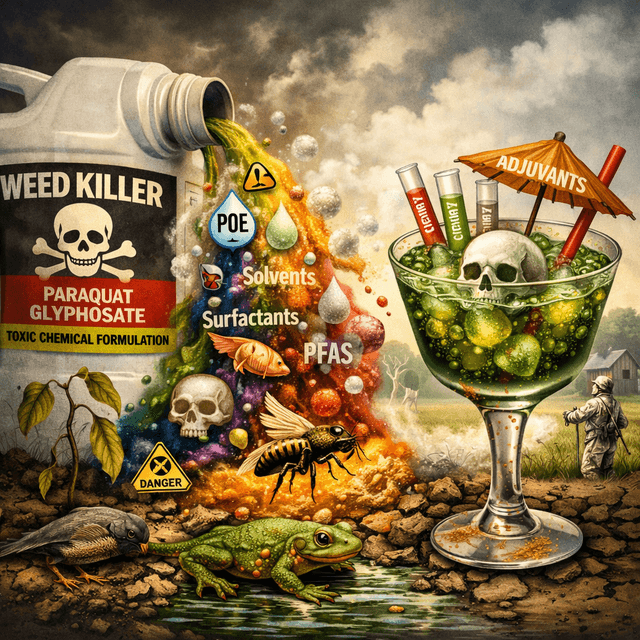
Because commercial herbicide products are usually not just one chemical floating around by itself. They often contain surfactants, solvents, and other additives that help the product spread, stick, penetrate, or work better on plants. In humans, those same helpers may substantially shape the toxicity picture.
Sometimes they are not supporting actors.
Sometimes they steal the whole scene.
On paper, herbicides can be classified in tidy ways: by chemical structure, by mechanism of action, by whether they are selective or nonselective, even by WHO toxicity categories based on LD50.
Useful? Yes.
Sufficient at the bedside? Not always.
Because those systems do not reliably predict how sick a real human will become after exposure to a real commercial product in a real-world setting. Dose matters. Route matters. Time course matters. Formulation matters. Patient factors matter.
History matters. Formulation matters.
That is why a bottle with the same active ingredient can behave differently from another product that looks, at first glance, like its twin.
This is one of the most important concepts in herbicide toxicology.
Commercial products are mixtures. The active ingredient gets the headline, but co-formulants can drive a major share of human toxicity. Surfactants and solvents may improve plant penetration, yet in human exposures they may increase irritation, worsen absorption, or contribute substantially to systemic effects.
Glyphosate is the classic place where this conversation gets muddy. Public discussions often swing between two extremes: either glyphosate is portrayed as pure evil, or it is brushed off as nearly harmless. The truth, clinically, is more annoying and more useful. The toxicity of a glyphosate-based product is not just about glyphosate. It is about the full product.
And that pattern is not unique to glyphosate.
The label tells you something.
The formulation tells you much more.
Herbicide poisoning does not look identical across regions. Availability matters. Regulation matters. Agricultural practice matters. Intent matters.
In developed countries such as the United States, many exposures are mild. Small unintentional ingestions. Limited dermal contact. Ocular splashes. Low-risk occupational scenarios. Those often do well with supportive care and appropriate decontamination.
Intentional ingestions are a different beast.
Particularly in parts of the world where highly toxic herbicides are more accessible, severe poisoning and death remain major public health problems. Paraquat, in particular, has long stood out as one of the deadliest herbicides in human poisoning.
Geography gets a vote here.
Policy does too.
Restrictions on highly hazardous herbicides have been associated with reduced mortality in several settings. That is not a tiny detail. That is toxicology shaking hands with public health.
Herbicide diagnosis often depends heavily on history and product identification.
Not glamorous. Still true.
The exact product name, brand label, concentration, formulation, estimated amount, route of exposure, and timing may matter more than any single lab test. For many herbicides, confirmatory testing is unavailable, delayed, or simply not useful in the acute clinical moment.
So if the presentation is nonspecific, and it often is, you need a high index of suspicion.
Bring the bottle if you have it.
A photo helps too.
That sounds almost too obvious, yeah? But this is one of those times when obvious is doing real work.
Acute herbicide poisoning is managed supportively more often than not. That does not mean casually. It means carefully.
The opening moves are the same ones that matter in good toxicology over and over again:
Airway, breathing, circulation
Early assessment of mental status and vital signs
Monitoring for evolving organ dysfunction
Acid-base evaluation when clinically indicated
Serial labs when the exposure or symptoms warrant it
Skin decontamination for dermal exposures
Ocular irrigation for eye exposures
Early activated charcoal in selected recent ingestions
Gastric lavage only rarely, and not as some reflexive theatrical gesture
Prolonged observation when the exposure is intentional, the product is high risk, or delayed toxicity is expected
Enhanced elimination for selected agents in selected contexts
No, gastric lavage is not the answer to every poisoning. No.
Observation matters.
Timing matters.
Some patients declare themselves early. Others do not. That is especially important with agents like glufosinate, where serious neurologic toxicity may show up later than you would like.
Herbicide toxicity is not a one-road system.
Some cause oxidative stress.
Some disrupt mitochondria.
Some behave like uncouplers.
Some create functional hypoxia.
That variation explains why two patients can both say, “I swallowed weed killer,” and end up with very different syndromes.
Back to the point.
If you want to think clearly about herbicides, think in patterns: target organ, route, dose, timing, and toxidrome. That is the frame.
If there is one herbicide that deserves a red warning light around its name, paraquat is near the front of the line. Its major mechanism is free radical generation with oxidative injury. The classic target organ is the lung, with risk of progressive pulmonary injury and pulmonary fibrosis.
The early picture may include oral burns and gastrointestinal symptoms. Then renal injury may emerge. Then respiratory failure may follow later.
That delay is part of what makes it so cruel.
One of the classic board-style pearls here is that oxygen can worsen toxicity. Prognosis can be poor, and management is largely supportive, sometimes with early extracorporeal approaches considered depending on the case and setting.
This is not just a “garden product gone wrong.”
This can become an ICU story.
Diquat is often mentioned next to paraquat because both involve oxidative injury, but diquat is not just paraquat in different packaging. The big distinction is that diquat does not classically produce the same pulmonary fibrosis picture. Instead, the kidney and central nervous system are more prominent targets.
Think acute kidney injury.
Think confusion.
Think seizures.
That difference matters. Because “same family” does not mean “same clinical movie.”
Glyphosate has become famous enough to be misunderstood in both directions. Clinically, the key point is that many glyphosate product exposures are as much about the formulation as the active ingredient. Patients may present with gastrointestinal irritation, vomiting, diarrhea, hypotension, and metabolic acidosis in more severe cases.
So when somebody says, “It was just glyphosate,” that sentence is not finished.
The real question is: which product?
Sometimes “glyphosate-based herbicide” tells you more than “glyphosate” alone.
Glufosinate is worth remembering because of its delayed neurotoxicity. Patients may look relatively stable at first, then later develop seizures, depressed mental status, coma, or apnea.
That delay is the trap.
If a patient seems fine early after a glufosinate exposure, that does not automatically close the case. Observation may need to be longer than people expect, and supportive care often centers on airway protection and seizure management.
We have all been there: the case that looks calm until it suddenly is not.
These are not just “nausea and go home” exposures when serious poisoning occurs. They can produce weakness, myalgias, metabolic acidosis, rhabdomyolysis, and renal injury. In significant cases, urinary alkalinization may enhance elimination.
So if someone says, “I only drank a little,” and later develops muscle pain, weakness, dark urine, or a climbing creatine kinase, that is not a nothing-burger anymore.
Dicamba is generally lower-acuity than some of the heavy hitters, and many cases involve gastrointestinal irritation and do well with supportive care. Still, low toxicity is not the same as no toxicity. Rare severe effects, including rhabdomyolysis and pancreatitis, have been reported.
Less dangerous? Often.
Automatically benign? No.
Propanil deserves special attention because it can lead to methemoglobinemia and hemolysis. This is one of those cases where mechanism and bedside clue line up nicely. Toxic metabolites impair hemoglobin’s ability to deliver oxygen effectively, leading to tissue hypoxia, acidosis, and potentially serious end-organ effects.
The classic clue is cyanosis that does not improve the way you expect with oxygen.
That should make you stop.
Think methemoglobinemia.
Treatment centers on methylene blue when appropriate, alongside supportive care.
If the patient looks gray or blue and the pulse oximeter story feels wrong, trust that discomfort. If it does not smell right clinically, it probably is not right.
Atrazine helps bring a little balance back into the conversation. Not every herbicide is paraquat. Atrazine generally has lower acute toxicity, and many exposures are limited to mild gastrointestinal effects. That does not mean ignore it. It means keep your calibration honest.
Everything does not have to be apocalyptic.
Fortunately, occupational and secondary exposures rarely cause significant toxicity. Standard precautions are usually sufficient for healthcare workers. Many routine dermal or incidental low-level exposures are manageable and do not turn into major systemic poisonings.
This is where common sense helps.
Not every splash is a catastrophe.
Not every bottle is a wolf.
Still, the route matters, the product matters, and symptoms matter. A low-risk skin exposure is not the same as a concentrated intentional ingestion. Seems obvious. It is. It still gets missed.
A few red flags should move the needle fast:
Intentional ingestion
Unknown amount
Concentrated product
Oral burns or significant gastrointestinal injury
Hypotension
Progressive respiratory symptoms, especially after paraquat
Delayed seizures or declining mental status after glufosinate
Acute kidney injury or prominent neurologic findings after diquat
Myalgias, weakness, dark urine, or rhabdomyolysis after phenoxy herbicides
Cyanosis not responding appropriately to oxygen after propanil
These are the moments when “watch and wait” can become the wrong kind of optimism.
What helps is surprisingly unflashy:
The exact product name
The label
A photo of the bottle
The time of exposure
The route of exposure
The estimated amount
Current symptoms
Co-ingestants if any
That information is gold.
For dermal and ocular exposures, prompt irrigation and decontamination matter. For uncertain or potentially serious exposures, early consultation with a poison center or medical team matters.
What does not help?
Homemade poisoning folklore.
Forced vomiting at home. Mystery mixtures. Assuming “nothing has happened yet, so everything is probably fine.” That line of thinking is especially risky with agents that can declare themselves late.
Herbicides look simple from across the yard. One bottle. One purpose. Kill the weeds. End of story.
But clinically, that is where the story starts.
Some are primarily irritants. Some are neurotoxic. Some target kidney or muscle. Some cause methemoglobinemia. Some are usually mild. Some can be devastating. And some, like paraquat, still deserve genuine respect the moment they enter the history.
So, in short:
Herbicides are not one poison.
Each product has its own toxic personality.
The active ingredient matters.
The formulation matters too.
And in real clinical toxicology, the tiny print on the label may matter just as much as the giant word on the front.
Not all herbicides behave alike. Paraquat, diquat, glyphosate products, glufosinate, phenoxy herbicides, dicamba, propanil, and atrazine do not read from the same script.
Formulation can be as important as the active ingredient. Co-formulants, especially surfactants and solvents, may significantly shape toxicity.
Good toxicology thinking is pattern-based. History, route, dose, timing, target organ, and delayed effects often matter more than the label alone.
© All copyright of this material is absolute to Medical toxicology
Dr. Omid Mehrpour (MD, FACMT) is a senior medical toxicologist and physician-scientist with over 15 years of clinical and academic experience in emergency medicine and toxicology. He founded Medical Toxicology LLC in Arizona and created several AI-powered tools designed to advance poisoning diagnosis, clinical decision-making, and public health education. Dr. Mehrpour has authored over 250 peer-reviewed publications and is ranked among the top 2% of scientists worldwide. He serves as an associate editor for several leading toxicology journals and holds multiple U.S. patents for AI-based diagnostic systems in toxicology. His work brings together cutting-edge research, digital innovation, and global health advocacy to transform the future of medical toxicology.