New Case Series Links Uncommon Agrochemicals to Acquired Methemoglobinemia
post on 27 Jul 2026 · Updated 01 Oct 2026
post on 27 Jul 2026 · Updated 01 Oct 2026
 Medical Toxicologymedicaltoxic.com
https://medicaltoxic.com/news/agrochemical-poisoning-methemoglobinemia-case-series
New Case Series Links Uncommon Agrochemicals to Acquired Methemoglobinemia
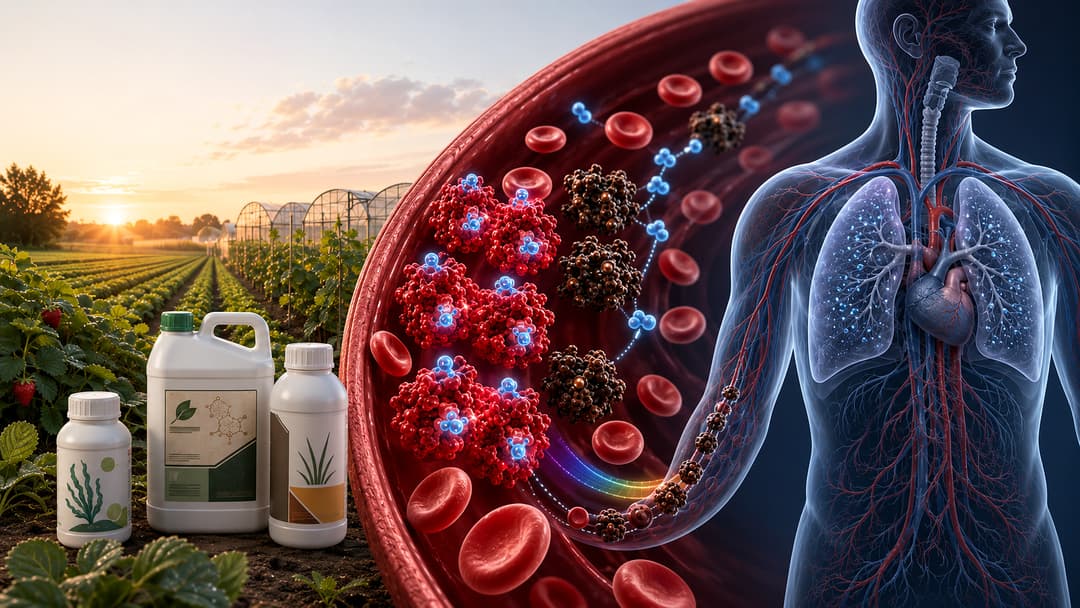
A newly published rapid communication in Clinical Toxicology reports acquired methemoglobinemia after intentional exposure to several uncommon agrochemical products.
The report matters because the central clinical pattern—cyanosis, persistently low pulse-oximetry readings and an unexpectedly poor response to supplemental oxygen—can be mistaken for primary lung disease, cardiac disease or a more familiar pesticide toxidrome. [A]
Some of the implicated products were described as biological pesticides, plant-growth products or less familiar agricultural formulations. Their packaging or marketing category may create an impression of lower toxicity, but those descriptions do not establish safety after intentional ingestion.
The paper, “Acquired methemoglobinemia from intentional exposure to uncommon agrochemicals: a case series,” was published online on 16 July 2026. The listed authors are Ramaswamy Nagappan, Nilabh Prasad Singh and Krishnadutt Chavali. The journal classifies it as a rapid communication. [A]
The full peer-reviewed text was not openly accessible during this editorial review. A publicly available APAMT conference abstract from the same institution and lead author appears to describe the underlying clinical cohort, although its author list is not identical to that of the final publication. The conference data therefore provide useful context but should not automatically be treated as an exact reproduction of every detail in the final article. [B]
The APAMT abstract described a retrospective review of 101 patients presenting to a tertiary-care centre over two years after intentional agrochemical exposure.
Five patients developed clinically significant methemoglobinemia. The group included four men and one woman between 15 and 35 years of age. Reported products included:
a biological pesticide;
a plant-growth stimulant containing an extract of Ascophyllum nodosum and other ingredients;
the fungicide validamycin;
the herbicide propanil;
a product containing 2,4-D ethyl ester.
The patients presented between six and 24 hours after exposure. Reported findings included central cyanosis, low oxygen saturation on pulse oximetry and oxygen readings that did not improve as expected during oxygen therapy. Other findings included hematuria, chest pain and pulmonary edema. Measured methemoglobin concentrations ranged from 20% to 40%. [B]
All five patients received intravenous methylene blue, while two also received vitamin C. Methemoglobin concentrations reportedly fell below 20% within one hour and returned to normal within 24 to 48 hours. All five patients survived.
Because these figures come from the conference abstract, they should be presented as contextual data from the earlier report rather than assumed to represent every finalized detail of the peer-reviewed rapid communication.
Methemoglobinemia is already recognized after exposure to several medicines and oxidizing chemicals. What makes this report notable is the range of agricultural formulations involved, including products that may not immediately appear to clinicians or consumers as classic causes of dyshemoglobinemia.
The term “agrochemical” describes a product category, not one toxicological mechanism. Two products used for similar agricultural purposes can contain different active ingredients, solvents, surfactants and other formulation components.
That distinction is central to Herbicides: Why the Name on the Bottle Is Not Enough, which explains why clinical risk assessment must consider the full formulation, timing, route and patient presentation—not merely the word printed most prominently on the container.
A product described as biological, natural or plant-derived should not automatically be assumed harmless after ingestion. At the same time, this case series does not show that ordinary occupational or label-compliant use of these products causes methemoglobinemia.
Normal hemoglobin contains iron primarily in the ferrous state, which allows it to bind oxygen.
Oxidizing agents can convert part of that iron into the ferric state, creating methemoglobin. Methemoglobin cannot carry oxygen normally. It also affects oxygen release by the remaining functional hemoglobin, further limiting delivery to tissues.
The result is functional hypoxia: oxygen may be entering the lungs and may even be present as dissolved oxygen in arterial blood, but hemoglobin cannot transport and release it normally. Established diagnostic and treatment recommendations describe cyanosis, headache, dizziness, dyspnea, neurological symptoms and cardiovascular instability among possible manifestations, depending on severity and patient-specific factors. [E]
Conventional pulse oximetry estimates oxygen saturation indirectly. It does not reliably distinguish every abnormal hemoglobin species.
A patient with methemoglobinemia may therefore have a persistently low pulse-oximetry reading even while receiving supplemental oxygen. At the same time, the arterial partial pressure of oxygen may be relatively preserved because that measurement reflects oxygen dissolved in plasma rather than oxygen carried by hemoglobin.
The discrepancy is commonly described as a saturation gap.
Confirmation generally requires co-oximetry, which uses multiple wavelengths of light to measure different hemoglobin species directly. Dark or chocolate-brown blood can be a useful clue, but blood color alone should not establish the diagnosis. [E]
Routine toxicology screening may also fail to identify the responsible agrochemical or formulation component. The broader limitations of rapid screening are examined in Drug Screens Lie: A Clinician’s Guide to Interpreting Toxicology Tests Safely, which emphasizes that a negative screening result cannot overrule a convincing physiological toxidrome.
Acquired methemoglobinemia can follow exposure to a range of medicines and chemicals, including dapsone, topical anesthetics, nitrites, aniline compounds, naphthalene and certain pesticides.
A 2024 retrospective analysis found that dapsone was the most frequently identified cause in both pediatric and adult cases at one US academic medical centre. [F]
Topical products containing agents such as benzocaine represent another clinically important source. The broader risk assessment for these exposures is covered in Personal Care Cosmetics and Topical Products Management.
Naphthalene exposure may produce both methemoglobinemia and hemolysis, especially in susceptible patients. Parents and clinicians can find additional background in Mothball Poisoning in Children: Emergency Response Guide for Parents.
Propanil is one of the better-documented agricultural causes of methemoglobinemia.
A seven-year retrospective cohort from a poison centre in Thailand included 275 patients with acute propanil ingestion. Methemoglobinemia occurred in 108 patients, or 39.3%, while hemolysis was reported in 25 patients, or 9.1%.
The median onset of methemoglobinemia was 5.5 hours. Hemolysis developed later, at a median of 48 hours. The overall mortality rate was 6.2%, and neurological symptoms, methemoglobinemia and acute kidney injury were associated with moderate-to-severe outcomes. [D]
These figures apply to the propanil cohort and should not be transferred to the biological pesticide, validamycin, plant-growth stimulant or 2,4-D formulation described in the smaller report.
A separate 2026 ten-year retrospective study identified dapsone and propanil as the leading causes in its clinical population. It also found that shock at presentation was an important marker of fatal outcome, probably reflecting severe concurrent systemic complications rather than methemoglobinemia alone. [C]
Treatment depends on clinical severity, measured methemoglobin concentration, ongoing absorption and individual patient factors.
Immediate priorities include:
stopping further exposure;
supporting the airway and ventilation;
confirming the diagnosis with co-oximetry when available;
identifying the exact formulation;
evaluating for co-ingestants and other complications;
considering methylene blue when clinically indicated;
monitoring for recurrence or delayed complications.
Methylene blue can accelerate enzymatic reduction of methemoglobin back toward functional hemoglobin. It is not appropriate in every circumstance, and treatment requires particular caution in patients with glucose-6-phosphate dehydrogenase deficiency or other relevant contraindications. [E]
The fact that two patients in the conference abstract also received vitamin C does not establish the independent effectiveness of vitamin C. The case series was not a comparative treatment trial and cannot determine which component of therapy produced the observed improvement.
Clinicians evaluating unexplained cyanosis after a pesticide or agricultural-product exposure should attempt to obtain:
the original container;
photographs of every label panel;
the safety data sheet;
the complete active-ingredient list;
declared solvents and surfactants;
the estimated time and route of exposure;
information about other substances taken.
The exact product formulation can substantially change the expected clinical syndrome.
When product identity is incomplete, consultation with a regional poison centre or medical toxicologist can help interpret the likely mechanism, identify delayed complications and coordinate specialized testing. The Role of Poison Center Calls: Managing Poisoning Cases from Emergency Calls to Critical Decisions provides additional context on why these consultations matter when the exposure history is uncertain.
The publication should not be interpreted as evidence that:
a new national outbreak is occurring;
agrochemical-associated methemoglobinemia is increasing;
every biological pesticide is dangerous;
normal agricultural use produces the same risk as intentional ingestion;
all products within the listed categories contain the same oxidizing agent;
methylene blue will produce the same response in every patient;
clinical treatment guidelines have changed.
The reported series was small, retrospective and based on intentional exposures treated at a tertiary-care centre. The product compositions may not be generalizable across manufacturers or countries.
The study identifies an important diagnostic signal. It does not provide a population-level estimate of risk.
Agricultural products should remain in their original containers and should never be transferred into drink bottles, food containers or unlabelled household containers.
After an unexpected ingestion or substantial exposure:
do not induce vomiting;
keep the product container available;
move away from inhalational exposure when it is safe to do so;
remove contaminated clothing when appropriate;
contact a poison centre or emergency service;
follow product-specific professional instructions.
In the United States, Poison Control: Your Lifeline in Emergencies explains how the national poison hotline and specialist centres support both the public and healthcare professionals.
Emergency services should be contacted immediately when a person develops blue or grey lips, breathing difficulty, severe confusion, seizures, collapse or loss of consciousness.
When the exposure was intentional, emergency toxicology care should be accompanied by appropriate mental-health assessment and measures to reduce the risk of recurrence.
The new Clinical Toxicology publication expands the range of agrochemical products that clinicians may need to consider when investigating acquired methemoglobinemia.
Its most important message is not that all agrochemicals carry equal risk. It is that an unfamiliar or apparently biological formulation should not be dismissed when the physiology suggests impaired hemoglobin function.
Persistent cyanosis, low pulse-oximetry readings and an inadequate apparent response to supplemental oxygen should prompt consideration of methemoglobinemia. Co-oximetry, exact product identification, supportive care and early toxicology consultation remain the most defensible clinical priorities.
Yes. Certain agrochemicals and formulation ingredients can oxidize hemoglobin and cause acquired methemoglobinemia. The risk varies substantially by product, ingredient, dose, route and circumstances of exposure.
Supplemental oxygen cannot make methemoglobin carry oxygen normally. Pulse oximetry may remain abnormal even when dissolved oxygen in arterial blood is adequate. Co-oximetry is generally required for confirmation.
The publicly accessible conference abstract listed a biological pesticide, a seaweed-extract plant-growth stimulant, validamycin, propanil and a 2,4-D ethyl ester product. The final peer-reviewed article should be consulted for its definitive case descriptions.
No. Treatment depends on symptoms, methemoglobin concentration, ongoing exposure and patient-specific risks. Methylene blue is commonly considered for clinically significant cases but requires professional assessment.
No. The cases involved intentional exposure. The report does not estimate risk from normal, label-compliant agricultural use.
A. Nagappan, R., Singh, N. P., & Chavali, K. (2026). Acquired methemoglobinemia from intentional exposure to uncommon agrochemicals: A case series. Clinical Toxicology. Advance online publication.
B. Nagappan, R., Shukla, P. K., Rajan, S., & Chavali, K. (n.d.). Acquired methemoglobinemia due to intentional exposure to uncommon agrochemicals: A retrospective case series. 22nd Scientific Congress of the Asia Pacific Association of Medical Toxicology.
C. Tansuwannarat, P., et al. (2026). A 10-year retrospective study of patients with acquired methemoglobinemia: Causative agents, clinical characteristics, and outcomes. Clinical Toxicology.
D. Rittilert, P., Sriapha, C., Tongpoo, A., Pradoo, A. O., Wananukul, W., & Trakulsrichai, S. (2022). Clinical characteristics, treatment and outcomes of acute propanil poisoning in a seven-year retrospective cohort study. Toxicology Reports, 9, 1180–1188.
E. Iolascon, A., Bianchi, P., Andolfo, I., et al. (2021). Recommendations for diagnosis and treatment of methemoglobinemia. American Journal of Hematology, 96(12), 1666–1678.
F. Belzer, A., et al. (2024). Causes of acquired methemoglobinemia: A retrospective study. Toxicology Reports, 12, 331–337.
Keep reading
Latest Research and Studies
29 Sept 2026 · Updated 02 Oct 2026
Latest Research and Studies
19 Sept 2026 · Updated 01 Oct 2026
Latest Research and Studies
05 Aug 2026 · Updated 01 Oct 2026

Latest Research and Studies
27 Jul 2026 · Updated 01 Oct 2026