New Poisoning Research Points to Faster ED Triage, Methanol Mortality Markers and Safer AI Use in Toxicology
post on 06 Jul 2026 · Updated 30 Sept 2026

post on 06 Jul 2026 · Updated 30 Sept 2026
 Medical Toxicologymedicaltoxic.com
https://medicaltoxic.com/news/poisoning-ed-triage-methanol-ai-safety

New Poisoning Research Points to Faster ED Triage, Methanol Mortality Markers and Safer AI Use in Toxicology
Emergency poisoning care is becoming more structured, with new research pointing to faster triage, earlier recognition of high-risk cases and more cautious use of artificial intelligence in toxicology.
A recent emergency medicine guideline for suspected but unidentified poisoning says clinicians should not wait for the exact toxin to be known before acting. Instead, early assessment should focus on vital signs, mental status, ECG, blood gas testing, renal and liver markers, and specialist poison advice when needed [1]. This fits closely with MedicalToxic’s related article, The Role of Poison Center Calls: Managing Poisoning Cases from Emergency Calls to Critical Decisions, which explains why expert consultation remains central when exposure details are incomplete.
Methanol poisoning remains time-critical because delayed treatment can cause severe acidosis, blindness or death. In a retrospective emergency department study of 116 methanol-poisoned patients, 27 died. Lower pH and bicarbonate, and higher base deficit, anion gap and lactate, were associated with death, while blood methanol level itself did not correlate with mortality [2].
The finding supports an ED approach in which blood gas results and acid-base markers are treated as early warning signals, especially when confirmatory toxicology testing is delayed. For readers who need broader toxic alcohol context, What Happens If You Drink Antifreeze: Critical Symptoms You Can't Ignore explains why rapid recognition and antidotal treatment are crucial in toxic alcohol poisoning.
Paraquat poisoning is another high-risk exposure where early severity assessment can be difficult. A retrospective study found that patients with above-normal creatinine from day two to day six after paraquat overdose had a much higher risk of death than those with normal creatinine [3].
The result suggests that serial kidney-function monitoring may help identify patients who need closer observation, specialist consultation and escalation planning when direct paraquat levels are unavailable. This also connects with Herbicides: Why the Name on the Bottle Is Not Enough, which highlights why herbicide risk assessment must go beyond the product name alone.
Overdose care is not limited to illicit substances. In a frail 80-year-old patient who accidentally received a large binimetinib overdose, clinicians used model-informed precision dosing to estimate drug washout and guide safe treatment resumption. Therapy restarted after 36 hours, close to the modelled safe window, and the patient tolerated reinitiation [4].
Although this was a single case, it shows how pharmacokinetic modelling may help manage complex medication overdoses where stopping treatment for too long also carries risk. It also reinforces the message in Drug Screens Lie: A Clinician’s Guide to Interpreting Toxicology Tests Safely: toxicology results must be interpreted alongside the patient’s clinical condition, timing and exposure history.
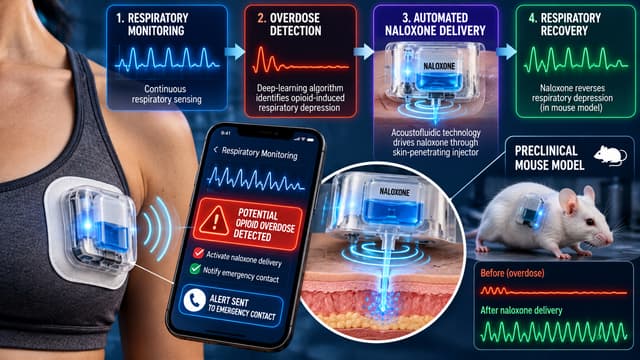
A prospective feasibility study found that smartphone-based ecological momentary assessment was acceptable among people who use opioids. Participants answered twice-daily prompts about opioid use, overdose experiences and naloxone access, with high completion rates. Two participants reported overdose events during the study period, and naloxone was carried during each event [5].
A separate systematic review and meta-analysis found a substantial burden of both non-fatal and fatal overdose among people who inject drugs, reinforcing the need for prevention tools that act before overdose becomes fatal [6]. For related opioid-overdose management context, Naloxone in Xylazine, Nitazenes, and Fentanyl Analogue Overdose explains why reversal strategies and post-reversal monitoring must adapt to the changing drug supply.
AI is also entering emergency toxicology through documentation, decision support and possible toxin-identification tools. A review in the Journal of Medical Internet Research found potential uses for AI in emergency toxicology, but warned that validation, regulation, data quality and clinical implementation remain major barriers [7].
Evidence from ED documentation studies suggests AI tools may reduce note-writing time and improve documentation structure, but clinician review remains essential [8]. A separate emergency physician survey found that trust in ambient AI-generated notes was not universal, highlighting the need for human correction and accountability [9].
That makes AI a supervised assistant, not an autonomous toxicology decision-maker. MedicalToxic has explored this same safety boundary in The Role of AI in Medical Toxicology: Revolutionizing Toxicity Prediction and Drug Safety and AI-Driven Solutions in Medical Toxicology: Revolutionizing Diagnosis and Management of Poisoning Incidents.
The latest poisoning research does not point to one dramatic breakthrough. It points to a safer system: structured ED pathways for unknown poisoning, blood gas markers for methanol mortality risk, creatinine trends for paraquat severity, precision dosing for selected medication overdoses and carefully reviewed AI documentation.
In poisoning, the toxin may be unknown at first. But the response can still be organised, evidence-based and faster.
2. Sarıbaş, K., Açıkalın Akpınar, A., Efeoğlu Özşeker, P., Taşkın, Ö., Dişel, N. R., & Devecioğlu, G. F. (2025). Methanol poisoning in the emergency department: Methanol blood levels, prognosis, and sequelae outcomes. Irish Journal of Medical Science, 194, 1461–1470. https://doi.org/10.1007/s11845-025-03982-9
3. Gheshlaghi, F., Haghirzavareh, J., Wong, A., Golshiri, P., Gheshlaghi, S., & Eizadi-Mood, N. (2022). Prediction of mortality and morbidity following paraquat poisoning based on trend of liver and kidney injury. BMC Pharmacology and Toxicology, 23, 67. https://doi.org/10.1186/s40360-022-00609-y
4. Sayadi, H., Fromage, Y., Labriffe, M., Monchaud, C., Jourdain, H., Géniaux, H., & Woillard, J.-B. (2026). From empirical caution to precision resumption: Model-informed management of a binimetinib overdose in a frail elderly patient. European Journal of Clinical Pharmacology, 82, 107. https://doi.org/10.1007/s00228-026-04040-8
5. Gautam, K., Paudel, K., Wickersham, J. A., Khati, A., Thapa, A., Bhusal, S., Sujan, M. S. H., Pagoto, S., Ha, T., & Shrestha, R. (2026). Smartphone-based ecological momentary assessment to monitor opioid use and overdose among people who use opioids: Prospective observational feasibility study. JMIR Human Factors, 13, e95655. https://doi.org/10.2196/95655
6. Shealey, J. Y., Hall, E. W., Pigott, T. D., Rosmarin, L., Carter, A., Cade, C., Crepaz, N., Buchacz, K., Rosenberg, E. S., Brookmeyer, K., Luisi, N., & Bradley, H. (2026). Systematic review and meta-analysis to estimate the burden of non-fatal and fatal overdose among people who inject drugs living in the United States and comparator countries: 2010–2023. Substance Use & Misuse, 61(9), 1483–1494. https://doi.org/10.1080/10826084.2025.2609295
7. Yong, L. P. X., Tung, J. Y. M., Cheung, N. M. T., Lee, Z. Y., Ng, E. Y., Ng, A. J. Y., Lim, C. K. W., Boon, Y., Lim, D. Y. Z., Sng, G. G. R., & Tang, J. Z. Y. (2025). Artificial intelligence applications in emergency toxicology: Advancements and challenges. Journal of Medical Internet Research, 27, e73121. https://doi.org/10.2196/73121
8. Song, J. W., Park, J. S., Kim, J. H., & You, S. C. (2025). Large language model assistant for emergency department discharge documentation. JAMA Network Open, 8(10), e2538427. https://doi.org/10.1001/jamanetworkopen.2025.38427
9. Marquis, T., Kopp, M., Anderson, J. S., Napoli, A. M., Brown, L. L., & Berlyand, Y. (2026). AI-powered ambient scribe technology experiences among emergency physicians: Cross-sectional, mixed methods pilot survey study. JMIR Formative Research, 10, e80401. https://doi.org/10.2196/80401
Keep reading
Latest Research and Studies
29 Sept 2026 · Updated 02 Oct 2026
Latest Research and Studies
19 Sept 2026 · Updated 01 Oct 2026
Latest Research and Studies
05 Aug 2026 · Updated 01 Oct 2026
Latest Research and Studies
27 Jul 2026 · Updated 01 Oct 2026