New Systematic Review Maps Drug Combinations Behind Reported Serotonin Syndrome Cases
post on 27 Jul 2026 · Updated 01 Oct 2026
post on 27 Jul 2026 · Updated 01 Oct 2026
 Medical Toxicologymedicaltoxic.com
https://medicaltoxic.com/news/serotonin-syndrome-drug-combinations-systematic-review
New Systematic Review Maps Drug Combinations Behind Reported Serotonin Syndrome Cases
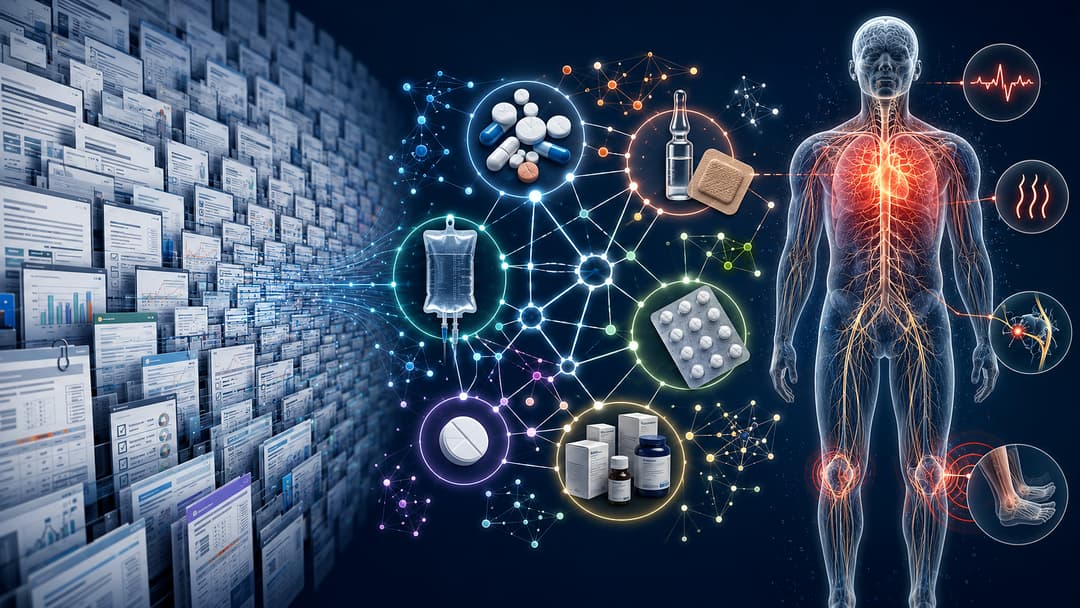
A new systematic review has mapped the medications, combinations and clinical features reported across hundreds of published adult serotonin syndrome cases.
Published in the European Journal of Clinical Pharmacology on 17 July 2026, the study included 764 patients from 707 case reports and case series. Most reports arising during regular prescription use involved more than one medication, and non-antidepressant drugs appeared in many of those combinations. A
The findings challenge the simplified idea that serotonin syndrome is mainly an adverse effect of antidepressants taken alone. They also show why complete medication reconciliation matters when opioids, antibiotics, Parkinson’s medicines or other centrally acting drugs are added to an existing regimen.
The study does not rank individual drugs by causal risk. Its network analysis shows which medications repeatedly appeared together in published reports—not which medicine is most dangerous for an individual patient.
The article, titled Precipitants and clinical features of serotonin syndrome: a systematic review with patient-level analysis of published case reports and series, examined adults aged 18 years or older.
Researchers searched PubMed and Embase from database inception through June 2024 and later searched PsycINFO and CINAHL through May 2025. They extracted patient-level information on diagnoses, implicated medicines, clinical findings, hospitalization, intensive-care admission and survival.
Rather than accepting every original diagnosis without reassessment, the authors applied both the Hunter Serotonin Toxicity Criteria and the Sternbach criteria. They also created a medication network to identify drugs that frequently appeared together. A
This differs from spontaneous-reporting databases such as FAERS. What Is FAERS and Why It Matters in Medical Toxicology explains why pharmacovigilance databases can reveal safety signals but generally cannot confirm incidence, diagnosis or causation.
Of the 764 published cases, 103 occurred in the context of a suicide attempt or completed suicide. The remaining 661 were classified as occurring during regular prescription use.
For a focused analysis, the researchers excluded suicide-attempt cases, five reports linked to medication discontinuation and 12 involving non-pharmacological precipitants. This left 645 cases.
Only 46, or 7.1%, involved monotherapy. The other 599—92.9%—involved two or more medications. Non-antidepressant medicines appeared in 90.7% of the reported combination cases. A
Monotherapy reports often followed the introduction of a new antidepressant and were generally less severe than combination cases. Combination reports were more complex because medicines could contribute through different mechanisms, including serotonin reuptake inhibition, receptor agonism, serotonin release or monoamine-oxidase inhibition.
The importance of considering mechanisms rather than drug names alone is discussed in How Mechanistic Medical Toxicology Is Shaping Next-Generation Patient Care.
Among cases associated with a suicide attempt, 79.4% required intensive-care admission and 18.0% resulted in death. Among regular-prescription cases, 35.6% required intensive care and 5.1% resulted in death. A
These percentages should not be interpreted as the overall ICU-admission or mortality rate of serotonin syndrome. Published case reports disproportionately represent severe, unusual or diagnostically challenging patients, while mild cases may never be reported.
A previous systematic review of 56 fatal published cases found that severe hyperthermia, seizures and markedly elevated creatine kinase were recurring features. That review was restricted to fatal reports and cannot estimate overall prognosis. D
Intentional poisoning may also produce competing toxidromes. Overdose in the Night: A Deadly Encounter with Imipramine illustrates how antidepressant overdose can cause seizures, shock and cardiac sodium-channel blockade—findings that should not automatically be attributed to serotonin toxicity.
The researchers analyzed the 599 combination cases as a medication network.
Trazodone had 16 direct connections. Fentanyl and tramadol each had 14. Fluoxetine and venlafaxine had 11 connections each, followed by paroxetine with 10. Citalopram, duloxetine and sertraline each had eight.
Fentanyl had the highest eigenvector centrality, meaning it was connected to several other highly connected medicines. Trazodone also appeared to bridge different medication groups. A
These findings do not establish that trazodone, fentanyl or tramadol has the highest individual probability of causing serotonin syndrome. A medicine can appear central because it is frequently prescribed, commonly combined with antidepressants, used in hospital settings or more likely to appear in published reports.
The authors explicitly caution that network centrality is not proof of causality.
Non-antidepressant medicines appeared in most regular-prescription combination reports. The network included opioids, linezolid, methylene blue, antiparkinsonian medicines, sleep medications and other centrally acting drugs.
This creates a cross-specialty medication-safety problem. An antidepressant may be prescribed in one setting, while another clinician later adds an opioid, antibiotic or neurological medicine with serotonergic or monoamine-oxidase activity.
The Role of Medical Toxicology in Drug Safety explains how toxicologists evaluate adverse effects that emerge across prescribing systems, pharmacovigilance and acute care.
Tramadol can inhibit serotonin and norepinephrine reuptake in addition to producing opioid effects. Fentanyl has also appeared in serotonin syndrome reports, particularly when combined with other serotonergic medicines.
A 2025 FAERS analysis identified reporting signals when selective serotonin reuptake inhibitors were combined with higher-risk serotonergic opioids, especially tramadol and fentanyl. FAERS reports cannot establish incidence or prove that the listed medicines caused the event. E
Opioid respiratory depression and serotonin toxicity require different assessments. Naloxone in Xylazine, Nitazenes, and Fentanyl Analogue Overdose explains naloxone’s role in reversing opioid-mediated respiratory depression. Naloxone does not treat clonus, hyperreflexia or severe hyperthermia caused by serotonin toxicity.
The review also identified a cluster involving amantadine, levodopa, rasagiline and ropinirole. This matters because tremor, rigidity and autonomic dysfunction associated with Parkinsonism can overlap with serotonin toxicity. The study identifies a recurring pattern in published reports; it does not show that these medicines routinely cause the syndrome.
Of the 764 published cases, 85.6% met the Sternbach criteria, 65.0% met the Hunter criteria, 64.1% met both and 13.5% met neither when reassessed from the available reports. A
This disagreement may reflect incomplete documentation, atypical presentations, limitations of the criteria or misdiagnosis.
The Hunter criteria emphasize spontaneous clonus, inducible or ocular clonus with agitation or diaphoresis, tremor with hyperreflexia, and hypertonia with fever and clonus. The original Hunter study reported better sensitivity and slightly better specificity than the Sternbach criteria in its development dataset. C
Neither framework replaces a complete clinical assessment. There is no routine laboratory test that confirms serotonin syndrome. Drug Screens Lie: A Clinician’s Guide to Interpreting Toxicology Tests Safely explains why medication history, examination and the overall toxidrome must take priority over a rapid toxicology-screen result.
The study cannot determine the incidence of serotonin syndrome, the absolute risk associated with an individual medicine, which drug combination is most dangerous, whether every published diagnosis was correct or the effectiveness of a specific treatment.
Case reports are affected by publication bias, incomplete dose information, missing timelines and selective reporting. Severe or unusual cases are more likely to be published.
The network also reflects prescribing patterns. Medicines that are commonly used together may appear connected even when a specific causal interaction has not been established.
The most practical message is to review the complete medication list, not antidepressants alone.
Clinicians should ask about antidepressants, opioid analgesics, linezolid, Parkinson’s medicines, migraine treatments, cough and cold products, supplements, recreational substances and recent medication additions, dose increases or discontinuations.
Serotonin toxicity should be considered when a compatible exposure is followed by neuromuscular hyperactivity—particularly clonus and hyperreflexia—together with autonomic or mental-status changes.
Contemporary management prioritizes stopping causative agents, supportive care, sedation when required and rapid control of severe hyperthermia and neuromuscular activity. Evidence for serotonin antagonists such as cyproheptadine is less robust than the evidence supporting supportive treatment. B
Severe or uncertain cases should prompt consultation with a poison center or medical toxicologist. The Role of Poison Center Calls: Managing Poisoning Cases from Emergency Calls to Critical Decisions explains how specialist consultation supports medication identification and time-sensitive treatment decisions.
Patients should not stop antidepressants, antipsychotics, Parkinson’s medicines or pain treatments because of this study.
A safer approach is to keep an updated medication list, tell every prescriber about medicines supplied by other clinicians and ask before combining prescriptions with cough medicines, supplements or recreational substances.
Emergency assessment is warranted when a medication change, interaction or overdose is followed by rapidly worsening agitation, clonus, marked tremor, severe rigidity, high temperature, seizures, collapse or altered consciousness.
The review shifts attention away from the idea that serotonin syndrome is simply an antidepressant side effect.
In published regular-prescription cases, medication combinations dominated and non-antidepressant drugs appeared in most combination reports. Trazodone, fentanyl and tramadol occupied central positions in the medication network, but those positions do not represent a causal risk ranking.
The useful clinical message is to recognize overlapping serotonergic mechanisms, perform complete medication reconciliation and look carefully for clonus and hyperreflexia when a patient deteriorates after a medication change or overdose.
Yes. Monotherapy cases were reported, particularly after starting a new antidepressant, but they represented a small minority of regular-prescription cases in this review.
Trazodone had the most direct connections. Fentanyl and tramadol were the most connected non-antidepressants. Connectivity does not equal individual risk.
No. Abrupt discontinuation can cause withdrawal or relapse. Medication changes should be discussed with the prescribing clinician unless emergency professionals advise otherwise.
A. Blyzniuk, B., Danukalo, M., Gastaldon, C., et al. (2026). Precipitants and clinical features of serotonin syndrome: A systematic review with patient-level analysis of published case reports and series. European Journal of Clinical Pharmacology, 82, Article 210.
B. Chiew, A. L., & Isbister, G. K. (2025). Management of serotonin syndrome (toxicity). British Journal of Clinical Pharmacology, 91(3), 654–661.
C. Dunkley, E. J. C., et al. (2003). The Hunter Serotonin Toxicity Criteria. QJM, 96(9), 635–642.
D. Prakash, S., et al. (2021). Fatal serotonin syndrome: A systematic review of 56 cases. Clinical Toxicology, 59(2), 89–100.
E. Novella, A., Elli, C., & Pasina, L. (2025). Selective serotonin reuptake inhibitors and risk of serotonin syndrome as a consequence of drug–drug interactions. Medical Principles and Practice, 34(5), 456–463.
Keep reading
Latest Research and Studies
29 Sept 2026 · Updated 02 Oct 2026
Latest Research and Studies
19 Sept 2026 · Updated 01 Oct 2026
Latest Research and Studies
05 Aug 2026 · Updated 01 Oct 2026

Latest Research and Studies
27 Jul 2026 · Updated 01 Oct 2026