Clinical Toxicology
Serotonin Syndrome (Serotonin Toxicity): Symptoms, Diagnosis, Drug Interactions, and Treatment
Amirhosein Shabrang
Post on 21 Aug 2026 · Updated 02 Oct 2026 · 23 min read
Amirhosein Shabrang
Post on 21 Aug 2026 · Updated 02 Oct 2026 · 23 min read
 Medical Toxicologymedicaltoxic.com
https://medicaltoxic.com/blogs/serotonin-syndrome

Serotonin syndrome—often called serotonin toxicity in clinical toxicology—is a potentially serious drug-induced condition caused by excessive serotonergic activity in the central nervous system. Its presentation ranges from mild tremor and hyperreflexia to marked clonus, agitation, autonomic instability, severe hyperthermia, rigidity, seizures, and life-threatening complications.
Diagnosis is clinical. There is no serum serotonin concentration, biomarker, or laboratory panel that confirms the syndrome. Recognition depends on identifying a compatible medication or exposure history and a characteristic neuromuscular examination, particularly clonus and hyperreflexia. Management likewise depends primarily on stopping the responsible serotonergic agents and providing severity-directed supportive care. [1]
Serotonin toxicity deserves particular attention because it can result not only from deliberate overdose but also from therapeutic dose escalation, pharmacokinetic or pharmacodynamic interactions, the addition of monoamine oxidase inhibition, and combinations involving medications that clinicians may not initially think of as serotonergic.
A 2026 systematic review mapped serotonin-syndrome cases reported across 764 adults from 707 case reports and case series, highlighting the complexity of medication combinations described in the literature. Importantly, those published cases cannot establish population incidence, and the frequency with which a drug appears in a case network does not prove that the drug independently caused the syndrome. [2] This distinction is also central to the existing MedicalToxic News coverage, New Systematic Review Maps Drug Combinations Behind Reported Serotonin Syndrome Cases.
Serotonin syndrome and serotonin toxicity refer to the same clinical problem, although “toxicity” better reflects its spectrum from mild to life-threatening manifestations.
Clonus and hyperreflexia are among the most useful bedside clues. Agitation, diaphoresis, tremor, tachycardia, hypertension, increased bowel activity, hyperthermia, and rigidity provide additional context.
Toxicity can follow overdose, dose escalation, or a drug interaction. The most concerning interactions generally involve agents that markedly increase serotonergic activity through different mechanisms, especially monoamine oxidase inhibition combined with serotonin reuptake inhibition or serotonin release.
Linezolid and methylene blue deserve special attention because both can inhibit monoamine oxidase and may be introduced during treatment for an apparently unrelated medical problem.
Not all opioids have the same serotonergic properties. Tramadol, meperidine, methadone, and dextromethorphan have better-established serotonergic mechanisms than many other analgesics or antitussives.
The Hunter Serotonin Toxicity Criteria are useful decision rules, but they were developed and validated principally in overdose populations and should support—not replace—clinical judgment.
Treatment is primarily supportive: stop serotonergic agents, control agitation and excessive muscle activity, manage hyperthermia, support circulation and ventilation, and treat complications.
Cyproheptadine should not be presented as a proven antidote. Clinical evidence remains very low quality, and it must never delay aggressive supportive management in severe toxicity.
Severe hyperthermia in serotonin toxicity is driven largely by excessive skeletal-muscle activity. Conventional antipyretics do not address that mechanism.
No single observation period, laboratory threshold, or cyproheptadine regimen can be applied safely to every patient.
Both terms are widely used. “Serotonin syndrome” remains the dominant clinical and search term, but serotonin toxicity is often preferred in toxicology because the condition behaves as a continuum rather than an all-or-none syndrome. [1]
At the mild end, a patient may have tremor, brisk reflexes, inducible clonus, anxiety or restlessness, and modest autonomic activation. More substantial toxicity can produce spontaneous or ocular clonus, agitation, marked diaphoresis, gastrointestinal hyperactivity, and greater autonomic instability. Severe toxicity can progress to profound hyperthermia, generalized muscle rigidity, seizures, metabolic complications, organ injury, and cardiovascular deterioration.
This spectrum matters because rigidly asking whether a patient “has” or “does not have” serotonin syndrome can obscure clinically meaningful early toxicity.
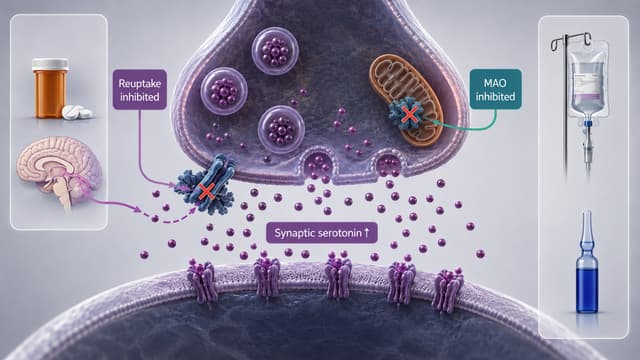
Serotonin toxicity results from excessive serotonergic neurotransmission within the central nervous system.
Drugs can increase serotonergic activity through several mechanisms, including:
inhibiting serotonin reuptake;
inhibiting serotonin metabolism through monoamine oxidase;
increasing serotonin release;
increasing serotonin synthesis or precursor availability; or
combining mechanisms that substantially increase synaptic serotonin.
Severe toxicity is strongly associated with excessive stimulation of serotonergic pathways, particularly those involving 5-HT2A receptors, although the clinical syndrome should not be reduced to a single receptor mechanism. [1,3]
The most clinically dangerous scenarios are often pharmacodynamic interactions. A patient may tolerate one serotonergic medication at a therapeutic dose but develop toxicity when another drug blocks serotonin metabolism, inhibits reuptake, promotes release, increases exposure through a pharmacokinetic interaction, or adds another serotonergic mechanism.
This is why medication reconciliation is fundamental to diagnosis.
Long lists of “serotonergic drugs” can be misleading. Some medications have strong mechanistic and clinical support, whereas others appear in case reports or regulatory databases without convincing evidence that they independently generate serotonin toxicity.
A toxicologically useful approach is to ask how the drug alters serotonergic neurotransmission and whether the combination is biologically plausible. Reviews of the diagnostic literature caution that not every drug historically associated with serotonin syndrome is equally justified as a causal agent. [3]
Mechanism or group | Clinically relevant examples | Why it matters |
|---|---|---|
SSRIs | Fluoxetine, sertraline, paroxetine, citalopram, escitalopram | Serotonin reuptake inhibition; risk rises with overdose or interacting serotonergic mechanisms |
SNRIs | Venlafaxine, desvenlafaxine, duloxetine | Serotonin and norepinephrine reuptake inhibition; venlafaxine is frequently encountered in toxicology |
Strongly serotonergic antidepressants | Clomipramine and selected others | Serotonergic effects vary substantially between agents; avoid treating all antidepressants as equivalent |
Irreversible MAO inhibitors | Phenelzine, tranylcypromine, isocarboxazid | Impair serotonin metabolism and can create high-risk interactions |
Nonpsychiatric MAO inhibition | Linezolid, methylene blue | May introduce MAO inhibition unexpectedly during medical treatment |
Serotonergic opioids | Tramadol, meperidine, methadone; fentanyl in relevant combinations | Serotonergic activity differs substantially between opioids |
Antitussive | Dextromethorphan | Has serotonin-transporter activity and can contribute to toxicity, especially in overdose or combinations |
Serotonin-releasing recreational drugs | MDMA and related exposures | Can markedly increase serotonergic neurotransmission |
The table is intentionally selective. A published association, isolated case report, or appearance in an adverse-event database should not automatically be interpreted as proof that a medication independently produces serotonin toxicity.
Monoamine oxidase participates in serotonin metabolism. When MAO activity is substantially inhibited, serotonergic drugs that would otherwise increase synaptic serotonin through reuptake blockade or release can produce much larger increases in serotonergic activity.
This makes combinations of potent MAO inhibition with serotonin-reuptake inhibitors or serotonin-releasing drugs particularly concerning.
The practical danger is that the MAO inhibitor is not always prescribed as an antidepressant.
Linezolid is an oxazolidinone antibacterial agent that also acts as a reversible, nonselective monoamine oxidase inhibitor. Its current prescribing information warns about serotonin syndrome in patients receiving serotonergic agents and describes reported serious, including fatal, reactions. [4]
This interaction is clinically important because linezolid may be initiated during treatment of an infection in a patient whose chronic SSRI, SNRI, or other serotonergic therapy was not initially viewed as relevant.
The label warning should not be converted into an incidence estimate. It establishes a clinically recognized interaction risk, not the probability that any individual combination will cause toxicity.
Methylene blue presents an even more distinctive toxicology problem. It is used clinically for acquired methemoglobinemia, yet it is also a potent reversible MAO inhibitor and carries a boxed warning concerning serotonin syndrome when administered with serotonergic drugs and certain opioids or dextromethorphan. [5]
This creates a high-value medication-reconciliation checkpoint before methylene blue is administered whenever clinical circumstances permit.
A future MedicalToxic Methemoglobinemia Blog should link bidirectionally with this section once that page actually exists.
The relationship between opioids and serotonin toxicity is often oversimplified.
Mechanistic evidence supports meaningful serotonin-transporter inhibition for tramadol, meperidine, methadone, and dextromethorphan, while fentanyl appears capable of serotonergic effects through other mechanisms. [6,7]
The FDA has warned that opioids can interact with serotonergic medicines and produce serotonin syndrome, but spontaneous adverse-event reports cannot establish incidence or rank the causal risk of individual opioids. [6]
Clinicians should therefore avoid both extremes: assuming that every opioid carries identical serotonergic risk, or overlooking the better-supported serotonergic properties of specific agents.
Symptoms commonly develop within hours of a relevant change in serotonergic exposure—for example:
initiation of a serotonergic medication;
dose escalation;
overdose;
addition of an interacting medication;
addition of an MAO inhibitor; or
a pharmacokinetic interaction that increases drug exposure.
A rigid “must occur within X hours” rule is unsafe. Onset and duration depend on the involved agents, formulation, dose, active metabolites, half-lives, metabolism, and whether exposure is ongoing. [1]
A careful timeline of medication changes is therefore often more useful than a static medication list.
The traditional description emphasizes three domains:
Neuromuscular excitation
Autonomic activation
Altered mental status
Not every patient displays all three equally.
Neuromuscular excitation provides some of the most diagnostically useful clues:
inducible clonus;
spontaneous clonus;
ocular clonus;
hyperreflexia;
tremor;
increased muscle tone;
rigidity in severe toxicity.
Clonus and hyperreflexia—often more prominent in the lower extremities—are especially important because agitation, tachycardia, diaphoresis, and hypertension have many alternative causes.
In severe toxicity, generalized rigidity may become so marked that clonus is difficult to elicit.
Possible autonomic manifestations include:
diaphoresis;
tachycardia;
hypertension;
fluctuating blood pressure;
tachypnea;
hyperthermia;
increased bowel activity, nausea, vomiting, or diarrhea.
Patients may appear:
anxious or restless;
agitated;
confused;
delirious; or
severely encephalopathic.
Marked CNS depression should prompt careful assessment for co-ingestants, complications, seizures, postictal state, or another diagnosis rather than being automatically attributed to serotonin toxicity.
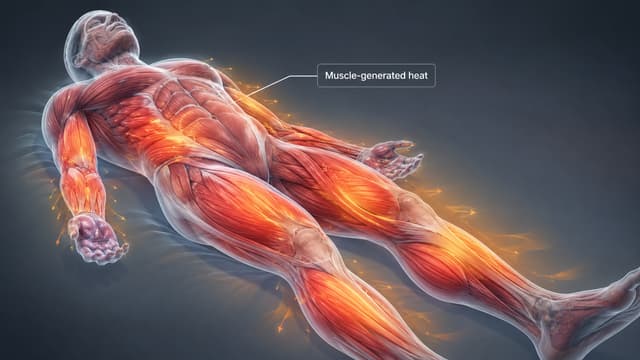
Hyperthermia in severe serotonin toxicity is not simply a hypothalamic “fever.” Excessive neuromuscular activity and sustained skeletal-muscle contraction generate heat.
This distinction has direct treatment implications: antipyretic medications do not address the primary mechanism of dangerous serotonin-toxicity hyperthermia. [1]
Severe toxicity may include:
marked hyperthermia;
substantial rigidity or hypertonicity;
severe agitation or delirium;
seizures;
acid-base abnormalities;
rhabdomyolysis;
acute kidney injury;
coagulopathy or disseminated intravascular coagulation in extreme cases;
respiratory failure or cardiovascular collapse.
These patients require aggressive resuscitation and critical-care management.
There is no confirmatory laboratory test.
The diagnosis should integrate:
a biologically plausible serotonergic exposure;
timing of medication changes or overdose;
characteristic neuromuscular findings;
autonomic and mental-status abnormalities;
exclusion of more plausible alternative diagnoses; and
recognition of mixed toxidromes when more than one drug is involved.
The medication history must extend beyond antidepressants. Ask specifically about antibiotics, analgesics, cough medicines, procedural medications, over-the-counter products, supplements, and recreational drugs.
The Hunter Serotonin Toxicity Criteria were derived from a large toxicology dataset and provide a compact set of decision rules based heavily on clonus, hyperreflexia, and hypertonicity. In the original publication, the criteria were derived from serotonergic overdose cases and showed 84% sensitivity and 97% specificity relative to assessment by a clinical toxicologist. [8]
In a patient with a relevant serotonergic exposure, the original Hunter decision rules identify serotonin toxicity when any one of the following is present:
Hunter finding | Required accompanying findings |
Spontaneous clonus | None |
Inducible clonus | Agitation or diaphoresis |
Ocular clonus | Agitation or diaphoresis |
Tremor | Hyperreflexia |
Hypertonia | Temperature >38°C and ocular or inducible clonus |
The temperature above 38°C in this table is part of the diagnostic decision rule. It should not be misinterpreted as a universal treatment, intubation, cooling, or ICU threshold.
Hunter is useful, but it is not an infallible diagnostic test.
The criteria were principally developed and validated in an overdose population, and subsequent toxicology scholarship has cautioned against assuming identical diagnostic performance in every therapeutic, perioperative, inpatient, or mixed-exposure setting. [3,8]
The 2026 systematic review found that not every published case labeled serotonin syndrome fulfilled Hunter criteria. That observation should not automatically be interpreted as Hunter “missing” true disease: incomplete case reporting, varying diagnostic quality, different criteria, and potentially questionable attribution all influence published case literature. [2]
Use Hunter to structure bedside reasoning—not to override a more convincing alternative diagnosis or an implausible exposure history.
Both can cause agitation, tachycardia, hyperthermia, and altered mental status.
Serotonin toxicity is more strongly supported by clonus, hyperreflexia, diaphoresis, and increased gastrointestinal activity. Anticholinergic toxicity instead classically produces dry skin and mucous membranes, urinary retention, reduced bowel activity, and other peripheral antimuscarinic findings.
For a complete comparison, see Anticholinergic Toxidrome: Symptoms, ECG Clues, Physostigmine, Rivastigmine, and Emergency Treatment.
Mixed ingestions may blur these distinctions. MedicalToxic's A Complex Toxidrome Following Intentional Ingestion of Hydroxyzine and Venlafaxine XR in a 22-Year-Old Female illustrates how anticholinergic and serotonergic findings can coexist after a multidrug overdose.
Both may produce:
agitation;
diaphoresis;
tachycardia;
hypertension;
hyperthermia.
A serotonergic exposure combined with clonus and marked hyperreflexia favors serotonin toxicity. The distinction can be difficult in mixed recreational-drug exposures because sympathomimetic and serotonergic effects may coexist.
Neuroleptic malignant syndrome is usually associated with dopamine-antagonist exposure or disruption of dopaminergic therapy. It commonly evolves more slowly and produces generalized rigidity, altered mental status, hyperthermia, and autonomic dysfunction.
Serotonin toxicity generally evolves more rapidly after the relevant serotonergic change, and clonus and hyperreflexia provide particularly useful discriminatory findings. Clinical presentations can overlap, so medication history and temporal evolution remain essential. [1]
Malignant hyperthermia is an anesthesia-related hypermetabolic crisis associated with susceptible individuals exposed to recognized triggers, particularly volatile anesthetic agents and succinylcholine. [9]
Both malignant hyperthermia and severe serotonin toxicity can cause hyperthermia, rigidity, metabolic derangement, and critical illness. The peri-anesthetic exposure context and medication history are therefore crucial.
Laboratory studies do not diagnose serotonin toxicity. Their role is to identify complications, quantify physiologic stress, and assess competing diagnoses or co-ingestants.
Depending on severity and exposure, evaluation may include:
serum electrolytes and renal function;
glucose;
creatine kinase when substantial muscle activity or hyperthermia is present;
acid-base assessment and lactate in significantly ill patients;
hepatic testing when organ injury is suspected;
coagulation studies in severe hyperthermia or systemic toxicity;
urinalysis when rhabdomyolysis is a concern;
ECG, especially after deliberate overdose or when co-ingestants may produce conduction or repolarization abnormalities.
No “serotonin level” should be used to confirm or exclude the diagnosis.
Serial clinical examination is particularly important. Changes in clonus, rigidity, temperature, mental status, heart rate, blood pressure, and organ function provide more meaningful information than a single laboratory measurement.
Discontinue suspected causative serotonergic medications and prevent further exposure.
In a complex medication regimen, this requires more than stopping the newest antidepressant. Identify recent dose changes, newly added drugs, PRN medications, antibiotics, analgesics, cough suppressants, procedural drugs, supplements, and recreational substances.
For severe toxicity, treatment should begin immediately rather than waiting for perfect certainty about which individual medication was responsible.
Supportive care is the foundation of management. [1]
Provide oxygenation, ventilation, vascular access, fluid resuscitation, cardiovascular support, and continuous monitoring according to the patient's physiologic needs.
The requirement for airway intervention should be based on the entire clinical state rather than a single temperature value or diagnostic criterion.
Benzodiazepine sedation is a central component of symptomatic treatment because reducing agitation and muscle activity can also decrease catecholamine excess and heat production. [1]
Benzodiazepines may be titrated clinically for:
agitation;
tremor and excessive motor activity;
significant neuromuscular excitation;
seizures.
A single fixed benzodiazepine dose is not appropriate for all patients; agent, route, dose, and escalation should reflect severity, airway status, age, co-exposures, and local emergency or critical-care protocols.
External cooling can be used when clinically necessary, but cooling alone may be insufficient in severe toxicity if intense muscle activity continues to generate heat.
For severe hyperthermia with substantial rigidity, current toxicology guidance emphasizes aggressive sedation, active cooling, airway and ventilatory management when required, and neuromuscular paralysis in the most severe cases. [1]
When paralysis is required, critical-care management should use an appropriate nondepolarizing neuromuscular blocker according to local resuscitation practice.
Antipyretics are not a substitute for controlling neuromuscular heat production.
Patients may require treatment for:
dehydration and volume depletion;
seizures;
electrolyte or acid-base disturbances;
rhabdomyolysis;
acute kidney injury;
coagulopathy;
respiratory failure;
severe blood-pressure instability.
Autonomic abnormalities often improve as agitation and neuromuscular excitation are controlled. Persistent severe instability should be managed with short-acting, titratable critical-care therapies selected according to the patient's hemodynamics and co-exposures.
Cyproheptadine is a serotonin-receptor antagonist and has long been recommended in many references as a pharmacologic option for serotonin toxicity.
The evidence supporting clinical benefit, however, is weak.
A 2025 systematic review specifically examining cyproheptadine after deliberate self-poisoning found only 11 case reports and one case series, with heterogeneous treatment regimens, incomplete outcome reporting, and a high risk of bias. The authors concluded that the available evidence does not establish its efficacy. [10]
A contemporary toxicology review reaches a similar practical conclusion: serotonin antagonists may be considered in selected cases, but there is no conclusive evidence that they improve major outcomes, and they should never displace high-quality supportive care. [1]
Therefore:
Cyproheptadine should be framed as an adjunctive option, not a proven antidote.
No evidence-based universal cyproheptadine dosing regimen has been established for serotonin toxicity. If it is used, dosing and repeat administration should follow current poison-center, medical-toxicology, or institution-specific guidance rather than an unverified copied protocol.
Most importantly, cyproheptadine should not delay sedation, cooling, airway management, paralysis when required, or treatment of life-threatening complications.
Activated charcoal is not a treatment for the syndrome itself.
In an acute overdose, gastrointestinal decontamination may occasionally be considered based on the specific drug, formulation, timing, airway safety, clinical condition, and presence of co-ingestants. Those decisions are exposure-specific rather than serotonin-syndrome-specific.
There is no justification for a universal charcoal rule simply because a patient has serotonergic toxicity. Poison-center or medical-toxicology consultation is appropriate when decontamination is being considered.
ICU-level care is appropriate when toxicity is accompanied by major physiologic instability, including situations such as:
severe hyperthermia;
substantial rigidity;
recurrent seizures;
need for advanced airway or ventilatory support;
need for neuromuscular paralysis;
severe autonomic instability;
rhabdomyolysis with significant systemic complications;
renal or coagulation abnormalities;
evolving multiorgan dysfunction.
The central principle is rapid control of excessive muscle activity and aggressive support of failing physiology rather than pursuit of a laboratory confirmation.
There is no universally valid observation period for serotonin toxicity.
Disposition depends on:
clinical severity;
resolution or persistence of clonus and hyperreflexia;
normalization of temperature and autonomic findings;
drug half-life;
extended-release formulations;
active metabolites;
MAO inhibition;
intentional overdose;
co-ingestants;
organ complications;
risk of recurrent symptoms after initial improvement.
Patients with severe toxicity require admission and often intensive care.
Patients with more limited toxicity should not be discharged solely because agitation has improved. Neuromuscular findings, vital signs, temperature, mental status, and relevant complications should also resolve or show an appropriately reassuring course.
Rigid observation-hour cutoffs are particularly unsafe when long-acting agents, monoamine oxidase inhibitors, extended-release preparations, or uncertain exposures are involved.
The medication history should answer four questions:
What was the patient already taking?
Include antidepressants, opioids, stimulants, cough preparations, supplements, and psychiatric medications.
What changed recently?
Look for dose escalation, a new prescription, reinitiation after interruption, overdose, or a second serotonergic drug.
Was an apparently unrelated drug added?
Linezolid and methylene blue are critical examples because their MAO-inhibiting activity may be overlooked.
Are there nonprescription or recreational exposures?
Dextromethorphan-containing cough products and recreational serotonergic drugs may not appear in the electronic medication list.
The 2026 systematic review reinforces the value of this approach: complex multidrug exposure was common among the published cases it analyzed, although that case-report pattern must not be mistaken for population incidence or causal-risk ranking. [2]
Many preventable cases occur at transitions in medication therapy.
Risk reduction depends on:
reviewing the entire medication list before adding a serotonergic or MAO-inhibiting drug;
checking over-the-counter and recreational exposures;
identifying long half-lives and active metabolites;
respecting drug-specific washout recommendations;
involving pharmacists when interaction complexity is high;
educating patients about meaningful medication changes rather than presenting an unmanageably long list of theoretical interacting drugs;
reconciling chronic serotonergic medications before linezolid, methylene blue, or other high-consequence interacting therapy is given.
Washout periods should be taken from the current prescribing information for the specific drugs involved. They should not be replaced with one universal interval.
Serotonin toxicity is not exclusively an outpatient antidepressant problem.
Hospitalized patients may acquire a new interaction when:
linezolid is started for infection;
methylene blue is administered;
a serotonergic opioid is added;
medication history is incomplete;
chronic psychiatric drugs are restarted or changed;
several clinicians prescribe across different services.
Perioperative cases are particularly challenging because hyperthermia, rigidity, agitation, delayed emergence, hemodynamic instability, malignant hyperthermia, medication effects, and other toxidromes may overlap.
The correct response is not to label every postoperative abnormality serotonin syndrome. It is to reconstruct the exposure timeline and actively examine for the neuromuscular pattern that makes serotonin toxicity more plausible.
These findings are nonspecific. Look for clonus, hyperreflexia, tremor, diaphoresis, gastrointestinal activity, and a biologically plausible serotonergic exposure.
Not every medication mentioned in a case report or pharmacovigilance database has equal causal plausibility. Drug mechanism, dose, timing, interaction partners, and alternative explanations matter. [3]
Hunter is a clinical decision rule derived principally from overdose data. Its excellent original specificity does not eliminate the need for exposure plausibility and differential diagnosis. [8]
Both may introduce clinically meaningful MAO inhibition even though neither is prescribed as an antidepressant. [4,5]
Mechanisms differ substantially across the class. Focus on the specific opioid and the interacting regimen rather than using “opioid” as a uniform risk category. [7]
Dangerous heat production in severe serotonin toxicity is driven largely by muscle activity. Sedation, control of neuromuscular activity, cooling, and critical-care support are more relevant to the mechanism. [1]
Cyproheptadine has not been shown in high-quality clinical trials to improve major outcomes. Do not allow it to delay airway management, sedation, cooling, or treatment of complications. [1,10]
Clonus changes the differential. In the right exposure context, inducible, ocular, or spontaneous clonus is far more informative than nonspecific agitation or tachycardia.
Look at the legs. Hyperreflexia and clonus can be particularly prominent in the lower extremities.
A drug interaction can be more important than a drug dose. Adding MAO inhibition to another serotonergic mechanism can fundamentally change risk.
Do not let the specialty silo hide the interaction. An antibiotic, analgesic, procedural medication, psychiatric drug, and OTC cough suppressant can intersect in one serotonergic medication history.
A normal laboratory panel does not exclude serotonin toxicity. Diagnosis is clinical.
Severe hyperthermia is a resuscitation problem. Control muscle activity and support physiology rather than relying on antipyretics.
Cyproheptadine is optional adjunctive therapy—not a substitute for supportive care.
They describe the same toxicologic phenomenon. “Serotonin syndrome” remains widely used clinically, while “serotonin toxicity” emphasizes that manifestations exist on a spectrum from mild neuromuscular findings to life-threatening hyperthermia and rigidity. [1]
No single sign is perfect, but clonus and hyperreflexia are particularly valuable. Spontaneous, inducible, and ocular clonus feature prominently in the Hunter Serotonin Toxicity Criteria. [8]
Yes, particularly after overdose or substantial exposure, but clinically important toxicity is also associated with interactions involving multiple serotonergic mechanisms. The presence of an SSRI alone does not prove that unexplained symptoms are serotonin toxicity; the clinical examination and exposure timeline remain essential.
It is better described as a serotonin-antagonist adjunct. The current clinical evidence base consists predominantly of low-quality reports, and a 2025 systematic review did not establish efficacy. Supportive care remains the core treatment. [1,10]
Many cases improve after the causative exposure is stopped and supportive care is provided, but there is no universal duration. Resolution depends on the involved drugs, dose, formulation, active metabolites, half-lives, MAO inhibition, co-ingestants, and severity. Patients should be managed according to clinical recovery rather than a fixed clock.
Serotonin toxicity is fundamentally a clinical toxidrome of excessive serotonergic activity, not a diagnosis established by a laboratory value or an indiscriminate list of “serotonergic drugs.”
The most useful bedside pattern combines a plausible exposure with neuromuscular excitation—especially clonus and hyperreflexia—plus compatible autonomic and mental-status findings. Hunter criteria can sharpen diagnostic reasoning, but their original performance came from overdose populations and they should not be treated as universally definitive.
Medication reconciliation is equally important. High-consequence interactions may involve traditional antidepressants, but they can also arise when linezolid, methylene blue, serotonergic opioids, dextromethorphan, or other relevant agents are added to an existing regimen.
Treatment is centered on removing the offending exposure and providing high-quality supportive care. Benzodiazepine sedation, control of excessive muscle activity, active temperature management, respiratory and cardiovascular support, and treatment of complications take priority. Cyproheptadine may be considered in selected cases, but current evidence does not support presenting it as a proven antidote or allowing it to delay definitive supportive management.
For clinicians, the practical approach is simple: recognize the neuromuscular pattern, reconstruct the medication timeline, identify dangerous interactions, treat physiology early, and reassess repeatedly.
References
Chiew, A. L., & Isbister, G. K. (2025). Management of serotonin syndrome (toxicity). British Journal of Clinical Pharmacology, 91(3), 654–661. https://doi.org/10.1111/bcp.16152
Blyzniuk, B., Danukalo, M., Gastaldon, C., Barbui, C., Toto, S., Raschi, E., Seifritz, E., Kuzo, N., & Schoretsanitis, G. (2026). Precipitants and clinical features of serotonin syndrome: a systematic review with patient-level analysis of published case reports and series. European Journal of Clinical Pharmacology, 82. https://doi.org/10.1007/s00228-026-04118-3
Chiew, A. L., & Buckley, N. A. (2022). The serotonin toxidrome: shortfalls of current diagnostic criteria for related syndromes. Clinical Toxicology, 60(2), 143–158. https://doi.org/10.1080/15563650.2021.1993242
DailyMed. (2024). LINEZOLID—linezolid tablet, film coated. U.S. National Library of Medicine.
DailyMed. (2025). PROVAYBLUE—methylene blue injection. U.S. National Library of Medicine.
U.S. Food and Drug Administration. (2016). FDA Drug Safety Communication: FDA warns about several safety issues with opioid pain medicines; requires label changes.
Baldo, B. A., & Rose, M. A. (2020). The anaesthetist, opioid analgesic drugs, and serotonin toxicity: a mechanistic and clinical review. British Journal of Anaesthesia, 124(1), 44–62. https://doi.org/10.1016/j.bja.2019.08.010
Dunkley, E. J. C., Isbister, G. K., Sibbritt, D., Dawson, A. H., & Whyte, I. M. (2003). The Hunter Serotonin Toxicity Criteria: simple and accurate diagnostic decision rules for serotonin toxicity. QJM: An International Journal of Medicine, 96(9), 635–642. https://doi.org/10.1093/qjmed/hcg109
Malignant Hyperthermia Association of the United States. (n.d.). Safe and Unsafe Anesthetics.
King, E., & Rotella, J. A. (2025). Review article: Efficacy of cyproheptadine in the management of serotonin toxicity following deliberate self-poisoning – A systematic review. Emergency Medicine Australasia, 37(1), e14554. https://doi.org/10.1111/1742-6723.14554
© All copyright of this material is absolute to Medical toxicology
As the Growth & Content Lead at MedicalToxic.com, I work on content strategy, development, and digital growth. My focus is on making MedicalToxic’s content clear, practical, and accessible, while helping expand the platform’s reach and strengthen its position as a trusted resource in clinical toxicology.
Keep reading
 Clinical Toxicology
Amirhosein Shabrang
 Clinical Toxicology
Amirhosein Shabrang
 Clinical Toxicology
Amirhosein Shabrang
 Clinical Toxicology
Amirhosein Shabrang