Clinical Toxicology
Michael Jackson’s Death and Propofol Toxicity: What the Case Teaches About Sedation Safety
Amirhosein Shabrang
Post on 01 Sept 2026 · Updated 01 Oct 2026 · 9 min read

Amirhosein Shabrang
Post on 01 Sept 2026 · Updated 01 Oct 2026 · 9 min read
 Medical Toxicologymedicaltoxic.com
https://medicaltoxic.com/blogs/michael-jackson-propofol-toxicity-sedation-safety
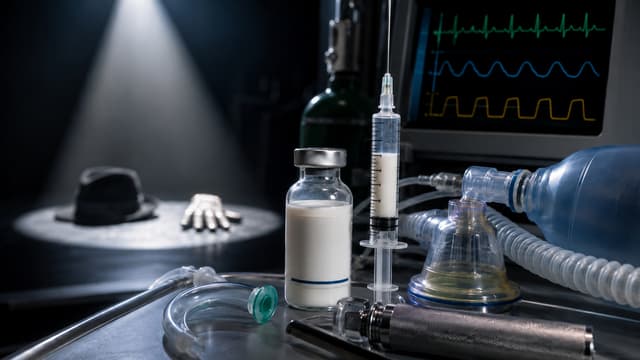
His death was not simply a story about a powerful anesthetic. It was a story about what happens when a powerful anesthetic is separated from the safety system that is supposed to surround it.
Official forensic finding: acute propofol intoxication, with benzodiazepine effect as a contributing condition; manner of death: homicide. [1]
Michael Jackson was 50 years old.
He was preparing for This Is It, the concert series meant to mark his return to the stage.
Behind the rehearsals was another problem: sleep.
During the period leading to his death, propofol and several benzodiazepines became part of that story. The official Los Angeles County Coroner finding identified propofol and lorazepam as the primary drugs responsible for Jackson’s death. Midazolam and diazepam were also detected. [1]
On June 25, 2009, Jackson became unresponsive. Resuscitation was unsuccessful.
The Coroner later established the cause of death as acute propofol intoxication. Benzodiazepine effect was listed as a contributing condition, and the manner of death was classified as homicide. [1]
That is where the celebrity story ends. And the toxicology story begins.
Propofol is sometimes described in popular accounts of Jackson’s death as though the drug itself were the villain.
That is too simple.
Propofol is one of the most useful intravenous anesthetic and sedation drugs in modern medicine. Current U.S. prescribing information includes induction and maintenance of general anesthesia, monitored anesthesia care sedation, and sedation of intubated, mechanically ventilated adults in intensive care. [2]
Propofol is very good at its day job.
Treating insomnia is not that job.
But another distinction matters just as much.
Using an approved drug “off-label” does not automatically mean malpractice. FDA notes that clinicians generally may prescribe an approved medication for an unapproved use when they judge that use medically appropriate, although FDA has not established the safety and effectiveness of that particular use. [3]
So the important lesson from Jackson’s case is not simply that propofol was being used for sleep.
It is that a drug capable of producing general anesthesia and profound cardiorespiratory depression cannot safely be separated from the monitoring and rescue capability required to manage those effects.
Propofol is given intravenously and acts quickly.
Current prescribing information states that a therapeutic IV dose can induce anesthesia, usually within about 40 seconds of the start of injection. [2]
That speed is clinically useful.
It also means the transition from awake to deeply sedated can happen quickly.
Propofol can cause hypoventilation, apnea, upper-airway obstruction, oxygen desaturation, hypotension, and cardiovascular depression. [2]
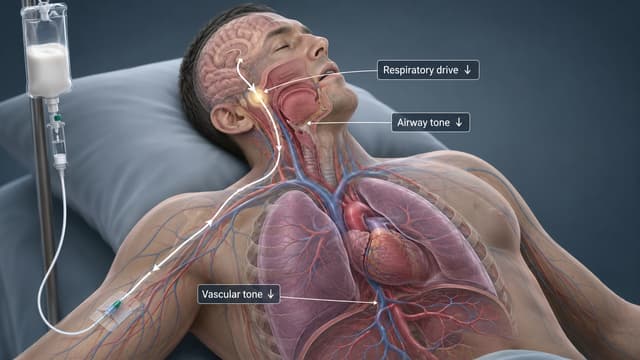
That is why the current label does not simply tell clinicians how to administer the drug.
It also tells them what must be available around the patient.
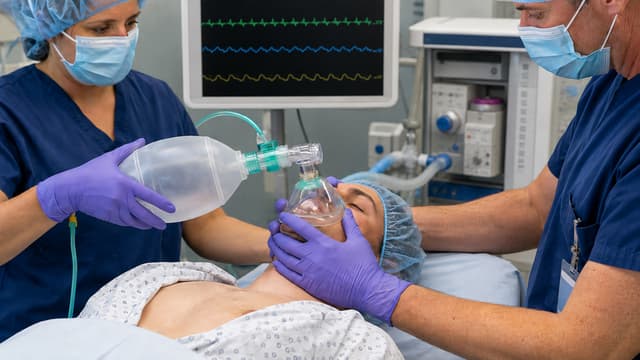
For general anesthesia or monitored anesthesia care sedation, patients should be continuously monitored. Equipment for maintaining the airway, providing artificial ventilation and supplemental oxygen, and initiating cardiovascular resuscitation must be immediately available. [2]
There is a reason for all that equipment.
A patient may be breathing adequately and then require ventilatory support shortly afterward.
So the safety question is never simply:
How many milligrams were given?
Dose matters.
Rate matters.
Other medications matter.
The patient matters.
And the environment matters.
Jackson’s death was not attributed to propofol in complete pharmacologic isolation.
The Coroner identified benzodiazepine effect as a contributing condition and specifically named lorazepam alongside propofol as a primary drug responsible. Midazolam and diazepam were also detected. [1]
That matters because sedative burden is cumulative.
Current propofol labeling states that sedatives such as benzodiazepines may increase propofol’s anesthetic or sedative effects and may produce more pronounced reductions in blood pressure and cardiac output. [2]
This does not mean we can retrospectively calculate exactly how much each drug contributed to Jackson’s terminal event.
We cannot.
It means that evaluating a sedated patient one medication at a time can be misleading.
Co-exposures matter. Timing matters.
The clinically relevant question is the total sedative burden and what it is doing to breathing, airway tone, consciousness, and circulation.
Imagine the problem physiologically.
Sedation deepens.
Breathing becomes inadequate or stops.
The upper airway may obstruct.
If effective ventilation is not restored, hypoxemia and cardiovascular deterioration can follow.
This is the window that matters.
In an appropriately monitored setting, deterioration can be recognized while it is still primarily an airway or ventilation problem.
The airway can be repositioned.
Oxygen can be administered.
Bag-mask ventilation can begin.
Further airway intervention is available if needed.
The drug can be stopped.
Current propofol labeling is direct about overdose management: discontinue propofol, treat respiratory depression with artificial ventilation with oxygen, and support cardiovascular function when necessary. [2]
There is no specific reversal agent for propofol.
That makes recognition and rescue even more important.
Supportive care in this setting is not passive care.
Airway management is treatment. Ventilation is treatment. Oxygenation is treatment. Hemodynamic support is treatment.
A pulse oximeter and a capnograph do not measure the same thing.
Pulse oximetry monitors oxygen saturation.
Capnography provides information about ventilation through exhaled carbon dioxide.
That distinction matters during sedation because ventilation may become inadequate before a major fall in oxygen saturation is apparent, particularly when supplemental oxygen is being used.
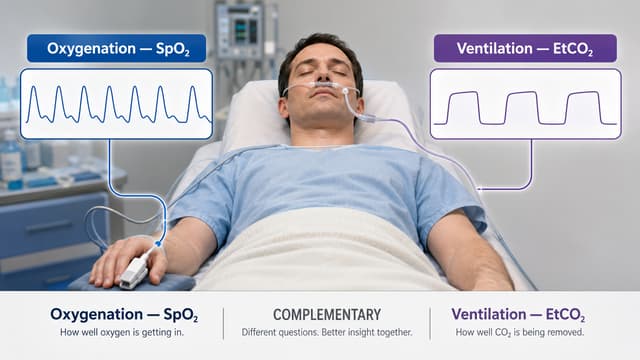
The multidisciplinary Practice Guidelines for Moderate Procedural Sedation and Analgesia 2018 emphasize continual monitoring of ventilation with capnography, alongside clinical observation and pulse oximetry, except when the patient, procedure, or equipment makes capnography inappropriate or unreliable. [4]
The point is not that a monitor replaces a clinician.
It is that safe sedation uses multiple ways to identify deterioration before a reversible respiratory event becomes something worse.
Here is the part of Jackson’s case that matters more than debating one reconstructed propofol dose.
Propofol is used safely every day in operating rooms, procedural areas, and intensive care units.
The molecule does not change.
What changes is everything around it.
Current U.S. prescribing information requires continuous patient monitoring and immediate access to airway equipment, artificial ventilation, supplemental oxygen, and cardiovascular resuscitation capability during general anesthesia or monitored anesthesia care with propofol. It also specifies that propofol should be administered by personnel trained in general anesthesia in those settings. [2]
Modern sedation guidance adds another important principle:
the clinical team must be capable of recognizing and rescuing deeper-than-intended sedation. [4]
That sounds less dramatic than the drug itself.
That is exactly the point.
A pulse oximeter is ordinary.
A capnography line is ordinary.
A bag-mask device sitting unused is ordinary.
Oxygen and suction are ordinary.
A clinician watching the patient breathe is ordinary.
Until breathing fails.
Then every part of that system has a job.
For opioid poisoning, naloxone can directly reverse opioid effects.
For benzodiazepines, flumazenil exists.
For propofol, there is no comparable specific reversal agent. [2]
And flumazenil is not a universal “undo” button for sedative poisoning.
Current American Heart Association toxicology guidance states that flumazenil can be effective in selected patients with pure benzodiazepine poisoning when contraindications are absent. It is associated with harm in patients at increased risk for seizures or dysrhythmias and may be dangerous when significant co-ingestants or benzodiazepine dependence are present. [5]
Most importantly for this case:
Flumazenil does not reverse propofol.
So if a patient exposed to propofol loses effective ventilation, the immediate problem remains physiologic.
The airway must be managed.
Ventilation must be restored.
For the broader approach to stabilization and supportive care in poisoned patients, see Comprehensive Guidelines for Managing Poisoning in Adults.
The Los Angeles County Coroner classified Michael Jackson’s manner of death as homicide. [1]
In U.S. medicolegal death investigation, however, homicide does not automatically mean murder.
NIST’s current medicolegal terminology describes homicide as a neutral manner-of-death classification. It does not itself establish or imply criminal intent; that determination belongs to the legal process. [6]
That distinction is important.
The medical examiner answered one question:
What was the manner of death?
The criminal justice system answered another.
On November 7, 2011, Conrad Murray was found guilty of involuntary manslaughter in connection with Jackson’s death. [7]
So these two statements are related, but they are not interchangeable:
The Coroner classified the manner of death as homicide.
The jury convicted Murray of involuntary manslaughter.
The easiest question is:
What killed Michael Jackson?
The forensic answer is established:
Acute propofol intoxication, with benzodiazepine effect contributing. [1]
But the more useful medical question is:
What allows a powerful sedative to be used safely when the same pharmacology can suppress breathing and circulation?
The answer is not simply a lower dose.
It is a system.
Continuous observation.
Appropriate physiologic monitoring.
Oxygen.
Airway equipment.
Immediate positive-pressure ventilation.
Cardiovascular resuscitation capability.
Personnel who can recognize respiratory deterioration and act immediately.
The safety of propofol does not live entirely inside the vial.
Some of it lives in the monitor.
Some of it lives in the bag-mask device.
Some of it lives in the oxygen supply.
And a large part of it lives in the person watching closely enough to recognize that breathing has become inadequate.
If a drug can take breathing away, the environment around that drug must be prepared to give breathing back.
That may be the most durable medical lesson from Michael Jackson’s death.
Not that propofol is a “killer drug.”
Not that every off-label use is automatically wrong.
But that a drug capable of producing deep sedation or general anesthesia cannot be separated from the safeguards required to manage its predictable complications.
Propofol can rapidly produce profound respiratory and cardiovascular depression.
Other CNS depressants can increase the clinical sedative burden and must be considered together.
With deep sedation, monitoring and immediate airway rescue are not optional accessories. They are part of the treatment itself.
For a person who is unresponsive, not breathing normally, severely hypoxemic, seizing, or otherwise experiencing an immediately life-threatening medication exposure, activate emergency medical services.
In the United States: call 911 for a life-threatening emergency.
America’s Poison Centers can also be reached at 1-800-222-1222, which connects callers to their local U.S. poison center 24/7. [8]
Readers outside the United States should use their local emergency and poison-information services.[1][2][3][4][5][6][7][8]
© All copyright of this material is absolute to Medical toxicology
As the Growth & Content Lead at MedicalToxic.com, I work on content strategy, development, and digital growth. My focus is on making MedicalToxic’s content clear, practical, and accessible, while helping expand the platform’s reach and strengthen its position as a trusted resource in clinical toxicology.
Keep reading
 Clinical Toxicology
Amirhosein Shabrang
 Clinical Toxicology
Amirhosein Shabrang
 Clinical Toxicology
Amirhosein Shabrang
 Clinical Toxicology
Amirhosein Shabrang