Clinical Toxicology
Anticholinergic Toxidrome: Symptoms, ECG Clues, Physostigmine, Rivastigmine, and Emergency Treatment
Amirhosein Shabrang
Post on 27 Jul 2026 · Updated 28 Sept 2026 · 20 min read

Amirhosein Shabrang
Post on 27 Jul 2026 · Updated 28 Sept 2026 · 20 min read
 Medical Toxicologymedicaltoxic.com
https://medicaltoxic.com/blogs/anticholinergic-toxidrome-symptoms-physostigmine-treatment
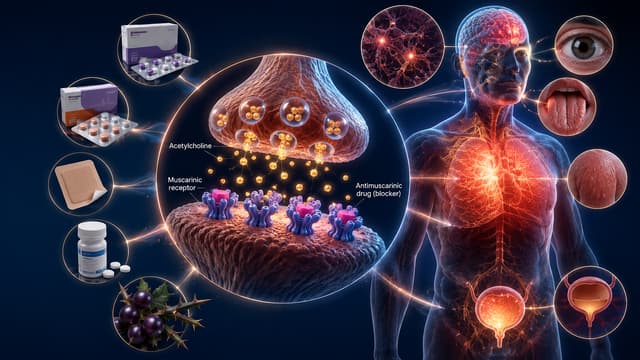
Anticholinergic toxidrome is a recognizable but potentially dangerous poisoning syndrome caused by medicines, plants or chemicals that interfere with acetylcholine signalling.
Mild toxicity may produce dry mouth, blurred vision and tachycardia. More severe poisoning can cause hallucinations, profound delirium, hyperthermia, urinary retention, seizures, coma or life-threatening cardiac conduction abnormalities.
The term anticholinergic toxidrome is widely used in emergency medicine and medical toxicology. In many acute poisonings, however, antimuscarinic toxidrome is more pharmacologically precise because the characteristic findings arise predominantly from blockade of muscarinic acetylcholine receptors.
That distinction matters clinically. A patient may have obvious antimuscarinic delirium while also having another toxic mechanism—such as cardiac sodium-channel blockade from diphenhydramine or a tricyclic antidepressant. In that setting, the ECG may be as important as the pupils, skin or mental-status examination.
This guide explains how to recognize anticholinergic toxicity, distinguish it from competing toxidromes and understand the evidence, limitations and safety requirements surrounding physostigmine and rivastigmine.
Medical safety note: Physostigmine and rivastigmine are clinician-administered treatments for selected poisoned patients. They are not home antidotes and should not be used without poison-centre or medical-toxicology guidance.
Anticholinergic toxidrome is primarily a clinical diagnosis based on delirium, mydriasis, dry skin or mucosa, tachycardia, urinary retention, reduced gastrointestinal activity and hyperthermia.
The presence of agitation does not prove anticholinergic poisoning. Sympathomimetic toxicity, serotonin syndrome, sedative withdrawal, infection, heat illness and metabolic disease may produce overlapping findings.
An ECG should be obtained in significant or uncertain exposures. QRS widening, PR prolongation, bradycardia or ventricular dysrhythmia may identify mixed toxicity and alter antidote decisions.
Diphenhydramine can produce both antimuscarinic delirium and cardiac sodium-channel blockade. A routine urine drug screen does not reliably diagnose this exposure.
Physostigmine can rapidly reverse central anticholinergic delirium in carefully selected patients, but it requires cardiac monitoring, slow administration, atropine availability and exclusion of important contraindications.
Rivastigmine has emerged as a possible alternative when physostigmine is unavailable, but its onset is slower and the human evidence remains limited to observational studies, case series and case reports.
Supportive care, cooling, seizure control, treatment of cardiac toxicity and poison-centre consultation remain central even when an acetylcholinesterase inhibitor is considered.
Acetylcholine is a major neurotransmitter in the central and peripheral nervous systems. It helps regulate attention, memory, glandular secretion, pupil size, heart rate, gastrointestinal movement, bladder emptying and temperature control.
Many toxic exposures block acetylcholine at muscarinic receptors. When this blockade becomes clinically significant, the result is a combination of central neurological dysfunction and peripheral autonomic findings.
A concise clinical definition is:
Anticholinergic toxidrome is a poisoning syndrome characterized by central delirium together with evidence of peripheral muscarinic receptor blockade.
The central component may range from mild confusion to severe agitated delirium, hallucinations, seizures or coma. Peripheral findings may include dry mucosa, mydriasis, tachycardia, urinary retention, reduced bowel activity and hyperthermia.
A 2026 Ontario Poison Centre clinical resource lists delirium, mydriasis, tachycardia, dry skin or mucosa, urinary retention and hyperthermia among the core manifestations. A
“Anticholinergic” can refer broadly to interference with acetylcholine at muscarinic or nicotinic receptors. The classic toxidrome, however, is dominated by muscarinic receptor blockade.
That is why many toxicologists prefer the phrase antimuscarinic delirium when describing the central syndrome.
This terminology also prevents a common misunderstanding: not every medicine casually described as “anticholinergic” produces the same poisoning pattern.
For example, a large cohort study comparing hydroxyzine and diphenhydramine found substantially fewer antimuscarinic findings after hydroxyzine exposure. The authors cautioned clinicians against simply applying the diphenhydramine toxicity pattern to all first-generation antihistamines. K
The syndrome may follow therapeutic error, accidental childhood ingestion, deliberate overdose, recreational misuse or ingestion of toxic plants.
Important exposure groups include:
diphenhydramine;
doxylamine;
dimenhydrinate;
chlorpheniramine;
promethazine.
These products may be sold for allergy symptoms, motion sickness, cough and cold complaints or sleep.
High-dose diphenhydramine can cause severe delirium, seizures, coma and dangerous dysrhythmias. The FDA has warned that excessive doses may cause serious cardiac problems, seizures, coma or death. J
Examples include amitriptyline, imipramine, nortriptyline and doxepin.
These medicines may produce antimuscarinic findings, but their most dangerous overdose effects also include cardiac sodium-channel blockade, hypotension, seizures and ventricular dysrhythmias.
MedicalToxic.com’s Overdose in the Night: A Deadly Encounter with Imipramine illustrates why a patient who appears anticholinergic may require aggressive management of cardiotoxicity rather than treatment of delirium alone.
Quetiapine, clozapine, olanzapine and some other psychiatric medicines may contribute to antimuscarinic delirium, often alongside sedation, hypotension or cardiac effects.
The broader toxicity profile is reviewed in Can You Overdose on Seroquel? Symptoms, Treatment, and Safety Guide.
Benztropine and trihexyphenidyl can cause prolonged antimuscarinic delirium, particularly after large or repeated exposures.
Oxybutynin, tolterodine, solifenacin, hyoscyamine and related medicines may produce peripheral and central toxicity, particularly in children or older adults.
Atropine and scopolamine can cause systemic toxicity after inappropriate dosing, accidental ingestion or excessive transdermal exposure.
Cyclobenzaprine can produce antimuscarinic effects and may also raise concern for cardiac conduction abnormalities because of its structural relationship to tricyclic antidepressants.
Jimson weed, deadly nightshade, angel’s trumpet and related plants contain atropine-like alkaloids.
The alkaloid concentration may vary between plants and plant parts, making effects difficult to predict.
Central and peripheral findings do not always appear with equal intensity.
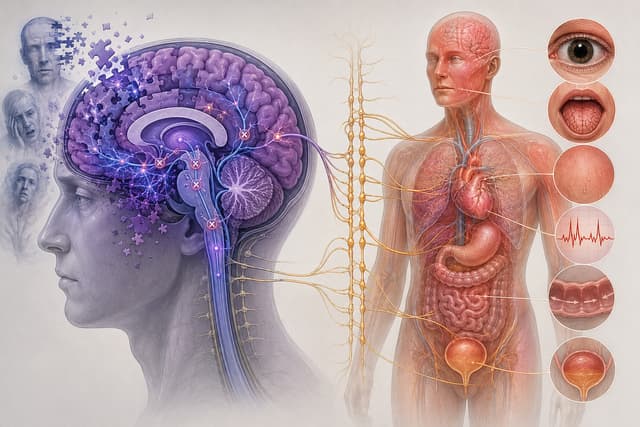
confusion;
disorientation;
agitation;
visual hallucinations;
incoherent or mumbling speech;
repetitive picking at clothing or invisible objects;
impaired short-term memory;
ataxia;
seizures;
somnolence or coma in severe cases.
The delirium may fluctuate. A patient can appear briefly calm and then become combative, frightened or disorganized.
dilated pupils;
blurred near vision;
dry mouth;
reduced sweating;
warm or flushed skin;
tachycardia;
reduced bowel sounds;
ileus;
urinary retention;
elevated body temperature.
Not every patient will display the full syndrome. Skin may not be completely dry, pupils may not be dramatically enlarged and bowel sounds may be difficult to interpret in a noisy emergency department.
The diagnosis should rest on the complete pattern, not one mnemonic or isolated physical sign.
The traditional description is memorable:
dry as a bone;
blind as a bat;
red as a beet;
hot as a hare;
mad as a hatter;
full as a flask.
The mnemonic captures dry secretions, mydriasis, flushing, hyperthermia, delirium and urinary retention.
However, it can also create false confidence. A patient with dilated pupils and agitation may instead have stimulant poisoning. A febrile, rigid patient may have serotonin syndrome or neuroleptic malignant syndrome. A confused older adult with dry mouth may have infection, dehydration or medication accumulation rather than acute overdose.
The mnemonic should begin the assessment—not end it.
Severe anticholinergic poisoning can progress beyond delirium.
Warning findings include:
temperature rising despite initial cooling;
seizures;
coma or loss of airway reflexes;
hypotension;
severe agitation that cannot be safely controlled;
muscle breakdown or dark urine;
prolonged QRS duration;
ventricular dysrhythmia;
recurrent toxicity after temporary improvement;
suspected mixed or unknown ingestion.
Agitation and hyperthermia may lead to rhabdomyolysis, metabolic acidosis, renal injury and disseminated complications if not controlled.
There is no single routine laboratory test that confirms the syndrome.
Diagnosis is based on:
the exposure history;
medication reconciliation;
physical examination;
temperature;
neurological findings;
cardiac assessment;
the clinical course;
exclusion of competing diagnoses.
Clinicians should seek the original medicine containers, photographs of labels, prescription records, family reports and information from emergency medical services.
Important questions include:
What exact product was involved?
Was it immediate-release or extended-release?
Was the exposure intentional?
Were multiple medicines available?
When was the person last seen well?
Could a patch, liquid, sleep aid or combination cold product be involved?
Are there baseline neurological or psychiatric conditions?
Standard urine immunoassays do not test comprehensively for most antimuscarinic medicines. Some agents may also cross-react with unrelated assays.
A positive or negative screen therefore cannot confirm or exclude the syndrome.
The principle is explored in Drug Screens Lie: A Clinician’s Guide to Interpreting Toxicology Tests Safely: treatment decisions should be anchored to physiology, exposure history and confirmatory testing when necessary—not to one rapid immunoassay result.
An ECG should be obtained in patients with significant delirium, severe symptoms, an unknown exposure or possible ingestion of diphenhydramine, tricyclic antidepressants, cyclobenzaprine or another cardiotoxic agent.
The ECG may reveal:
QRS widening;
PR prolongation;
QT abnormalities;
a terminal R wave in lead aVR;
ventricular dysrhythmia;
conduction delay;
bradycardia.
These findings are not explained by simple muscarinic receptor blockade alone.
A contemporary ToxIC registry analysis found that diphenhydramine, bupropion and several antidysrhythmic drugs have become important contributors to pharmaceutical poisoning with QRS prolongation. In 2022, diphenhydramine accounted for a larger proportion of QRS-prolongation cases in that dataset than tricyclic antidepressants. I
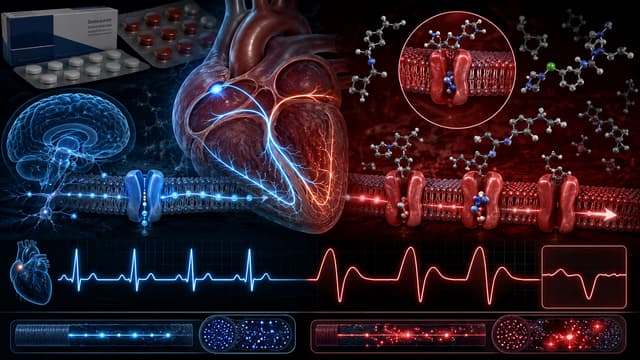
At high concentrations, diphenhydramine can block fast cardiac sodium channels.
This can produce a wide-complex tachycardia, conduction delay and a terminal R wave in aVR. Published cases describe QRS narrowing after sodium bicarbonate treatment. L
A patient with dry skin, mydriasis and hallucinations may therefore have two simultaneous toxic mechanisms:
central muscarinic receptor blockade;
cardiac sodium-channel blockade.
The second mechanism changes the immediate treatment priorities and may make physostigmine inappropriate.
Both syndromes can cause agitation, mydriasis, tachycardia and hyperthermia.
Sweating is an important distinction: stimulant-poisoned patients are often diaphoretic, while a strongly antimuscarinic patient is more likely to have dry skin and mucosa.
However, mixed exposures can blur this distinction.
Clonus and hyperreflexia strongly favour serotonin toxicity. Sweating and increased bowel activity are also more typical than dry skin and ileus.
NMS often evolves more slowly and is associated with generalized rigidity, altered consciousness, hyperthermia and dopamine-antagonist exposure.
Withdrawal may cause agitation, hallucinations, tremor, tachycardia, hypertension and seizures, but patients often sweat rather than becoming dry.
Severe hyperthermia and delirium can resemble anticholinergic poisoning. Exposure setting, exertion, weather conditions, medication history and neuromuscular findings help distinguish them.
Hypoglycaemia, electrolyte abnormalities, hypoxia, sepsis, meningitis, encephalitis and postictal states must remain in the differential diagnosis, particularly when the exposure history is uncertain.
Treatment is guided by the patient’s physiological condition and the suspected toxic mechanism.
Patients with severe sedation, recurrent seizures, respiratory failure or loss of airway reflexes may require airway protection and mechanical ventilation.
Hypotension should prompt assessment for dehydration, dysrhythmia, mixed overdose and direct myocardial toxicity.
Continuous cardiac and temperature monitoring are appropriate in moderate or severe cases.
A quiet environment, reduced lighting, verbal reassurance and removal of unnecessary stimuli may reduce mild agitation.
Physical restraint alone can increase struggling, heat generation, acidosis and rhabdomyolysis. When restraint is required for immediate safety, chemical sedation and close monitoring should accompany it.
Benzodiazepines are appropriate for:
seizures;
severe agitation;
sedation when acetylcholinesterase inhibitors are unavailable or inappropriate;
mixed toxicity requiring nonspecific seizure control.
They do not reverse muscarinic receptor blockade. Large cumulative doses may worsen sedation, obscure neurological assessment or contribute to intubation.
Ontario Poison Centre guidance describes benzodiazepines as symptom-reducing treatment when physostigmine or rivastigmine is unavailable or insufficient—not as a mechanism-reversing antidote. B
Hyperthermia should be treated aggressively with external cooling, sedation and control of excessive muscular activity.
Antipyretic medicines do not correct toxic hyperthermia because the elevated temperature is not primarily driven by a hypothalamic fever response.
A distended bladder can worsen agitation and delirium. Bladder scanning and catheterization may be appropriate when retention is clinically significant.
Ileus and delayed gastric emptying may prolong absorption of some medicines, particularly extended-release products.
Activated charcoal may be considered in selected patients after a potentially serious ingestion when the airway is protected and the expected benefit exceeds aspiration risk.
The decision should be individualized with poison-centre or medical-toxicology guidance. Agitated or somnolent patients should not receive charcoal without adequate airway protection.
When QRS widening or another sodium-channel-blockade pattern is present, treatment should focus on cardiac stabilization rather than simply reversing delirium.
Sodium bicarbonate has long been used for toxin-induced QRS widening, including poisoning involving tricyclic antidepressants and diphenhydramine. L
Refractory dysrhythmia, severe hypotension or cardiac arrest requires specialist toxicology and critical-care management.
Physostigmine is a reversible acetylcholinesterase inhibitor that crosses the blood–brain barrier.
By slowing the breakdown of acetylcholine, it increases acetylcholine concentrations at synapses and can overcome central and peripheral muscarinic receptor blockade.
Unlike a sedative, physostigmine can directly reverse the underlying mechanism of antimuscarinic delirium.
Ontario Poison Centre describes physostigmine as the preferred antidote for central anticholinergic toxicity in appropriately selected patients. A
Potential candidates are patients with:
a convincing antimuscarinic toxidrome;
clinically important agitation or delirium;
failure of non-pharmacological measures;
an ECG without concerning conduction abnormalities;
no strong evidence of a mixed sodium-channel-blocking overdose;
continuous monitoring and immediate resuscitation capability.
Physostigmine should not be used simply to make a sedated patient wake up or as a diagnostic experiment in an unexplained coma.
Its benefit is greatest when the clinical problem is genuine central antimuscarinic delirium.
A retrospective comparison of 52 patients found physostigmine more effective than benzodiazepines for reversing anticholinergic agitation and delirium. Patients treated first with physostigmine had fewer reported complications and a shorter median recovery time, although the study was observational and susceptible to treatment-selection bias. D
A later randomized trial in adolescents found physostigmine superior to lorazepam for control of antimuscarinic delirium and agitation after bolus treatment, with more sustained delirium control following infusion. E
In an 815-patient ToxIC registry analysis, patients who received physostigmine alone had a lower recorded intubation rate than patients managed with other treatment strategies. The registry was observational and cannot prove that physostigmine itself caused the difference, because clinicians may have selected lower-risk patients for the antidote. F
Physostigmine has a history of underuse because of reports of seizures and cardiac arrest, particularly in patients with severe cyclic-antidepressant poisoning.
Modern reviews suggest that serious adverse events are uncommon when patients are carefully selected and the medicine is administered slowly.
A narrative review included 2,299 patients. Reported adverse effects occurred in 18.1%, most commonly hypersalivation and nausea or vomiting. Seizures occurred in 0.61% and were self-limited or treated successfully; symptomatic bradycardia was reported in 0.35%. The authors concluded that significant complications were infrequent but advised avoiding physostigmine in patients with QRS prolongation. C
These data do not mean the medicine is risk-free. They reinforce that safety depends on:
correct toxidrome identification;
ECG screening;
slow dosing;
cardiac monitoring;
resuscitation capability;
atropine availability;
poison-centre or toxicologist involvement.
The 2026 Ontario Poison Centre protocol lists the following contraindications:
QRS duration greater than 100 milliseconds when not explained by bundle-branch block;
PR interval greater than 200 milliseconds;
bradycardia or sick-sinus syndrome;
unexplained syncope;
severe asthma or COPD;
seizure disorder;
hypersensitivity to salicylate.
A suspected tricyclic antidepressant ingestion should not be reduced to a simple yes-or-no rule. The practical concern is whether the patient has cardiotoxicity, conduction delay, seizures or another mixed toxic mechanism.
The ECG and full clinical context should guide the decision.
The Ontario Poison Centre protocol recommends:
0.5 mg intravenously over one to two minutes;
repeat doses may be considered every 15 minutes until the desired clinical effect;
maximum 2 mg during the first hour.
0.01–0.02 mg/kg intravenously;
maximum 0.5 mg per dose;
administered over one to two minutes;
repeat dosing may be considered every 15 minutes under specialist guidance.
The patient should remain on a cardiac monitor, with atropine available at the bedside. Recurrence may occur because physostigmine’s clinical effect can be shorter than the duration of the poisoning. A
This protocol should not be treated as a universal substitute for local poison-centre or institutional guidance.
Rivastigmine is another centrally acting acetylcholinesterase inhibitor. It is ordinarily used in dementia care and is available in oral and transdermal forms.
Interest in rivastigmine increased during shortages of injectable physostigmine. In the United States, ASHP continued to list insufficient physostigmine supply in March 2026 after the previous manufacturer ceased operations and temporary imported stock approached expiration. M
Rivastigmine is pharmacologically plausible because it reaches the central nervous system and inhibits acetylcholinesterase. Its slower onset and longer duration, however, make it different from intravenous physostigmine.
A 2024 retrospective study reviewed patients treated with oral or transdermal rivastigmine in two toxicology units. The study was designed to examine whether patients required additional parenteral sedation or physostigmine after rivastigmine administration. It provided useful observational evidence but was not a randomized comparison. H
A 2025 case series from a level-one trauma centre included 12 patients who received rivastigmine for anticholinergic toxicity. The authors described rivastigmine as a potential alternative during physostigmine shortage, while emphasizing the limited evidence base. G
A separate 2025 case report described improvement after a transdermal rivastigmine patch in a patient with severe confirmed diphenhydramine poisoning. A single successful case cannot define efficacy, dosing or comparative safety.
Overall, the evidence consists mainly of:
retrospective case series;
poison-centre experience;
small observational cohorts;
individual case reports.
There are no large randomized trials demonstrating that rivastigmine is equivalent or superior to physostigmine.
Not automatically.
Physostigmine has a rapid intravenous onset and can produce improvement within minutes. Rivastigmine works more slowly and lasts longer.
The 2026 Ontario Poison Centre alternative-treatment resource recommends considering rivastigmine in adults with significant anticholinergic agitation or delirium when:
non-pharmacological measures have failed; and
physostigmine is unavailable; or
the patient has a confirmed salicylate allergy.
The protocol prefers oral treatment because of faster onset compared with the transdermal patch. Pediatric use requires poison-centre consultation. B
The same cardiac, neurological and respiratory precautions remain important. Rivastigmine should not be interpreted as a safer option for a patient with an abnormal ECG or unknown mixed overdose merely because it is administered orally or through a patch.

For adult patients meeting the protocol criteria, the Ontario Poison Centre resource describes:
an initial oral dose of 6 mg when the oral route is appropriate;
a 9.5 mg/24-hour transdermal patch when oral treatment is unsuitable;
reassessment before additional treatment;
a maximum daily oral amount or combined oral-and-patch limit;
prolonged observation after the final dose or patch removal.
The complete protocol, contraindications and observation requirements should be reviewed directly in Alternatives to Physostigmine Salicylate for Anticholinergic Toxicity.
Because rivastigmine’s effect is slower and more sustained, inappropriate administration cannot be reversed as quickly as simply stopping a short intravenous bolus.
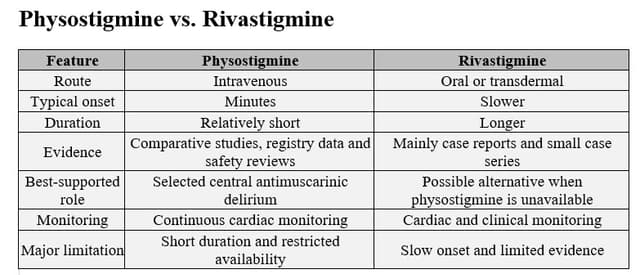
Neither medicine replaces supportive care or treatment of seizures, hyperthermia or cardiotoxicity.
Children may develop severe toxicity after comparatively small accidental ingestions, particularly with concentrated liquids, adult sleep aids or transdermal patches.
Early symptoms may be mistaken for behavioural disturbance, fever, infection or a primary neurological illness.
A randomized adolescent trial supports the effectiveness of physostigmine in selected antimuscarinic poisoning, and national paediatric analyses have not identified a high rate of serious adverse outcomes when it is used appropriately. Nevertheless, paediatric dosing and patient selection should involve a poison centre or paediatric medical toxicologist. E
Evidence for rivastigmine in children remains especially limited.
Families can reduce accidental exposures using the storage principles in How to Prevent Poisoning at Home: A Parent's Essential Safety Guide.
Older adults may be more vulnerable to antimuscarinic delirium because of:
reduced physiological reserve;
multiple medications;
dementia or baseline cognitive impairment;
impaired renal or hepatic clearance;
bladder dysfunction;
dehydration;
increased blood–brain barrier vulnerability.
The syndrome may develop through accumulation or drug interactions rather than one dramatic overdose.
A complete medication review should include sleep aids, bladder medicines, antihistamines, antidepressants, antipsychotics, motion-sickness products and over-the-counter cold preparations.
In the United States, Poison Control should be contacted after an unexpected ingestion, dosing error or suspected anticholinergic exposure—even before severe symptoms develop.
MedicalToxic.com’s Poison Control: Your Lifeline in Emergencies explains how to access immediate specialist advice.
Call emergency services immediately when a person:
cannot be awakened;
is severely confused or violent;
has a seizure;
develops a very high temperature;
collapses;
has difficulty breathing;
has chest pain or an abnormal heart rhythm;
may have taken several medications;
has intentionally overdosed.
The practical role of specialist consultation is examined further in The Role of Poison Center Calls: Managing Poisoning Cases from Emergency Calls to Critical Decisions.
Do not induce vomiting or attempt to administer a prescription antidote at home.
Anticholinergic toxidrome is not simply a collection of dry skin, dilated pupils and agitation.
The central clinical problem is often antimuscarinic delirium, but the most dangerous patient may also have seizures, hyperthermia, sodium-channel blockade, hypotension or another mixed toxic mechanism.
The safest diagnostic approach is to:
recognize the central and peripheral pattern;
obtain an ECG;
identify the exact product;
search for co-ingestants;
treat airway, temperature, seizures and cardiotoxicity;
consult a poison centre or medical toxicologist.
Physostigmine can rapidly reverse central anticholinergic delirium in carefully selected patients. Modern evidence suggests that serious adverse effects are uncommon when clinicians exclude conduction abnormalities, administer the drug slowly and monitor continuously.
Rivastigmine is a promising alternative when physostigmine is unavailable, but it has a slower onset, longer duration and substantially less comparative evidence. It should be used through a defined toxicology protocol—not as an interchangeable over-the-counter substitute.
The most important treatment decision is therefore not simply “physostigmine or benzodiazepine?”
It is:
Does this patient have a sufficiently convincing, isolated antimuscarinic toxidrome—and have the ECG, exposure history and contraindications been assessed before antidotal treatment?
FAQ
Early findings may include dry mouth, blurred vision, dilated pupils, tachycardia, restlessness or confusion. No single symptom confirms the diagnosis.
Anticholinergic poisoning usually causes dry skin, reduced bowel activity and delirium without clonus. Serotonin syndrome more often produces sweating, hyperreflexia, clonus and increased gastrointestinal activity.
No. Severe diphenhydramine poisoning can block cardiac sodium channels and produce QRS widening, ventricular dysrhythmia or cardiac arrest.
The major concern is evidence of cardiotoxicity or another mixed toxic mechanism, particularly QRS widening, PR prolongation, seizures or dysrhythmia. Current poison-centre protocols advise against physostigmine when concerning conduction abnormalities are present.
That has not been established. Rivastigmine has shown potential in small observational studies and case reports, but large comparative trials are lacking. It also acts more slowly than intravenous physostigmine.
Usually not. Routine immunoassays do not comprehensively test for most antimuscarinic agents and may produce false-positive or false-negative results.
© All copyright of this material is absolute to Medical toxicology
As the Growth & Content Lead at MedicalToxic.com, I work on content strategy, development, and digital growth. My focus is on making MedicalToxic’s content clear, practical, and accessible, while helping expand the platform’s reach and strengthen its position as a trusted resource in clinical toxicology.
References
A. Ontario Poison Centre. (2026). Physostigmine salicylate for anticholinergic toxicity.
B. Ontario Poison Centre. (2026). Alternatives to physostigmine salicylate for anticholinergic toxicity.
C. Arens, A. M., Shah, K., Al-Abri, S., Olson, K. R., & Kearney, T. (2019). Adverse effects of physostigmine. Journal of Medical Toxicology, 15, 184–191.
D. Burns, M. J., Linden, C. H., Graudins, A., Brown, R. M., & Fletcher, K. E. (2000). A comparison of physostigmine and benzodiazepines for the treatment of anticholinergic poisoning. Annals of Emergency Medicine, 35(4), 374–381.
E. Wang, G. S., Baker, K., Ng, P., et al. (2021). A randomized trial comparing physostigmine vs lorazepam for treatment of antimuscarinic toxidrome. Clinical Toxicology, 59(8). https://doi.org/10.1080/15563650.2020.1854281
F. Watkins, J. W., Schwarz, E. S., Arroyo-Plasencia, A. M., & Mullins, M. E. (2015). The use of physostigmine by toxicologists in anticholinergic toxicity. Journal of Medical Toxicology, 11, 179–184.
G. Berg, M., Strand, A., Garrett, N. D., Keric, A., & Wilkinson, J. (2025). Rivastigmine as an alternative treatment for anticholinergic toxidrome in light of the physostigmine shortage: A case series. American Journal of Emergency Medicine, 94, 144–147.
H. Chiew, A. L., Holford, A. G., Chan, B. S. H., & Isoardi, K. Z. (2024). Rivastigmine for the management of anticholinergic delirium. Clinical Toxicology, 62(2), 82–87.
I. Tang, K. B., et al. (2024). Evolving trends of pharmaceutical poisonings associated with QRS complex prolongation. Clinical Toxicology.
J. U.S. Food and Drug Administration. (2020). FDA warns about serious problems with high doses of the allergy medicine diphenhydramine.
K. Simon, M., & Heard, K. (2023). Are antimuscarinic effects common in hydroxyzine overdose?. Clinical Toxicology, 61(5), 379–386.
L. Bruccoleri, R. E., & Burns, M. M. (2016). A literature review of the use of sodium bicarbonate for the treatment of QRS widening. Journal of Medical Toxicology, 12, 121–129.
M. American Society of Health-System Pharmacists. (2026). Drug shortage detail: Physostigmine salicylate injection.
Keep reading
 Clinical Toxicology
Amirhosein Shabrang
 Clinical Toxicology
Amirhosein Shabrang
 Clinical Toxicology
Amirhosein Shabrang
 Clinical Toxicology
Amirhosein Shabrang