Pediatric and adolescent Toxicology
Pediatric Tramadol Poisoning: Risks and Management
Amirhosein Shabrang
Post on 26 Nov 2026 · 24 min read

Amirhosein Shabrang
Post on 26 Nov 2026 · 24 min read
 Medical Toxicologymedicaltoxic.com
https://medicaltoxic.com/blogs/pediatric-tramadol-poisoning
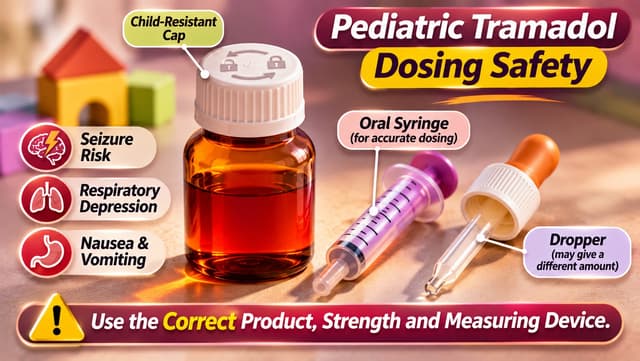
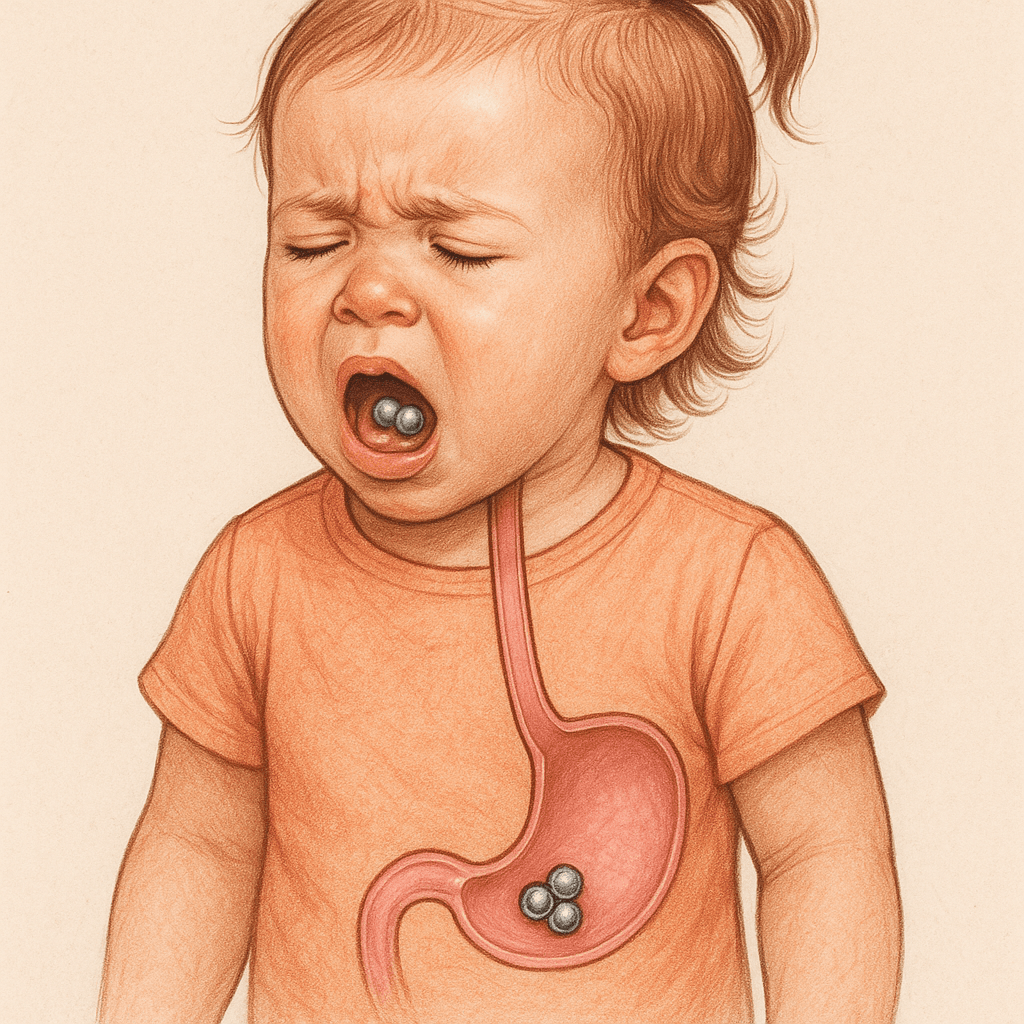
Tramadol poisoning in children presents a distinctive toxicological challenge. Although tramadol is classified as an opioid analgesic, its effects extend beyond opioid receptors. Overdose may cause profound sedation, respiratory depression, seizures, and, in selected circumstances, serotonin toxicity.
These risks are particularly important when children accidentally ingest an adult's medication or receive an incorrect dose of an oral solution. Medication concentration, measuring devices, prescription instructions, and individual differences in drug metabolism may all influence exposure.
In a nationwide French poison-center study published in 2022, researchers identified 1,260 reported exposures to immediate-release tramadol in children aged six years or younger during 2003–2019. Among 145 analyzed single-agent cases, 12 children developed respiratory depression. The study found substantial variability in clinical severity and emphasized that pediatric risk assessment cannot be reduced to a single observation. [1]
In the United States, tramadol is contraindicated in children younger than 12 years and in patients younger than 18 years for postoperative pain management following tonsillectomy or adenoidectomy. These are US-specific restrictions and should not be described as identical regulations worldwide. [2]
A 2026 forensic case report described a fatal pediatric tramadol intoxication following postoperative administration. Although this case reinforces the importance of preventing dosing errors, an individual death cannot establish the frequency of fatal poisoning, a universally lethal dose, or an outcome prediction based on a single postmortem concentration. [3]
The clinical priority is to recognize respiratory compromise and seizures early, provide appropriate supportive treatment, and prevent avoidable medication errors.
This review examines the evidence behind pediatric tramadol toxicity, its pharmacological mechanisms, formulation-related risks, clinical assessment, management principles, monitoring, and prevention.
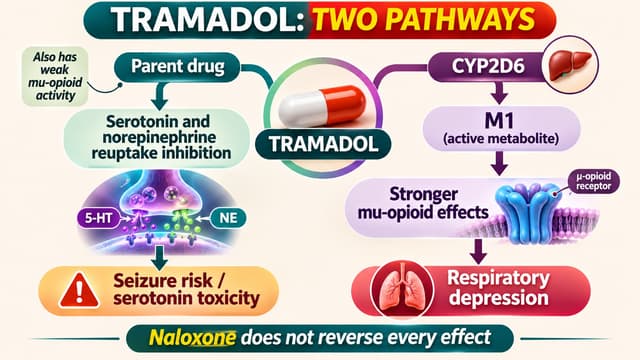
Tramadol has both opioid and monoaminergic effects. Toxicity can involve respiratory depression, seizures, and serotonin toxicity.
Young children are vulnerable to accidental ingestion and dosing errors, particularly involving concentrated oral drops and solutions.
Tramadol is converted by CYP2D6 to O-desmethyltramadol (M1), a metabolite with greater affinity for mu-opioid receptors. Genetic variation contributes to differences in response.
US FDA labeling contraindicates tramadol in children younger than 12 and in those younger than 18 after tonsillectomy or adenoidectomy. Regulations differ internationally.
Naloxone is appropriate for clinically important suspected opioid-mediated respiratory depression, but it does not reliably reverse tramadol's seizure-producing or serotonergic effects.
Benzodiazepines are a principal treatment for tramadol-associated seizures, alongside airway protection and correction of physiological complications.
A routine urine opiate screen cannot reliably exclude tramadol exposure, and serum tramadol concentrations are generally not needed for initial resuscitation.
No single pediatric dose threshold, observation period, or discharge rule can safely be applied to all formulations and clinical circumstances.
Tramadol's pharmacology explains why its clinical presentation may be more complicated than conventional opioid toxicity.
Tramadol is a centrally acting analgesic with two important mechanisms:
Agonist activity at mu-opioid receptors, mediated partly by its active metabolite.
Inhibition of serotonin and norepinephrine reuptake by the parent compound.
The opioid component contributes to analgesia, sedation, and respiratory depression.
The monoaminergic component contributes to the drug's analgesic activity but also creates clinically important concerns involving seizures, serotonergic drug interactions, and serotonin toxicity.
This combination makes tramadol poisoning more than a straightforward opioid-receptor problem.
A patient may improve in respiratory function after naloxone yet remain at risk for seizures or other manifestations. Conversely, seizures may occur without severe opioid-like sedation.
After absorption, tramadol undergoes hepatic metabolism through several pathways.
CYP2D6 converts tramadol to O-desmethyltramadol, commonly called M1. M1 has greater mu-opioid receptor affinity than the parent compound.
Other metabolic pathways, including those involving CYP3A4 and CYP2B6, also influence tramadol disposition.
The relative exposure to tramadol and M1 depends on metabolism, drug interactions, and individual patient characteristics.
These relationships are described in current US prescribing information and are central to understanding tramadol's variable clinical effects. [2]
Pediatric tramadol poisoning may occur through several pathways.
Young children may encounter tramadol tablets, capsules, or liquid preparations stored in homes where the medication belongs to another family member.
The exposure may be unwitnessed, and the quantity initially reported may be inaccurate.
A child's smaller body weight makes the amount contained in an adult medication particularly relevant to risk assessment.
An apparently small number of tablets should not be assumed harmless.
Liquid tramadol preparations are a particularly important medication-safety concern.
Concentrations, measuring devices, labeling conventions, and available formulations vary between countries and products.
An error may occur when someone:
Confuses drops with milliliters.
Uses the wrong product concentration.
Misreads the dose expressed in milligrams.
Repeats a dose administered by another caregiver.
Uses an incorrect or incompatible measuring device.
Applies instructions from a different formulation.
Miscommunicates the prescribed dose during a transfer of care.
Some authorized French oral preparations contain tramadol at 100 mg/mL. This high concentration makes accurate measurement and instruction especially important. The French official product information includes specific warnings about pediatric overdose and secure storage. [4]
This concentration is an example of a particular authorized product, not a universal tramadol liquid strength.
The number of drops per milliliter should never be assumed interchangeable between products or measuring systems.
Medication errors can occur even when caregivers intend to follow medical instructions.
The 2026 case report by Sakly and colleagues described a four-year-old child found dead after a postoperative tramadol exposure.
According to the family's account, the mother administered 90 drops of a tramadol preparation, estimated by the authors to contain approximately 400 mg. The family reported that the administration followed the prescribed postoperative medication plan.
The authors described toxicological and forensic findings supporting acute tramadol intoxication as the cause of death, most likely through respiratory depression. [3]
However, the family's account of the prescription instructions should not be represented as independently verified proof of exactly what was prescribed or communicated.
The case illustrates serious medication-safety concerns, including prescription review and caregiver education. It does not establish that similar exposure circumstances are common or that a particular postmortem concentration universally predicts death.
Intentional self-poisoning becomes more relevant in older children and adolescents.
Mixed ingestions may involve other opioids, sedatives, antidepressants, or analgesic combinations.
Such circumstances introduce additional diagnostic uncertainty and may increase the risk of respiratory depression, seizures, or serotonin toxicity.
Adolescent poisoning assessment therefore requires evaluation for possible co-ingestants and appropriate psychosocial assessment after medical stabilization.
CYP2D6 is a drug-metabolizing enzyme with substantial genetic variability.
Different CYP2D6 phenotypes influence the conversion of tramadol into M1.
The FDA's Table of Pharmacogenetic Associations identifies increased active-metabolite exposure and potentially life-threatening respiratory depression in CYP2D6 ultrarapid metabolizers taking tramadol. [5]
The Clinical Pharmacogenetics Implementation Consortium (CPIC) also recommends avoiding tramadol in individuals known to be CYP2D6 ultrarapid metabolizers because of toxicity concerns, and in poor metabolizers because of reduced formation of the active metabolite and potentially diminished analgesia. These pharmacogenetic recommendations do not override age-based regulatory contraindications. [6]
CYP2D6 phenotype | Expected effect on M1 formation | Clinical implication |
|---|---|---|
Poor metabolizer | Markedly reduced | Reduced opioid-mediated analgesic effect; parent-drug adverse effects remain possible |
Intermediate metabolizer | Reduced | Potentially diminished M1 exposure and variable analgesic response |
Normal metabolizer | Expected formation | Does not eliminate toxicity or overdose risk |
Ultrarapid metabolizer | Increased | Greater risk of active-metabolite-related opioid toxicity, including respiratory depression |
This table describes pharmacogenetic effects on metabolism and expected response, not a validated method for predicting the severity of an acute overdose.
CYP2D6 inhibitors can increase exposure to the parent drug while reducing M1 formation.
Depending on the circumstances, this may alter analgesia, seizure risk, serotonergic effects, and subsequent opioid activity if the interacting medicine is discontinued.
CYP3A4 inhibitors and inducers may also change tramadol exposure. [2]
Genetics are important, but they do not explain every case.
A 2024 French case report involving a five-year-old child documented substantial variability in tramadol pharmacokinetics despite a predicted normal CYP2D6 metabolizer phenotype. The authors considered additional physiological factors, including volume of distribution, relevant to the prolonged elimination observed in that patient. [7]
This is case-level evidence, not proof that every child with a normal CYP2D6 phenotype will have prolonged elimination.
Clinical implication: Neither a presumed normal genotype nor an apparently ordinary medication dose is sufficient to dismiss concerning symptoms.
A universally safe or lethal pediatric tramadol dose has not been established.
Risk depends on several factors, including:
Age and body weight.
Immediate-release versus modified-release formulation.
The quantity and accuracy of the exposure history.
CYP2D6 metabolism.
Renal and hepatic function.
Co-ingested medicines.
Existing neurological or respiratory conditions.
Individual pharmacokinetic variability.
Caré and colleagues retrospectively evaluated immediate-release tramadol exposures in children aged six years or younger.
Of the 145 analyzed single-agent cases:
49.7% were asymptomatic.
29.6% had minor neurological symptoms.
14.5% had moderate-to-severe neurological symptoms.
Twelve children experienced respiratory depression.
No seizures or deaths were recorded in that analyzed subgroup.
The investigators identified 7.4 mg/kg as a study-derived threshold for recommending hospital referral in their defined population. [1]
This threshold was based on retrospective poison-center data, particular eligibility criteria, estimated exposure information, and immediate-release products.
It must not be converted into a universal safe dose or a home-observation rule for every child.
The study's absence of observed seizures does not establish that seizures cannot occur below that level or after therapeutic administration.
A separate observational study by Stassinos and colleagues examined tramadol ingestions in young children and documented seizures and respiratory depression in some cases.
Its authors emphasized limitations involving small numbers of patients with reliable dose information and lack of laboratory confirmation of the reported ingested quantity.
The study did not establish a universally valid minimum dose requiring medical management. [8]
Neither study supports using a postmortem tramadol concentration from a fatal case as an individual prediction rule.
For an actual exposure, poison-center consultation and the child's clinical condition are more important than applying a single published cutoff.
Tramadol toxicity may involve neurological, respiratory, gastrointestinal, autonomic, and cardiovascular manifestations.
Clinical domain | Reported manifestations | Clinical significance |
|---|---|---|
CNS | Drowsiness, lethargy, confusion, reduced responsiveness, coma | Assesses severity and airway protection |
Respiratory | Slow or shallow breathing, hypoventilation, apnea | Potentially life-threatening opioid-mediated effects |
Neurological | Generalized seizures, agitation, tremor | Tramadol-associated seizure risk |
Gastrointestinal | Nausea, vomiting | Common but nonspecific; aspiration risk if consciousness is impaired |
Autonomic | Tachycardia, sweating, temperature abnormalities | May reflect toxicity, physiological stress, or serotonergic effects |
Serotonergic | Clonus, hyperreflexia, agitation, hyperthermia | Raises concern for serotonin toxicity, particularly with interacting drugs |
Cardiovascular | Variable blood-pressure and heart-rate abnormalities | Requires assessment in clinical context |
Opioid-mediated respiratory depression is one of the most dangerous manifestations.
A child may become unusually sleepy, breathe slowly, develop shallow ventilation, or become difficult to awaken.
Oxygen saturation can remain deceptively reassuring early in hypoventilation, particularly when supplemental oxygen is being administered. Clinicians must evaluate respiratory effort and ventilation directly.
Severe respiratory depression can lead to hypoxia, aspiration, respiratory arrest, and secondary organ injury.
Tramadol-associated seizures are a distinctive clinical concern.
They are commonly described as generalized tonic-clonic seizures and may occur after overdose or, less commonly, during therapeutic use.
Seizure risk is influenced by exposure, interacting medications, and individual susceptibility, but no single tramadol concentration reliably predicts whether a seizure will occur.
The absence of a seizure on arrival does not guarantee that one will not develop later.
Because tramadol inhibits serotonin reuptake, serotonin toxicity is possible, especially when combined with other serotonergic medicines.
Relevant findings include:
Agitation or altered mental status.
Tremor.
Hyperreflexia and clonus.
Diaphoresis.
Tachycardia and autonomic instability.
Hyperthermia in severe cases.
Not every tramadol-associated seizure is serotonin syndrome.
The distinction matters because isolated seizures and serotonin toxicity are different clinical problems requiring different assessments.
For detailed diagnostic reasoning, see Serotonin Syndrome (Serotonin Toxicity): Symptoms, Diagnosis, Drug Interactions, and Treatment.
Tramadol poisoning can resemble other medication exposures and acute medical conditions.
Differential diagnosis | Overlapping manifestations | Important distinguishing considerations |
|---|---|---|
Other opioid poisoning | Sedation, miosis, hypoventilation | Tramadol has additional seizure and monoaminergic effects |
Clonidine or guanfacine poisoning | CNS depression, respiratory compromise | Bradycardia and hypotension may be especially prominent |
Antidepressant poisoning | Seizures, altered mental status, serotonin toxicity | Co-ingestion history and ECG abnormalities |
Hypoglycemia | Reduced consciousness, seizures | Immediate bedside glucose testing |
Other sedative poisoning | Somnolence, reduced airway protection | Agent-specific cardiovascular and respiratory findings |
Intracranial injury or CNS infection | Seizures, altered consciousness | Trauma, fever, focal neurological findings, inconsistent exposure history |
No single examination feature confirms tramadol poisoning.
In an unwitnessed exposure, the differential diagnosis should remain open until the history, examination, and available investigations provide sufficient support.
The initial approach follows general pediatric poisoning principles: physiological stabilization, exposure assessment, targeted investigations, and repeated examination.
The Royal Children's Hospital Melbourne advises that pediatric poisoning assessment should prioritize resuscitation and risk assessment, which may need to occur simultaneously. [9]
Clinical priorities include:
Assess airway patency and protective responses.
Evaluate respiratory rate, effort, oxygenation, and ventilation.
Assess circulation, blood pressure, heart rate, and perfusion.
Check consciousness and neurological findings.
Obtain bedside glucose.
Identify seizures, abnormal temperature, or possible serotonin toxicity.
Establish exposure details and contact a poison center when appropriate.
A child with severe respiratory depression, recurrent seizures, or impaired airway protection needs urgent escalation.
Confirm as much of the following as possible:
Exact product and active ingredients.
Liquid concentration or tablet strength.
Immediate-release or extended-release formulation.
Time and maximum possible quantity ingested.
Child's weight and age.
How the medication was administered.
Whether the measuring device matched the product.
Previous doses or possible duplicate administration.
Other accessible medications.
Relevant medical conditions and interacting prescriptions.
The original medicine container and dosing device can be particularly valuable in suspected liquid medication errors.
Testing should address the child's clinical condition and important differential diagnoses rather than attempting to confirm every exposure through broad screening.
Investigation | Potential value |
|---|---|
Point-of-care glucose | Identifies a rapidly reversible cause of altered consciousness or seizures |
Electrocardiogram | Evaluates rhythm, conduction, and possible co-ingested cardiotoxic drugs |
Electrolytes and renal function | Useful in significant illness, prolonged symptoms, seizures, or suspected metabolic complications |
Blood gas | Assesses suspected hypoventilation or acid-base disturbances |
Creatine kinase | May help after prolonged or repeated seizures or suspected rhabdomyolysis |
Acetaminophen concentration | Important when combination analgesics or intentional mixed ingestion are possible |
Targeted toxicological analysis | Consider when results could change clinical or forensic interpretation |
A routine opiate immunoassay generally does not reliably detect tramadol because many standard assays are designed around morphine-related compounds.
Some specialized assays can identify tramadol or its metabolites, and confirmatory methods such as liquid chromatography–mass spectrometry may be available.
However, a negative routine opiate screen does not exclude tramadol ingestion.
Conversely, a positive drug screen does not independently prove that the detected substance caused the current clinical findings.
For a detailed explanation of immunoassay limitations, see Drug Screens Lie: A Clinician’s Guide to Interpreting Toxicology Tests Safely.
Serum tramadol concentrations are rarely available rapidly and generally do not direct initial stabilization.
They may contribute to selected specialist, analytical, or forensic investigations, but treatment should not wait for them.
Supportive care is the foundation of treatment.
Management should target the child's actual physiological abnormalities and anticipate potential deterioration.
The Royal Children's Hospital's toxicology guidance identifies CNS and respiratory depression, seizures, and serotonin syndrome as relevant manifestations of tramadol poisoning. It emphasizes monitoring, airway support, and treatment of seizures. [10]
That guideline primarily addresses adolescent recreational exposures; its principles should be applied to younger children within an appropriate pediatric toxicology framework.
Respiratory assessment is an immediate priority.
Children with impaired ventilation may require assisted breathing, oxygenation support, and close monitoring.
A child with apnea, persistent inability to protect the airway, refractory seizures, or worsening respiratory failure may require endotracheal intubation and intensive care.
The decision should be driven by ventilation, airway protection, and clinical trajectory rather than an isolated numerical consciousness score.
Naloxone must not delay essential ventilatory support.
Naloxone competitively antagonizes opioid receptors.
In suspected tramadol poisoning, it can reverse clinically important opioid-mediated respiratory depression.
However, naloxone does not directly reverse all of tramadol's effects on serotonin and norepinephrine pathways.
A patient may remain at risk of seizures or serotonin toxicity after improvement in breathing.
Naloxone's effect may also wear off before tramadol-related opioid effects fully resolve, potentially requiring continued monitoring and additional treatment.
This question has generated conflicting findings in observational studies.
A 2019 systematic review and meta-analysis by Eizadi-Mood and colleagues examined seven studies of naloxone use in acute tramadol poisoning.
The pooled estimate did not demonstrate a statistically significant increase in seizure risk with naloxone (odds ratio 1.14; 95% confidence interval 0.60–2.18).
However, the confidence interval and limitations of the included studies mean this result does not prove that naloxone has no seizure-related risk in every setting. The evidence was not sufficient to establish a specific pediatric safety guarantee. [11]
Clinical interpretation: Naloxone should not be withheld from a child with clinically important suspected opioid-mediated respiratory depression solely because tramadol may be involved.
It should be administered according to appropriate pediatric emergency protocols, with attention to ventilation and repeated reassessment.
Naloxone is not an anticonvulsant, does not prevent all tramadol complications, and should not be used as proof that a child is ready for discharge.
Tramadol-associated seizures require prompt supportive care and treatment.
Immediate priorities include protecting the child from injury, ensuring oxygenation and ventilation, and identifying reversible metabolic abnormalities.
Benzodiazepines are a principal first-line pharmacological treatment for clinically significant toxicological seizures.
Persistent or recurrent seizures require escalation through established pediatric seizure-management pathways, often including specialist and critical-care involvement.
Routine prophylactic anticonvulsant treatment for every asymptomatic tramadol exposure is not supported by strong pediatric evidence.
Likewise, management should not rely on phenytoin as a routine first-line treatment for toxin-induced seizures.
When serotonin toxicity is suspected, clinicians should identify and discontinue contributing serotonergic medicines and provide severity-directed supportive management.
Agitation, muscle activity, hyperthermia, and autonomic complications require appropriate treatment and monitoring.
Severe hyperthermia associated with serotonin toxicity is primarily related to excessive muscular activity rather than a conventional fever mechanism.
Accordingly, treatment should address the underlying muscle activity and physiological consequences rather than relying on antipyretics alone.
Activated charcoal has a limited and selective role.
Its potential benefit depends on the formulation, ingestion timing, expected severity, and airway safety.
A child who is drowsy, vomiting, seizing, or unable to protect the airway faces an important aspiration risk.
The Royal Children's Hospital recommends restricting activated charcoal use to carefully selected situations, generally after consultation with a toxicologist. [9]
Activated charcoal should not be routinely given at home after suspected tramadol ingestion.
Induced vomiting is inappropriate.
Any consideration of gastrointestinal decontamination should follow an individualized toxicology assessment and must not delay resuscitation.
Hemodialysis is not an established routine treatment for isolated tramadol poisoning.
Management generally depends on airway support, seizure control, cardiovascular stabilization, and monitoring.
Renal dysfunction may influence tramadol and metabolite clearance, but this does not automatically establish an indication for extracorporeal removal.
Severe or complicated cases require specialist consultation rather than automatic application of dialysis protocols used for other toxicants.
For broader critical-care principles, see Management of Acute Poisoning in the Intensive Care Unit. That guideline is primarily adult-focused; pediatric-specific protocols should govern bedside management.
A normal initial examination does not necessarily exclude subsequent toxicity.
The risk of delayed or prolonged effects is influenced by product formulation, timing, metabolic variability, co-ingestants, and organ function.
Modified-release preparations deserve particular attention because absorption and clinical effects may differ from those of immediate-release products.
Clinical situation | General clinical consideration |
|---|---|
Suspected small, well-characterized immediate-release exposure without symptoms | Poison-center assessment; do not automatically apply a study-specific home-observation threshold |
Uncertain dose, concentration, or timing | More cautious assessment because the exposure cannot be reliably characterized |
Extended-release ingestion | Consider delayed or prolonged absorption and clinical effects |
Mild but persistent sedation | Continued monitoring until an appropriate level of consciousness and physiological recovery |
Respiratory depression | Hospital management with ventilatory support and monitoring appropriate to severity |
Seizures or serotonin toxicity | Urgent medical treatment and assessment for complications |
Recurrent respiratory depression after naloxone | Continued monitoring and reassessment for further opioid-mediated effects |
Intentional ingestion or possible co-ingestants | Broader poisoning investigation and appropriate psychosocial assessment |
No universally validated observation period can be recommended for all pediatric tramadol exposures.
Discharge should depend on the patient's clinical recovery, exposure certainty, formulation, and specialist judgment.
Before discharge, the child should have age-appropriate consciousness and behavior, adequate ventilation and perfusion, a reassuring clinical course, and an appropriate caregiver and safety plan.
Persistent neurological abnormalities, recurrent respiratory depression, or unresolved concerns about the ingestion are reasons to defer discharge.
The 2022 French poison-center study derived a referral threshold for a particular immediate-release, single-substance pediatric population.
The authors suggested that selected children without underlying illness or concomitant medications who ingested below the study threshold might be observed at home.
However, the retrospective design, uncertainty in exposure estimates, and the possibility of seizures outside the observed cohort limit generalization. [1]
That conclusion should not be reproduced as an unrestricted instruction for caregivers.
A numerical threshold cannot replace individualized poison-center risk assessment.
Tramadol's pediatric regulatory status differs internationally.
The FDA strengthened pediatric tramadol restrictions in 2017 because of reports of serious respiratory depression and deaths.
Current US tramadol labeling includes:
Contraindication in children younger than 12 years.
Contraindication for postoperative pain management after tonsillectomy or adenoidectomy in patients younger than 18 years.
Warnings against use in adolescents aged 12–18 who have additional respiratory risk factors, including obstructive sleep apnea, obesity, and significant pulmonary disease.
Warnings concerning CYP2D6 ultrarapid metabolism and interacting medications.
A recommendation against breastfeeding during maternal tramadol treatment.
These restrictions are reflected in current US prescribing information. [2]
Some European jurisdictions have permitted pediatric use of specific tramadol formulations under defined age and prescribing conditions.
For example, French official product information for a particular oral solution describes an indication for children from three years of age and adolescents. The same information emphasizes overdose precautions and safe storage. [4]
This difference does not establish that tramadol is safe for all eligible pediatric patients or that a formulation authorized in one country is approved in another.
Clinicians and caregivers must follow the current authorization, product-specific labeling, and clinical recommendations applicable to their jurisdiction.
Preventing medication errors is one of the most actionable ways to reduce avoidable pediatric harm.
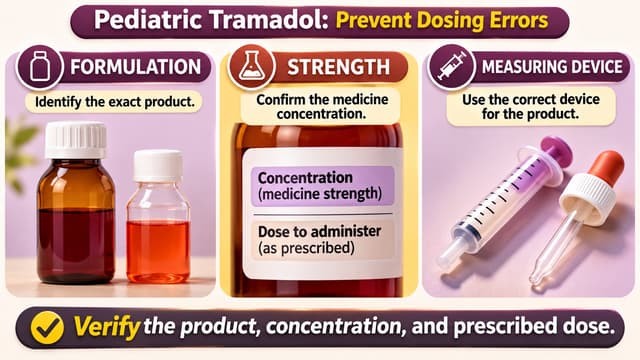
Before dispensing or administering tramadol, the exact medication, concentration, formulation, and prescribed quantity should be confirmed.
Oral drops and solutions should never be treated as interchangeable simply because they contain the same active drug.
A concentration expressed as mg/mL is not equivalent to a dose expressed in drops.
Prescription instructions should be unambiguous.
The patient's age, weight, product strength, dosing units, measuring device, and administration interval should be checked.
For high-risk liquid medication use, an independent dose calculation and appropriate pharmacist verification can reduce opportunities for error.
Caregivers should understand which measuring device belongs to the specific medicine and should not use household teaspoons or an unrelated dropper.
When multiple caregivers are involved, a written administration record can help identify whether a dose has already been given.
This is particularly important after surgery or when a child is recovering at home and several adults share responsibility for medications.
Opioid medicines should be stored securely, out of sight and reach of children, and inaccessible to visitors and other household members.
The FDA recommends safe storage and prompt appropriate disposal of unused or expired opioid medicines. [12]
Children should never be given another person's prescription medication.
Contact a poison center immediately for individualized advice.
Seek emergency medical help if the child has:
Slow, shallow, or abnormal breathing.
Severe sleepiness or difficulty awakening.
Seizures.
Collapse or loss of consciousness.
Other signs of serious illness.
Do not induce vomiting or give activated charcoal at home.
If naloxone is available and an opioid overdose is suspected, follow emergency-service instructions and the product's directions while ensuring that emergency help is obtained. Naloxone does not replace assessment and monitoring for tramadol-associated seizures or recurrent toxicity.
Bring the medication container and measuring device to the medical team when possible.
In the United States, Poison Control can be reached at 1-800-222-1222. In other countries, contact the appropriate local poison information service.
Tramadol is not just another opioid.
Its monoaminergic activity makes seizures and serotonin toxicity important considerations alongside respiratory depression.
A normal routine opiate screen does not exclude tramadol.
Testing must be interpreted according to the actual assay's detection capabilities.
A liquid dose is only meaningful when the concentration is known.
Confusing drops, milliliters, and milligrams can result in major dosing errors.
Naloxone treats the opioid-mediated component.
It may improve breathing but does not reliably prevent seizures or serotonin toxicity.
CYP2D6 is relevant, but not the whole explanation.
Genetics, drug interactions, formulation, age, and physiological variability all matter.
A case report is not a dose-response study.
An individual fatal exposure cannot define a universal lethal dose or postmortem threshold.
Do not import a French referral cutoff into every clinical setting.
Published thresholds must be interpreted within the population, formulation, and methods studied.
Monitor the patient, not merely the clock.
Recovery, breathing, neurological status, formulation, and exposure certainty should guide disposition.
The most important complications are respiratory depression, profound CNS depression, and seizures. Serotonin toxicity may also occur, particularly with interacting serotonergic medications. Severe symptoms require emergency assessment and treatment.
Yes. Tramadol's seizure risk is not limited to children with severe opioid-mediated respiratory depression. Seizures and respiratory depression reflect overlapping but distinct pharmacological effects.
Naloxone may reverse the opioid-mediated respiratory effects of tramadol. It does not reliably reverse seizures or serotonin toxicity, and recurrent respiratory depression may require continued monitoring. Airway and ventilatory support remain essential.
Regulatory status differs by country. In the United States, tramadol is contraindicated below age 12 and for postoperative pain following tonsillectomy or adenoidectomy below age 18. Some other jurisdictions authorize specific pediatric formulations under defined conditions.
No single universally valid pediatric toxic-dose threshold has been established. Dose-response studies provide useful information for selected populations, but risk assessment must consider formulation, symptoms, patient characteristics, and exposure uncertainty.
There is no universal observation period appropriate for every exposure. Immediate-release and modified-release products may require different monitoring strategies. Clinical recovery, risk factors, and poison-center guidance should inform disposition.
No. A normal CYP2D6 phenotype does not prevent overdose toxicity. Drug concentration, formulation, co-ingestants, organ function, and other physiological factors remain relevant.
Pediatric tramadol poisoning requires attention to both opioid-mediated toxicity and tramadol's additional monoaminergic effects.
Respiratory depression and seizures are the most clinically important complications to recognize early. Concentrated oral solutions, dosing-unit confusion, formulation differences, and drug-metabolism variability create additional pediatric risks.
Published poison-center studies help characterize these exposures, but they do not establish a universally safe dose or a discharge rule applicable to every child. Similarly, a fatal forensic case demonstrates the potential consequences of medication error without defining the expected outcome of ordinary pediatric exposures.
Management centers on prompt assessment, airway and ventilatory support, seizure treatment, appropriate naloxone use, monitoring, and specialist consultation.
Prevention depends on accurate prescribing, pharmacist verification, clear caregiver instructions, medication reconciliation, secure storage, and awareness of jurisdiction-specific pediatric restrictions.
© All copyright of this material is absolute to Medical toxicology
As the Growth & Content Lead at MedicalToxic.com, I work on content strategy, development, and digital growth. My focus is on making MedicalToxic’s content clear, practical, and accessible, while helping expand the platform’s reach and strengthen its position as a trusted resource in clinical toxicology.
Keep reading
 Pediatric and adolescent Toxicology
Amirhosein Shabrang
 Pediatric and adolescent Toxicology
Amirhosein Shabrang
 Pediatric and adolescent Toxicology
Amirhosein Shabrang
 Pediatric and adolescent Toxicology

Omid Mehrpour
We would like to use analytics and session-replay tools to understand how this site is used. They are optional and the site works fully without them. Signing in still needs its own cookie either way. Our Privacy Policy names each one.