Pediatric and adolescent Toxicology
Infant Botulism: Symptoms, Diagnosis, BabyBIG Treatment, and Formula Recall Safety
Amirhosein Shabrang
Post on 15 Jul 2026 · Updated 02 Oct 2026 · 19 min read

Amirhosein Shabrang
Post on 15 Jul 2026 · Updated 02 Oct 2026 · 19 min read
 Medical Toxicologymedicaltoxic.com
https://medicaltoxic.com/blogs/infant-botulism-symptoms-babybig-formula-recall-safety

Infant botulism is rare, but its earliest signs can look deceptively ordinary.
Constipation, slower feeding, a weaker cry or reduced head control may appear before the more recognisable pattern of profound weakness and breathing difficulty. Because the illness can progress, parents and clinicians need to recognise the combination of symptoms rather than waiting for a single definitive sign.
The condition occurs when an infant swallows spores from Clostridium botulinum or a related neurotoxin-producing species. The spores can temporarily colonise the large intestine and produce botulinum neurotoxin inside the body. This differs from classic foodborne botulism, in which a person consumes toxin that has already formed in food. A
Recent powdered infant formula outbreaks have brought new attention to the disease. They have also created understandable anxiety among parents. The central message, however, needs to remain precise: infant botulism is uncommon, most cases are not associated with formula, and a recall affecting one product should not be interpreted as evidence that all infant formula is unsafe.
Infant botulism usually begins gradually. Constipation, difficulty feeding, weak cry, reduced facial expression and loss of head control may appear before severe weakness.
It is an intestinal toxemia. Infants swallow bacterial spores, which can colonise the intestine and produce neurotoxin.
Diagnosis begins clinically. Physicians should not wait for laboratory confirmation before seeking specialist consultation or starting treatment when the clinical assessment supports infant botulism.
BabyBIG is the FDA-approved treatment for type A and type B infant botulism in infants younger than one year.
Early BabyBIG matters. Human clinical evidence shows shorter hospital stays and reduced need for intensive care, ventilation and assisted feeding.
Respiratory and nutritional support remain essential. BabyBIG neutralises circulating toxin but does not immediately reverse paralysis that has already developed.
Recalled formula should never be used. Normal preparation, heating or boiling does not make a recalled product safe.
Honey should not be given before 12 months of age. Avoiding honey is the only established specific preventive measure for infant botulism, although most cases have no clearly identified source.
Infant botulism is a neuroparalytic illness that usually occurs during the first year of life.
After spores are swallowed, they may germinate and temporarily colonise the infant’s large intestine. The bacteria then produce botulinum neurotoxin. The toxin travels through the bloodstream and binds to cholinergic nerve endings, where it disrupts the release of acetylcholine—the chemical messenger needed for nerves to activate muscles. A
The result is weakness that often begins in muscles controlled by the cranial nerves and then progresses downward. Clinicians may observe bulbar weakness, hypotonia and a symmetric descending flaccid paralysis. Severe illness can involve the diaphragm and other respiratory muscles.
For a broader explanation of how botulinum neurotoxin interferes with nerve-to-muscle signalling, MedicalToxic.com’s An Interview with Botulinum Toxin: From the Deadliest Poison to a Miraculous Treatment provides accessible background on the toxin’s harmful and therapeutic effects.
The word “botulism” describes several related illnesses, but the route of toxin production differs.
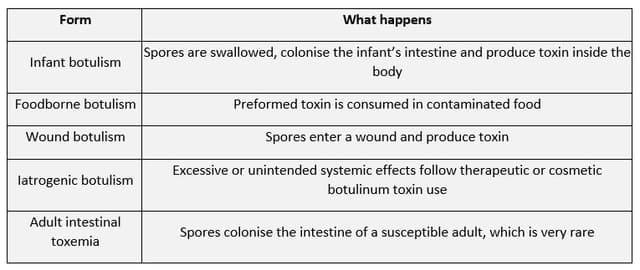
This distinction matters during formula investigations. The concern is not necessarily that a finished bottle already contains a large amount of preformed toxin. The relevant hazard can be the presence of spores capable of producing toxin after entering an infant’s intestine. A
Botulinum spores are also different from many ordinary foodborne bacteria. They are naturally present in soil and dust and can enter home or manufacturing environments. Finding a possible environmental connection does not automatically identify where contamination occurred or establish legal causation.
Infant botulism often develops over hours or days rather than beginning with a dramatic collapse.
Constipation may be the first symptom, but parents frequently notice changes in feeding, crying or muscle strength before they recognise a bowel-pattern change.
Early and progressive findings may include:
constipation or fewer bowel movements;
poor feeding or difficulty maintaining suction;
trouble swallowing;
a weak, quiet or altered cry;
reduced facial expression;
drooping eyelids;
sluggish pupil responses;
diminished suck or gag reflexes;
loss of head control;
generalised weakness or unusual floppiness;
reduced movement;
weak breathing or respiratory distress.
Not every infant will have every symptom. A child may initially appear tired, less expressive or slower to feed without yet looking critically ill. A
The pattern becomes more concerning when feeding difficulty occurs alongside cranial nerve weakness, hypotonia or progressive loss of motor function. CDC guidance specifically identifies poor feeding, ptosis, flattened facial expression, diminished suck and gag reflexes, weak cry and respiratory difficulty as important clinical features.

Parents should seek immediate medical assessment when an infant develops new weakness, poor feeding, loss of head control, difficulty swallowing, reduced facial movement or an altered cry—particularly after a known recalled-product exposure.
Emergency services should be contacted immediately if the infant:
is struggling to breathe;
has pauses in breathing;
becomes blue, grey or unusually pale;
cannot feed or protect the airway;
is very difficult to wake;
develops rapidly worsening weakness;
becomes profoundly floppy;
appears to stop breathing.
Parents should not wait for constipation to appear before seeking help if other neurological or respiratory warning signs are present.
The emergency-response principles outlined in Poison Control: Your Lifeline in Emergencies can help families understand when telephone toxicology advice is appropriate and when emergency services are required.
Infant botulism is a clinical diagnosis, but it is not the only condition that can cause poor feeding, hypotonia or weakness.
Potential mimics include:
sepsis or another serious infection;
spinal muscular atrophy;
congenital myopathies;
metabolic disorders;
myasthenic syndromes;
Guillain–Barré syndrome;
brainstem or central nervous system disease;
electrolyte or metabolic abnormalities;
medication or toxin exposure;
anatomical feeding or airway problems.
A review of 76 infants whose presentations closely resembled botulism found a range of alternative diagnoses, while some remained undetermined. Prominent bulbar weakness, sluggish pupils and fatigability may increase clinical suspicion, but no single examination finding rules the disease in or out. F
Clinicians should therefore evaluate the whole child. Investigating alternative causes should occur in parallel with urgent botulism consultation rather than delaying it.
The initial diagnosis is based on history and clinical findings.
CDC advises physicians who suspect infant botulism to contact the California Department of Public Health Infant Botulism Treatment and Prevention Program immediately at 510-231-7600. Consultation is available 24 hours a day. A B
The specialist consultation helps determine whether the clinical pattern supports release and administration of BabyBIG.
A stool or enema specimen is required for definitive diagnosis. Testing may identify botulinum toxin, toxigenic organisms or both.
CDC specifies that an enema specimen should be obtained using sterile, non-bacteriostatic water. Testing is coordinated through state public-health laboratories, with CDC support available for some jurisdictions. Results may take several days. A
Laboratory testing is important for confirmation, surveillance and outbreak investigation. It should not become a barrier to treatment.
For a case-based example of weak cry, hypotonia, bulbar dysfunction, and progressive respiratory compromise, see Case Study: An 8-Week-Old Infant with Weak Cry, Hypotonia, and Respiratory Distress
The key clinical rule is simple: do not wait for laboratory confirmation before starting treatment when specialist consultation supports infant botulism.
The wider role of rapid reporting and specialist case consultation is discussed in The Role of Poison Center Calls: Managing Poisoning Cases from Emergency Calls to Critical Decisions.

BabyBIG is the trade name for Human Botulism Immune Globulin Intravenous, also called BIG-IV.
It is a human-derived antitoxin containing antibodies against botulinum neurotoxins. It is FDA approved for treatment of infant botulism caused by toxin types A or B in patients younger than one year. L
BabyBIG binds and neutralises toxin that remains available in the circulation. It cannot remove toxin already bound to nerve endings and does not instantly restore muscle strength.
This explains why improvement may be gradual even after appropriate treatment. Recovery depends on nerve terminals regaining their ability to release acetylcholine and communicate with muscles.
The main randomised clinical trial included 122 infants with laboratory-confirmed infant botulism.
Infants who received BIG-IV had a mean hospital stay of 2.6 weeks, compared with 5.7 weeks in the placebo group. Treatment also shortened intensive-care stay, mechanical ventilation and tube or intravenous feeding. D
The study did not demonstrate a mortality difference because there were no deaths in either group. Its strongest evidence concerns reduction of illness burden, complications and hospital-resource use—not proof that BabyBIG guarantees survival in every case.
A later post-licensure analysis examined 1,192 infants treated in the United States between 2003 and 2015. Mean hospital stay was 2.2 weeks among treated infants, compared with 5.7 weeks in the historical placebo group.
The greatest reduction was seen when treatment was given during the first three hospital days. Treatment on hospital days four to seven remained beneficial, while later administration produced a smaller measurable advantage. E
Because the post-licensure study used a historical comparison rather than a concurrent untreated group, changes in hospital practice over time could have influenced outcomes. Even with that limitation, its findings reinforce the time-dependent benefit observed in the randomised trial.
Infants may need intensive supportive care while nerve function recovers.
Important components can include:
continuous respiratory observation;
oxygen and ventilatory support;
intubation and mechanical ventilation when required;
protection against aspiration;
careful feeding and nutritional support;
monitoring of hydration and electrolytes;
management of secretions;
prevention of complications associated with prolonged immobility or intensive care;
gradual reduction of respiratory support as strength returns.
An infant can continue to weaken temporarily after BabyBIG if toxin had already entered nerve endings before treatment. This does not necessarily mean the medication failed.
Repeated neurological and respiratory assessment remains essential. Clinical teams should avoid assuming that an infant who is maintaining oxygen saturation has adequate ventilation; early respiratory muscle weakness may require closer evaluation.
Recovery is usually gradual.
Some infants improve relatively quickly after early treatment, while others require weeks of hospital care and prolonged feeding or respiratory support. The time course depends on the amount of toxin activity, severity at presentation, speed of treatment and complications during hospitalisation.
The Infant Botulism Treatment and Prevention Program states that full recovery is expected for most infants because the toxin does not enter and damage the brain. Nerve endings must recover their ability to signal muscles, which takes time. B
Parents may notice feeding, facial movement and limb strength returning in stages rather than all at once. Discharge planning may include feeding assessment, developmental follow-up and guidance on recognising respiratory or swallowing concerns.
Most cases cannot be traced to a specific exposure and cannot be fully prevented.
Botulinum spores are present in the environment, including soil and dust. They may enter homes on shoes, hands or objects and can remain present even in clean environments. Ordinary household cleanliness cannot eliminate every environmental spore. C
The one established specific preventive measure is not feeding honey to infants younger than one year.
This includes:
honey added to formula or water;
honey on a pacifier;
foods deliberately sweetened with honey;
herbal or traditional preparations containing honey.
Honey may contain botulinum spores even when it looks, smells and tastes normal. Cooking or pasteurisation cannot be assumed to make honey suitable for an infant. C
CDC guidance advises against giving honey before 12 months of age. After the first year, intestinal development makes colonisation much less likely.
For broader household-risk reduction, How to Prevent Poisoning at Home: A Parent's Essential Safety Guide provides practical advice on storing medicines, chemicals and other hazardous products around children.
A formula recall is not a situation in which parents should try to reduce risk by changing the preparation method.
If a specific formula is recalled:
stop using it immediately;
check the exact brand, formulation, package size, lot number and use-by date;
follow FDA, CDC and manufacturer disposal or return instructions;
do not mix recalled formula with a non-recalled product;
do not donate or resell it;
do not assume boiling or using hotter water will make it safe;
record product details before discarding it;
retain an opened container only when public-health authorities advise doing so.
Powdered formula is not a sterile product, but safe routine preparation advice should not be confused with recall instructions. Once a product is recalled because of a potential serious microbiological hazard, the correct response is not to use it.
Public-health lessons from product-related paediatric hazards are also discussed in The Growing Involvement of Pediatric Surgeons in Preventing Toxic Exposures from Consumer Products, which examines how clinical observations can lead to prevention and regulatory action.
Update — August 27, 2026: CDC has declared the Nara Organics infant botulism outbreak over. The final outbreak summary includes four confirmed cases in California, Pennsylvania, and Washington. All four infants were hospitalized, and no deaths were reported. No new cases were added after July 3. [G]
The recall remains in effect. CDC advises families who still have recalled Nara Organics Whole Milk Organic Infant Formula at home not to use it and to discard it. Because symptoms can take several weeks to develop, infants who consumed recalled formula should be monitored for one month after their last exposure, and immediate medical care should be sought if symptoms such as poor feeding, loss of head control, difficulty swallowing, or decreased facial expression develop. [G]
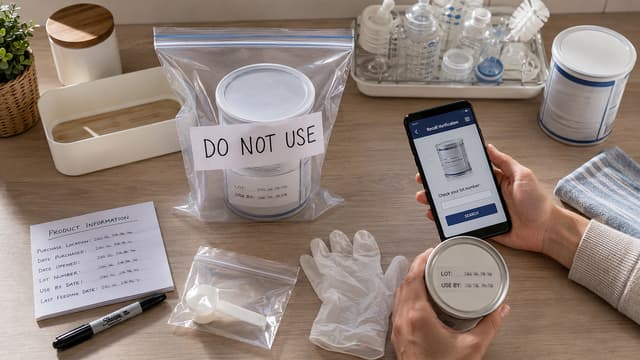
Parents and caregivers should:
Stop using all recalled Nara Organics infant formula.
Photograph the container.
Record the lot number and use-by date.
Return or discard unopened containers according to recall instructions.
Mark an opened container “DO NOT USE.”
Store it safely away from feeding supplies if retaining it for possible public-health testing.
Wash surfaces and feeding items that may have touched the formula with hot soapy water or in a dishwasher.
Watch the infant for symptoms for one month after the last use.
Seek immediate medical care if symptoms develop.
CDC notes that symptoms can take several weeks to appear. Parents should not continue using a product while waiting to see whether their infant becomes ill.
The evidence has advanced substantially since this Blog was first published.
CDC now states that epidemiologic, traceback, and laboratory data showed that Nara Organics Whole Milk Organic Infant Formula was contaminated and made infants sick. The outbreak has been declared over. [G]
FDA's whole-genome sequencing analysis found that one clinical sample from an infant in the Nara outbreak genetically matched a clinical sample from the earlier ByHeart outbreak, a powdered infant formula base sample from that investigation, and four samples from unopened cans of ByHeart powdered infant formula. [H]
FDA also determined that the Nara formula lots linked to illness were made with milk supplied by Organic West Milk and spray dried by Dairy Farmers of America. Those companies were also involved in the organic whole-milk supply chain examined during the earlier ByHeart outbreak. [H]
FDA says the matching WGS results and supply-chain commonalities indicate a common source of contamination between the two outbreaks. [H]
That conclusion is stronger than the evidence available in July, but it does not identify the final root cause or prove that a specific supplier was responsible.
FDA says there is still not enough evidence to determine where the milk became contaminated, and its root-cause investigation remains ongoing. [H]
The earlier ByHeart investigation demonstrated how a rare condition can be recognised as a common-source outbreak.
A 2026 report in NEJM Evidence described 51 suspected or confirmed infant botulism cases with exposure to ByHeart powdered infant formula across 19 states as of 10 December 2025. Investigators combined clinical reporting, epidemiological interviews, product testing and whole-genome sequencing. J
Subsequent CDC review refined the outbreak classification. The final public-health summary listed 28 confirmed and 20 probable cases after three initially suspected cases were excluded. The difference reflects changing case definitions and review over time, not necessarily a contradiction between the early scientific report and the later final count. I
The outbreak showed why rapid communication between paediatric teams, public-health laboratories, the IBTPP and regulators matters. Without aggregated surveillance, individual infants in different states might have appeared to represent unrelated sporadic cases.
Vomiting, diarrhoea and fever without progressive weakness are more commonly associated with gastrointestinal infection or another illness than with classic infant botulism.
However, parents should not attempt to diagnose the cause at home when a young infant is unwell. Poor feeding can occur in many serious conditions, including sepsis, dehydration, metabolic disease and neurological illness.
The distinguishing concern in botulism is the development of neuromuscular weakness—particularly weak cry, reduced facial movement, impaired swallowing, loss of head control and hypotonia.
For a broader discussion of gastrointestinal warning signs such as persistent vomiting, bloody stools, fever and dehydration, Kids Food Poisoning: Warning Signs Every Parent Must Know [2025 Guide] provides complementary parent-focused information. It should not be used to rule out botulism when neurological signs are present.
When infant botulism is suspected:
Stabilise airway, breathing and circulation.
Evaluate feeding, swallowing, cranial nerve function and muscle tone.
Ask about constipation and the sequence of symptoms.
Review honey, formula, food, dust and environmental exposure history.
Identify any recalled product.
Call IBTPP immediately at 510-231-7600.
Begin BabyBIG promptly if consultation supports the diagnosis.
Do not wait for stool-test confirmation.
Arrange stool or enema specimen testing through public health.
Report the suspected case to the state health department.
Investigate alternative diagnoses in parallel.
Monitor closely for respiratory decline and aspiration.
Infant botulism is a notifiable disease in the United States. Early reporting also helps identify product-related clusters that may not otherwise be visible. A B
Infant botulism results from intestinal production of neurotoxin after spores are swallowed.
Constipation, bulbar weakness, hypotonia and descending paralysis are characteristic features.
Diagnosis begins clinically.
Stool or enema testing provides definitive confirmation.
Treatment should not wait for laboratory results.
Early BabyBIG reduces hospital stay and major measures of illness burden.
Honey should not be given before 12 months.
Recalled infant formula should not be used.
Established:
The Nara outbreak is over.
Four confirmed cases were reported; all four infants were hospitalized and no deaths occurred. [G]
CDC says epidemiologic, traceback, and laboratory evidence showed that Nara Organics formula was contaminated and made infants sick. [G]
FDA reports a WGS match between a Nara clinical sample and clinical and product-related samples from the earlier ByHeart outbreak. [H]
FDA says WGS findings and supply-chain commonalities indicate a common source of contamination between the Nara and ByHeart outbreaks. [H]
During the earlier ByHeart investigation, FDA identified Clostridium botulinum in a powdered milk ingredient. Two samples from one lot of organic whole milk powder also matched a clinical sample and a positive infant formula sample by WGS. [H]
Still unresolved:
FDA has not identified the final root cause.
The precise point where contamination entered the shared supply chain remains unknown.
FDA has not established that one specific supplier or facility was the conclusively proven cause.
Evidence of a common source should not be interpreted as proof of responsibility by a specific company. [H]
Infant botulism can begin quietly.
A baby may first become constipated, feed less effectively or cry more weakly before developing obvious hypotonia or breathing difficulty. Recognising this progression matters because the diagnosis is clinical and treatment should begin before laboratory confirmation when specialist consultation supports the disease.
BabyBIG is supported by randomised and post-licensure human evidence. It does not instantly reverse paralysis, but early administration substantially reduces hospital stay and the need for intensive supportive care.
Formula recalls add another layer of urgency. Parents should stop using a recalled product rather than trying to heat, dilute or otherwise make it safe. They should preserve product information, follow official recall instructions and seek immediate care if neurological or respiratory symptoms develop.
The Nara outbreak is now over, but its public-health and supply-chain lessons remain important. FDA's current evidence links the Nara and ByHeart outbreaks through whole-genome sequencing and shared supply-chain findings and indicates a common source of contamination. The precise root cause, however, has not been established. [G,H]
These findings update the outbreak investigation without changing the established clinical approach to suspected infant botulism: recognize progressive weakness early, seek urgent specialist consultation, and do not delay BabyBIG when the clinical assessment supports treatment.
For the latest outbreak and supply-chain findings, see FDA Calls for Stronger Infant Formula Safeguards After Botulism Outbreaks.
Constipation can be the earliest sign, but parents may first notice poor feeding, a weaker cry, reduced facial expression or loss of head control. The combination and progression of symptoms are more informative than any single sign.
No. CDC and IBTPP guidance states that treatment should begin as soon as possible when clinical consultation supports infant botulism. Laboratory confirmation may take several days and should not delay treatment.
No. BabyBIG neutralises toxin that has not yet bound to nerve endings. It cannot immediately remove toxin already attached to nerves, so weakness may persist and supportive care may still be required.
No. Parents should not use recalled formula. Heating, boiling or changing the preparation method is not a substitute for following an FDA or CDC recall.
No honey or honey-containing product should be given to a child younger than 12 months. Cooking or pasteurisation should not be relied upon to eliminate the risk from botulinum spores.
© All copyright of this material is absolute to Medical toxicology
As the Growth & Content Lead at MedicalToxic.com, I work on content strategy, development, and digital growth. My focus is on making MedicalToxic’s content clear, practical, and accessible, while helping expand the platform’s reach and strengthen its position as a trusted resource in clinical toxicology.
Keep reading
 Pediatric and adolescent Toxicology
Amirhosein Shabrang
 Pediatric and adolescent Toxicology
Omid Mehrpour
 Pediatric and adolescent Toxicology
Omid Mehrpour
 Pediatric and adolescent Toxicology
Omid Mehrpour