Environmental and Occupational Toxicology
Is Plasterboard Toxic? Drywall Dust and Safety
Omid Mehrpour
Post on 08 Aug 2024 · Updated 13 Nov 2026 · 15 min read

Omid Mehrpour
Post on 08 Aug 2024 · Updated 13 Nov 2026 · 15 min read
 Medical Toxicologymedicaltoxic.com
https://medicaltoxic.com/blogs/drywall-dust-health-risks-plasterboard-safety
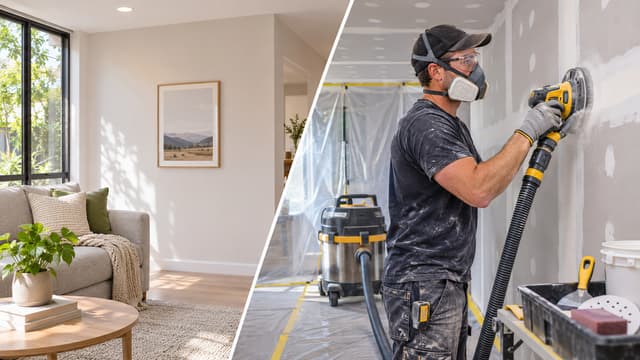
Plasterboard, also called drywall or gypsum board, is one of the most widely used materials in modern buildings. It is commonly installed in homes, hospitals, offices, and schools.
But is plasterboard toxic?
Ordinary, intact plasterboard is generally a low-risk building material. The more important health concerns arise when drywall is cut, sanded, demolished, damaged by moisture, or associated with other hazardous construction materials.
The distinction matters because drywall itself, drywall joint compound, old painted surfaces, and moisture-damaged wall systems can present very different exposure risks.
Gypsum, the principal mineral in standard plasterboard, can irritate the eyes and respiratory tract when inhaled as dust. However, gypsum exposure should not automatically be equated with silica poisoning, asbestos exposure, heavy-metal poisoning, or exposure to toxic gases. [1]
The strongest evidence for significant occupational risk comes from direct workplace measurements.
In a 2024 National Institute for Occupational Safety and Health (NIOSH) investigation of drywall sanding, all three sampled workers had respirable crystalline silica exposures above the OSHA action level, and one exceeded the permissible exposure limit. [2]
That finding demonstrates why construction dust controls matter. It does not establish that every installed drywall panel or every brief home repair produces hazardous silica exposure.
Intact, properly installed gypsum board is generally a low-risk material during ordinary occupancy.
Cutting, sanding, and demolishing drywall can release irritating airborne particles.
Drywall joint compounds vary in composition and may contain crystalline silica.
Direct NIOSH workplace sampling has documented silica exposures exceeding occupational regulatory thresholds during drywall finishing.
Not all drywall work creates equivalent silica exposure; actual material composition and working conditions matter.
Vacuum-assisted sanding and other dust-control methods can substantially reduce exposure.
Some older wall systems may contain asbestos in finishing materials or lead-based paint on their surfaces.
Moisture-damaged drywall can support mold growth, especially on paper-facing materials.
Historical cases of defective drywall involved sulfur-gas emissions and corrosion, but those findings should not be generalized to ordinary gypsum board.
Severe confusion, fainting, or loss of consciousness should not be automatically attributed to plasterboard dust; other causes require urgent evaluation.
Standard plasterboard contains a gypsum core between facing materials, typically paper.
Gypsum is calcium sulfate dihydrate, with the chemical formula CaSO₄·2H₂O.
The finished panel may also contain additives selected for strength, weight, fire resistance, water resistance, or manufacturing performance.
However, the exact composition depends on the manufacturer and product type.
Importantly, three related materials should not be confused.
Material | Main purpose | Relevant exposure concern |
|---|---|---|
Gypsum board | Interior wall and ceiling panels | Dust during cutting or demolition |
Drywall joint compound | Filling and finishing joints | High dust generation during sanding; possible silica |
Existing wall coatings and finishing materials | Paint, texture, older compounds | Potential lead, asbestos, or other material-specific hazards |
This distinction is particularly important when interpreting research about drywall workers.
A study of sanding joint compound does not necessarily establish the same exposure profile for cutting an untreated gypsum panel.
Gypsum dust is mainly an inhalation and irritation concern rather than a typical cause of systemic poisoning.
NIOSH identifies the eyes, skin, mucous membranes, and upper respiratory tract as the main targets of gypsum dust exposure. Possible symptoms include:
eye irritation;
coughing;
sneezing;
nasal discharge;
throat irritation;
upper-airway discomfort. [1]
A brief accidental exposure may cause temporary irritation.
Repeated or heavy occupational dust exposure deserves greater concern, particularly when the dust contains additional hazardous substances.
Gypsum itself should not be described as a proven cause of silicosis simply because some drywall-related products may contain silica.
The silica component must be evaluated separately.
In April 2024, NIOSH published a Health Hazard Evaluation entitled Evaluation of Silica Exposures During Drywall Sanding.
Investigators visited a hospital construction site and assessed three drywall finishers.
The evaluation included:
personal air sampling;
respirable dust measurements;
respirable crystalline silica measurements;
analysis of joint compound and sanding dust;
observations of work practices;
interviews about exposure controls and protective equipment.
The investigators found that all three workers exceeded the OSHA action level for respirable crystalline silica, and one exceeded the OSHA permissible exposure limit. [2]
This is direct evidence from a real drywall-finishing operation.
It is stronger evidence for that specific occupational hazard than an assumption based solely on the ingredients listed for generic plasterboard.
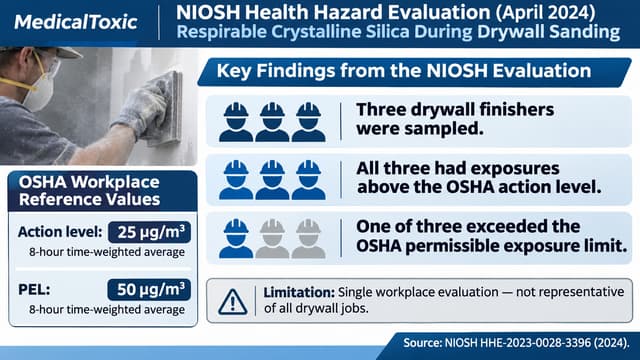
The investigation involved one workplace and three workers.
It cannot establish that all drywall finishers exceed regulatory exposure limits.
Results may differ depending on:
joint-compound formulation;
silica concentration;
sanding method;
duration of the task;
ventilation;
vacuum extraction;
other dust-generating work nearby.
The correct conclusion is that significant exposure is possible and has been directly measured, not that every drywall installation produces the same hazard.
No.
Drywall board and joint compounds do not have a single universal composition.
OSHA specifically addressed this issue in a 2019 interpretation of its construction silica standard.
The agency noted that drywall and joint compound frequently contain only trace crystalline silica, sometimes below 1%.
When work involves only trace-silica materials and is performed separately from other silica-generating activities, exposures will often remain below the standard's action level.
However, prolonged sanding under very dusty conditions can still produce elevated exposures. [3]
This is why a material's Safety Data Sheet, the task being performed, and actual exposure conditions matter more than the generic word “drywall.”
Respirable crystalline silica is a distinct occupational hazard.
Repeated or substantial exposure can increase the risk of serious lung disease, including silicosis and lung cancer.
But these established silica hazards should not be automatically attributed to every exposure involving gypsum.
Gypsum and crystalline silica are different materials.
Sanding joint compound can release substantial quantities of airborne dust.
The United Kingdom Health and Safety Executive identifies sanding taped and covered plasterboard joints as an activity capable of generating high dust concentrations.
Its guidance prioritizes preventing unnecessary sanding, using on-tool extraction, and maintaining effective dust-control equipment. [4]
NIOSH compared five commercially available vacuum-assisted drywall sanding systems with traditional sanding methods without local dust extraction.
The controlled systems reduced measured dust exposure by approximately 80%–97% under the conditions studied. [5]
This is useful evidence because it tests an actual prevention strategy.
The percentage reduction should not be interpreted as a guarantee for every modern tool or jobsite.
Performance depends on equipment design, maintenance, correct use, and working conditions.
The underlying principle is clear:
Capturing dust where it is generated is more effective than relying only on room ventilation or a mask.
Choose methods that minimize airborne dust when suitable for the task.
Examples include:
avoiding unnecessary sanding;
using appropriate low-dust finishing methods;
selecting suitable cutting tools;
using compatible wet methods when practical.
Vacuum-assisted sanding equipment can collect particles near the point of generation.
The extraction system should be designed for the task and maintained appropriately.
Keep dust-generating activities away from occupied areas when practical.
Temporary barriers and suitable local exhaust can limit dust migration.
Respiratory protection should be selected according to the assessed exposure.
For work requiring respirators under OSHA rules, employers must follow the applicable respiratory-protection requirements, including appropriate selection and fit testing.
A loose-fitting disposable mask should not be assumed to provide adequate protection against every workplace exposure.
OSHA's construction silica standard restricts dry sweeping, dry brushing, and compressed-air cleaning in specified circumstances where those methods contribute to respirable crystalline silica exposure and safer alternatives are feasible.
Wet cleaning and appropriately filtered vacuuming may be preferable. [6]
A HEPA-filtered vacuum helps capture particles but should not be described as a control for toxic gases or volatile chemicals.
For U.S. construction work covered by OSHA's respirable crystalline silica standard:
Regulatory measure | Limit |
|---|---|
Action level | 25 µg/m³ |
Permissible exposure limit | 50 µg/m³ |
Averaging period | 8-hour time-weighted average |
These values apply to respirable crystalline silica, not all gypsum dust.
They are workplace exposure-control thresholds, not medical diagnostic cutoffs.
An action-level exceedance does not prove that an individual has developed silicosis.
Likewise, staying below a regulatory limit does not establish that every exposure is biologically harmless.
NIOSH updated its guidance on occupational silica exposure assessment in July 2026, emphasizing validated sampling and analytical methods when evaluating worker exposure. [7]
Ordinary gypsum board should not be assumed to release dangerous concentrations of formaldehyde, heavy metals, or other substances merely because those chemicals are possible concerns in some building products.
Product-specific evidence matters.
However, there is a documented historical exception involving certain defective drywall products.
Beginning in 2009, the U.S. Consumer Product Safety Commission (CPSC) investigated reports of drywall associated with:
blackening or corrosion of copper wiring;
damage to air-conditioning components;
unusual odors;
reported indoor irritation symptoms.
The interagency investigation identified a strong association between certain problem drywall products, hydrogen sulfide, and corrosion. [8]
This was a specific product and building-material problem.
It does not mean that all plasterboard emits hydrogen sulfide or that all drywall installed in a home is chemically unsafe.
CPSC developed a structured approach to identifying affected homes.
Among its screening criteria were blackening of relevant copper components and drywall installed within the historical investigation period, followed by corroborating evidence. [9]
A reported odor or unexplained symptom alone cannot confirm problem drywall.
Moisture can create a separate health concern.
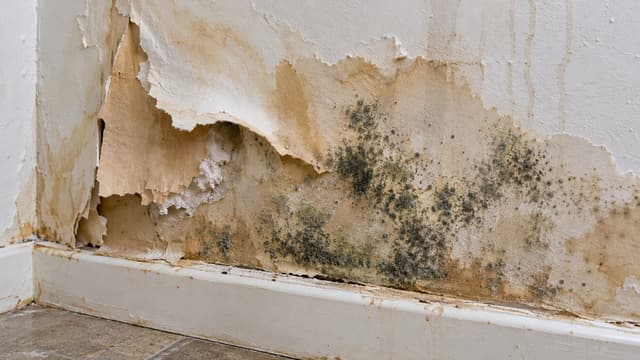
The paper-facing layer of drywall provides material on which mold can grow when persistent water intrusion or condensation is present.
The U.S. Environmental Protection Agency recommends drying water-damaged materials promptly, ideally within 24–48 hours, to reduce the risk of mold growth. [10]
Potential problems include:
nasal and throat irritation;
allergic symptoms;
coughing;
wheezing;
worsening asthma in susceptible people.
Persistent dampness should be corrected, and damaged materials should be assessed for appropriate cleaning or replacement.
The presence of black or green mold does not automatically establish systemic mycotoxin poisoning.
For the detailed medical evidence on this specific issue, see Black Mold Exposure: Symptoms, Testing, and Health Risks.
Moisture-related mold exposure is a different problem from silica exposure during drywall sanding.
Some older wall systems may contain asbestos-bearing finishing materials.
This does not mean that modern gypsum itself is asbestos.
Historically, asbestos was used in certain:
joint compounds;
wall-finishing materials;
surface coatings;
other construction products.
Asbestos-containing materials may remain present in older buildings and should not be disturbed without appropriate assessment.
In May 2026, EPA reaffirmed that the presence of asbestos in drywall or sheetrock materials cannot be established simply by visual inspection.
When suspect materials are damaged or planned renovation could disturb them, EPA recommends assessment by an accredited asbestos professional. [11]
Do not drill, sand, break, or collect your own samples from suspected asbestos-containing materials.
Lead-based paint is another distinct renovation hazard.
In U.S. housing and child-occupied facilities built before 1978, painted surfaces may contain lead.
Sanding, scraping, or demolishing those surfaces can create hazardous lead-containing dust.
That exposure should be attributed to lead-based coatings, not automatically to the underlying gypsum.
EPA's lead-safe renovation guidance was updated in March 2026 and addresses safe work practices during renovation, repair, and painting. [12]
An older home therefore requires more careful assessment before demolition than a newly installed, unpainted gypsum panel.
After dust exposure, mild irritation may improve once the person leaves the dusty environment.
Possible symptoms include:
coughing;
throat irritation;
sneezing;
eye irritation;
nasal symptoms.
Persistent wheezing, shortness of breath, significant eye injury, or worsening respiratory symptoms warrant clinical assessment.
Loss of consciousness, severe confusion, chest pain, or respiratory distress requires urgent medical evaluation.
These are not characteristic findings that should automatically be assigned to uncomplicated gypsum dust irritation.
If multiple workers develop headaches, confusion, dizziness, or collapse in the same enclosed work area, clinicians should consider other potential hazards.
For example, fuel-burning equipment may generate carbon monoxide.
CDC identifies headache, weakness, dizziness, confusion, and loss of consciousness as possible manifestations of carbon monoxide poisoning. [13]
This does not prove carbon monoxide caused symptoms in any particular construction-site incident.
It means a serious alternative diagnosis should not be overlooked while attributing illness to drywall.
The immediate response depends on severity.
For inhalation exposure:
leave the dusty environment;
move to clean air;
avoid further dust generation;
seek medical assessment if respiratory symptoms persist or worsen.
For dust in the eyes:
avoid rubbing;
irrigate with clean water;
seek urgent eye care for persistent pain, impaired vision, or suspected penetrating injury.
For substantial occupational exposure, employers and occupational-health professionals may need to assess the work process, materials, exposure controls, and relevant air measurements.
Routine broad heavy-metal panels, chelation therapy, or extensive chemical testing are not indicated simply because a person inhaled gypsum dust.
Testing should respond to a credible substance-specific exposure or relevant clinical findings.
There is no single household test that determines whether all drywall-related exposures are safe.
Testing should answer a defined question.
For example:
Suspected silica exposure during repeated sanding may call for occupational air sampling.
Suspected asbestos in older finishing materials requires qualified material assessment.
Suspected lead paint calls for appropriate lead-based paint evaluation and safe work practices.
Visible mold calls for moisture investigation and remediation.
Suspected historic problem drywall may warrant evaluation under CPSC criteria.
A generic indoor air-quality monitor does not identify all of these hazards.
Homeowners should avoid assuming that a single carbon dioxide, particulate matter, or VOC reading can diagnose a specific poisoning.
Before beginning work:
Identify the age of the building and the materials likely to be disturbed.
Review the product Safety Data Sheet when available.
Assess the potential for silica-containing joint compound.
Consider asbestos and lead hazards in older wall systems.
Select tools that minimize and capture dust.
Isolate work areas from building occupants.
Use appropriate ventilation and dust extraction.
Choose suitable respiratory and eye protection.
Clean using methods that avoid re-suspending dust.
Correct water damage promptly and assess mold-contaminated materials.
For substantial occupational work, these measures should form part of an appropriate exposure-control program, not an informal checklist used in place of professional assessment.
Intact drywall and sanding dust have different risk profiles.
Ordinary occupancy near finished gypsum board is not equivalent to sanding joint compound.
Gypsum is not the same as crystalline silica.
Silica-related disease risk depends on actual silica exposure.
Direct workplace measurements are more relevant than generic ingredient lists.
NIOSH has documented actionable silica exposures during drywall sanding.
Engineering controls matter.
Vacuum-assisted sanding has substantially reduced measured dust exposure under tested conditions.
Older wall systems require separate hazard identification.
Lead paint and asbestos-containing finishing materials should not be confused with the gypsum core.
Mold indicates a moisture problem.
Its presence does not automatically establish systemic mycotoxin poisoning.
Severe neurologic symptoms require a broad differential.
Do not attribute collapse or marked altered consciousness to plasterboard dust without evidence.
Ordinary intact gypsum board is generally a low-risk building material. Concerns arise with dust-generating work, moisture damage, certain older materials, or specific defective products.
Heavy or repeated exposure can cause respiratory irritation. Some drywall sanding tasks may also involve respirable crystalline silica, which requires specific occupational controls.
No. Composition varies, and some products contain only trace amounts. The exposure risk depends on the material and the work performed.
Exposure to sufficient respirable crystalline silica can cause silicosis. That is not the same as saying gypsum itself causes silicosis.
Some older wall systems and finishing materials may contain asbestos. Suspected materials should be evaluated by qualified professionals before disturbance.
No. Moisture and mold can cause respiratory and allergic problems, but visible mold alone does not establish a systemic poisoning diagnosis.
Not necessarily. Dust capture, work methods, ventilation, and appropriate respiratory protection should be combined according to the exposure assessment.
Plasterboard is not inherently a highly toxic material.
For ordinary occupancy, intact gypsum board is generally low risk.
The more meaningful hazards arise in specific circumstances: dust-generating construction work, silica-containing joint compounds, older asbestos or lead-containing wall systems, persistent moisture damage, and unusual defective products.
The strongest direct evidence emphasizes the importance of controlling drywall sanding dust, rather than assuming every wall emits dangerous chemicals.
For clinicians and construction professionals, the central lesson is straightforward:
Identify the actual material, exposure route, work process, and symptoms before assigning a diagnosis of toxicity.
For homeowners, the practical response is equally clear:
Avoid unnecessary dust, use effective controls, check older materials before demolition, and correct moisture problems promptly.
© All copyright of this material is absolute to Medical toxicology
Dr. Omid Mehrpour (MD, FACMT) is a senior medical toxicologist and physician-scientist with over 15 years of clinical and academic experience in emergency medicine and toxicology. He founded Medical Toxicology LLC in Arizona and created several AI-powered tools designed to advance poisoning diagnosis, clinical decision-making, and public health education. Dr. Mehrpour has authored over 250 peer-reviewed publications and is ranked among the top 2% of scientists worldwide. He serves as an associate editor for several leading toxicology journals and holds multiple U.S. patents for AI-based diagnostic systems in toxicology. His work brings together cutting-edge research, digital innovation, and global health advocacy to transform the future of medical toxicology.
Keep reading
 Environmental and Occupational Toxicology

Amir Mohammad Mottaghi
 Environmental and Occupational Toxicology
Amir Mohammad Mottaghi
 Environmental and Occupational Toxicology
Omid Mehrpour
 Environmental and Occupational Toxicology
Omid Mehrpour
We would like to use analytics and session-replay tools to understand how this site is used. They are optional and the site works fully without them. Signing in still needs its own cookie either way. Our Privacy Policy names each one.