Environmental and Occupational Toxicology
Black Mold Exposure: Symptoms, Testing, and Health Risks
Omid Mehrpour
Post on 22 Aug 2024 · Updated 28 Oct 2026 · 11 min read

Omid Mehrpour
Post on 22 Aug 2024 · Updated 28 Oct 2026 · 11 min read
 Medical Toxicologymedicaltoxic.com
https://medicaltoxic.com/blogs/black-mold-exposure-symptoms-testing-health-risks
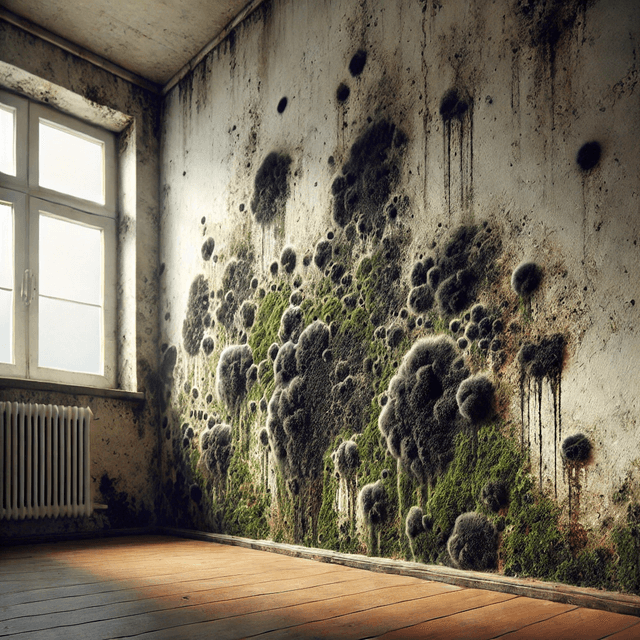
Indoor mold is common wherever persistent moisture allows fungi to grow. Water leaks, flooding, condensation, poor ventilation, and chronically damp building materials can all create conditions for mold growth.
The phrase “black mold toxicity” is widely used online, but it is not a precise medical diagnosis. Stachybotrys chartarum is a greenish-black mold that can grow on wet cellulose-containing materials such as gypsum board, fiberboard, and paper. Some strains can produce mycotoxins under certain environmental conditions, but finding this mold in a building does not prove that an occupant has been “poisoned.” [1]
The strongest evidence linking damp indoor environments to human disease concerns respiratory symptoms, allergies, asthma, and selected risks in people with chronic lung disease or immune suppression. [2] The World Health Organization likewise identifies persistent dampness and microbial growth as important indoor-air health concerns, particularly because of their association with respiratory symptoms, allergies, and asthma. [3]
This distinction matters. Unvalidated testing and exaggerated claims about “toxic mold syndrome” can lead to unnecessary anxiety, inappropriate treatment, and failure to address the most important intervention: finding the moisture source and correcting the damp environment.
“Black mold toxicity” is not a single validated clinical diagnosis.
Stachybotrys chartarum can produce mycotoxins, but its presence does not prove systemic poisoning.
The best-established health effects of damp indoor environments are respiratory and allergic.
Urine mycotoxin testing is not validated for diagnosing illness caused by a water-damaged building.
Routine mold air sampling is usually not recommended because no health-based indoor mold concentration standard exists.
Mold color does not reliably indicate health risk or mycotoxin production.
Visible mold and persistent dampness should be addressed regardless of mold species.
Moisture control is the foundation of effective mold prevention and remediation.
“Black mold” describes appearance rather than a specific medical hazard.
Many mold species can appear black, dark green, brown, or gray. Stachybotrys chartarum has received particular public attention because it grows on chronically wet cellulose-rich materials and can produce mycotoxins under some conditions. [1]
Common substrates include:
gypsum board or drywall;
fiberboard;
paper;
ceiling materials;
other cellulose-containing materials exposed to persistent moisture.
Importantly, mold color does not establish whether mycotoxins are present or predict how a person will respond to exposure.
CDC advises that it is generally unnecessary to determine the exact mold species before acting. If visible mold is growing indoors, the moisture problem should be corrected and the mold removed regardless of species or color. [1]
This is why the common online distinction between “toxic black mold” and supposedly harmless mold is often misleading.
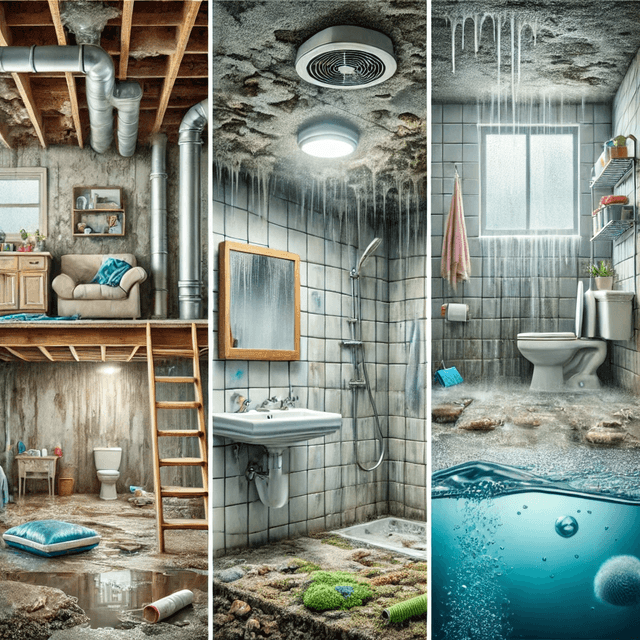
Exposure to damp or moldy environments can affect people differently. Some individuals may have no symptoms.
In susceptible people, mold exposure can contribute to:
nasal congestion;
sore throat;
coughing;
wheezing;
burning or irritated eyes;
skin irritation or rash;
allergic symptoms;
asthma exacerbation.
CDC also notes that people with chronic lung disease or immune suppression may face increased risk of fungal lung infections. [2]
WHO's review of damp indoor environments similarly found the strongest evidence for increased respiratory symptoms, allergy, and asthma associated with persistent dampness and microbial growth. [3]
Claim | Current evidence |
|---|---|
Damp indoor environments can worsen respiratory symptoms | Supported |
Mold can aggravate asthma in susceptible people | Supported |
Mold can produce allergic symptoms | Supported |
Immunocompromised people may face fungal infection risk | Supported |
Black color proves a mold is more toxic | Not supported |
A urine mycotoxin result proves a building caused illness | Not supported |
Routine air sampling determines whether a building is medically “safe” | Not supported |
Typical indoor mold exposure causes a defined systemic “toxic mold syndrome” | Not established |
Certain groups deserve additional caution around substantial mold contamination.
These include people with:
asthma;
chronic obstructive pulmonary disease;
other significant chronic lung disease;
established mold allergy;
substantial immune suppression.
CDC recommends that people with allergies, chronic respiratory disease, underlying lung disease, or immune suppression avoid participating directly in major mold cleanup. [4]
Children also should not take part in major disaster-related mold cleanup.
Headache, fatigue, difficulty concentrating, memory complaints, mood symptoms, and “brain fog” are frequently attributed online to indoor mold or inhaled mycotoxins.
The evidence for these broad systemic claims is substantially weaker than the evidence for respiratory and allergic effects.
The American Academy of Allergy, Asthma & Immunology notes that many studies used to support “toxic mold syndrome” have important methodological limitations, including self-reported symptoms, inadequate comparison groups, and unreliable or unvalidated measures of mycotoxin exposure. [5]
This does not mean that patients with persistent headaches, fatigue, cognitive difficulty, or other symptoms should be dismissed.
It means those symptoms require an appropriate medical assessment rather than an automatic assumption that indoor mold poisoning is the diagnosis.
Headache, fatigue, impaired concentration, sleep disturbance, and memory complaints have many potential causes. Attributing them to mold without adequate evaluation can delay diagnosis of another medical condition.
There is no validated routine clinical test that diagnoses a generalized syndrome called “black mold toxicity.”
That distinction is one of the most important clinical points in this article.
Urine mycotoxin testing should not be used to diagnose illness caused by living or working in a water-damaged building.
CDC has specifically warned against this practice. Mycotoxins can be found in urine because people may encounter them through foods and other sources, including exposures that do not cause disease. Concentrations that predict illness have not been established. [6]
A positive urine mycotoxin result therefore does not establish that:
a particular home or workplace caused the result;
inhaled mold caused the patient's symptoms;
the measured concentration represents toxicity;
the patient has a defined systemic mold illness;
“detoxification” treatment is required.
CDC has warned that use of unvalidated tests can produce misinformation, incorrect diagnoses, unnecessary environmental evaluations, and potentially inappropriate medical interventions. [6]
AAAAI similarly notes that commercial urine mycotoxin testing lacks established thresholds linking measured concentrations to disease. [5]
There is no routine blood test that confirms systemic “black mold poisoning.”
In selected patients with respiratory or allergic symptoms, clinicians may evaluate for conditions such as asthma or allergic sensitization based on the history and clinical presentation.
That type of evaluation is fundamentally different from testing the blood for a supposed generalized mold-toxin syndrome.
If a person has persistent wheezing, dyspnea, or suspected asthma, pulmonary-function testing may be clinically appropriate.
Again, the goal is to evaluate the actual respiratory disorder—not to confirm “black mold toxicity.”
Usually not with routine air sampling.
NIOSH states that there are no health-based standards for mold concentrations in indoor air and does not recommend routine air sampling as part of building air-quality evaluations. [7]
Short-term mold-spore sampling has significant limitations. A negative sample may not represent actual exposure, and a positive spore count cannot be translated into a validated health-risk threshold.
NIOSH considers thorough visual inspection, evaluation of dampness, detection of musty odors, and identification of moisture sources more useful than routine air sampling. [7]
If visible mold or obvious water damage is already present, testing often does not change what needs to happen:
Find the moisture source → stop the water problem → remove damaged or contaminated material when necessary → clean appropriate surfaces → dry the area completely.
Stachybotrys chartarum can grow on chronically wet cellulose-rich materials and can produce mycotoxins under some environmental conditions. [1]
However, finding Stachybotrys does not prove that occupants have systemic mycotoxin poisoning.
CDC specifically states that no test currently demonstrates an association between Stachybotrys chartarum and a particular set of health symptoms. CDC also notes that the historical proposed association between Stachybotrys and acute idiopathic pulmonary hemorrhage in infants has not been proven. [1]
From a building-management perspective, identifying Stachybotrys usually does not change the basic response:
persistent indoor mold growth requires moisture correction and appropriate removal.
The central principle is:
Mold control is moisture control.
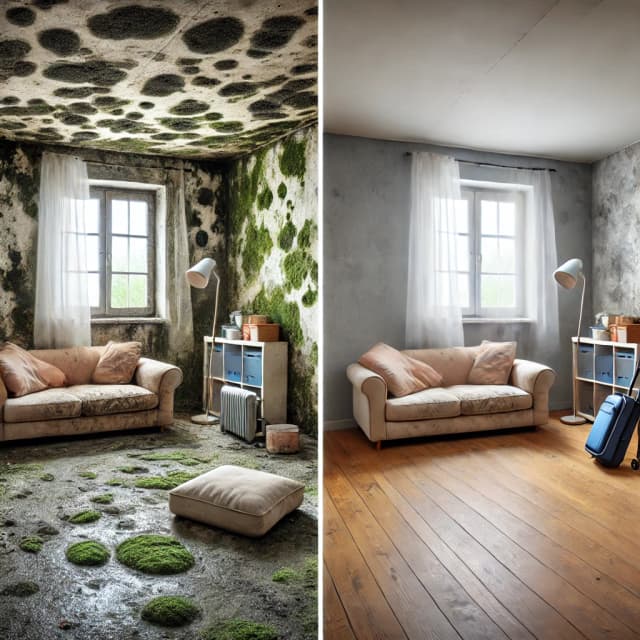
Cleaning visible mold without correcting the leak, condensation, flooding, or humidity problem that allowed it to grow is unlikely to provide a durable solution.
EPA recommends scrubbing mold from appropriate hard surfaces with detergent and water and drying them completely. Porous or absorbent materials may need to be discarded if they cannot be effectively cleaned and dried. [8]
Do not simply paint or caulk over active mold.
EPA guidance indicates that mold growth covering less than about 10 square feet can often be handled by the occupant in uncomplicated circumstances. Larger areas, substantial water damage, sewage contamination, hidden mold, or suspected HVAC involvement may require professional remediation. [9]
This is a practical building-remediation threshold, not a medical toxicity threshold.
For mold cleanup, CDC recommends protecting the respiratory tract, skin, and eyes. At minimum, an NIOSH-approved N95 respirator, gloves, and protective eye wear are recommended for appropriate cleanup tasks. [4]
People with asthma, significant allergies, chronic lung disease, or immune suppression should not perform substantial mold cleanup themselves.
Do not mix bleach with ammonia, acids, vinegar, or other cleaners.
Such mixtures can generate irritating and potentially dangerous chlorine or chloramine gases.
For clinical management of those exposures, see Sodium Hypochlorite (Bleach) Exposure: Poison Center Triage and Clinical Management.
Routine use of bleach or another biocide is not a substitute for physically removing mold and correcting the moisture problem.
Prevention is primarily about preventing persistent dampness.
Important steps include:
repair plumbing, roof, window, and other water leaks promptly;
dry water-damaged materials as quickly as practical;
improve ventilation in bathrooms, kitchens, and other moisture-producing areas;
use dehumidification when necessary;
investigate recurrent condensation;
replace materials that remain chronically wet or cannot be adequately cleaned.
EPA emphasizes drying water-damaged areas and materials within approximately 24–48 hours when feasible to reduce mold growth. [8]
For broader prevention of household toxic exposures and safer use of cleaning products, see How to Prevent Poisoning at Home: A Parent's Essential Safety Guide.
Medical evaluation is reasonable when exposure to a damp or moldy environment is accompanied by persistent or significant symptoms, particularly:
recurrent wheezing;
worsening asthma;
persistent cough;
shortness of breath;
substantial allergic symptoms;
fever or respiratory symptoms in an immunocompromised person.
Significant breathing difficulty or other severe symptoms warrant urgent evaluation.
The purpose of medical assessment is to identify and treat the actual condition—such as asthma, allergy, another respiratory disorder, hypersensitivity disease, fungal infection, or an unrelated diagnosis—not simply to obtain a “mold toxicity” test.
Visible mold is actionable even without species identification.
You do not need to prove that mold is Stachybotrys before correcting a moisture problem.
A positive urine mycotoxin test is not a diagnosis.
It cannot establish that a particular building caused a patient's symptoms.
Respiratory disease has stronger evidence than generalized systemic toxicity.
Asthma, respiratory irritation, and allergic effects are much better established than broad “brain fog” or detoxification syndromes.
Environmental sampling is not the same as medical risk assessment.
There is no validated indoor spore-count cutoff that distinguishes a medically safe building from an unsafe one.
Fixing moisture is more important than identifying mold color.
Persistent water intrusion predicts recurrence if the underlying cause is not corrected.
Not necessarily. Stachybotrys chartarum can produce mycotoxins under some conditions, but color or species alone does not determine how dangerous an indoor exposure is. CDC recommends addressing visible indoor mold and moisture regardless of species. [1]
No. Urine mycotoxin tests do not have validated disease thresholds and should not be used to diagnose illness attributed to a water-damaged building. [6]
Routine sampling is generally unnecessary when visible mold or water damage is already present. Visual inspection and identifying the moisture source are usually more useful. [7]
Yes. Damp and moldy environments can worsen asthma and produce respiratory or allergic symptoms in susceptible people. [2]
Current evidence does not establish typical indoor mold exposure as the cause of the broad neurological or psychiatric syndrome often described online as “toxic mold syndrome.” Persistent cognitive, neurological, or psychiatric symptoms should receive appropriate medical evaluation rather than automatically being attributed to mold. [5]
Indoor mold is a legitimate environmental health concern, but its risks should be described accurately.
The best-supported health effects involve respiratory symptoms, allergic disease, asthma, and selected risks in people with chronic lung disease or immune suppression.
Current evidence does not support diagnosing a generalized “black mold toxicity” syndrome through urine mycotoxin tests, routine blood toxin tests, DIY mold kits, or indoor air-spore thresholds.
The evidence-based response is more straightforward:
control moisture, remove mold appropriately, evaluate persistent symptoms clinically, and avoid unvalidated testing or unsupported detoxification treatments.
© All copyright of this material is absolute to Medical toxicology
Dr. Omid Mehrpour (MD, FACMT) is a senior medical toxicologist and physician-scientist with over 15 years of clinical and academic experience in emergency medicine and toxicology. He founded Medical Toxicology LLC in Arizona and created several AI-powered tools designed to advance poisoning diagnosis, clinical decision-making, and public health education. Dr. Mehrpour has authored over 250 peer-reviewed publications and is ranked among the top 2% of scientists worldwide. He serves as an associate editor for several leading toxicology journals and holds multiple U.S. patents for AI-based diagnostic systems in toxicology. His work brings together cutting-edge research, digital innovation, and global health advocacy to transform the future of medical toxicology.
Keep reading
 Environmental and Occupational Toxicology

Amir Mohammad Mottaghi
 Environmental and Occupational Toxicology
Amir Mohammad Mottaghi
 Environmental and Occupational Toxicology
Omid Mehrpour
 Environmental and Occupational Toxicology
Omid Mehrpour
We would like to use analytics and session-replay tools to understand how this site is used. They are optional and the site works fully without them. Signing in still needs its own cookie either way. Our Privacy Policy names each one.