FDA Calls for Stronger Infant Formula Safeguards After Botulism Outbreaks
post on 03 Sept 2026
post on 03 Sept 2026
 Medical Toxicologymedicaltoxic.com
https://medicaltoxic.com/news/fda-nara-byheart-infant-botulism-update
FDA Calls for Stronger Infant Formula Safeguards After Botulism Outbreaks
Updated FDA findings now connect the Nara and ByHeart infant botulism outbreaks through whole-genome sequencing and shared supply-chain evidence, while the precise contamination point and root cause remain unresolved.
Last updated: September 2, 2026
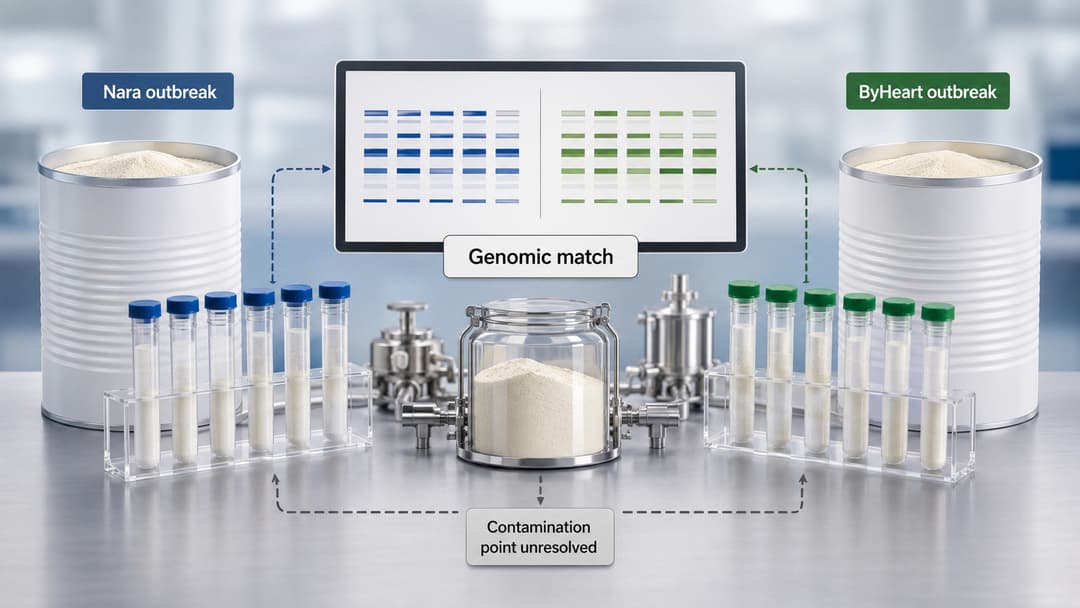
The FDA has materially advanced its investigation into infant botulism associated with powdered infant formula. In an August 27 update, the agency said the four-case Nara Organics outbreak is over and that whole-genome sequencing, or WGS, together with supply-chain evidence, indicates a common source of contamination between the Nara and ByHeart outbreaks. [1]
That is a significant change from when this MedicalToxic article was first published on July 15. At that time, FDA had identified shared suppliers and was urging the infant-formula industry to strengthen supplier oversight, but the Nara investigation had not established a genomic link to the earlier ByHeart outbreak. [2]
FDA has still not identified the final root cause. The agency says there is not enough evidence to determine whether the relevant milk was contaminated before drying or during the drying process, and its root-cause work remains ongoing. [1]
FDA and CDC investigated four confirmed infant botulism cases among infants who consumed Nara Organics Whole Milk Organic Powdered Infant Formula. The cases occurred in California, Pennsylvania, and Washington, with illness onset between April and May 2026.
As of August 27, CDC had declared the outbreak over. FDA says no new cases had been added since July 3. All four infants were hospitalized, no deaths were reported, and the last illness onset was May 31. [1]
The most important new finding comes from WGS analysis. FDA reports that one clinical sample from an infant in the Nara outbreak was a genetic match to:
a clinical sample from an infant in the 2025 ByHeart outbreak;
a powdered infant-formula base sample from the ByHeart investigation; and
four samples from unopened cans of ByHeart powdered infant formula. [1]
FDA also determined that the Nara formula lots linked to illness were made with milk supplied by Organic West Milk and spray dried by Dairy Farmers of America. Those firms were also part of the organic whole-milk and milk-powder supply chain examined during the ByHeart investigation. [1] [3]
FDA's conclusion is carefully worded: the matching WGS results and supply-chain commonalities indicate a common source of contamination between the two outbreaks. [1]
That statement is stronger than the evidence available in July, but it does not identify a particular company, facility, ingredient lot, or production step as the proven source.
When this article was published on July 15, the central news was FDA's July 13 call for infant-formula manufacturers and supply-chain partners to strengthen supplier oversight.
FDA told manufacturers to understand where ingredients originate, how they are produced, what hazards they may carry, and whether suppliers are controlling those hazards. The agency specifically cited the ByHeart and Nara outbreaks as examples of why robust supplier oversight matters. [2]
At that stage, shared suppliers were an investigative lead. The available evidence was insufficient to say they represented the contamination source or route.
The August 27 update materially changes that assessment. FDA now has a genetic match connecting a Nara clinical isolate with clinical and product-related samples from the earlier ByHeart outbreak, together with overlapping supply-chain evidence. [1]
The article therefore moves from “shared suppliers are under investigation” to “FDA says the two outbreaks have evidence indicating a common source of contamination.”
The unresolved question has also become narrower. Investigators are no longer asking only whether the outbreaks may be related; they are trying to determine where and how contamination occurred within the shared chain.
Whole-genome sequencing provides a high-resolution genetic comparison of bacterial isolates. In outbreak investigations, a genetic match can strengthen evidence that apparently separate illnesses or contaminated products are connected.
Here, FDA reports that the Nara-associated infant sample genetically matched a ByHeart-associated infant sample, a powdered formula-base sample, and four unopened ByHeart formula samples. [1]
The unopened-product findings are particularly important because they strengthen the evidence beyond a positive result from a container that had already been opened in a home environment.
But WGS does not, by itself, reveal when contamination entered the supply chain.
FDA says there is still insufficient evidence to determine whether the milk was contaminated before drying or during the drying process. [1]
For that reason, describing Organic West Milk, Dairy Farmers of America, Nara Organics, ByHeart, or any other individual firm as the conclusively proven root cause would go beyond FDA's current findings.
Two separate statuses now need to be distinguished.
The Nara outbreak and outbreak investigation have ended, with four confirmed cases and no new cases added since July 3. [1]
FDA's broader post-outbreak and root-cause work continues. The agency is examining ingredients and supply-chain factors, conducting surveillance sampling, and working with industry and scientific partners on prevention strategies for spore-forming organisms in powdered infant formula. [3]
FDA's post-outbreak program also continues work related to the earlier ByHeart outbreak. That investigation previously identified Clostridium botulinum in a powdered milk ingredient, and WGS linked samples from an organic whole-milk powder lot to clinical and positive infant-formula samples. [3]
This distinction prevents two opposite errors: the August update should not be framed as a growing outbreak, but neither should “outbreak over” be interpreted as “root cause solved.”
Despite the stronger genomic evidence, several questions remain open.
FDA has not established whether contamination occurred before milk drying or during the drying process. [1]
The agency has not publicly identified a final contamination point or conclusively attributed responsibility to one supplier or manufacturer.
The new evidence establishes a common-source relationship between the Nara and ByHeart outbreaks at the level FDA is prepared to state, but it does not justify a more specific causal claim.
FDA says it continues working with firms involved in both outbreaks and with the infant-formula industry to prevent future events. [1]
The outbreak's closure does not reverse the Nara recall.
FDA says recalled Nara Organics Whole Milk Organic Powdered Infant Formula should no longer be available for sale. Recalled products have “Best By” dates ending in 2027, and consumers should check their homes for remaining recalled product and discard it. [1]
Families looking for detailed information on early symptoms, diagnosis, BabyBIG, and formula-recall safety can use MedicalToxic's Infant Botulism: Symptoms, Diagnosis, BabyBIG Treatment, and Formula Recall Safety.
The clinical guidance has not changed because of the August 27 genomic findings. The update changes what investigators know about the relationship between the outbreaks—not the established approach to recognizing or treating infant botulism.
For a clinical presentation showing how weak cry, hypotonia, feeding difficulty, and respiratory deterioration can evolve in an affected infant, see Case Study: An 8-Week-Old Infant with Weak Cry, Hypotonia, and Respiratory Distress.
FDA's July 13 industry communication urged infant-formula manufacturers to strengthen supplier oversight after the Nara and ByHeart events highlighted potential risks entering through the supply chain. [2]
The August WGS findings make that earlier preventive action more consequential.
FDA is no longer describing only two separate outbreaks that happened to involve some of the same supply-chain participants. The agency now says genetic and supply-chain evidence indicates a common contamination source between them. [1]
That still does not reveal the exact root cause, but it reinforces why ingredient traceability, supplier qualification, microbiological risk assessment, and rapid response to safety signals are central to infant-formula safety.
The August 27 update establishes four important developments:
The Nara outbreak is over, with four confirmed cases in California, Pennsylvania, and Washington and no new cases added since July 3.
A Nara-associated infant clinical sample genetically matched samples from the earlier ByHeart outbreak, including a ByHeart clinical sample, a powdered formula-base sample, and four unopened cans.
FDA now says WGS and supply-chain commonalities indicate a common source of contamination between the Nara and ByHeart outbreaks.
The precise contamination point remains unresolved; FDA cannot yet determine whether contamination occurred before or during milk drying, and root-cause work continues. [1]
These findings materially advance the investigation without establishing a final responsible supplier or manufacturing step.
FDA's August 27 update changes the evidentiary picture behind the Nara infant botulism outbreak.
What began as a four-case Nara investigation with overlapping suppliers is now genomically linked to the earlier ByHeart outbreak. FDA says the WGS results and supply-chain commonalities indicate a common source of contamination between the two outbreaks. [1]
At the same time, the agency has not identified the final root cause or determined whether contamination occurred before or during drying.
The responsible interpretation therefore sits between two extremes: this is no longer merely a speculative shared-supplier connection, but it is also not evidence that a specific supplier or production stage has been conclusively proven responsible.
For MedicalToxic, that strengthens the original July message rather than replacing it: supplier oversight and traceability matter, and the August findings show why conclusions about contamination must advance at the pace of epidemiologic, genomic, and supply-chain evidence.
1. U.S. Food and Drug Administration. (2026, August 27). Outbreak Investigation of Infant Botulism: Powdered Infant Formula (June 2026).
2. U.S. Food and Drug Administration. (2026, July 13). FDA Calls on Infant Formula Industry to Better Safeguard Against Contaminants Introduced through their Supply Chain.
3. U.S. Food and Drug Administration. (2026). Post-Outbreak Response Activities: Clostridium botulinum Illnesses Associated with Consumption of Powdered Infant Formula.
Keep reading
Public Health Warnings and Recalls
25 Sept 2026
Public Health Warnings and Recalls
02 Sept 2026
Public Health Warnings and Recalls
02 Sept 2026
Public Health Warnings and Recalls
16 Aug 2026