FDA Calls for Stronger Infant Formula Safeguards After Botulism Outbreaks
post on 15 Jul 2026 · Updated 02 Oct 2026
post on 15 Jul 2026 · Updated 02 Oct 2026
 Medical Toxicologymedicaltoxic.com
https://medicaltoxic.com/news/fda-infant-formula-safeguards-botulism-outbreaks
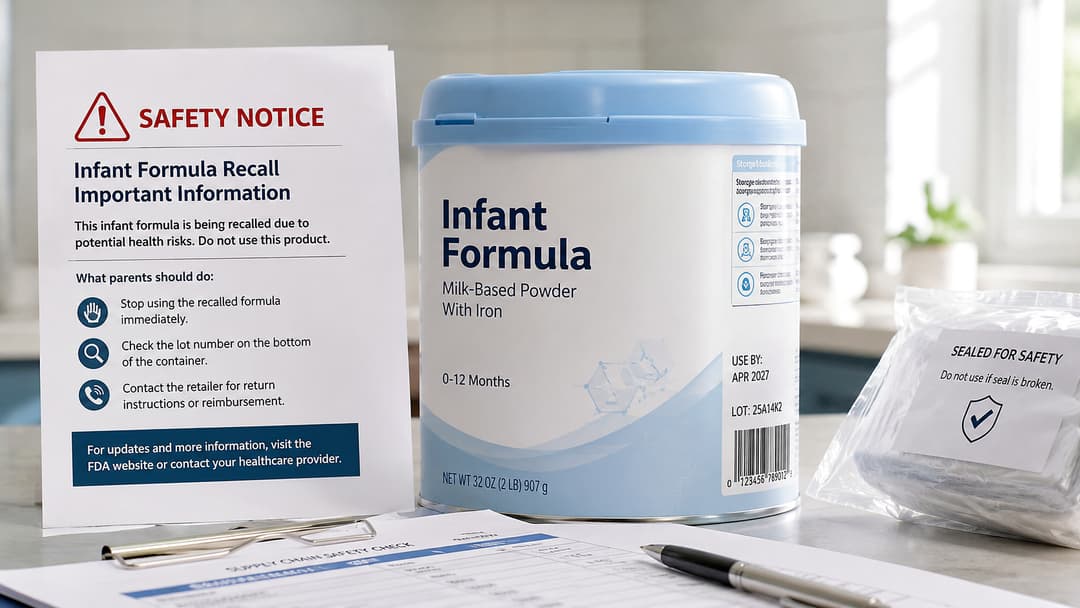
FDA Calls for Stronger Infant Formula Safeguards After Botulism Outbreaks
The Nara outbreak is over, but FDA now says genomic and supply-chain evidence indicates a common contamination source with the earlier ByHeart outbreak while the final root cause remains unresolved.
Last updated: October 2, 2026
FDA's investigation into infant botulism associated with powdered infant formula has moved well beyond where it stood when this article was first published in July.
CDC has declared the Nara Organics outbreak over. Four confirmed infant botulism cases occurred in California, Pennsylvania and Washington; all four infants were hospitalized and no deaths were reported. No new cases were added after July 3. [1]
More importantly, FDA now says whole-genome sequencing, or WGS, together with overlapping supply-chain evidence indicates a common source of contamination between the 2026 Nara outbreak and the earlier 2025 ByHeart outbreak. [2]
That is substantially stronger evidence than was available in July.
But it is not the same as identifying a final root cause or proving that a particular supplier caused both outbreaks.
CDC's current outbreak summary lists:
Current status | Finding |
|---|---|
Confirmed cases | 4 |
Hospitalizations | 4 |
Deaths | 0 |
States | 3 |
Investigation status | Closed |
The infants had consumed Nara Organics Whole Milk Organic Infant Formula, which was recalled on June 13. CDC says epidemiologic, traceback and laboratory evidence showed the formula was contaminated and made infants sick. [1]
Outbreak closure does not reverse the recall.
CDC continues to advise families who still have recalled Nara formula at home not to feed it to an infant and to discard it. [1]
The most important development comes from FDA's genomic investigation.
FDA reports that one clinical sample from an infant in the Nara outbreak was a genetic match to:
a clinical sample from an infant in the 2025 ByHeart outbreak;
a powdered infant-formula base sample from the ByHeart investigation; and
four samples from unopened cans of ByHeart powdered infant formula. [2]
FDA also determined that the Nara formula lots linked to illness were made using milk supplied by Organic West Milk and spray dried by Dairy Farmers of America.
Those companies were also part of the organic whole-milk and whole-milk-powder supply chain examined during the earlier ByHeart outbreak. [2]
FDA's conclusion is specific:
The matching WGS results and supply-chain commonalities indicate a common source of contamination between the two outbreaks. [2]
That statement materially changes the July evidentiary picture.
Three different conclusions must remain separate:
common-source evidence
≠
final root cause identified
≠
specific supplier proven responsible
FDA says its root-cause investigation remains ongoing.
The agency has not established where the relevant milk became contaminated or identified one company, facility or processing stage as the conclusively proven source. [2]
That distinction matters because the current evidence is stronger than a simple shared-supplier hypothesis but does not support assigning final responsibility to Organic West Milk, Dairy Farmers of America, Nara Organics, ByHeart or another individual firm.
FDA's current post-outbreak work adds important context.
During inspections related to the earlier ByHeart outbreak, FDA identified Clostridium botulinum in a powdered milk ingredient. [2]
FDA and ByHeart also sampled dairy ingredients from Dairy Farmers of America.
Two samples from one lot of organic whole milk powder were shown by WGS to match a clinical sample and a positive infant-formula sample. [2]
However, FDA says inspections at both the ByHeart and Dairy Farmers of America facilities did not identify additional factors sufficient to explain the outbreak, and the agency still has not identified a final root cause. [2]
The ingredient evidence therefore strengthens the supply-chain hypothesis without completing the causal chain.
When the original MedicalToxic News article was published on July 15, FDA had recently called on infant-formula manufacturers to strengthen supplier oversight.
At that point, the overlap between the Nara and ByHeart supply chains was an important investigative lead, but FDA had not yet reported the WGS connection now available. [3]
The evidence has now progressed from:
shared suppliers under investigation
to:
WGS + supply-chain evidence indicating a common contamination source.
The unresolved question has therefore narrowed.
Investigators are no longer asking only whether the two outbreaks may be related.
The remaining question is where and how the contamination entered the shared supply chain.
FDA's July 13 industry communication told formula manufacturers and suppliers to understand:
where ingredients originate;
how ingredients are produced;
what hazards they may carry; and
whether suppliers are adequately controlling those hazards. [3]
At the time, that warning was partly preventive.
The later WGS and ingredient findings make the same message more concrete.
A contamination problem introduced upstream may affect finished infant-formula products produced by different companies.
That is why ingredient traceability and supplier oversight are central to FDA's continuing post-outbreak work.
The Nara outbreak itself is closed, but FDA's work is not.
The agency says it is continuing to:
investigate the root cause of the contamination;
assess the infant-formula supply chain and dairy-based ingredients;
conduct surveillance sampling of powdered milk; and
develop better strategies for controlling Clostridium botulinum and other spore-forming organisms in powdered infant formula. [2]
This is an important status distinction:
outbreak closed ≠ investigation finished.
Recalled Nara formula should still not be used.
CDC advises families who still have recalled product at home to discard it. Because powdered infant formula has a long shelf life, recalled cans may remain in homes after an outbreak is officially closed. [1]
Parents should seek immediate medical care if an infant who consumed recalled Nara formula develops signs such as poor feeding, loss of head control, difficulty swallowing or decreased facial expression.
Symptoms can take several weeks to develop, and CDC advises monitoring exposed infants for one month after the last consumption of recalled formula. [1]
For detailed clinical guidance on symptoms, diagnosis, BabyBIG and formula-recall safety, see Infant Botulism: Symptoms, Diagnosis, BabyBIG Treatment, and Formula Recall Safety.
The August genomic findings change the outbreak investigation—not the established clinical approach to suspected infant botulism.
FDA has not established:
the final root cause;
the precise contamination point;
whether contamination occurred at one specific stage of milk processing;
that one individual supplier was solely responsible; or
a final mechanism explaining how the organism entered the affected supply chain.
FDA's investigation remains focused on ingredients, supply-chain relationships and prevention. [2]
No company should therefore be described as the conclusively proven cause unless FDA publishes evidence supporting that determination.
The current evidence changes four parts of the story:
The Nara outbreak is over, with four confirmed cases, four hospitalizations and no deaths.
A Nara clinical isolate is genetically linked to clinical and product-related samples from the earlier ByHeart outbreak.
FDA says the genomic and supply-chain evidence indicates a common source of contamination between the outbreaks.
FDA's post-outbreak work provides additional evidence involving a ByHeart powdered-milk ingredient and an organic whole-milk-powder lot, while the final root cause remains unresolved. [1] [2]
The investigation has therefore moved well beyond the July state without reaching a final attribution of responsibility.
The Nara infant botulism outbreak is over, but the evidence connecting it to the earlier ByHeart outbreak is substantially stronger than it was in July.
CDC reports four confirmed cases, four hospitalizations and no deaths. FDA now says WGS and overlapping supply-chain evidence indicate a common contamination source between the Nara and ByHeart outbreaks. [1] [2]
FDA has also identified C. botulinum in a powdered milk ingredient from the earlier ByHeart investigation and WGS-matched an organic whole-milk-powder lot to clinical and formula samples.
But those findings still do not establish a final root cause or prove that one supplier was responsible.
The appropriate interpretation is therefore precise:
The two outbreaks now have evidence of a common contamination source, while the exact source and pathway of contamination remain under investigation.
Centers for Disease Control and Prevention. (2026, August 27). Infant Botulism Outbreak Linked to Powdered Infant Formula, June 2026.
U.S. Food and Drug Administration. (2026). Post-Outbreak Response Activities: Clostridium botulinum Illnesses Associated with Consumption of Powdered Infant Formula.
U.S. Food and Drug Administration. (2026, July 13). FDA Calls on Infant Formula Industry to Better Safeguard Against Contaminants Introduced through their Supply Chain.
Keep reading
Public Health Warnings and Recalls
09 Oct 2026
Public Health Warnings and Recalls
05 Oct 2026
Public Health Warnings and Recalls
03 Oct 2026
Public Health Warnings and Recalls
03 Oct 2026