Food and Drug Toxicology
Vitamin Toxicity: When “Natural” Isn’t Safe
Omid Mehrpour
Post on 04 Jan 2026 · 14 min read
Omid Mehrpour
Post on 04 Jan 2026 · 14 min read
 Medical Toxicologymedicaltoxic.com
https://medicaltoxic.com/blogs/vitamin-toxicity-when-natural-isnt-safe
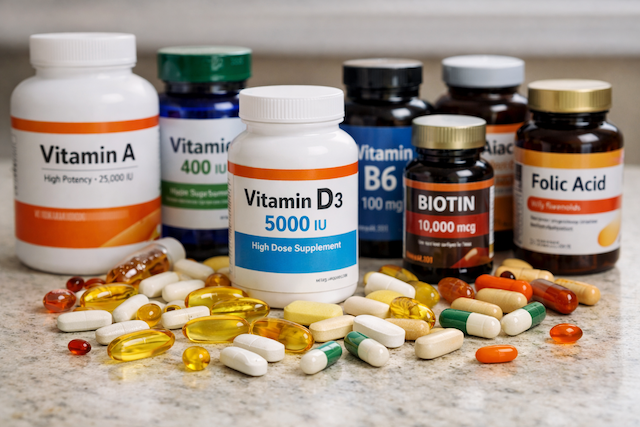
Vitamins are indeed “vital for life,” but they are not exempt from fundamental pharmacology. At excessive doses, these natural nutrients exhibit predictable dose–response relationships and can cause clinically relevant toxicity. Most meaningful vitamin toxicity in practice arises from high-dose supplement use, often chronic, rather than from dietary intake alone. For most individuals, it is preferable to meet micronutrient requirements primarily through food, using supplements selectively when indicated.
Historically, deficiency syndromes such as scurvy (vitamin C deficiency) and beriberi (thiamin deficiency) helped establish that discrete dietary deficits produce reproducible disease patterns. The term vitamin itself reflects early 20th-century thinking, when these factors were conceptualized as “vital amines” (“vitamines”), a naming artifact that persists despite the fact that many vitamins are not amines. In modern toxicology practice, a predictable pattern emerges: fat-soluble vitamins (A, D, E, K) are absorbed with dietary fat and stored to variable degrees (for example, most body vitamin A is stored in the liver), increasing the risk from chronic overuse, whereas a subset of “water-soluble” vitamins can still cause clinically important harm at high doses (e.g., neuropathy, hepatotoxicity, or diagnostic laboratory interference).
Deficiency (brief clinical context): Vitamin A deficiency classically presents with dry eyes and may include dry skin, night blindness, and corneal hyperkeratinization; early observations noted reversal of ocular findings when diets were supplemented with foods such as butter, eggs, and cod liver oil .
Toxicity Profile: Vitamin A toxicity primarily results from excessive preformed vitamin A (retinol and retinyl esters) from supplements or certain animal-derived foods or medications, not from provitamin A carotenoids in plant sources. High intakes of preformed vitamin A (often from high-dose multivitamins or retinoid medications) can cause acute symptoms: severe headache, blurred vision, dizziness, nausea, muscle aches, and incoordination. In extreme cases, elevated intracranial pressure may lead to drowsiness, coma, or even death. Chronic hypervitaminosis A may lead to dry skin, bone pain, and liver injury. Notably, vitamin A is teratogenic at high doses – excessive intake during pregnancy can cause congenital birth defects.
Practical Pearl: When evaluating intake, clarify the form of “Vitamin A” in supplements – retinol/retinyl esters vs. beta-carotene. Toxicity risk applies to preformed vitamin A (retinol) sources, whereas provitamin A carotenoids carry little acute toxicity risk (though they can discolor skin benignly as carotenemia).
Toxicity Profile:
What happens if you deliberately overdose on vitamin D?
Vitamin D toxicity manifests as hypercalcemia and hypercalciuria due to its role in calcium regulation. Excessive vitamin D raises 25(OH)D levels and increases calcium absorption. Symptoms of vitamin D overdose often reflect hypercalcemia: nausea, vomiting, loss of appetite, dehydration, weakness, frequent urination, kidney stones, and confusion. In severe cases, vitamin D-induced hypercalcemia can cause renal failure, soft-tissue and vascular calcifications, cardiac arrhythmias, or even death. Vitamin D toxicity almost always results from excessive supplement intake, not sun exposure or diet (the body limits endogenous D from sunlight, and food sources are unlikely to reach toxic levels).
Practical Pearl: If a patient is “taking a lot of vitamin D,” immediately think about calcium problems (3). Monitor serum calcium and watch for signs of hypercalcemia. The treatment of vitamin D toxicity centers on managing hypercalcemia (e.g., hydration, calcitonin, bisphosphonates) and stopping vitamin D intake. For more information see ("Can you overdose on vitamin D?")
Toxicity Profile: High-dose vitamin E (particularly α-tocopherol supplements above approximately 400 IU/day) can disrupt coagulation and promote bleeding. Vitamin E in large doses inhibits platelet aggregation and antagonizes vitamin K-dependent clotting factors, so excessive supplementation may lead to hemorrhagic complications (e.g., increased bleeding tendency or even hemorrhagic stroke). Patients on anticoagulant or antiplatelet medications are especially at risk, as high-dose vitamin E can augment the anticoagulant effect and increase bleeding risk.
Practical Pearl: Always ask about vitamin E supplements in patients with unexplained bleeding or those on warfarin or other blood thinners. If a patient is on high-dose α-tocopherol, monitor for bleeding symptoms (easy bruising, mucosal bleeding) and check coagulation parameters. It may be prudent to avoid high-dose vitamin E in those on anticoagulation therapy.
Toxicity Profile: In healthy individuals, vitamin K has very low toxicity. In fact, the Food and Nutrition Board did not even establish a tolerable Upper Limit (UL) for vitamin K, because no adverse effects in humans have been reported from high dietary or supplemental vitamin K intake . Unlike other fat-soluble vitamins, vitamin K does not typically accumulate to toxic levels in the liver. However, vitamin K can have serious interactions with warfarin and related anticoagulants. Sudden large increases or decreases in vitamin K intake can antagonize or potentiate warfarin’s effect, leading to fluctuating INRs and risking clotting or bleeding.
Practical Pearl: Cases of apparent “vitamin K toxicity” are usually issues of warfarin management rather than direct vitamin toxicity .Emphasize consistent dietary vitamin K intake for patients on warfarin. If a patient on warfarin has an unexpectedly high or low INR, inquire about changes in vitamin K intake (e.g., diet, supplements). There is essentially no need to worry about vitamin K overdose symptoms in a non-warfarin patient – the focus should be on drug-vitamin interaction in anticoagulated patients.
Toxicity Profile: Vitamin C has a wide margin of safety, and the body excretes excess vitamin C in urine. There is no serious chronic toxicity syndrome; notably, no UL was set for vitamin C in some countries due to low risk. However, very high doses (e.g., grams daily) can cause uncomfortable but reversible effects: osmotic diarrhea, abdominal cramping, nausea, and other gastrointestinal upset are common acute side effects of excess vitamin C intake . There are theoretical concerns that chronically high vitamin C intake could contribute to kidney stone formation (via oxalate) or excess iron absorption (by enhancing iron uptake), but in healthy individuals these are not major issues and evidence is mixed . Such risks may be more relevant in predisposed individuals (e.g., those with a history of oxalate kidney stones or hemochromatosis).
Practical Pearl: Gut tolerance usually limits how much vitamin C one can take – diarrhea is a common dose-limiting effect. If a patient reports taking “mega-doses” of vitamin C for colds or other reasons, warn them about GI side effects and the lack of proven benefit beyond a certain point. Encourage obtaining vitamin C from a balanced diet (fruits and vegetables) which is sufficient for virtually everyone without the need for high-dose supplementation.
Toxicity Profile: Vitamin B6 is the classic example of a water-soluble vitamin where excess from supplements causes a distinct neurologic toxicity. Chronic high doses of pyridoxine can cause peripheral neuropathy – typically a sensory neuropathy with symptoms like numbness, tingling, or burning pain in the hands and feet, as well as ataxia in severe cases. These neurologic symptoms are dose-dependent and usually reversible if B6 is stopped early, but they can become permanent with sustained very high intake. To prevent neuropathy, an upper intake level (UL) of 100 mg/day for adults was established by the IOM, based on clinical cases of neuropathy at higher intakes .(Notably, some recent analyses, including an EFSA panel, suggest neuropathy can occur at even lower doses with long-term use, and have proposed a lower UL.)
Practical Pearl: “Nerve support” or “energy” supplements often contain vitamin B6, sometimes in high amounts. Always ask patients about dose and duration of any vitamin B6 supplementation if they present with neuropathic symptoms of unclear origin . Unlike most water-soluble vitamins that are readily excreted, B6 can accumulate in nerve tissues and cause damage. If you suspect pyridoxine neuropathy, advise discontinuing supplements and monitor for improvement.
Toxicity Profile: Niacin is unique among B-vitamins for its frequent pharmacological use at high doses (e.g., gram doses to improve lipid profiles). Nicotinic acid (one form of niacin) commonly causes flushing – a benign but uncomfortable vasodilatory reaction. Flushing typically presents as redness, warmth, burning and itching of the face and upper body shortly after taking niacin; it’s prostaglandin-mediated and more common with immediate-release formulations (8). While flushing is not dangerous, high-dose nicotinic acid can also cause more serious adverse effects. Prolonged use of high doses (e.g., 1–3 grams daily for months to years) may lead to hepatotoxicity: initially asymptomatic elevations in liver enzymes, which can progress to hepatitis and even acute liver failure in severe cases . Other potential effects of excessive niacin include gastrointestinal upset, insulin resistance and gout flare-ups. Extended-release (ER) niacin formulations actually reduce flushing but have been associated with a higher incidence of liver toxicity compared to immediate-release niacin .
Practical Pearl: “No-flush” niacin products (often nicotinamide or inositol hexanicotinate) and extended-release niacin are not a free pass – they simply minimize flushing, but can still cause significant liver stress if taken in excess . If a patient is self-medicating with OTC niacin for cholesterol, ensure they do so under medical supervision with periodic liver function tests. Educate patients on recognizing symptoms of liver injury (fatigue, right upper quadrant pain, dark urine, jaundice) during high-dose niacin therapy. Niacin flush can be mitigated by taking aspirin or apple sauce before dosing, but this addresses only the flushing, not the other systemic risks.
Toxicity Profile: Folate itself (from foods) is not known to be toxic, but excessive intake of folic acid (the synthetic form, from high-dose supplements or fortified foods) can pose a diagnostic and neurologic hazard. Large doses of folic acid can “mask” a vitamin B12 deficiency by correcting B12-deficiency megaloblastic anemia while not addressing the concurrent neurological damage . In other words, someone with B12 deficiency who takes a lot of folic acid may see their anemia improve, potentially delaying the diagnosis of B12 deficiency until irreversible neuropsychiatric consequences develop (e.g., peripheral neuropathy, subacute combined degeneration of the cord, cognitive impairment). For this reason, the tolerable upper limit for folic acid in adults is set at 1,000 µg/day – to reduce the risk of masking B12 deficiency (9). There is also some evidence that excessive folate might worsen the neurologic symptoms in B12 deficiency, though this is still debated.
Practical Pearl: In a patient with unexplained neuropathy or cognitive decline, check vitamin B12 status – especially if they have been taking high-dose folate supplements or a fortified diet . High folate can hide anemia, so neurologic signs might be the first clue of B12 deficiency. Always pair folic acid supplementation with adequate B12 assessment. This is particularly pertinent in anemia workups: before treating macrocytic anemia with folate, ensure B12 is normal to avoid masking a serious deficiency.
Toxicity Profile: Biotin has no well-defined toxic dose and doesn’t cause a classic “toxidrome.” The main concern with excessive biotin supplementation (now common in “hair and nail” supplements, often 5–10+ mg doses) is laboratory test interference. Biotin can interfere with many lab assays that use biotin-streptavidin technology (which includes a wide range of immunoassays). High levels of biotin in a blood sample can cause falsely high or falsely low results in assays for hormones (e.g., thyroid function tests), cardiac markers (troponin), and others. Even a single 10 mg dose of biotin was shown to skew thyroid lab results within 24 hours of ingestion . In 2017, the FDA issued a safety communication about this issue, and in 2019 the FDA reiterated warnings after reports of biotin interference causing a missed troponin elevation (and thus a missed myocardial infarction diagnosis) in a patient. The FDA reminds health professionals that biotin in patient samples can cause incorrect lab results that may go undetected .
Practical Pearl: If lab results don’t fit the clinical picture, ask about biotin supplements (10,11). This is especially crucial for thyroid tests (biotin can cause labs resembling Graves’ disease or hypothyroidism falsely) and troponin or other critical labs. To avoid interference, patients should ideally stop high-dose biotin at least a few days before having blood tests drawn. Laboratories can sometimes flag biotin interference if known; nevertheless, awareness is key. Biotin itself has no known toxicity to organs, but its impact on diagnostic accuracy can indirectly cause patient harm.
Toxicity Profile: Vitamin B12 is remarkably safe. No Tolerable Upper Intake Level has been established for B12 because of its low toxicity potential – even large doses are generally well-tolerated . The body regulates B12 absorption (only a small fraction is absorbed if given in huge amounts), and excess B12 is excreted. No consistent adverse effects have been documented from high B12 intake in healthy individuals. Rarely, flushing or diarrhea is reported anecdotally at very high doses, but no direct toxic damage is known.
Practical Pearl: There is no need to fear “B12 overdose” – it’s commonly used in large doses to treat deficiencies with no issues . If you see an extremely high serum B12 level incidentally, it often reflects recent supplementation or underlying disorders affecting B12 binding, rather than toxicity. Focus attention on vitamins with real overdose risks (as above), since B12 is not one of them.
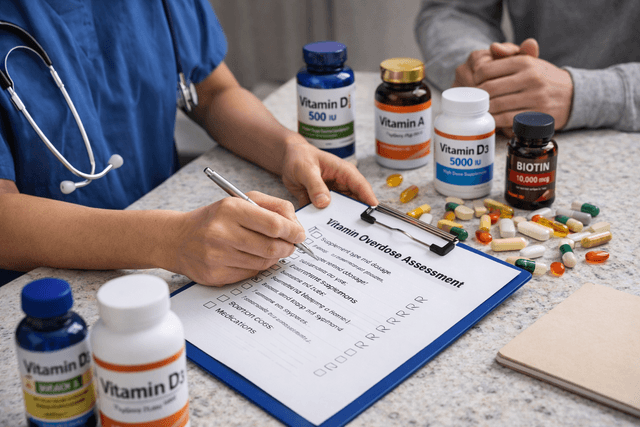
For healthcare providers (such as those in emergency or poison control settings), assessing a vitamin overdose or toxicity case involves specific considerations. Use this mini-checklist to ensure key questions are covered:
Exact Product(s) and Formulation: Determine the specific vitamin product and its form – for example, is it a fat-soluble vitamin like retinol? Is it extended-release niacin or a “no-flush” niacin? Gummies or high-potency tablets? Different formulations can drastically change toxicity (e.g., extended-release niacin has higher hepatic risk) .
Single Acute Ingestion vs. Chronic Overuse: Clarify if this was a one-time massive overdose or chronic high-dose use over weeks/months. Most serious vitamin toxicities (e.g., hypervitaminosis A or D, B6 neuropathy, niacin liver injury) result from chronic excessive intake rather than a single day’s dose . Acute single overdoses of many vitamins may cause transient GI upset but rarely the full toxicity syndrome, whereas long-term accumulation is more dangerous.
Focus on Fat-Soluble Vitamins: Always check for exposures to vitamins A, D, E, and K, as these are stored in the body and have higher potential for serious toxicity (liver accumulation of A, hypercalcemia from D, coagulopathy from E, warfarin interaction with K) (1,3,4,5). In an overdose scenario, if the patient has taken large amounts of a fat-soluble vitamin, this likely demands closer attention and possibly longer monitoring.
Symptom Assessment (Now and Recent): Connect any current symptoms to specific vitamin toxidromes. For example:
GI distress (nausea, vomiting, diarrhea) – common with extremely high vitamin C intake or acute niacin dose (flushing may also cause GI upset) .
Neurologic symptoms (e.g., peripheral neuropathy, ataxia) – think vitamin B6 excess (and check if they’ve been on “energy” or B-complex supplements) .
Signs of hypercalcemia (polyuria, confusion, arrhythmia) – points to vitamin D overdose .
Bleeding or bruising – consider vitamin E in large doses, or an interaction of E/K with anticoagulants .
Mental status changes (irritability, depression) – severe B6 excess or acute hypervitaminosis A could contribute.
This symptom-vitamin matching can guide which vitamin levels or labs to urgently check.
Medication and Medical Context: Review the patient’s medications and conditions for relevant context:
Are they on warfarin or other anticoagulants? If yes, a surreptitious change in vitamin K intake or high-dose vitamin E could be very pertinent (4,5,8).
Are they self-treating high cholesterol with niacin? If yes, look for signs of niacin toxicity (flush, liver labs) .
Any use of retinoid medications (isotretinoin, etc.)? This adds to vitamin A burden.
Any renal issues or sarcoidosis (which could worsen vitamin D toxicity effects)?
Understanding these will help predict complications (e.g., warfarin + vitamin K issue).
Laboratory Interference: If lab tests are involved in the case, consider biotin interference. Ask if the patient takes biotin supplements before trusting certain lab results (especially thyroid function tests, troponin, hormone levels) . High biotin can produce misleading lab values that might mimic or mask pathology. This is critical to avoid misdiagnosis – for example, a normal troponin in a biotin-loaded patient could be falsely reassuring. Coordinate with the lab if biotin interference is suspected, and repeat crucial tests after biotin is cleared if needed.
By systematically addressing these points, healthcare professionals can more safely navigate the evaluation and management of vitamin overdose cases. The key is to recognize that “natural” does not mean “harmless” when consumed to excess – a principle that ensures vitamins are treated with the same respect as any pharmacologically active substance.
© All copyright of this material is absolute to Medical toxicology
Dr. Omid Mehrpour (MD, FACMT) is a senior medical toxicologist and physician-scientist with over 15 years of clinical and academic experience in emergency medicine and toxicology. He founded Medical Toxicology LLC in Arizona and created several AI-powered tools designed to advance poisoning diagnosis, clinical decision-making, and public health education. Dr. Mehrpour has authored over 250 peer-reviewed publications and is ranked among the top 2% of scientists worldwide. He serves as an associate editor for several leading toxicology journals and holds multiple U.S. patents for AI-based diagnostic systems in toxicology. His work brings together cutting-edge research, digital innovation, and global health advocacy to transform the future of medical toxicology.
· NIH ODS — Vitamin A and Carotenoids: Fact Sheet for Health Professionals Office of Dietary Supplements
· NIH ODS — Vitamin A and Carotenoids: Consumer Fact Sheet Office of Dietary Supplements
· NIH ODS — Vitamin D: Fact Sheet for Health Professionals Office of Dietary Supplements
· NIH ODS — Vitamin E: Fact Sheet for Health Professionals Office of Dietary Supplements
· NIH ODS — Vitamin K: Fact Sheet for Health Professionals Office of Dietary Supplements
· NIH ODS — Vitamin C: Fact Sheet for Health Professionals Office of Dietary Supplements
· NIH ODS — Vitamin B6: Fact Sheet for Health Professionals Office of Dietary Supplements
· NIH ODS — Niacin: Fact Sheet for Health Professionals Office of Dietary Supplements
· NIH ODS — Folate: Fact Sheet for Health Professionals Office of Dietary Supplements
· NIH ODS — Biotin: Fact Sheet for Health Professionals Office of Dietary Supplements
· FDA — FDA in Brief: Biotin interference with certain test results U.S. Food and Drug Administration
· NIH ODS — Vitamin B12: Fact Sheet for Health Professionals
Keep reading
 Food and Drug Toxicology
Amirhosein Shabrang
 Food and Drug Toxicology
Amirhosein Shabrang
 Food and Drug Toxicology
Amirhosein Shabrang
 Food and Drug Toxicology
Amirhosein Shabrang