Food and Drug Toxicology
Is Milk Healthy – Superfood, White Poison, or Something In Between?
Omid Mehrpour
Post on 08 Dec 2025 · Updated 25 Feb 2026 · 12 min read
Omid Mehrpour
Post on 08 Dec 2025 · Updated 25 Feb 2026 · 12 min read
 Medical Toxicologymedicaltoxic.com
https://medicaltoxic.com/blogs/is-milk-healthy-superfood-white-poison-or-something-in-b
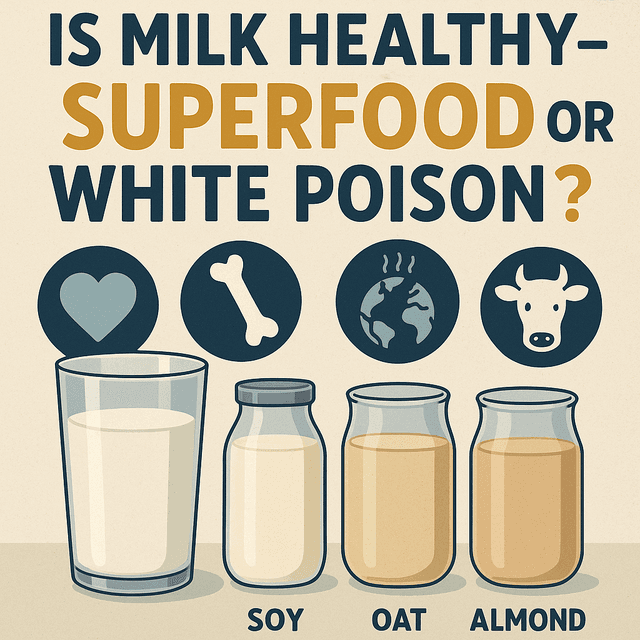
Over the last decade, milk has gone from an unquestioned “superfood” to a controversial topic. Some people see it as a necessary and nutritious food, vital for milk and bone health and milk and child development. Others worry about milk and cancer risk, milk and heart disease, and long-term health problems.
So, is milk healthy or not?
Based on the evidence summarized in this article, milk:
It is a nutrient-dense food that has supported human survival for thousands of years
Has mixed but mostly neutral evidence for cancer, heart disease, and bone health in adults
Can clearly cause problems in people with lactose intolerance or milk allergies
Has a serious milk and environmental impact, including greenhouse gas emissions and animal cruelty in dairy farms
Faces growing competition from cow milk vs plant milk, including soy, oat, and future lab-grown milk options
This guide organizes the topic into four main themes:
Milk & Human Health
Lactose Intolerance & Allergies
Dairy vs Plant-Based Milk
Environmental & Ethical Impact
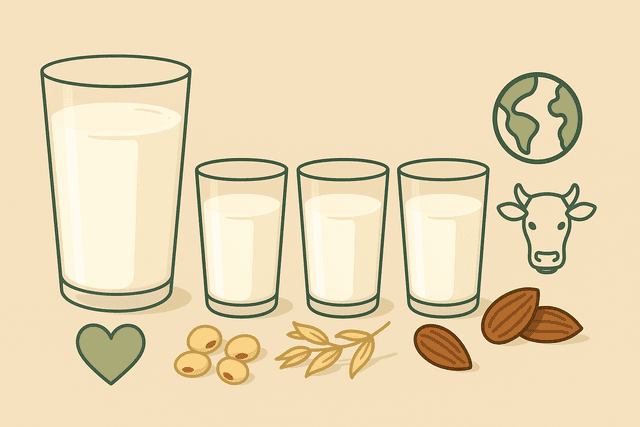
Milk is the starting point of nutrition for every mammal. Right after birth, when the digestive system is still immature and small, milk serves as a powerhouse food to kick-start growth.
Early in life, how milk affects the body is straightforward:
Milk is rich in fat, vitamins, minerals, and milk sugar (lactose)
It also temporarily contains antibodies and proteins that:
Help protect against infections
Support and regulate the immune system
For newborns, the benefits of drinking milk are extremely strong: survival, growth, and immune support.
Over time, humans stop drinking their mother’s milk and transition to the diet of their parents. But about 11,000 years ago, something changed.
When humans formed the first agricultural communities, they domesticated dairy animals: goats, sheep, and cattle.
These animals could:
Eat “useless” or abundant plant material
Turn it into nutritious and tasty food: milk
This made a huge difference for survival, especially in hard times. Groups that had milk available had an evolutionary advantage.
Over thousands of years, this led to changes in genes through natural selection, especially involving a key enzyme: lactase, which is essential for digesting lactose.
Milk is closely linked to milk and child development, particularly in low-resource settings:
It contains all necessary macronutrients and many micronutrients
In regions where people struggle to get enough calories, milk can:
Contribute to a healthy life
Lower child mortality
For many children, the benefits of drinking milk are practical and life-saving: energy, growth, and survival.
In developed regions, milk is:
A convenient way for children to get large amounts of calcium
A useful source of vitamin B12 and B vitamins for vegetarians
However, you do not need to drink milk to be healthy. Other foods can provide similar nutrients.
Many people assume milk is either:
Essential for strong bones, or
Harmful and responsible for brittle bones
But research gives a more neutral picture of milk and bone health:
Several studies in adults found neither strong positive nor strong negative effects of milk on bone health
So, for adults, the evidence is more neutral than extreme. Milk is not the miracle bone protector some marketing suggests, but it is also not proven to ruin bones.
Milk and cancer risk is one of the most controversial topics in the milk debate.
Studies have found:
Some older research reported a link between milk and a higher risk of breast, colon, and prostate cancer
However, meta-analyses (which combine many studies) found no impact of milk on the overall cancer rate
More specific points:
Calcium in milk might have a protective effect against colon cancer, although this benefit may come from calcium in general, not milk specifically
For prostate cancer, some studies show an increased risk in people drinking more than 1.25 liters of milk per day, but:
The association is inconsistent
Other studies show no effect
Overall, if you drink between 100 to 250 ml of milk per day, cancer is not a concern based on current evidence in this summary.
What about milk and heart disease?
Based on meta-analyses:
Milk or dairy products have no clear impact on the risk of:
Heart disease
Stroke
Total mortality
Some studies even suggest:
High blood pressure might be less common in people who eat a lot of dairy
However, the evidence is not strong enough to say that milk definitely protects the heart. At moderate intake levels, milk and heart disease do not appear strongly linked, either positively or negatively.
Summarizing milk & human health:
Milk is nutrient-dense and can be crucial where calories are scarce
In developed countries, for people who are not allergic or lactose intolerant:
Milk is not harmful in moderate amounts
It offers some benefits of drinking milk, such as calcium and B vitamins
You do not need milk to be healthy if you get nutrients elsewhere
Milk is not a substitute for water
Because milk is a power food, drinking a lot of it regularly, especially flavored milk or chocolate milk, can add extra calories and contribute to being overweight.
These products are closer to lemonade than to a healthy snack
So, is milk healthy?
For most people, in moderate amounts, yes, it can be part of a healthy diet. For others, especially those with intolerance or allergy, it clearly does cause discomfort and problems.
Lactose is the milk sugar found in dairy. To digest it, the body needs an enzyme called lactase.
Babies have high levels of lactase, so they digest milk easily
As people age, lactase production declines
Globally:
About 65% of the population no longer has enough lactase after infancy
This limits them to digesting roughly 150 ml of milk per day
This is the background to lactose intolerance symptoms and milk intolerance in adults.
Lactose intolerance by country varies widely:
In some East Asian communities, lactose intolerance reaches up to 90%
In Northern Europe and North America, lactose intolerance rates are the lowest
Why this difference?
The lactase persistence trait likely arose due to random mutations in a few populations.
As farming replaced hunting and gathering, people who could digest lactose had access to more food.
Over time, natural selection favored these traits.
Migration of dairy farmers to the north spread the lactose-digesting genes further and displaced populations without the trai.t
So, milk intolerance in adults is not just a personal problem; it’s also a reflection of human evolutionary history.
In this context, lactose intolerance symptoms are described mainly as general discomfort after drinking milk or eating dairy products.
For many people with lactose intolerance:
Even usual amounts of milk can cause discomfort
The question “does milk cause discomfort?” becomes a daily, practical concern
The best-known negative effects of milk in this group include:
Acne
General discomfort following dairy intake
The article also distinguishes milk allergy vs lactose intolerance:
Milk allergies (to milk proteins) are especially common in children
In Germany, about 1 in 18 kids suffers from allergies to milk products
These allergies often improve or disappear with age
This leads to a practical distinction:
Lactose intolerance:
Linked to the enzyme lactase and the digestion of lactose
Milk allergy:
Related to immune reactions to components of milk, especially in children
Both can cause milk intolerance in adults or children, but through different biological mechanisms.
Given all this, what is the best milk for lactose intolerance?
Within the scope of this content:
The solution is not drinking more traditional milk
Instead, it points toward milk alternatives and plant-based milk as viable options
These alternatives can be an alternative to milk, especially when they are fortified with vitamins and calcium
So, the best milk for lactose intolerance is any lactose-free or plant-based option that:
Avoids the discomfort caused by lactose
It is appropriately enriched to match the nutritional value of dairy
The rise of debates over cow milk vs. plant milk is driven by health, ethical, and climate concerns.
According to this content:
In terms of protein levels and nutritional value, only soy milk can compare to cow milk
Other plant milks need to be artificially enriched to reach similar levels of vitamins and calcium
When fortified, these milk alternatives can function as genuine alternatives to milk
On a strict nutritional level:
Cow milk = naturally nutrient-dense
Soy milk = closest plant-based rival
Other plant milks = highly dependent on enrichment
People often search for:
Best plant-based milk for calcium
Healthiest milk to drink
From this summary:
The best plant-based milk for calcium is any milk alternative that has been enriched to reach similar calcium levels as dairy
The content does not name specific vegan milk brands, but clearly notes that:
Most plant-based milks need fortification to match cow milk in calcium and vitamins
There is no ranked list of the healthiest milk to drink, but some practical conclusions emerge:
For people without lactose intolerance or allergy and consuming moderate amounts, cow milk is not harmful
For people with intolerance or allergy, or those focused on environmental and ethical concerns, plant-based or non-animal milk is the better choice.
Flavored dairy drinks, like chocolate milk, are closer to soft drinks than to a healthy snack.
Search interest in soy milk vs almond milk and oat milk vs cow milk is high.
From this content:
Soy milk can match cow milk in terms of protein levels and nutritional value
Other plant milks (such as almond or oat) need artificial enrichment to reach similar nutrient levels
So, for soy milk vs almond milk:
The content supports saying that soy milk is nutritionally closer to cow milk
Almond milk and others may still be useful, but need fortification to match vitamins and calcium
For oat milk vs cow milk:
Cow milk is presented as naturally nutrient-dense
Oat milk falls into the category of plant milks that require enrichment to reach similar calcium and vitamin levels
No additional claims about taste, fiber, or other health effects are made here.
One of the most important aspects of the modern milk discussion is its environmental impact.
The numbers are striking:
About 33% of cropland is used to feed grazing animals, including dairy cattle
This answers the question “how much land is used for dairy?” in a broad sense: a significant share of global cropland exists to support animal agriculture, including milk production.
In addition:
Even though the carbon footprint of dairy products has decreased since 1990,
Dairy production is still responsible for about 3% of all greenhouse gas emissions
That is more than all airplanes combined
From a climate perspective:
Milk and dairy are far from neutral
They play a measurable role in climate change
The article also highlights animal cruelty in dairy farms, especially factory farms:
Milk is described as part of a huge industry
In most factory farms:
Cows are impregnated over and over
They are separated from their young shortly after birth
Once their bodies are “tortured” enough that they are no longer productive, they are slaughtered
The conclusion is clear:
Much of the milk we consume comes from an industry that is basically torture and contributes to climate change.
For many people, this ethical dimension is as important as milk and human health.
To address these issues, the content discusses three main alternatives:
Plant-Based Milk
Many milk alternatives use significantly less energy, land, and water than animal milk.
As a result, they have a much lower environmental impact
They are natural candidates for cruelty-free milk options, especially when produced regionally
Regional Milk Alternatives
If you want the lowest possible negative impact on the planet, the best choice is:
Whatever milk alternative is regional in your area
This reduces transport impact and supports more sustainable consumption
Lab-Grown Milk (Non-Animal Milk)
Several startups have created non-animal milk that is nutritionally identical to dairy milk
It is produced using fermentation by gene-modified bacteria
This lab-grown milk:
Can be turned into cheese
Solves a key problem for many plant-based alternatives, which lack casein and whey protein, the proteins that give dairy its taste and structure
Together, plant-based milks, regional options, and lab-grown milk represent the future of cruelty-free milk options that reduce both animal suffering and environmental harm.
Putting everything together:
For most people, at moderate intake (about 100–250 ml per day), milk is not harmful
Milk is a good, nutritious food, especially:
For children
For vegetarians seeking vitamin B12
For regions facing food insecurity and high child mortality
Evidence on milk and bone health, milk and heart disease, and milk and cancer risk is:
Mostly neutral or mixed
Clear extreme harms at moderate consumption are not supported by the research summarized here
For people with lactose intolerance or milk allergies, milk can very clearly cause problems and discomfort
As for the planet:
The milk and its environmental impact are significant
Production uses large amounts of land
Accounts for about 3% of global greenhouse gas emissions
It is tightly linked to animal cruelty in dairy farms
At the same time:
The cow milk vs plant milk and lab-grown milk debates show that:
We now have real alternatives
Many milk alternatives have a much lower environmental impact
Future vegan milk brands and non-animal milk may fully replicate the nutrition and functionality of dairy without the ethical and climate costs associated with dairy.
Milk is complicated. It is not harmful to most people and is crucial for many people worldwide.
It is also harmful to the planet and often tied to serious animal suffering.
In the end, we need to decide, both individually and as a society, how we want to deal with these facts.
© All copyright of this material is absolute to Medical toxicology
Dr. Omid Mehrpour (MD, FACMT) is a senior medical toxicologist and physician-scientist with over 15 years of clinical and academic experience in emergency medicine and toxicology. He founded Medical Toxicology LLC in Arizona and created several AI-powered tools designed to advance poisoning diagnosis, clinical decision-making, and public health education. Dr. Mehrpour has authored over 250 peer-reviewed publications and is ranked among the top 2% of scientists worldwide. He serves as an associate editor for several leading toxicology journals and holds multiple U.S. patents for AI-based diagnostic systems in toxicology. His work brings together cutting-edge research, digital innovation, and global health advocacy to transform the future of medical toxicology.
Is dairy bad for us? The milky, cheesy truth!
Bettencourt-Silva, J. (2014). From Data to Knowledge in Secondary Health Care Databases. https://core.ac.uk/download/41989188.pdf
Keep reading
 Food and Drug Toxicology
Amirhosein Shabrang
 Food and Drug Toxicology
Amirhosein Shabrang
 Food and Drug Toxicology
Amirhosein Shabrang
 Food and Drug Toxicology
Amirhosein Shabrang