Substance Abuse and Addiction
7-OH vs. Kratom: Toxicity, Overdose Symptoms, Withdrawal, and Treatment
Amirhosein Shabrang
Post on 15 Jul 2026 · Updated 02 Oct 2026 · 15 min read
Amirhosein Shabrang
Post on 15 Jul 2026 · Updated 02 Oct 2026 · 15 min read
 Medical Toxicologymedicaltoxic.com
https://medicaltoxic.com/blogs/7-oh-vs-kratom-toxicity-overdose-withdrawal-treatment
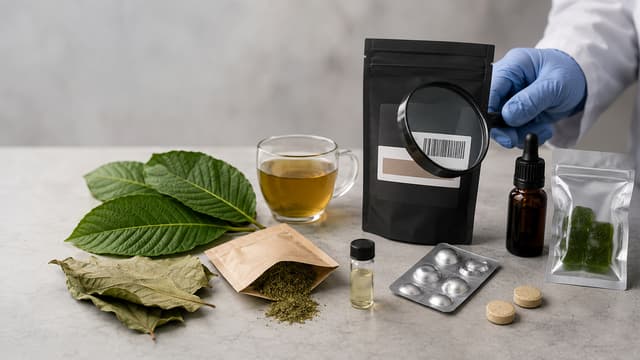
Products sold under the word “kratom” no longer represent one consistent type of exposure.
A packet of dried kratom leaf, a concentrated extract, a tablet labelled with purified 7-hydroxymitragynine and a chemically modified kratom-derived product may differ substantially in composition, potency and clinical risk.
That distinction has become increasingly important as US poison centers report rising exposures involving kratom derivatives and concentrated 7-hydroxymitragynine, commonly known as 7-OH. Regulators have also begun taking targeted action against concentrated and synthetic products rather than treating every form of kratom as identical. [A] [B]
This article explains what 7-OH is, how it differs from botanical kratom, which symptoms may indicate serious toxicity, how clinicians evaluate suspected exposures and what current human evidence says about naloxone, withdrawal and buprenorphine treatment.
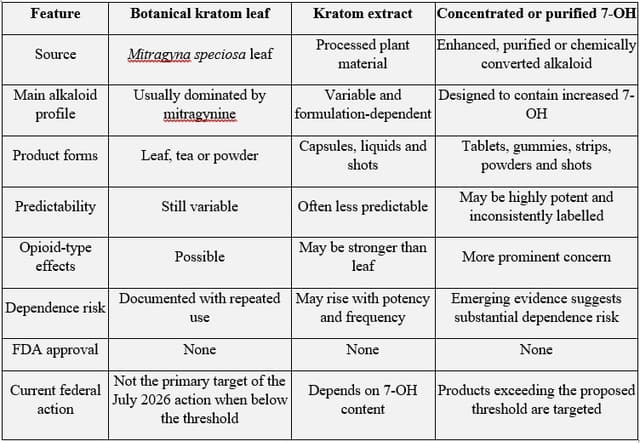
Kratom and concentrated 7-OH are not interchangeable. Traditional plant material contains mitragynine and much smaller amounts of 7-OH, while some commercial products contain enhanced, purified or chemically produced 7-OH.
Product strength may be difficult to predict. Tablets, gummies, shots, extracts and powders can differ substantially in alkaloid content and labelling accuracy.
Serious toxicity can resemble opioid poisoning. Sedation, reduced consciousness and slow or difficult breathing require urgent assessment.
Co-exposures matter. Opioids, benzodiazepines, alcohol, stimulants and antidepressants were frequently reported in severe kratom-associated poison-center cases.
Diagnosis is primarily clinical. Routine toxicology screening may not identify kratom alkaloids, and specialised testing is not always immediately available.
Treatment evidence remains limited. Supportive care is central, naloxone should be considered in an opioid-type presentation, and early evidence for buprenorphine in 7-OH dependence comes from small case reports and series.
Kratom is the common name for products derived from Mitragyna speciosa, a tree native to Southeast Asia.
Its leaves have traditionally been chewed or prepared as tea. Modern commercial products may also be sold as powders, capsules, extracts, drinks, gummies or pressed tablets.
Kratom contains dozens of alkaloids. The best studied are mitragynine, which is usually the most abundant psychoactive alkaloid in the leaf, and 7-hydroxymitragynine. These compounds interact with opioid and other neurochemical systems, although their pharmacology is not identical to that of conventional prescription or illicit opioids. [A]
People report using kratom for pain, fatigue, mood symptoms, recreation or to manage opioid withdrawal. These uses do not mean the products have been proven safe or effective. The FDA has not approved a drug containing kratom or 7-OH for pain, anxiety, depression, opioid withdrawal or any other medical condition. [C]
7-Hydroxymitragynine, or 7-OH, is a kratom-related alkaloid with clinically important activity at the mu-opioid receptor.
It can occur naturally in kratom plant material at low levels. It may also be formed in the body when mitragynine is metabolised. However, many modern retail products contain concentrations far beyond what would ordinarily be expected in minimally processed leaf material. [A] [D]
Concentrated 7-OH may be produced by converting or oxidising mitragynine isolates or extracts. It can then be incorporated into tablets, gummies, shots, powders, strips or other consumer products.
Laboratory and animal studies indicate that 7-OH has stronger mu-opioid activity than mitragynine. However, potency comparisons from receptor assays or animal models should not be treated as direct human dose equivalents. The concentration, formulation, route of exposure, co-ingestants and individual susceptibility all affect clinical risk. [D] [E]
The important clinical question is therefore not simply, “Did the patient use kratom?”
It is:
What exact product was taken, what form was it in, how much 7-OH was declared, and what else may have been used?
The rapid shift from botanical products to concentrated and chemically altered preparations fits the broader market pattern described Inside the Synthetic Drug Surge: Why 2025's New Threats Are Different. That article provides additional context on why product names often reveal less than clinicians and consumers assume.
Three features make concentrated 7-OH products particularly difficult from a medical toxicology perspective.
Products may be specifically manufactured to deliver enhanced 7-OH rather than the broader alkaloid mixture present in botanical material.
This can produce a clinical exposure that is pharmacologically different from traditional kratom use. A person who previously tolerated leaf powder cannot assume that a tablet, shot or gummy marketed as “kratom” will produce a comparable effect.
A product may disclose a milligram amount of 7-OH, describe only “total alkaloids,” or use terms such as “extract,” “enhanced,” “reserve,” “7-hydroxy” or “7-HMG.”
Some labels may be incomplete, confusing or inaccurate. In February 2026, one company recalled a lot of chewable tablets after testing found more 7-OH than the amount declared on the label. [F]
Products sold online, in smoke shops or at convenience stores may appear less dangerous than illicit drugs. Availability, professional packaging and a plant-based marketing claim do not establish safety, purity or medical effectiveness.
The FDA recommends that consumers avoid products containing added or enhanced 7-OH and says these products have not been proven safe or effective for any use. [G]
The clearest national human evidence comes from poison-center surveillance.
A 2026 analysis of National Poison Data System records identified 14,449 kratom-related exposure reports between 2015 and 2025. Annual reports rose from 258 in 2015 to 3,434 in 2025—an increase of approximately 1,200%. [H]
Hospitalisations increased over the same period. Among 233 kratom-associated deaths recorded in the dataset, 184, or 79%, involved multiple substances. Opioids were reported in 62% of fatalities, with benzodiazepines, stimulants and alcohol also frequently present. [H]
A second study reviewed 13,194 reports between January 2016 and July 2025. Most patients were evaluated in or referred to a healthcare facility. Major effects were reported in 10% of cases, while 219 deaths were recorded; 176 of those deaths involved multiple substances. [I]
The newer 7-OH-specific signal is also rising. America’s Poison Centers reported:
593 reports involving 7-OH during all of 2025;
901 reports between January and June 2026;
a 102% increase in the average monthly count compared with the final six months of 2025.

Among cases in which 7-OH was the only substance reported, 38.8% were associated with serious health problems, 63.8% received care at a healthcare facility and 20.5% were admitted to hospital. [J]
These data require careful interpretation. A poison-center report is not automatically a laboratory-confirmed poisoning, and NPDS does not capture every exposure in the country. Increased awareness and improved coding may also increase reporting.
The importance—and limitations—of this form of surveillance are explored further in The Role of Poison Center Calls: Managing Poisoning Cases from Emergency Calls to Critical Decisions.
The clinical picture can vary from mild gastrointestinal or neurological symptoms to severe opioid-type toxicity.
Reported effects include:
drowsiness;
dizziness;
agitation or confusion;
tremor;
seizures;
reduced consciousness or coma.
slow breathing;
shallow breathing;
difficult breathing;
respiratory arrest in severe cases.
nausea;
vomiting;
abdominal discomfort;
constipation.
rapid heart rate;
increased blood pressure;
sweating;
pallor or clammy skin.
aspiration;
prolonged altered mental status;
liver injury reported with some kratom exposures;
physical dependence;
withdrawal symptoms.
The presence of these symptoms does not prove that 7-OH was the sole cause. Product composition may be uncertain, and other drugs may produce or intensify the same clinical findings. [G] [J]
Kratom-related cases involving more than one substance consistently produced more severe outcomes than single-substance reports in national poison-center data.
Opioids, alcohol, benzodiazepines and other sedating drugs may compound respiratory and central nervous system depression. Stimulants may produce a mixed presentation involving agitation, hypertension, tachycardia or seizures.
A patient may therefore appear partly opioid-intoxicated and partly stimulated, or may improve in breathing after naloxone but remain unconscious because another sedative is present.
This is why the exact product history must be accompanied by questions about:
prescription opioids;
fentanyl or heroin;
benzodiazepines;
alcohol;
gabapentinoids;
sleep medications;
antidepressants;
stimulants;
kava or combination products;
other supplements.
There is no single bedside test that confirms clinically important 7-OH poisoning in real time.
Diagnosis usually depends on the exposure history, physical examination, vital signs, neurological findings and response to treatment.
Clinicians should document:
the complete product name;
whether it was leaf, powder, extract, shot, gummy, strip or tablet;
any declared 7-OH or total alkaloid content;
the number of units taken;
the time of use;
frequency and duration of regular use;
photographs of the package;
other medications or substances used;
the reason for use, including pain, recreation or withdrawal self-treatment.
Routine hospital immunoassay drug screens generally do not provide a reliable answer about kratom or 7-OH exposure. Dedicated methods can detect mitragynine and related compounds, but they may require specialised chromatography and mass spectrometry and may not be rapidly available. [K]
A negative routine opioid screen also does not rule out an opioid-type toxidrome from a kratom-derived product.

Treatment is guided by the patient’s condition rather than by the product name alone.
A patient with slow breathing, cyanosis, severe sedation or inability to protect the airway requires immediate airway support, oxygenation and ventilation.
Emergency services should not wait for toxicology results before treating respiratory failure.
Because 7-OH acts at the mu-opioid receptor, naloxone is a reasonable intervention when a patient has clinically significant respiratory depression or another compatible opioid toxidrome.
A published clinical report described cardiopulmonary arrest after reported 7-OH use, with recovery following resuscitation and naloxone. However, a single case does not establish an optimal dose, guaranteed response or 7-OH-specific treatment protocol. [L]
Naloxone should be used to restore adequate ventilation rather than simply to force full wakefulness. Persistent coma after breathing improves should prompt evaluation for co-intoxicants, hypoxia, trauma, metabolic abnormalities or another diagnosis.
The principles and limitations of naloxone in complex modern opioid exposures are reviewed in Naloxone in Xylazine, Nitazenes, and Fentanyl Analogue Overdose. Although that article does not provide direct evidence for 7-OH, its emphasis on ventilation, recurrence and co-intoxicants is clinically relevant.
Seizures, severe agitation, hyperthermia, arrhythmia or marked hypertension require immediate emergency assessment.
Management should follow established toxicology and emergency-care protocols while clinicians investigate possible mixed exposures.
The duration of toxicity may be difficult to predict when product composition, concentration or time of ingestion is uncertain.
Patients who require repeated naloxone, have recurrent respiratory depression, show persistent altered consciousness or have significant co-exposures may require prolonged monitoring or hospital admission.
A regional poison center or medical toxicologist should be consulted in serious or unclear cases.
Yes. Repeated kratom use can lead to tolerance, physical dependence, cravings and continued use despite harm.
Concentrated 7-OH may create a particularly difficult pattern because users may experience strong opioid-like effects from small retail units and may redose frequently to prevent withdrawal.
Signs of a substance-use disorder may include:
using more than intended;
unsuccessful attempts to reduce use;
spending substantial time obtaining or using the product;
craving;
continued use despite medical, financial or relationship harm;
tolerance;
withdrawal;
using primarily to avoid withdrawal symptoms.
Physical dependence does not always mean addiction, but withdrawal, compulsive use and loss of control should prompt a structured clinical assessment.
Reported symptoms resemble an opioid withdrawal syndrome and may include:
anxiety or irritability;
restlessness;
insomnia;
sweating and chills;
muscle aches;
abdominal cramping;
nausea or vomiting;
diarrhoea;
runny nose or watery eyes;
craving;
rapid heart rate;
increased blood pressure.
A 2026 case report described a man who developed nausea, diarrhoea, abdominal cramping, restlessness, chills and anxiety after stopping high-dose concentrated 7-OH. He had previously transitioned from kratom to 7-OH because he perceived the concentrated product as faster and stronger. [M]
Withdrawal severity varies. It may depend on daily exposure, frequency of redosing, duration of use, product concentration, concurrent opioid use and individual physiology.
The broader course of kratom dependence is covered in Kratom Withdrawal Is Real: What to Expect and What Helps. That article should be used as additional background rather than as a substitute for personalised addiction-medicine care.
Early human evidence suggests that buprenorphine may help selected patients with significant 7-OH dependence, but the evidence remains preliminary.

A 2026 retrospective case series described nine patients using purified 7-OH products who began buprenorphine treatment through a low-barrier telehealth addiction service. Eight successfully initiated treatment and reported stabilisation; symptom improvement was also reported at follow-up. [N]
The findings are clinically useful but limited:
only nine patients were included;
there was no control group;
treatment occurred through one service;
product composition was based partly on patient-reported use;
long-term outcomes remain uncertain;
the study does not define one standard induction or maintenance approach.
Buprenorphine should therefore not be presented as a universal treatment for anyone who uses kratom or 7-OH. It may be appropriate for selected patients after an individual assessment of dependence, withdrawal severity, opioid history and treatment goals.
Self-starting prescription medication or using another person’s medication can produce complications, including precipitated withdrawal or excessive sedation when other substances are involved.
A label cannot guarantee safety, but missing or unclear information is a warning sign.
Look for:
whether 7-OH is specifically declared;
whether the product is described as enhanced, concentrated or purified;
the amount per tablet, gummy, serving or container;
the number of servings;
other active ingredients;
warnings about combining the product with alcohol or sedatives;
unsupported claims to treat pain, anxiety, depression or opioid withdrawal;
lot number and manufacturer contact information.
Avoid assuming that “natural,” “herbal,” “botanical” or “supplement” means standardised or medically approved.
The absence of 7-OH on a label also does not prove that none is present.
In the United States, call Poison Control for unexpected symptoms, uncertain product composition, accidental exposure or questions after using a kratom-derived product.
Call emergency services immediately when a person:
cannot be awakened;
is breathing slowly or not breathing;
has blue or grey lips;
has a seizure;
collapses;
develops severe confusion;
has chest pain or a dangerous heart rhythm;
may have taken an opioid, benzodiazepine or another sedative as well.
Administer bystander naloxone when opioid overdose is suspected and breathing is impaired, while calling emergency services and providing rescue breathing when trained to do so. [J] [O]
As of 15 July 2026, the DEA had started—but not completed—the federal temporary scheduling process for concentrated 7-OH above a proposed threshold and for three related synthetic substances.
The proposed threshold would apply to botanical material containing more than 0.050% 7-OH by dry weight and to processed or synthetic articles exceeding specified concentration or quantity limits. The action is intended to target concentrated and synthetic products rather than natural kratom leaf containing only trace levels below the threshold. [B] [P]
This regulatory section should be reviewed whenever the article is updated because the legal position can change after publication of a final temporary scheduling order.
Kratom is no longer a single, easily defined consumer product.
Botanical leaf, concentrated extracts, purified 7-OH and chemically modified derivatives may be sold through similar channels and described using similar language, yet they can produce different clinical risks.
The strongest current evidence shows a rise in poison-center exposure reports, particularly as high-potency products have entered the market. It also shows that the most severe outcomes often involve more than one substance.
For consumers, the safest response is to avoid concentrated 7-OH products and seek advice rather than attempting to self-treat pain, mood symptoms or opioid withdrawal with an unapproved product.
For clinicians, the priorities are exact product identification, recognition of opioid-type respiratory depression, evaluation for co-exposures, supportive care, appropriate naloxone use and specialist consultation.
Evidence on treatment for 7-OH dependence is beginning to develop, but small case series should not yet be mistaken for a settled standard of care.
No. 7-OH is one alkaloid associated with kratom, but concentrated 7-OH products may contain far more of it than naturally occurs in ordinary leaf material. Botanical kratom, extracts and purified 7-OH should not be treated as interchangeable exposures.
Yes. Reported severe effects include marked sedation, loss of consciousness and slow or difficult breathing. A compatible opioid toxidrome should be treated as a medical emergency.
Naloxone should be considered when clinically important respiratory depression suggests mu-opioid receptor activity. Human evidence specific to 7-OH is limited mainly to case reports, so treatment should also include airway support, monitoring and evaluation for other substances.
Standard hospital drug screens may not reliably detect kratom alkaloids or 7-OH. Specialised laboratory methods may identify mitragynine or related compounds, but results may not be available quickly enough to direct emergency treatment.
Small case reports and a nine-patient retrospective series suggest buprenorphine may help selected patients with significant dependence. The evidence is still limited, and treatment should be planned by a clinician experienced in addiction medicine.
© All copyright of this material is absolute to Medical toxicology
As the Growth & Content Lead at MedicalToxic.com, I work on content strategy, development, and digital growth. My focus is on making MedicalToxic’s content clear, practical, and accessible, while helping expand the platform’s reach and strengthen its position as a trusted resource in clinical toxicology.
Keep reading
 Substance Abuse and Addiction
Omid Mehrpour
 Substance Abuse and Addiction
Omid Mehrpour
 Substance Abuse and Addiction
Omid Mehrpour
 Substance Abuse and Addiction
Omid Mehrpour