Back
Try for freeOpen Product
 Simulation
 Simulation
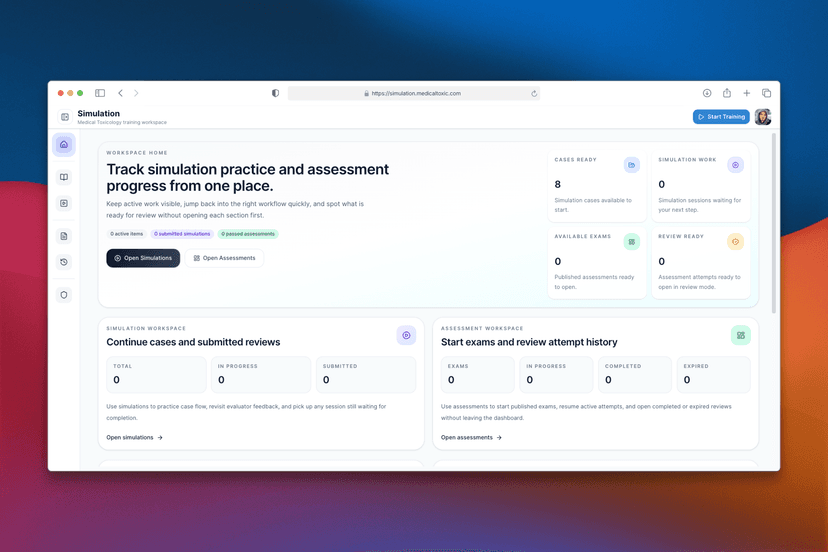
Simulation by Medical Toxicology is a voice and text-based poison center call simulator that helps SPI trainees, SPIs, CSPIs, and toxicology learners practice realistic exposure scenarios. The platform evaluates history-taking, missed questions, risk recognition, simulated triage reasoning, and communication, then provides structured educational scoring and feedback.
Overview
Simulation helps users practice toxicology call scenarios modeled after common types of poison center calls.
Simulation is designed for Specialist in Poison Information trainees, practicing SPIs, CSPIs, fellows, pharmacists, clinicians, students, educators, and other toxicology learners.
Users can complete simulated toxicology calls by voice or text, creating a more realistic educational call-center experience.
Each simulation presents a semi-realistic caller scenario. Users practice asking focused history questions, recognizing red flags, clarifying exposure details, and identifying missing information.
Simulation provides educational scoring across key areas such as history-taking, exposure assessment, risk recognition, simulated triage reasoning, communication, and safety awareness.
Simulation identifies important questions the user may have missed, such as dose, time of exposure, age, weight, symptoms, co-ingestants, formulation, pregnancy status, medical history, medications, and follow-up concerns.
After each case, users receive feedback explaining what they did well, what they missed, and how they can improve their toxicology reasoning in future simulations.
Simulation is currently free. Users create an account to access simulations, save their simulation history, review scores, and track educational feedback.
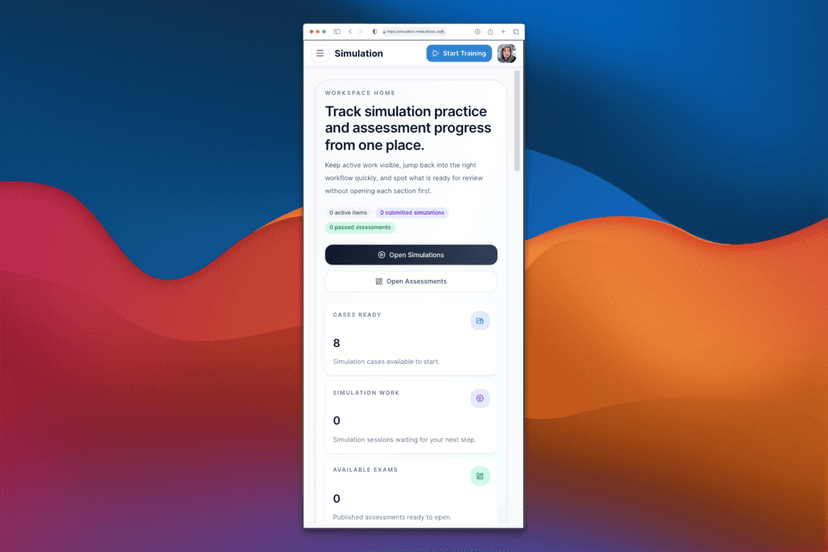
Simulation is currently available as a browser-based website and is responsive across desktop, tablet, and mobile browsers.
Version history
• Initial release of the product
Questions
Simulation is designed for SPI trainees, SPIs, CSPIs, poison center staff, medical toxicology fellows, pharmacists, emergency clinicians, residents, students, and educators who want to improve toxicology call-handling and reasoning skills.
A traditional question bank usually tests whether the user can choose the correct answer. Simulation evaluates the full reasoning process, including what questions the user asks, what information they miss, how they recognize risk, and how they respond to simulated clinical details.
Simulation cases are fictional educational scenarios modeled after common types of poison center calls. They may resemble real-world toxicology presentations, but they are not real patient records.
Yes. Simulation supports both voice-based and text-based simulations. Voice mode helps users practice speaking with a simulated caller, asking focused questions, and organizing information in real time.
Yes. Users create an account to access simulations, save simulation history, review performance, and track scores and feedback.
Simulation is currently free to use. Paid features, subscriptions, or institutional plans may be added in the future.
Simulation may score areas such as history-taking, exposure assessment, dose and timing clarification, symptom assessment, risk recognition, red flag identification, simulated triage reasoning, communication style, missed questions, and overall toxicology reasoning.
After each simulation, users receive structured educational feedback showing what was done well and what could be improved. Feedback may include missed questions, incomplete assessment areas, red flags, unsafe assumptions, and suggested learning points.
Simulation may help SPI trainees, SPIs, and CSPIs practice toxicology reasoning, call structure, and case assessment. However, it is not an official certification product and does not guarantee exam performance, certification, or professional competency.
No. Simulation provides educational feedback within simulated cases only. It does not provide patient-specific treatment recommendations or medical guidance.
Yes. Educators may use Simulation for toxicology teaching, poison center training, case discussion, clinical reasoning practice, and educational review.
Legal
We respect your privacy; this section explains what information we collect, how we use it, and how we protect its security.
Read Privacy PolicyLegal
This section outlines the rules, obligations, and rights that apply when you use our website or services.
Read Terms and Conditions