Drug Self-Intoxication Deaths Rose Far Faster Than Suicide Deaths During the US Opioid Epidemic
post on 06 Jul 2026 · Updated 01 Oct 2026

post on 06 Jul 2026 · Updated 01 Oct 2026
 Medical Toxicologymedicaltoxic.com
https://medicaltoxic.com/news/drug-self-intoxication-deaths
Drug Self-Intoxication Deaths Rose Far Faster Than Suicide Deaths During the US Opioid Epidemic
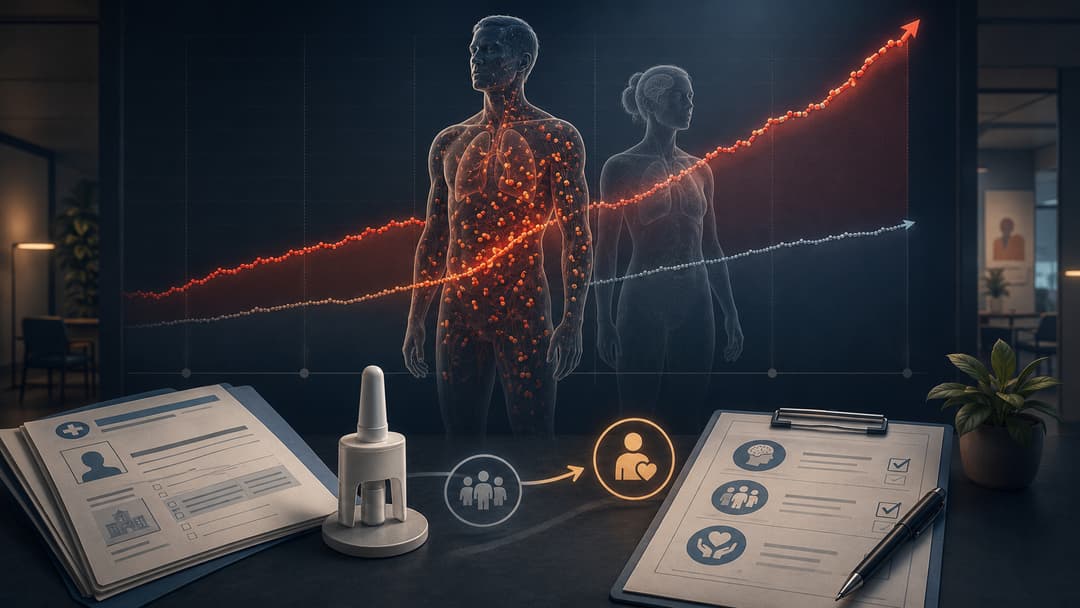
New research suggests drug self-intoxication has become an increasingly important driver of self-injury deaths in the United States, especially among people with substance use and mental health disorders.
The study, published in Mayo Clinic Proceedings, examined death certificate data from 1999 to 2023. Researchers found that self-injury mortality among people with mental and behavioural disorders rose sharply over the period. [1]
The increase was driven mainly by drug self-intoxication deaths, which rose at more than five times the rate of suicide mortality. For wider context on recent overdose mortality patterns, see Thanksgiving 2025: Overdose Death Trends in the United States and What We Are Thankful For.
For wider context on recent overdose mortality patterns, see Thanksgiving 2025: Overdose Death Trends in the United States and What We Are Thankful For.
The findings do not introduce a new emergency antidote or a new diagnostic test. But they do point to an urgent clinical and public-health message: drug intoxication should not be viewed only as an accidental overdose problem. In many cases, it overlaps with mental illness, substance use disorder, self-harm risk and gaps in follow-up care.
The researchers analysed deaths among people aged 15 years or older in the United States where mental and behavioural disorders were listed as contributing causes of death.
Between 1999 and 2023, they identified 639,462 self-injury mortality deaths in this population. The age-adjusted mortality rate increased from 2.22 per 100,000 people in 1999 to 24.75 per 100,000 in 2023.
Drug self-intoxication mortality increased with an average annual percentage change of 11.85%. Suicide mortality increased by 2.25% over the same period.
That means drug self-intoxication mortality rose at more than five times the rate of suicide mortality.
For clinicians following the broader opioid risk landscape, The Alarming Rise of Synthetic Opioids: What Healthcare Professionals Should Know provides additional background on why overdose prevention remains central to toxicology practice.
For clinicians following the broader opioid risk landscape, The Alarming Rise of Synthetic Opioids: What Healthcare Professionals Should Know provides additional background on why overdose prevention remains central to toxicology practice.
Around 90% of the self-injury deaths in the study occurred among people with substance use disorders.
This is important for clinicians because overdose presentations may represent more than acute toxicity alone. They may also signal ongoing psychiatric risk, substance use instability, unsafe medication access, or a need for structured follow-up after discharge.
For emergency departments and poison centres, the practical message is not that every intoxication is intentional. It is that intoxication risk and self-harm risk can overlap, especially in patients with known mental health or substance use disorders.
The study also found clear demographic differences.
Men had higher mortality rates than women. Non-Hispanic Black individuals had the highest age-adjusted mortality rate in 2023, followed by non-Hispanic White people and Hispanic or Latino groups.
The Northeast had the highest regional mortality rate in 2023. Urban areas also showed higher mortality rates than rural areas in the data reported for 2020.
These findings suggest that prevention should not rely on a single national message. Local drug supply, access to treatment, mental health services, social conditions and follow-up systems may all shape risk.
This research does not change acute poisoning resuscitation. Clinicians should still manage intoxication according to the suspected substance, airway status, vital signs, toxidrome, available antidotes and poison-centre advice.
But it may change the way intoxication is framed after the immediate emergency has passed.
A patient who survives drug intoxication may need more than observation and discharge. The episode may be an opportunity to assess suicide risk, substance use disorder, medication access, social support and connection to treatment. This is where New Challenges and Innovations in Treating Opioid Use Disorder Amidst the Fentanyl Crisis becomes clinically relevant, because post-overdose care increasingly depends on linking emergency treatment with addiction-medicine follow-up.
This is where New Challenges and Innovations in Treating Opioid Use Disorder Amidst the Fentanyl Crisis becomes clinically relevant, because post-overdose care increasingly depends on linking emergency treatment with addiction-medicine follow-up.
In practical terms, emergency and toxicology teams may need to ask:
Was the exposure accidental, intentional or unclear?
Is there a known substance use disorder or mental health diagnosis?
Was the patient using alone?
Is there access to opioids, sedatives, stimulants or other high-risk medications at home?
Does the patient need naloxone, medication for opioid use disorder, psychiatric review, or rapid follow-up?
Could a poison centre, addiction service, or community harm-reduction programme reduce future risk?
These questions also reinforce the importance of early expert consultation, a theme discussed in The Role of Poison Center Calls: Managing Poisoning Cases from Emergency Calls to Critical Decisions.
These questions also reinforce the importance of early expert consultation, a theme discussed in The Role of Poison Center Calls: Managing Poisoning Cases from Emergency Calls to Critical Decisions.
A second PubMed result described an unusual forensic case in which an 18-year-old man drowned after fluids were reportedly administered while he was deeply unconscious from fatal methamphetamine intoxication. [2]
The case is not strong enough to change clinical guidelines. It is a single medico-legal report.
However, it reinforces a basic emergency principle: unconscious intoxicated patients may lose protective airway reflexes. Giving fluids by mouth or otherwise exposing the airway to liquid can be dangerous when a person is deeply sedated, unconscious, vomiting, or unable to protect their airway.
For the public, the safer response is to call emergency services, place the person in a recovery position if appropriate, avoid giving food or drink, and follow dispatcher or poison-centre guidance. For a broader public-facing emergency resource, Poison Control: Your Lifeline in Emergencies explains why timely poison advice can be critical when the exposure is unclear or evolving.
For a broader public-facing emergency resource, Poison Control: Your Lifeline in Emergencies explains why timely poison advice can be critical when the exposure is unclear or evolving.
The strongest article in this PubMed update is the mortality-trend study. Its value is not in diagnosing one toxin faster or introducing a new antidote. Its value is in showing how drug self-intoxication has become a major and rapidly growing form of self-injury mortality.
For doctors, poison centres and public-health teams, the message is clear: intoxication care should include both acute toxicology management and prevention of recurrence.
The next improvement in poisoning outcomes may not come only from faster antidotes. It may also come from better follow-up, better risk recognition and better linkage between emergency care, addiction treatment and mental health support.
1. Ahmed, M., Zulfiqar, E., Shafiq, A., Shahzad, M., Hashmi, T. M., Ahmed, F., Ahmed, R., & Jamshed, N. (2026). The overlooked crisis: Drug self-intoxication mortality increased at 5 times the rate of suicide mortality during the US opioid epidemic (1999–2023). Mayo Clinic Proceedings, 101(7), 1163–1175. https://doi.org/10.1016/j.mayocp.2025.08.023
2. Handlos, P., Handlosová, K., Dokoupil, M., Gebauerová, V., & Uvíra, M. (2026). Drowning during methamphetamine intoxication precipitated by improper fluid administration: Medico-legal case analysis. Forensic Science, Medicine and Pathology, 22(2), 779–783. https://doi.org/10.1007/s12024-025-01142-0
Keep reading
Substance Abuse and Overdose
07 Oct 2026 · Updated 09 Oct 2026
Substance Abuse and Overdose
05 Oct 2026
Substance Abuse and Overdose
25 Sept 2026 · Updated 01 Oct 2026
Substance Abuse and Overdose
20 Sept 2026 · Updated 01 Oct 2026