Research and Innovations
Poisons and Medicine in the Ancient World
Post on 07 Dec 2025 · Updated 02 Oct 2026 · 11 min read
Post on 07 Dec 2025 · Updated 02 Oct 2026 · 11 min read
 Medical Toxicologymedicaltoxic.com
https://medicaltoxic.com/blogs/poisons-and-medicine-in-the-ancient-world
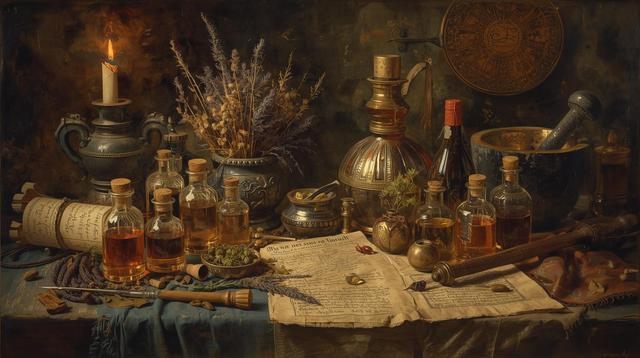
On a summer evening in 399 BCE, an old man sat in an Athenian prison and calmly drank a cup of poison. The sentence was legal, the poison was hemlock, and the man was Socrates. To the Athenians, that cup was an instrument of justice. To a modern toxicologist, it is something else as well: a plant extract with a predictable effect on the nervous system, used in a controlled, almost standardized way. In other words, an early, state-sanctioned application of toxicologic knowledge.
This story reflects only one face of humanity’s long and complex relationship with poison. Long before laboratories, LC–MS, or poison centers, ancient civilizations were already experimenting with toxic plants, venoms, and minerals. The same substances that ended the lives of rivals, philosophers, and kings were also used as medicines, antidotes, and ritual tools.
From the earliest moments of human interaction with nature, poisons have played a quiet yet powerful role in shaping medicine, survival, and power. Across civilizations such as Egypt, China, Persia, Mesopotamia, and Greece, toxic substances were never seen as agents of death alone, but also as tools of healing, ritual, and control. Through observation and experience, ancient societies discovered that the boundary between poison and medicine was defined by dosage, preparation, and intent. These early experiments laid the conceptual foundation of ancient toxicology and pharmacology.
The first systematic approach to identify how toxins impact the body was developed by ancient Egyptians through medicine long before the rise of modern-day toxicology. Egyptian physicians had already classified poisons, recorded symptoms of poisoning, and created preliminary antidotes. One of the important documents related to this topic is the Brooklyn Papyrus 47.2180 (dated 4th century BCE) which includes extensive information about venomous snakes, the physical manifestations of poisoning due to snakebite, and recommended remedies using a combination of herbal medicine and magical spells. While these therapies often ignored toxicity thresholds and side effects, they reflect one of the first recorded efforts to link poisonous agents with diagnosis and treatment.
It is also commonly stated in classical toxicology literature that the ancient Egyptians were familiar with prussic acid (hydrocyanic acid) as a lethal poison, allegedly extracted from peach kernels or leaves. This allegation stems from a disputed translation of a supposed ancient papyrus, which was later interpreted by modern toxicologists as proof that Egyptian Priests were aware of cyanogenic poisons and used them as tools of execution. Whether fully factual or partly symbolic, the overall impact of this story demonstrates that the connection between poison, secrecy, and justice was ingrained within Egyptian culture and thought, both historically as well as contemporaneously.
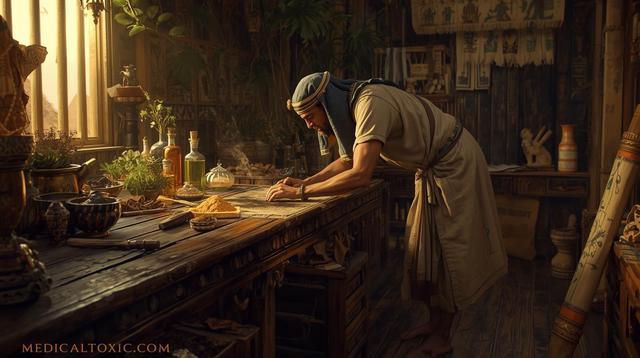
Egyptians developed early antidotes to toxic poison, this was accomplished through a process based on observing animal behavior towards poison and the way poisons affected animals when they were exposed to them. The result of these observations resulted in early antidotal methods based on two main principles.
The Egyptians were able to create antidotal cures by building a person's tolerance level to a particular type of poison. This was accomplished through repeated exposures to the same poisonous substance over a period of time, thereby creating an immune response against the poison.
The Egyptians were also able to create antidotes to certain types of toxic substances by using natural remedies that had opposing properties to the poison itself.
Rather than viewing poison simply as an agent of destruction, poisons began to be viewed as agents of opportunity, where poison could be neutralized by the use of an antidote or natural remedy.
One exemplary example of the ideas surrounding antidote therapy comes from the use of onion (Allium cepa L.) throughout the ancient Egyptian culture. Onions were a commonly consumed food source in ancient Egypt and were believed to have alexipharmic (anti-poison) qualities. Modern science has proven that onions contain a high amount of sulfur-based substances that generate allicin, a substance with strong antimicrobial activity The combination of ancient medicine and present day science demonstrates how the Egyptian civilization provided early foundations for pharmacology and ancient toxicology.
Although poison was commonly thought of in terms of deadliness in the ancient world of China, it also represented a great source of strength, a substance that could be both unsafe and beneficial. The Chinese word for poison (毒) had carried this dual meaning: a powerful agent that could produce either death or lifewhose effect depended entirely on how it was used. There was no strict separation between poisonous and non-poisonous substances in ancient China; rather it was the toxicity, dosage, bodily condition, and method of preparation that led to it being taken as a remedy for a given ailment or being used as a weapon.
Chinese doctors did not just avoid poisonous substances; they incorporated them into their practices and used their properties strategically. Highly poisonous materials such as mercury and aconite were integrated into both medicine and alchemy, used to expel parasites, relieve severe pain, treat epidemics, and even pursue longevity. During Imperial China, poisons made up nearly 20% of the total number of medicinal herbs found in Chinese medicine, showing that poisons were a key form of medicine used by physicians throughout the history of the imperial Chinese.This approach the philosophy of toxicity is that toxicity has therapeutic benefits and that it is only effective when administered with careful control.
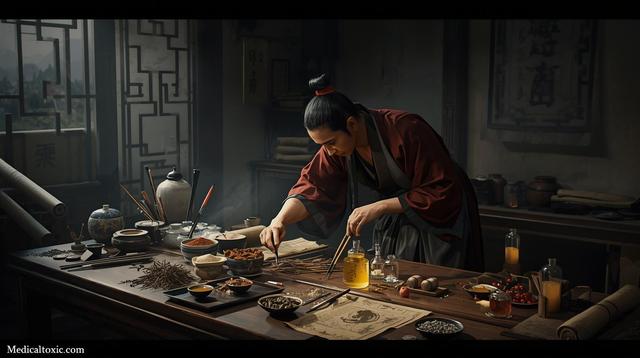
The Shennong Bencao Jing (Divine Farmer’s Materia Medica) describes two essential strategies for using toxic drugs safely. The first was strict dosage control, beginning with extremely small amounts and adjusting gradually according to the patient’s response. The second was drug combination, where toxic substances were mixed with non-toxic ones to suppress their danger while preserving their therapeutic effect, a principle known as mutual inhibition (xiangwei).
Another central idea was the principle of using poison to attack poison(yi du gong du). Physicians saw that potent poisons could expel potent agents of disease such as parasites and virulent diseases. The intense physical feelings brought on by these drugs were a way to interpret that the drug was purging illness from the body. This perspective on the use of medicine viewed medicine as neither "good" nor "bad" but as always being dependant on its relationship to the patient, the context in which it was used, and its preparation and the particular body of the patient.
Throughout imperial China, poison was an important part of both medicine and a means of exerting power or exacting revenge. As an example, during the Han dynasty, Empress Lü was said to have killed her son's rival Liu Ruyi by administering wine laced with "poisoned feathers" from the legendary zhen bird. The effectiveness of this poison was quick and quiet, emphasizing how greatly poison influenced political outcomes during that time.
Centuries later in 978 CE, the Southern Tang poet-king Li Yu was killed met a deadly fate. The Song emperor sent him wine containing poison from strychnine tree seeds, disguised as a birthday gift. Li Yu drank it, suffered excruciating pain, and died. These incidents show that in China, poisons could heal, kill, or shift the course of history.
poisons also used in other parts. Henbane (stinking nightshade), a strong hallucinogen, was used in crimes that caused madness and death. Aconite (wolf’s bane), one of East Asia’s deadliest plants, was both a medicine and a poison, sometimes coating arrows for hunting or war. These stories reveal the same paradox seen in Chinese medicine: on the one hand medicine is used to heal the human body, but at the same time medicine can be the tool of betrayal, exile, execution, and war.
In ancient Persia, Toxic Compounds were examined and acknowledged as a danger and a useful component of holistically based medicine. The most well-known "antidotes" were bezoars, or hardened masses from certain animal stomachs, which were claimed to neutralize several types of poisons. Bezoars were traded throughout the empires and were sought after for these two purposes.
Persian medicine made use of various toxins derived from plants, minerals and animals along with a plethora of complex antidotes. They also looked closely at the way various toxins acted upon the body and how they could be controlled properly by physicians. For example, mercury, arsenic, and aconites were all used as therapeutic agents for treating infections, parasite infections, and even psychiatric disorders, under strict dosage control.
In addition, compound antidotes were frequently prepared and administered by physicians; for example, a common antidote that comprised of opium, saffron, basil, myrrh, and cinnamon (sometimes combined with mineral components) was commonly used by the practitioners to counteract poisonings from plants, animals and minerals, as well as to treat common ailments such as coughs, fevers and digestive issues. The body of knowledge associated with the early practices of toxicology was developed through meticulous observation, careful calculation of dosages and the preparation of antidotes for the potential overdosing of toxic substances. Early pioneers of toxicology such as Rhazes and Gorgani, wrote and documented many types of poisons along with their corresponding antidotes in their medical manuals, thus establishing a historical framework for a systematic approach to toxicology.
Poison has often been utilized as an instrument of politics at Persian courts. Historical reports evidence the targeting of rival nobles, and even some royal heirs, with plant and mineral poisons. In certain incidents, physicians prepared both the poison and the antidote, allowing them to provide for the ruler's safety while eliminating threats..These occurrences exemplify some of the duality of poisons within Persian culture; poisons can heal, protect, or kill depending on who possesses control over the poison. Knowledge of Persian toxicology adversely affected Later Societies, such as the Roman Empire and the Greeks, as these societies received antidotes and Pharmaceutical Products via trade routes and scholarly exchange.
In ancient Greece, poisons functioned in a multifaceted way in medicine, law, and politics. For example, the most infamous poison was hemlock (Conium maculatum), which was used when Socrates was executed in 399 BCE. Socrates consumed hemlock and died. This act is one illustration of the toxic power of certain toxic plants that exist in nature. Greek physicians undertook controlled experiments involving poisons to gain an understanding of how to use them medically to treat patients. they meticulously recorded the signs and symptoms of patients as well as the effects of different doses on them. For further examples of historical people who, like Socrates, may have perished because of poisoning, read this article.
Another widely known toxic substance was arsenic. Dioscorides, a Greek physician in the court of the Roman Emperor Nero, described arsenic as a poison in the first century. Arsenic was viewed as a clear odorless poison that could be used to kill without being detected. The acute response to a poison such as arsenic includes extreme abdominal pain, vomiting, death and chronic poisoning, leading to weakness, confusion and paralysis) in an individual. The ability of arsenic to kill , contributed to its widespread use in antiquity as a homicidal agent.
Greek Doctors classified toxic substances that come from plants, minerals and animals for their impact on the human body. As well as looking at antidotes and means of protection, they frequently mixed substances that would reduce toxicity while retaining therapeutic effect. Thus, they anticipated some of the most important aspects of the modern idea of toxicology (i.e. that the dosage, preparation and context of a toxic substance will determine whether it heals or harms).
In ancient Rome, there was a strong belief that poison was not only a tool of political maneuvering but also a means of assassination. "Mad honey" which contains grayanotoxins, could produce dizziness, hallucinations, and even fatal cardiac. In some cases, during times of political competition between two factions, these types of poisons were mixed with food or drink to kill someone. The historical documents related to ancient Rome display the transmission of toxicological knowledge from Greece to ancient Rome and how natural toxins were used for both good and evil purposes in history. This article will provide an in-depth analysis of how poisons have been used by the Romans throughout history
Poison has been a powerful force in human history, shaping medicine, politics, and culture across civilizations. From the systematic antidotes of Egypt and China to the dual role of toxins as both medicine and weapon in Persia, Greece, and Rome, ancient societies understood the delicate balance between harm and healing. These historical practices laid the conceptual and practical foundations for modern toxicology, showing that context, preparation, and dosage are as critical as the substance itself. Studying ancient poisons not only illuminates the history of toxicology but also enriches our understanding of the principles that continue to guide medicine and toxicology today.
© All copyright of this material is absolute to Medical toxicology
https://www.buffalo.edu/ubnow/stories/2021/08/yan-liu-conversation.html
https://ethos.lps.library.cmu.edu/article/id/468/
https://www.academia.edu/14298707/Poisonous_Medicine_in_Ancient_China
https://www.theworldofchinese.com/2022/05/ancient-chinas-favorite-poisons/
https://apjmt.mums.ac.ir/article_11973.html
https://jcpres.com/storage/upload/pdfs/EMJ_42_2_235_238.pdf
https://www.lumhs.edu.pk/jlumhs/Vol21No03/02.pdf
Keep reading
 Research and Innovations
 Research and Innovations
 Research and Innovations
 Research and Innovations