Prescription fentanyl exposures in young children fell after 2015, poison center data show (2012–2024)
post on 01 Feb 2026

post on 01 Feb 2026
 Medical Toxicologymedicaltoxic.com
https://medicaltoxic.com/news/prescription-fentanyl-exposures-in-young-children-fell-after
Prescription fentanyl exposures in young children fell after 2015, poison center data show (2012–2024)
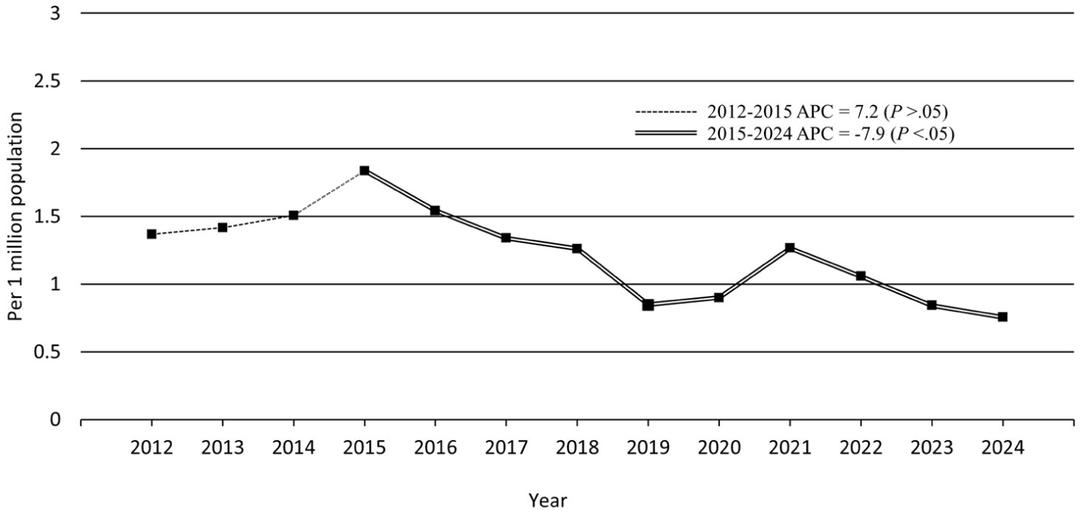
A new analysis of U.S. poison center reports suggests an encouraging divergence inside the broader fentanyl era: while illicit fentanyl exposure in young children has risen in recent years (as the authors note), prescription fentanyl exposures among children under 6 declined significantly from 2015 through 2024.
The study, published online January 28, 2026 in Public Health Reports, examined National Poison Data System (NPDS) cases from 2012–2024 and found that most exposures involved the very young and most often involved transdermal patches.
Related Topic: Emerging Threats in U.S. Emergency Rooms: Fentanyl Overdose and Synthetic Cannabinoid Dangers
Researchers conducted a retrospective observational review of NPDS cases reported to America’s Poison Centers from 2012 through 2024.
Because NPDS coding can misclassify illicit fentanyl as prescription fentanyl (a concern the authors explicitly discuss), the team filtered cases carefully to better isolate prescription exposures. They excluded cases missing a specific prescription fentanyl product name or missing product code category, excluded withdrawal/medical use/adverse effects, and excluded cases where fentanyl was not the primary substance. The analysis used standard descriptive statistics and joinpoint trend analysis for time trends.
Across the 13-year period, the authors identified 376 prescription fentanyl exposure cases in children aged <6 years.
Key characteristics:
Age concentration: 61.5% of cases occurred in children <2 years (231/376).
Intent: 97.6% were unintentional (367/376).
Formulation: The most common was transdermal patch (53.7%, 202/376).
Route: The most common route was ingestion (49.2%, 185/376), followed closely by dermal/transcutaneous exposure (44.1%, 166/376).
Outcomes: Half had no effect (50.0%), about a third had minor effects (32.4%), and 7.4% were major effects (28/376). There were 2 deaths (0.5%), with route/formulation not recorded for those fatal cases.
Transdermal patches weren’t just common; they were repeatedly implicated in higher-severity events.
Among cases where the formulation was a patch, nearly half of exposures involved ingestion (95 of 202, 47.0%). Notably, all patch-related cases coded as major effects occurred via ingestion, underscoring a practical risk: patches can be found, handled, chewed, or swallowed by children.
The age breakdown also hints at how patches enter a child’s orbit. Patches accounted for:
60.5% of exposures in infants age 0 (75/124),
52.3% at age 1 (56/107),
and stayed above 40% in every age group up to 5 years.
The most newsworthy analytic result comes from the trend modeling:
2012–2015: a slight increase that was not statistically significant (annual percentage change +7.2%).
2015–2024: a statistically significant decrease in exposure rates (annual percentage change −7.9%, P<.05).
In plain language: prescription fentanyl exposures reported to poison centers in children under 6 have been falling since 2015, even as illicit fentanyl became a larger public health concern (as framed by the authors).
Rates varied substantially by location. The authors report the highest annual exposure rates (per 1 million population) in:
District of Columbia: 4.6 per 1 million
Vermont: 4.3 per 1 million
They also note Massachusetts as an example of a comparatively low rate (0.7 per 1 million), discussing opioid-prescribing regulation as one possible contributing factor (without claiming causality).
Because the overwhelming majority of exposures were unintentional and heavily clustered in children under 2, the authors place prevention squarely in the caregiver environment: parents, grandparents, household members, and childcare providers.
Two prevention themes are emphasized:
Secure storage: toddlers can reach medications left within reach or on the floor.
Patch disposal: the authors highlight that even “used” patches can retain a large amount of fentanyl. They cite US Food and Drug Administration guidance: fold used patches in half with the sticky sides together and flush them, rather than throwing them into household trash.
They also suggest that opioid- or fentanyl-specific counseling at well-child visits may be warranted given the broader rise in fentanyl-related pediatric exposures described in the paper.
The study includes several important caveats (all acknowledged by the authors):
NPDS is voluntary reporting from the public and clinicians, so exposures may be undercounted and more severe cases may be overrepresented.
Some hospitals have limited fentanyl testing, and caregivers may avoid calling due to fear or stigma.
Overall, poison center reporting among children <6 has decreased in recent years, and the analysis did not adjust for that broader reporting decline.
Before November 2019, NPDS did not separately report illicit fentanyl exposures, complicating historical categorization.
The paper also includes a standard NPDS disclaimer: the database contains deidentified, self-reported information; exposures do not necessarily equal confirmed poisoning; and the system cannot verify every report’s accuracy completely.
This NPDS-based analysis paints a clear picture: prescription fentanyl exposures reported to poison centers in U.S. children under 6 decreased significantly from 2015–2024, with transdermal patches and children under 2 representing the main prevention targets. Serious outcomes were uncommon but not negligible, reinforcing the authors’ conclusion that clinicians should remain alert and prevention efforts, especially around patch storage and disposal, should stay a priority.
Keep reading