Hidden Truth Behind Judy Garland Death Surfaces After 55 Years
post on 23 Nov 2025

post on 23 Nov 2025
 Medical Toxicologymedicaltoxic.com
https://medicaltoxic.com/news/hidden-truth-behind-judy-garland-death-surfaces-after-55-yea
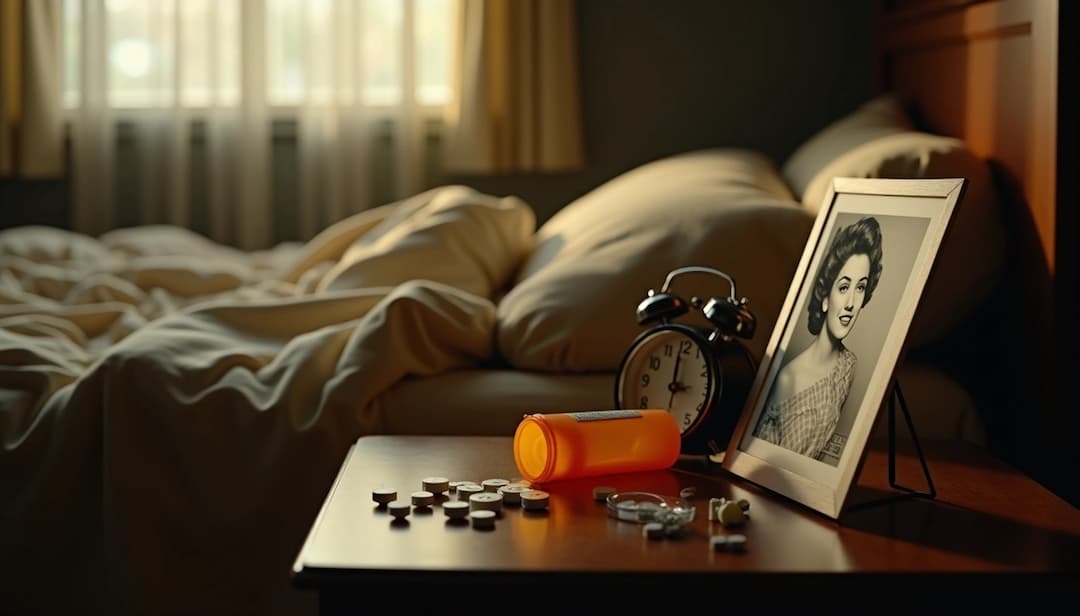
Hidden Truth Behind Judy Garland Death Surfaces After 55 Years
The entertainment industry's most enduring mysteries often conceal complex medical and psychological realities that extend far beyond initial forensic determinations. Judy Garland's untimely demise at forty-seven years of age represents a paradigmatic case study wherein official cause-of-death classifications obscure decades of systematic pharmaceutical dependence and institutional negligence [1]. Westminster coroner Gavin Thurston's postmortem examination revealed barbiturate concentrations of 4.9 milligrams percent within the deceased's circulatory system, on June 22, 1969, establishing the immediate pathophysiological mechanism responsible for her fatal overdose [2] [3].
The coroner's formal verdict of "barbiturate poisoning (quinabarbitone) incautious self-overdosage" represents a clinically precise yet fundamentally incomplete assessment of the circumstances surrounding Garland's death [1]. This determination fails to contextualize the profound addiction pathology that characterized her final decades, nor does it acknowledge the documented pattern of self-destructive behavior that her former spouse, Sid Luft, chronicled through attempted suicide at least 20 different times commencing at twenty-eight years of age [1]. The toxicological evidence of repeated small-dose barbiturate consumption indicates a chronic dependency syndrome that originated during her formative years within the Hollywood studio system [3]. This pharmaceutical dependence trajectory necessitates examination of the institutional practices and psychological stressors that established the neurochemical foundation for her eventual fatal overdose.
British judicial authorities executed comprehensive investigative protocols following the entertainer's unexpected mortality. Westminster coroner Gavin Thurston rendered his official determination on June 26, 1969, establishing barbiturate toxicity as the proximate cause while categorically excluding intentional self-harm from the differential diagnosis. The linguistic precision of this medicolegal classification reflected deliberate consideration of evidence patterns that distinguished accidental pharmaceutical accumulation from deliberate self-destruction.
Postmortem analytical chemistry disclosed profound quinabarbitone saturation within the deceased's biological matrices. Laboratory quantification identified Seconal concentrations of 4.9 milligrams per 100 milliliters of serum, representing a fivefold excess above established therapeutic parameters. Forensic pathological examination confirmed that these lethal concentrations resulted from cumulative dosing patterns rather than acute massive ingestion. The pharmacokinetic evidence suggested repeated self-administration cycles, potentially complicated by medication-induced cognitive impairment that compromised dosage awareness, ultimately precipitating fatal bioaccumulation.
Thurston's investigative findings explicitly documented "no evidence whatsoever" supporting intentional self-termination hypotheses. The death scene examination yielded no written communications indicating suicidal ideation, nor did circumstantial evidence suggest preparatory behaviors consistent with planned self-destruction. Concurrent toxicological screening revealed negligible alcohol concentrations, thereby refuting public speculation regarding ethanol-barbiturate synergistic toxicity. Physical evidence analysis, encompassing medication distribution patterns and residential environment assessment, corroborated accidental overdose conclusions while definitively excluding deliberate pharmaceutical self-administration.
Clinical expert witnesses provided essential contextual framework regarding the deceased's pharmaceutical history during formal inquest proceedings. Dr. Philip Lebon, Garland's attending London physician, testified regarding his prescribed Seconal regimen for managing refractory insomnia symptomatology. Professional medical testimony illuminated her extensive sedative-hypnotic dependency trajectory, originating during her early entertainment industry career. The clinical record documented a destructive pharmacological pattern wherein barbiturate sedatives addressed sleep dysfunction while amphetamine stimulants maintained performance capacity—a therapeutic paradox that established the metabolic foundation for her ultimate pharmaceutical misadventure.
The forensic reconstruction of Garland's final hours emerged through detailed testimonies from her immediate family and attending physicians, which provided crucial context for understanding the circumstances preceding her barbiturate-induced death. Mickey Deans, her fifth husband, discovered the deceased performer at their Cadogan Lane residence following a forced entry into the locked bathroom facility where she remained seated upon the toilet in a forward-slumped position, with rigor mortis already established upon his arrival.
Deans' return to their London domicile occurred approximately at 10:40 am on that fateful June morning, whereupon he immediately recognized the abnormal circumstances and initiated emergency protocols. His testimony documented attempts at cardiopulmonary resuscitation through mouth-to-mouth ventilation until emergency medical personnel arrived, though postmortem examination subsequently confirmed death had occurred several hours prior during the predawn period. The emergency response team's assessment corroborated Deans' account, establishing that Garland had maintained her seated position throughout the terminal phases of barbiturate toxicity.
Dr. Philip Lebon's expert testimony during the inquest revealed critical insights into Garland's chronic sedative dependency patterns that had persisted throughout her London residence period. His clinical observations documented her prolonged Seconal consumption for sleep management, accompanied by increasingly problematic dosing behaviors characterized by memory lapses regarding previously administered medication. The physician's account established a clear pattern of tolerance development, necessitating progressively elevated dosages to achieve therapeutic efficacy—a pharmacological progression that significantly heightened the risk of accidental overdose through cumulative consumption.
Contemporary witness accounts contradicted speculation regarding intentional self-harm, with multiple sources describing Garland's optimistic disposition during her final weeks. Deans specifically documented her enthusiasm regarding planned return to American performance venues following successful engagements at London's Talk of the Town nightclub. However, medical observers noted persistent insomnia symptomatology that had characterized her condition for decades, alongside visible physical exhaustion evident to audiences during her terminal performances. This complex psychological profile indicated ongoing struggles with sleep disorders while maintaining professional enthusiasm and future-oriented planning.
The official verdict regarding Garland's death precipitated extensive discourse within academic, journalistic, and medical communities, wherein divergent analytical frameworks produced markedly different interpretations of the available evidence. Multiple institutional perspectives emerged contemporaneously with the coroner's findings, establishing a complex evidential landscape that continues to challenge singular narrative constructions.
Notwithstanding the coroner's definitive accidental death ruling, substantial segments of public opinion maintained alternative interpretations rooted in Garland's documented psychiatric history. These perspectives derived primarily from testimonial evidence provided by Sid Luft, who had alleged she attempted suicide at least 20 times commencing at twenty-eight years of age [1]. The New York Times documented that within a decade following her MGM studio experiences, at age 28, the performer had attempted suicide [2]. Westminster coroner Gavin Thurston, however, maintained unequivocally that "absolutely no evidence to suggest this was a deliberate action by her" existed within the forensic record [3].
Contemporary media representations frequently diverged from established medical findings, creating interpretive tensions between popular discourse and clinical evidence. The Los Angeles Times reported that "she had tried suicide countless times," despite Scotland Yard's categorical statement indicating no evidence supporting intentional self-harm [4]. Simultaneously, postmortem examination revealed "rather superficial and old" lacerations on her wrists, which the pathologist confirmed as self-inflicted [3]—a finding that paradoxically supported both accidental and intentional death hypotheses.
Medical authorities characterized Garland's death as exemplifying established addiction pathology, wherein chronic tolerance necessitates progressively increased dosages to achieve therapeutic effects. Her circulatory system contained barbiturate concentrations equivalent of 10 Seconal capsules [5], demonstrating the neurochemical progression typical of long-term pharmaceutical dependence. Contemporary medical commentary emphasized that "addictive agents... hijack the brain's delicate circuitry," establishing cyclical consumption patterns that render accidental overdose statistically probable [1].
The systematic destruction of Judy Garland's physiological and psychological wellbeing originated from institutional practices that predated her fatal overdose by several decades. Analysis of the underlying factors responsible for her demise reveals a methodical pattern of exploitation and pharmaceutical manipulation that commenced during her childhood within the studio system.
Metro-Goldwyn-Mayer executives initiated Garland's exposure to barbiturates and amphetamines during her formative years as a contracted performer [6]. Studio head Louis B. Mayer and associated production personnel enforced stringent weight management protocols, frequently disparaging her physical appearance with derogatory references such as "fat little pig with pigtails" [7]. Remarkably, maternal complicity facilitated pharmaceutical administration—both stimulants for energy maintenance and sedatives for sleep regulation—to her daughter prior to reaching ten years of age [7]. The studio systematically prescribed "pep pills" for energy enhancement alongside sleeping medications for rest periods, frequently requiring continuous work schedules extending seventy-two hours [8].
Garland experienced her initial psychological breakdown in 1947 during production of "The Pirate," marking the onset of chronic mental health deterioration [9]. Subsequently, she engaged in her first documented self-harm incident through deliberate laceration with broken glass [9]. Her medical history encompassed treatment for hepatitis, renal complications, and multiple psychiatric institutionalizations throughout her adult life [4]. Her third husband documented attempted suicide 20 times during their thirteen-year matrimonial period [4].
Actress Lorna Luft characterized treatment facilities as institutions that "would literally just dry her out...but they never dealt with the mental issues" [10]. This systematic pattern of dietary restriction, pharmaceutical dependency, and performance obligations established the foundation for Garland's addiction pathology—representing the fundamental mechanism underlying her ultimate demise.
The forensic analysis conducted five and a half decades following Garland's demise illuminates a multifaceted pathological cascade wherein institutional malfeasance, pharmaceutical dependency, and inadequate psychiatric intervention converged to produce a preventable fatality. While coroner Thurston's determination of accidental barbiturate poisoning establishes the proximate cause through toxicological documentation of 4.9 milligrams of barbiturate concentrations per 100 milliliters of blood—representing quintupled therapeutic parameters—this clinical assessment obscures the systematic exploitation that initiated her dependency trajectory during prepubescent development.
The entertainment industry's culpability extends beyond mere negligence to constitute deliberate pharmaceutical manipulation of a vulnerable minor. MGM executives implemented a calculated regimen of amphetamine stimulants and barbiturate sedatives that established neuroadaptive alterations before Garland reached her tenth birthday. This institutionally mandated chemical dependency created irreversible neurobiological modifications that rendered subsequent recovery efforts fundamentally inadequate.
Contemporary medical understanding recognizes Garland's death as emblematic of chronic substance use disorder patterns wherein tolerance mechanisms necessitate escalating dosages to achieve homeostatic equilibrium. The discordant accounts provided by her final spouse, Mickey Deans, regarding her emotional stability contradicted the documented psychiatric history chronicled by former husband Sid Luft, whose testimony detailed extensive self-harm attempts throughout their relationship.
Perhaps most significantly, the treatment modalities available during Garland's era focused exclusively on acute detoxification protocols while neglecting the underlying psychological trauma that perpetuated her substance dependence. This therapeutic approach, characterized by her daughter Lorna Luft as mere "drying out" procedures, failed to address the complex interplay between childhood trauma, performance anxiety, and neurochemical adaptation that sustained her addiction pathology.
The broader implications of Garland's case extend beyond individual tragedy to encompass systemic failures within entertainment industry practices, psychiatric treatment methodologies, and societal exploitation of vulnerable performers. Her death serves as a paradigmatic example of how institutional priorities that privilege commercial interests over individual welfare can establish pathological trajectories that ultimately prove fatal despite apparent success and public adoration.
After 55 years, the truth behind Judy Garland's death reveals a tragic story of systemic exploitation that began in childhood and ultimately led to her fatal overdose at age 47.
• MGM studios created Garland's addiction by forcing amphetamines and barbiturates on her before age 10 to control her weight and performance schedule.
• The coroner ruled her death accidental, not suicide, despite finding lethal barbiturate levels five times higher than therapeutic doses in her system.
• Hollywood's exploitation cycle proved fatal - studios prioritized performance over wellbeing, while treatment facilities failed to address underlying psychological trauma.
• Her husband found her unresponsive in their London bathroom after she had been taking Seconal for chronic insomnia, forgetting previous doses due to long-term dependency.
• Garland's story serves as a warning about the entertainment industry's dark practices and the devastating human cost of prioritizing profit over performer welfare.
The hidden truth reveals that Judy Garland didn't just die from an overdose - she died from decades of systematic abuse that began when she was a vulnerable child star, making her death both preventable and tragically inevitable.
Judy Garland died from an accidental overdose of barbiturates. The coroner ruled her death as "barbiturate poisoning (quinabarbitone) incautious self-overdosage," with no evidence of suicide.
Judy Garland was discovered by her husband, Mickey Deans, in their London home. He found her unresponsive in the bathroom, slumped on the toilet, with rigor mortis already set in.
Garland's substance abuse issues stemmed from early exposure to drugs at MGM studios, where she was given amphetamines and barbiturates as a child star to control her weight and energy levels. This led to a lifelong struggle with addiction.
While there were claims of multiple suicide attempts throughout her life, the coroner found no evidence that her final overdose was intentional. Her ex-husband Sid Luft alleged she had attempted suicide at least 20 times, but this was not officially confirmed.
Hollywood's exploitative practices severely impacted Garland's health and career. She was subjected to strict dieting, given drugs to control her weight and energy, and faced immense pressure to perform. This led to chronic health issues, mental health struggles, and ultimately contributed to her dependency on substances.
[1] - https://www.pbs.org/newshour/health/the-day-judy-garlands-star-burned-out
[2] - https://www.theguardian.com/film/2019/jun/26/judy-garland-died-from-accidental-drug-overdose-archive-1969
[3] - https://www.ksat.com/entertainment/2020/06/22/5-things-you-probably-didnt-know-about-judy-garland/?ref=%2Ftopic%2FLSU%2F
[4] - https://www.nytimes.com/books/00/04/09/specials/garland-obit.html
[5] - https://www.latimes.com/local/obituaries/archives/la-me-judy-garland-19690623-story.html
[6] - https://www.studocu.com/en-us/document/post-university/forensic-science-i/judy-garland-overdose/14468702
[7] - https://www.biography.com/actors/judy-garland
[8] - https://www.biography.com/actors/judy-garland-pills-diet-wizard-of-oz
[9] - https://www.biography.com/actors/judy-garland-personal-life-struggles-husbands
[10] - https://en.wikipedia.org/wiki/Judy_Garland
[11] - https://www.eonline.com/news/1078373/shocking-secrets-about-judy-garland-s-tragic-life
Keep reading
Global Toxicology News
02 Oct 2026

Global Toxicology News
27 Jun 2026
Global Toxicology News
08 Jan 2026

Global Toxicology News
01 Jan 2026