Comprehensive Clinical Guidelines for the Management of Crotalinae Snakebites: Evaluation, Diagnosis, and Treatment
Published on 15 Sept 2024 · Updated 01 Oct 2026

Published on 15 Sept 2024 · Updated 01 Oct 2026
 Medical Toxicologymedicaltoxic.com
https://medicaltoxic.com/guidelines/crotalinae-pit-viper-snakebite-management
This guideline applies to native North American pit vipers (Crotalinae), including rattlesnakes (Crotalus and Sistrurus), copperheads, and cottonmouths (Agkistrodon) in the United States and Canada. It should not be extrapolated to coral snakes, exotic or non-native snakes, or snakebites in other geographic regions, because venom effects and antivenom selection differ. [1]
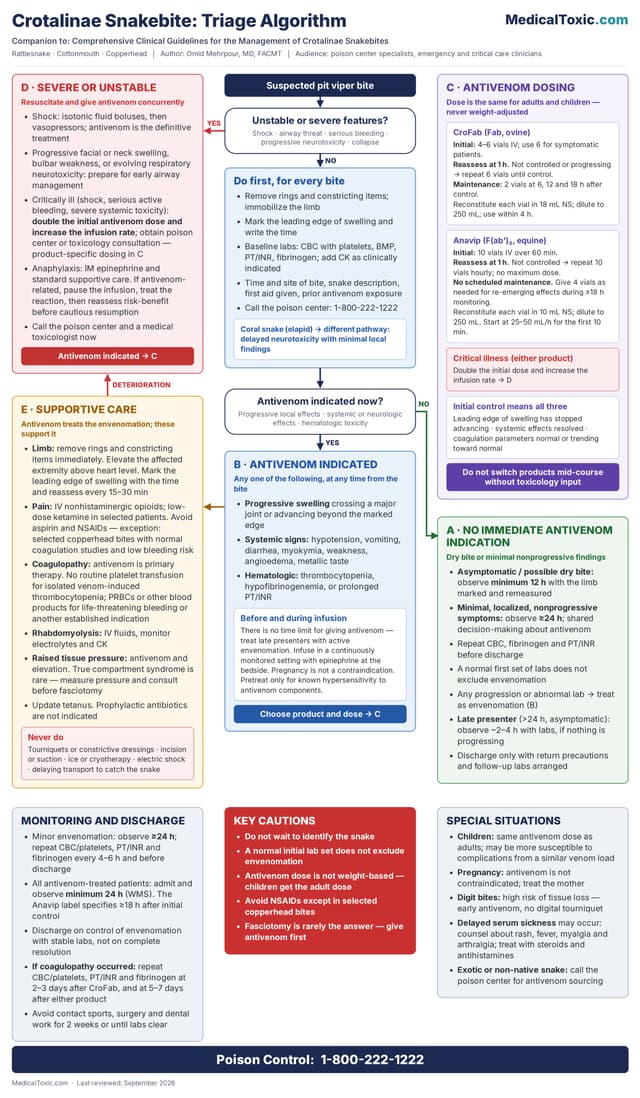
Companion algorithm: Crotalinae Snakebite: Triage Algorithm (September 2026 revision). The companion algorithm should use the same observation, antivenom, and analgesia standards described in this document.
This guideline is an evidence-informed synthesis anchored to the 2026 Wilderness Medical Society (WMS) clinical practice guideline, current FDA prescribing information for CroFab and ANAVIP, and selected clinical trials and reviews. WMS recommendation grades are reproduced where clinically useful; they are not independently regraded by MedicalToxic.com. [1]
Key recommendation | WMS 2026 grade |
|---|---|
Baseline CBC/platelets, BMP, PT/INR, and fibrinogen | Strong recommendation; moderate-quality evidence |
Antivenom for symptomatic pit viper envenomation | Strong recommendation; high-quality evidence |
Early antivenom when indicated, preferably within 6 h | Strong recommendation; moderate-quality evidence |
Observe minor, localized, nonprogressive edema/pain for 24 h | Strong recommendation; low-quality evidence |
Shared decision-making when symptoms are truly minimal | Strong recommendation; low-quality evidence |
CroFab initial 4-6 vials, starting at 6 vials for symptomatic patients | Strong recommendation; high-quality evidence |
ANAVIP initial 10 vials | Strong recommendation; high-quality evidence |
If progression continues within 1 h, repeat CroFab 6 vials or ANAVIP 10 vials | Strong recommendation; high-quality evidence |
NSAIDs only cautiously in selected copperhead envenomations without coagulopathy and with low bleeding risk | Strong recommendation; low-quality evidence |
Avoid platelet transfusion for isolated venom-induced thrombocytopenia | Strong recommendation; moderate-quality evidence |
Pediatric antivenom dosing is the same as adult dosing | Strong recommendation; moderate-quality evidence |
Double the initial antivenom dose and increase infusion rate in critically ill patients | Strong recommendation; low-quality evidence |
Obstetric consultation for patients approaching viable gestational age | Strong recommendation; low-quality evidence |
Product-specific follow-up laboratory testing after inpatient coagulopathy | Strong recommendation; moderate-quality evidence |
Clinical warning
Assess and stabilize airway, breathing, and circulation immediately. Life-threatening systemic toxicity and anaphylaxis should be treated concurrently with antivenom when envenomation is present. [1]
For severe or unstable patients, including those with shock, serious active bleeding, progressive neurotoxicity, collapse, or an evolving airway threat:
Give antivenom while resuscitation is underway.
Treat hypotension with isotonic crystalloid and vasopressors when needed.
Prepare for airway management when progressive facial or neck swelling, bulbar weakness, or evolving respiratory neurotoxicity threatens ventilation or airway protection.
Obtain immediate poison center or medical toxicology consultation. [1]
Snakebites are estimated to account for up to approximately 9,000 emergency department visits annually in the United States, and contemporary estimates place the annual incidence of venomous snakebite at approximately 7,000 to 8,000 cases. Most medically important native venomous snakebites are caused by pit vipers. Fatalities are uncommon in the United States. [1]
Copperheads, cottonmouths, and rattlesnakes account for most native pit viper bites. Clinical severity varies by snake species, venom phenotype, geography, venom dose, patient factors, bite location, and time to treatment. Species identification may help, but treatment should not be delayed while attempting to identify the snake. [1] [7]
Pit vipers belong to the family Viperidae, subfamily Crotalinae. North American pit vipers include rattlesnakes, copperheads, and cottonmouths. Characteristic features include heat-sensing loreal pits, keeled dorsal scales, vertically elliptical pupils, and generally broad or triangular heads. No single visual feature is sufficiently reliable by itself because some nonvenomous snakes mimic pit vipers. [1]
Rattlesnakes are distributed across much of the United States and parts of southern Canada. Copperheads and cottonmouths are concentrated primarily in the eastern and southeastern United States. [1]
If the snake can be photographed from a safe distance, the image may assist poison center or qualified herpetology identification. Patients and bystanders should not attempt to capture, handle, or kill the snake. [1]
Pit viper venoms contain more than 100 proteins and peptides in varying proportions. Important toxin families include phospholipase A2 (PLA2) enzymes, metalloproteinases, serine proteases, disintegrins, and C-type lectin-like proteins. Venom composition varies among and within species and may vary with geography and age. [1]
Clinical toxicity may include:
Local tissue injury: Pain, edema, erythema, ecchymosis, hemorrhagic bullae, and loss of function may occur. Progressive swelling indicates active local envenomation. Full-thickness necrosis is possible in severe bites, but most patients recover without surgery. [1]
Hemotoxicity: Thrombocytopenia, hypofibrinogenemia, and prolongation of PT/INR may occur. This venom-mediated syndrome should not automatically be equated with classic disseminated intravascular coagulation.
Cardiovascular toxicity: Hypotension may result from vasodilation, capillary leak, third spacing, bleeding, or anaphylaxis. Severe cases may progress to shock. [1]
Neurotoxicity: Some rattlesnake envenomations produce paresthesias, myokymia, cranial nerve abnormalities, weakness, and rarely descending paralysis or respiratory failure. Some Crotalus scutulatus populations express Mojave toxin, a neurotoxic venom phenotype associated with geographic variation in neurologic manifestations; species or geography alone should not be used to predict the clinical course. [3] [11]
Other systemic effects: Nausea, vomiting, diarrhea, metallic taste, renal injury, and rhabdomyolysis may occur. [1]
Clinical findings evolve over time and may involve one or more domains.
Pain, swelling, erythema, tenderness, and ecchymosis are common. Swelling may progress proximally and impair range of motion or function. Hemorrhagic bullae and tissue necrosis can occur in more severe cases. Serial examination is more informative than a single early assessment. [1]
Pit viper venom may cause thrombocytopenia, hypofibrinogenemia, prolonged PT/INR, and clinically apparent bleeding. Significant spontaneous bleeding is uncommon but can be life-threatening. Hemotoxicity may recur after apparent initial control, particularly after Fab antivenom, so follow-up testing is important when coagulation abnormalities occurred during hospitalization. [1] [5]
Neurotoxicity is uncommon after most North American pit viper bites but may occur after some rattlesnake envenomations. Findings include paresthesias, ptosis, diplopia, dysarthria, myokymia, generalized weakness, and rarely descending paralysis or respiratory failure. [1] [11]
Nausea, vomiting, diarrhea, tachycardia, hypotension, angioedema, impaired perfusion, renal injury, and other systemic findings indicate clinically important envenomation. Rhabdomyolysis can occur, but a single incidence estimate should not be generalized across all North American pit viper species. [1]
For suspected anaphylaxis from venom or antivenom, give intramuscular epinephrine promptly in the mid-anterolateral thigh. A standard regimen is 0.01 mg/kg of epinephrine 1 mg/mL IM; adults 0.3-0.5 mg per dose, children 0.01 mg/kg up to 0.3 mg per dose; repeat every 5-15 minutes as needed while providing airway, oxygen, IV fluid, and other supportive care. [9]
In critically ill patients, WMS recommends doubling the initial antivenom dose and increasing the infusion rate, because rapid venom neutralization outweighs the relatively low risk of an antivenom-associated allergic reaction. Evidence grade: strong recommendation, low-quality evidence. [1]
For every suspected pit viper bite:
Remove rings, watches, footwear, and other constricting items.
Establish IV or IO access in an unaffected extremity when possible.
In the emergency department, elevate the affected extremity above heart level.
Mark the leading edge of tenderness, erythema, and swelling and record the time.
Reassess local progression every 15 to 30 minutes until stabilization.
Update tetanus immunization when indicated.
Contact the regional poison center early when clinically significant envenomation is suspected or antivenom is being considered. [1] [7]
Document:
Time and location of the bite.
Circumstances of exposure and number of bites.
Description or safe photograph of the snake, if available.
Time of symptom onset and progression.
First aid measures already performed.
Previous snakebite or antivenom exposure.
Relevant allergies, pregnancy status, medications, comorbidities, and bleeding risk.
Do not delay treatment while attempting to identify the snake.
Assess:
Vital signs and perfusion: hypotension, tachycardia, tachypnea, hypoxemia, and signs of shock.
Local injury: pain, tenderness, swelling, erythema, ecchymosis, bullae, tissue perfusion, range of motion, and neurovascular status.
Neurologic status: cranial nerves, ptosis, diplopia, dysarthria, myokymia, weakness, respiratory effort, and mental status.
Systemic findings: nausea, vomiting, diarrhea, angioedema, bleeding, dark urine, oliguria, or other evidence of systemic toxicity.
For suspected envenomation, obtain:
CBC with platelet count.
Basic metabolic panel.
PT/INR.
Fibrinogen.
Evidence grade: strong recommendation, moderate-quality evidence. [1]
Add CK, urinalysis, renal studies, ECG, imaging, or other testing when clinically indicated. In patients with neurologic deficits or altered mental status not fully explained by the expected venom syndrome, consider noncontrast brain CT to evaluate intracranial hemorrhage or an alternative diagnosis. [1]
Clinical progression determines treatment. Continue serial examination of the wound and affected limb, neurologic reassessment, hemodynamic monitoring, and repeat laboratory testing based on severity and response to antivenom. [1]
Diagnosis is primarily clinical. A known or suspected pit viper exposure plus compatible local, hematologic, neurologic, or systemic findings supports the diagnosis. Two fang punctures are not required, and their absence does not exclude a bite.
Species-level identification is not required for treatment. Clinical progression and laboratory abnormalities should drive antivenom decisions. [1]
The principal early distinction is between a dry or non-envenomating bite and active envenomation. Patients with no findings beyond a possible puncture wound require observation because early examination and initial laboratory studies may be normal before toxicity develops. [1]
Other diagnoses may include nonvenomous snakebite, cellulitis, traumatic injury, allergic reaction, hematologic disorders, rhabdomyolysis from another cause, acute neurologic disease, or other causes of shock.
Coral snake exposure requires a separate pathway because clinically important neurotoxicity may occur with minimal local findings. [1]
Recommended prehospital measures include:
Move away from the snake.
Remove constricting items.
Loosely immobilize the affected limb and keep it approximately at heart level during evacuation.
Arrange prompt transport to a facility capable of evaluating snakebite and administering antivenom. [1] [7]
Do not use tourniquets, pressure immobilization for North American pit viper bites, incision or suction, cryotherapy or ice, electric shock, or other venom extraction techniques. Do not delay transport in an attempt to catch or kill the snake. [1]
Antivenom is the definitive treatment for clinically significant pit viper envenomation. The 2026 WMS guideline recommends antivenom for symptomatic pit viper envenomation and specifically prioritizes prompt treatment for progressive local toxicity, systemic toxicity, neurologic toxicity, or hemotoxicity. Evidence grade: strong recommendation, high-quality evidence. [1]
Antivenom should be given when any of the following are present:
Progressive local pain, swelling, tenderness, ecchymosis, or other local tissue effects.
Swelling advancing beyond the previously marked border or crossing a major joint.
Hypotension, vomiting, diarrhea, angioedema, significant systemic symptoms, or shock.
Neurotoxicity, including progressive weakness, bulbar findings, or other neurologic venom effects.
Thrombocytopenia, hypofibrinogenemia, prolonged PT/INR, or clinically important bleeding.
Early treatment is preferred, ideally within 6 hours when indicated, although active or progressive toxicity remains an indication in later presenters. Evidence grade: strong recommendation, moderate-quality evidence. [1]
Patients with truly minimal, localized, nonprogressive pain or edema near the bite site are a special subgroup. WMS supports 24-hour close observation and shared decision-making regarding antivenom in this setting. Any clinical or laboratory progression should prompt antivenom. [1]
For mild-to-moderate copperhead envenomation, randomized placebo-controlled evidence showed that FabAV improved limb function at 14 days. This evidence should be discussed when weighing observation versus antivenom in a patient whose symptoms are mild but clinically definite. [4]
Evidence grades: observation of minor nonprogressive edema/localized pain, strong recommendation/low-quality evidence; shared decision-making for minimal symptoms, strong recommendation/low-quality evidence. [1]
The Snakebite Severity Score should not be used as a predictive tool to decide whether antivenom is needed. Evidence grade: strong recommendation, low-quality evidence. [1]
Antivenom dose is determined by venom burden and clinical response, not patient weight. Children receive the same vial dose as adults. [1] [2] [3]
Initial dose: 4 to 6 vials IV; WMS favors 6 vials in symptomatic patients. Evidence grade: strong recommendation, high-quality evidence. [1] [2]
Infuse over 60 minutes, starting slowly during the first 10 minutes while observing for a reaction. [2]
Reassess at approximately 1 hour.
If local or systemic toxicity continues to progress or laboratory abnormalities worsen, give 6 additional vials and reassess. FDA labeling permits repeat 4- to 6-vial doses; WMS specifically recommends 6 vials for repeat dosing when initial control has not been achieved. Evidence grade: strong recommendation, high-quality evidence. [1] [2]
After initial control: FDA labeling recommends 2 vials every 6 hours for 3 doses at 6, 12, and 18 hours after control. [2]
Additional dosing after scheduled maintenance should be based on the clinical course.
Initial dose: 10 vials IV over 60 minutes. Evidence grade: strong recommendation, high-quality evidence. [1] [3]
Begin at 25-50 mL/h for the first 10 minutes while observing for hypersensitivity; if tolerated, increase the rate to complete the infusion. [3]
Reassess at approximately 1 hour.
If initial control has not been achieved, repeat 10-vial doses as needed until local progression stops, systemic symptoms resolve, and coagulation parameters normalize or trend toward normal. Evidence grade: strong recommendation, high-quality evidence. [1] [3]
After initial control, the current FDA label directs health-care observation and permits 4-vial doses as needed for re-emerging symptoms, including coagulopathy; it does not require routine scheduled maintenance dosing. [3]
Prospective randomized data support both FabAV and Fab2AV as effective therapies for North American pit viper envenomation, with differences in pharmacokinetics and late hemotoxicity profiles. Neither product has demonstrated universal clinical superiority across all bite types. [1] [5]
For shock, serious active bleeding, severe systemic toxicity, or other critical illness, give supportive care and antivenom concurrently. WMS recommends doubling the initial antivenom dose and increasing the infusion rate, ideally with poison center or medical toxicology consultation. Evidence grade: strong recommendation, low-quality evidence. [1]
Initial control requires all of the following:
Progressive local injury has stopped advancing.
Systemic venom effects have resolved or clearly stabilized.
Coagulation abnormalities have normalized or are trending toward normal. [1] [2] [3]
Resolution of edema is not required to establish initial control. If any toxicity domain continues to worsen, additional antivenom is generally required. [1]
Antivenom should be administered in a monitored setting with epinephrine and resuscitation medications immediately available.
If an infusion-associated hypersensitivity reaction occurs:
Pause or stop the infusion.
Treat anaphylaxis promptly with IM epinephrine 0.01 mg/kg of 1 mg/mL in the mid-anterolateral thigh (adult 0.3-0.5 mg; child up to 0.3 mg), repeating every 5-15 minutes as needed. [9]
Provide airway support, oxygen, IV fluids, and other standard anaphylaxis treatment as indicated. [1] [9]
Reassess the risk-benefit of continuing antivenom.
If antivenom remains necessary and the reaction is controlled, cautious resumption at a slower rate may be appropriate with close monitoring. [1] [3]
ANAVIP has no absolute contraindication in its FDA prescribing information; patients with equine-protein sensitivity may be at increased risk for hypersensitivity. [3]
For CroFab, known hypersensitivity to papain or papaya extracts increases concern for reaction. WMS recommends pretreatment and close monitoring in these patients, while recognizing that there is no absolute contraindication when antivenom is clinically necessary. Evidence grade: strong recommendation, moderate-quality evidence. [1] [2]
Routine prophylactic pretreatment for every patient is not recommended.
Elevate the affected extremity above heart level in the emergency department. Mark and serially reassess swelling, tenderness, and erythema every 15 to 30 minutes until stable. Evidence grade: strong recommendation, low-quality evidence. [1]
If a tourniquet was applied before arrival, establish IV access and remove it early rather than waiting for antivenom solely because of concern for a venom bolus. Evidence grade: strong recommendation, low-quality evidence. [1]
IV nonhistaminergic opioids are preferred for significant pain. Low-dose analgesic ketamine may be considered in selected patients. [1]
Aspirin and NSAIDs are generally avoided because coagulopathy, platelet dysfunction, renal injury, or rhabdomyolysis may develop. A specific exception exists for selected copperhead envenomations: NSAIDs may be used cautiously when coagulation studies are normal and baseline bleeding risk is low. Evidence grade: strong recommendation, low-quality evidence. [1] [7]
Antivenom is the primary treatment for venom-induced coagulopathy and thrombocytopenia. [1]
Packed red blood cells may be required for clinically significant acute hemorrhage. Do not routinely transfuse platelets solely to correct isolated venom-induced thrombocytopenia. WMS notes that platelet transfusion is unlikely to provide durable correction and cites a potential concern for exacerbating a hypercoagulable state. Evidence grade: strong recommendation, moderate-quality evidence. [1]
This recommendation does not preclude platelet or other blood-product support for life-threatening bleeding or another established transfusion indication. When major bleeding is present, prioritize adequate antivenom and involve toxicology/poison center and, when appropriate, hematology.
Treat rhabdomyolysis and acute kidney injury with standard supportive therapy, including appropriate IV fluids and monitoring of electrolytes, renal function, urine output, and CK when indicated. Evidence grade: strong recommendation, low-quality evidence. [1]
Perform frequent neurologic examinations and administer antivenom promptly when neurotoxicity is present. Myokymia alone is not an indication for intubation. [1]
If neurologic toxicity progresses despite antivenom and causes bulbar dysfunction, inadequate ventilation, or an evolving airway threat, proceed with airway management, including intubation when required. Patients with venom-induced paralysis may remain conscious and require appropriate sedation after intubation. Evidence grade: strong recommendation, moderate-quality evidence. [1]
True compartment syndrome after pit viper envenomation is rare. Marked swelling alone does not establish the diagnosis. [1] [8]
When severe swelling or neurovascular abnormalities persist:
Give additional antivenom as indicated.
Elevate the limb.
Perform serial neurovascular examinations.
Measure compartment pressure when the diagnosis remains a concern.
Consult a snakebite expert and surgeon before fasciotomy. [1]
Routine fasciotomy is discouraged. Surgical decompression should be reserved for rare cases of persistent objective neurovascular compromise despite adequate antivenom and supportive management. Contemporary upper-extremity data likewise show that operative intervention is uncommon. Evidence grade: strong recommendation against routine fasciotomy, moderate-quality evidence. [1] [8]
Prophylactic antibiotics are not routinely indicated. Reserve antibiotics for clinical infection or selected environmentally contaminated wounds or wounds altered by improper first aid. Evidence grade: strong recommendation, low-quality evidence. [1]
Early debridement of apparently necrotic tissue should generally be avoided because injured-appearing tissue may recover after antivenom and conservative care. Significant open wounds should receive appropriate wound care, and early active/passive range-of-motion therapy should be initiated when clinically appropriate. Evidence grade for avoiding early tissue excision: strong recommendation, moderate-quality evidence. [1] [8]
Patients with no signs or symptoms beyond a possible puncture wound should be observed for a minimum of 12 hours, with baseline laboratory studies and repeat assessment for delayed toxicity. Evidence grade: strong recommendation, low-quality evidence. [1]
Before discharge, there should be:
No progression of local findings.
No systemic symptoms.
No new or worsening laboratory abnormalities.
Late presenters: Patients presenting more than 24 hours after the bite with no symptoms may be observed for approximately 2 to 4 hours with laboratory assessment, provided no local, systemic, or laboratory progression is identified. Evidence grade: strong recommendation, low-quality evidence. [1]
Patients with minor, nonprogressive symptoms should generally be observed for at least 24 hours. For symptoms that are truly minimal and localized, shared decision-making about antivenom is reasonable; clinically definite or progressive envenomation should be treated promptly. [1]
Repeat CBC with platelets, PT/INR, and fibrinogen approximately every 4 to 6 hours and again before discharge when ongoing observation is chosen. [1]
Any progression in local symptoms, systemic findings, neurologic findings, or laboratory abnormalities should prompt antivenom.
Admit patients with progressive local toxicity, systemic toxicity, neurologic toxicity, hemotoxicity, or end-organ injury.
For patients with initial laboratory abnormalities receiving antivenom, repeat CBC with platelets, PT/INR, and fibrinogen approximately 1 hour after antivenom and continue serial testing until initial control is achieved. [1]
WMS recommends that all patients receiving antivenom be admitted for observation for a minimum of 24 hours, with continued examination, laboratory assessment, and additional antivenom as clinically indicated. [1]
The ANAVIP FDA label separately specifies monitoring in a health-care setting for at least 18 hours after initial control; for a unified institutional pathway, the more conservative WMS minimum of 24 hours is reasonable. [1] [3]
Discharge should be based on control of envenomation and stable or improving laboratory findings, not on complete disappearance of swelling or pain.
Before discharge, confirm that:
Local findings are no longer progressing.
Systemic and neurologic toxicity has resolved or stabilized.
Laboratory abnormalities are stable or improving.
The patient has clear return precautions and access to follow-up.
Patients should return urgently for recurrent swelling, bleeding, weakness, dyspnea, syncope, severe vomiting, new neurologic symptoms, or symptoms of delayed hypersensitivity.
If coagulation abnormalities occurred during hospitalization, obtain follow-up CBC with platelets, PT/INR, and fibrinogen:
CroFab/FabAV: approximately 2 to 3 days after discharge.
Either CroFab/FabAV or ANAVIP/Fab2AV: approximately 5 to 7 days after discharge.
Patients should avoid contact sports, elective surgery, dental procedures, tattoos, piercings, and other activities with meaningful bleeding risk for up to 2 weeks after discharge when recent hemotoxicity is a concern. Evidence grade: strong recommendation, moderate-quality evidence. [1]
Children receive the same antivenom vial dose as adults because treatment is based on venom burden rather than body weight. Pediatric patients may be more susceptible to complications from a similar venom load and should receive antivenom whenever clinically indicated. Evidence grade: strong recommendation, moderate-quality evidence. [1]
For infants or very small children, infusion volume may require adjustment to avoid excessive fluid administration. [1]
Pregnancy is not a reason to withhold indicated antivenom. Maternal stabilization and control of envenomation take priority. For patients approaching viable gestational age, obtain obstetric consultation for fetal monitoring and assessment. Evidence grade: strong recommendation, low-quality evidence. [1]
The 2026 WMS update describes fetal complications including preterm labor, placental abruption, and, in severe cases, fetal loss, but it does not provide a contemporary North American pit-viper-specific fetal-loss percentage. [1] A historical literature review of 213 venomous snakebites in pregnancy reported fetal loss of approximately 20%; because those cases spanned heterogeneous snake species, regions, and eras, that figure should not be interpreted as a current pit-viper-specific risk estimate. [10]
Antivenom should not be withheld solely because the patient is lactating. Evidence grade: strong recommendation, low-quality evidence. [1]
Digit bites require careful serial neurovascular assessment because small increases in tissue volume can produce substantial local dysfunction. Early antivenom is important when venom effects are clinically definite or progressing. Do not use digital tourniquets. [1] [8]
Do not extrapolate this guideline to exotic or non-native species. Contact the poison center immediately for species identification, antivenom sourcing, and expert management. [1]
Delayed serum reactions can occur after either antivenom. Reported incidence varies by product, study design, and diagnostic criteria, so a single percentage should not be applied to both products. A meta-analysis of FabAV reported a higher serum-sickness estimate than the 2-3% figure historically quoted in some summaries, supporting product-specific counseling rather than a universal rate. [2] [3] [6]
Counsel patients to seek medical evaluation for delayed rash, urticaria, pruritus, fever, myalgia, or arthralgia after antivenom treatment. Management is symptom-directed and based on severity.
Most patients with North American pit viper envenomation recover without permanent major disability. Persistent pain, swelling, reduced range of motion, sensory changes, weakness, or tissue loss can occur after more severe bites. [1] [7]
Most patients do not require surgery. Tissue necrosis can occur, particularly after severe rattlesnake envenomation, but early debridement is generally discouraged because clinically concerning tissue may recover with antivenom and conservative management. [1] [8]
Fatalities remain uncommon in the United States, but delayed care, severe systemic toxicity, hemorrhage, airway compromise, and inadequate access to antivenom can increase risk. [1]
Treat the patient, not the snake photograph.
Do not wait for severe toxicity before treating clinically definite or progressive envenomation.
Truly minimal, localized, nonprogressive symptoms are the main setting in which observation and shared decision-making about antivenom are reasonable.
Mild copperhead envenomation is not necessarily trivial; randomized trial data show improved limb function with FabAV. [4]
Antivenom dose is not weight-based.
Define treatment success by initial control, not by complete resolution of swelling.
Reassess the wound, systemic findings, neurologic status, and coagulation studies serially.
Avoid routine NSAIDs, but recognize the narrow copperhead exception in patients without coagulopathy and with low bleeding risk. [1]
Do not routinely transfuse platelets solely for venom-induced thrombocytopenia. [1]
Avoid prophylactic antibiotics, early debridement, and routine fasciotomy. [1] [8]
Observe asymptomatic possible dry bites for at least 12 hours; consider 2-4 hours for asymptomatic presentations occurring more than 24 hours after the bite. [1]
Admit antivenom-treated patients for at least 24 hours under the WMS 2026 pathway. [1]
Arrange product-appropriate follow-up when hemotoxicity occurred.
Contact Poison Control at 1-800-222-1222 for case-specific guidance in the United States.
Keep reading