Public Health and Poison Prevention
Sun Poisoning: Severe Sunburn Symptoms and Treatment
Omid Mehrpour
Post on 14 Aug 2024 · Updated 13 Nov 2026 · 13 min read

Omid Mehrpour
Post on 14 Aug 2024 · Updated 13 Nov 2026 · 13 min read
 Medical Toxicologymedicaltoxic.com
https://medicaltoxic.com/blogs/sun-poisoning-severe-sunburn-symptoms-treatment

“Sun poisoning” is a common term for severe sunburn, but it is not a separate medical diagnosis of poisoning by a toxin.
Severe sunburn occurs when excessive ultraviolet (UV) radiation damages the skin and triggers an inflammatory response. It can cause marked pain, swelling, blistering and, in some cases, symptoms such as headache, nausea or fever.
Most mild sunburns improve with supportive care. Severe symptoms, extensive blistering or signs of another illness require medical assessment.
The most important distinction is that sunburn, heat exhaustion, heatstroke and medication-related photosensitivity are not the same condition.
That matters because a person who becomes confused or collapses after prolonged heat exposure may have heatstroke, a life-threatening emergency, rather than simply a severe sunburn.
According to the American Academy of Dermatology (AAD), appropriate sunburn care begins with leaving the sun, cooling the skin, relieving discomfort, maintaining hydration and protecting the damaged skin while it heals. [1]
“Sun poisoning” generally means severe sunburn; it does not indicate that a toxic chemical has entered the body.
Sunburn results from excessive UV exposure, especially UVB radiation.
Symptoms may include painful, warm skin, swelling, blisters, peeling and sometimes headache, fever or nausea.
Skin redness may be less visible on darker skin tones, so pain, warmth, swelling and blistering are important signs.
Cool water, gentle skin care, hydration and appropriate pain relief are the main treatments for uncomplicated sunburn.
Do not use ice directly on sunburned skin, deliberately pop blisters or exfoliate peeling skin.
Topical corticosteroids have not demonstrated clinically useful benefit when started several hours after UV injury in a randomized trial.
Confusion, loss of consciousness or seizures after heat exposure must prompt emergency assessment for heatstroke or another serious illness.
Broad-spectrum, water-resistant sunscreen with SPF 30 or higher, shade and protective clothing help prevent further UV injury.
The term “sun poisoning” is commonly used to describe a particularly uncomfortable or severe episode of sunburn.
It may involve:
more extensive skin inflammation;
pronounced pain;
swelling;
blistering;
general illness or discomfort.
However, there is no single diagnostic test or universally accepted clinical definition separating “sun poisoning” from severe sunburn.
The medically meaningful assessment involves the degree of skin injury, the area affected, associated symptoms and the possibility of another illness occurring at the same time.
Ultraviolet radiation can damage DNA and other structures in skin cells.
This damage triggers inflammatory signaling, increased local blood flow and the familiar symptoms of sunburn.
The process is not simply overheating of the skin.
A person can develop sunburn on a cool, sunny day, during high-altitude activities or while reflected UV radiation reaches the skin from water, snow or sand.
The Centers for Disease Control and Prevention (CDC) emphasizes that anyone can experience sunburn regardless of skin tone, and that exposure risks depend on factors including altitude, season, time of day and individual susceptibility. [2]
Common findings include:
painful or tender skin;
warmth;
redness or a change in skin color;
swelling;
blisters in more severe cases;
peeling during the healing phase.
Sunburn may not produce obvious bright-red skin in people with darker skin tones.
Pain, warmth, tenderness and changes in texture can still indicate substantial injury. [3]
Some people with significant sun exposure may experience:
headache;
fatigue;
nausea;
chills or fever;
dizziness.
These symptoms deserve careful interpretation.
They are not specific to sunburn.
When a person has also been exposed to intense heat, exercised strenuously, become dehydrated or taken a photosensitizing medicine, additional conditions may be present.
A severe systemic presentation should not automatically be attributed to the skin injury.
Sunburn symptoms commonly develop within several hours of UV exposure.
CDC reports that sunburn may worsen over approximately 24–36 hours after exposure. Many uncomplicated cases improve over several days, although more severe burns can require longer to heal. [2]
Peeling can occur during recovery.
The absence of symptoms immediately after an outdoor activity does not guarantee that the skin has escaped UV injury.
These conditions may occur during the same outdoor event, but they have different mechanisms and require different responses.
Condition | Main problem | Typical findings | Immediate priority |
|---|---|---|---|
Severe sunburn | UV-induced skin injury | Pain, warmth, redness or discoloration, blisters | Leave UV exposure, cool and protect skin |
Heat exhaustion | Heat stress and fluid or salt loss | Heavy sweating, weakness, nausea, dizziness | Move to a cool place, rest, cool and rehydrate if alert |
Heatstroke | Dangerous failure of heat regulation with neurologic dysfunction | Confusion, altered consciousness, seizures, very high body temperature | Emergency services and rapid whole-body cooling |
CDC classifies heatstroke as the most serious heat-related illness and emphasizes that delayed treatment can cause permanent injury or death. [4]
Heatstroke is especially concerning when someone exposed to heat develops:
confusion;
slurred speech;
unusual behavior;
seizures;
loss of consciousness;
marked impairment of awareness.
Heatstroke may occur with either dry skin or heavy sweating.
Do not assume the person must stop sweating before heatstroke is possible.
If heatstroke is suspected:
Call emergency services immediately.
Move the person to a cooler area.
Begin rapid cooling while awaiting emergency assistance.
Use cold-water immersion when feasible and safe, or other effective cooling methods.
Stay with the person until professional help arrives.
Do not delay cooling while waiting for a thermometer or emergency responders.
A person who is confused or unconscious should not be given oral fluids.
Heatstroke requires rapid body cooling; treating only the sunburned skin is not enough. [4]
Medical evaluation is appropriate when sunburn is accompanied by:
extensive blistering or swelling;
severe or worsening pain;
significant dehydration;
persistent vomiting;
high fever or chills;
symptoms suggesting skin infection;
substantial involvement of the face, hands or other sensitive areas;
sunburn in an infant or young child.
The National Health Service (NHS) specifically advises seeking urgent medical advice for blistered or swollen sunburn, significant systemic symptoms and sunburn affecting babies or young children. [3]
Seek emergency care immediately for:
confusion or altered consciousness;
fainting with persistent abnormal symptoms;
seizures;
difficulty breathing;
inability to maintain hydration with marked weakness;
suspected heatstroke.
These findings should trigger assessment for heat illness, dehydration or another medical condition—not simply be labeled “sun poisoning.”
Uncomplicated sunburn is primarily treated with supportive care.
There is no proven home remedy that instantly reverses UV-induced cellular injury.
Move indoors or into shade as soon as sunburn is recognized.
Avoid further UV exposure while the skin is healing.
If going outdoors is unavoidable, protect the affected skin with suitable clothing.
Take a cool shower or bath, or place a clean, cool, damp cloth on the affected skin.
Use comfortably cool water rather than ice.
Do not apply ice packs directly to a sunburn because extreme cold can add further skin injury.
Take particular care to avoid excessive chilling of babies and young children. [3]
A fragrance-free moisturizer or aloe vera-containing product may help relieve discomfort.
AAD recommends applying moisturizer while the skin remains slightly damp after a cool bath or shower.
A moisturizer can improve comfort and support the skin barrier, but it should not be described as an antidote that reverses UV damage.
Avoid products that sting, irritate or contain unnecessary fragrances. [1]
Sunburn and hot-weather exposure may increase fluid requirements.
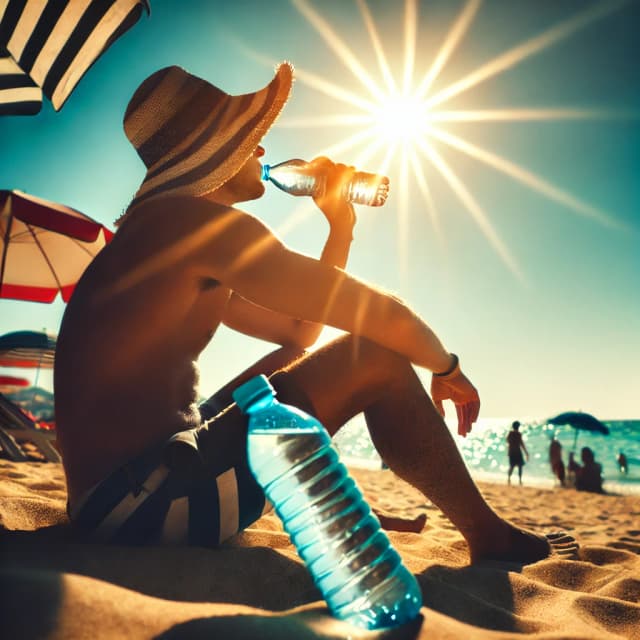
Drink water regularly if alert and able to swallow, adjusting intake according to thirst, activity and other medical circumstances.
People with conditions requiring fluid restriction should follow individualized medical advice.
Drinking water helps prevent or correct dehydration; it does not prevent UV damage to the skin and cannot replace sunscreen or protective clothing.
For people who can safely use them, nonprescription medicines such as ibuprofen or acetaminophen may help relieve pain.
Follow the product label and consider contraindications, including kidney disease, gastrointestinal bleeding risk, dehydration, pregnancy and drug interactions when relevant.
Pain medication provides symptom relief.
It does not erase the underlying UV-induced damage. [1]
Blisters indicate a deeper level of skin injury than simple redness.
They should be treated gently.
Do not deliberately pop or peel intact blisters.
Keep the affected area clean.
Protect the blistered skin from friction and further sunlight.
Use a suitable nonadherent dressing if protection is needed.
Seek medical advice for extensive blistering, significant pain or signs of infection.
Blisters can help protect damaged tissue while it heals.
If a blister opens, avoid removing attached skin unnecessarily. Increasing redness, warmth, pain, swelling, pus or fever may indicate infection and warrants medical evaluation. [1]
The evidence is more limited than many online treatment lists suggest.
A randomized, double-blind clinical trial published in Archives of Dermatology tested topical moderate-potency and high-potency corticosteroids in 20 healthy volunteers exposed to controlled UVB radiation.
The investigators found that applying these corticosteroids 6 or 23 hours after UV exposure did not produce a clinically useful reduction in the acute sunburn reaction. [5]
This was an experimental human study, not a trial of every possible severe sunburn presentation.
Nevertheless, it directly challenges the idea that applying a stronger steroid cream after sunburn reliably accelerates recovery.
Routine systemic corticosteroids should not be presented as standard treatment for uncomplicated sunburn.
If a clinician identifies a different inflammatory or allergic skin disorder, management may differ.
Yes.
Some medications produce photosensitivity, meaning the skin reacts more strongly or differently after exposure to UV radiation.
The FDA distinguishes:
Phototoxic reactions: More common; may resemble an exaggerated sunburn and can develop relatively soon after exposure.
Photoallergic reactions: Immune-mediated reactions that may appear later and can resemble eczema or another rash.
Potentially photosensitizing medicines include certain antibiotics, diuretics, nonsteroidal anti-inflammatory drugs and topical treatments. [6]
Not everyone taking these medicines develops photosensitivity.
Risk can depend on the specific drug, dose, individual and UV exposure.
Do not stop a prescribed medicine independently because of concern about sun sensitivity. Ask a healthcare professional about appropriate protection or whether an alternative is indicated.
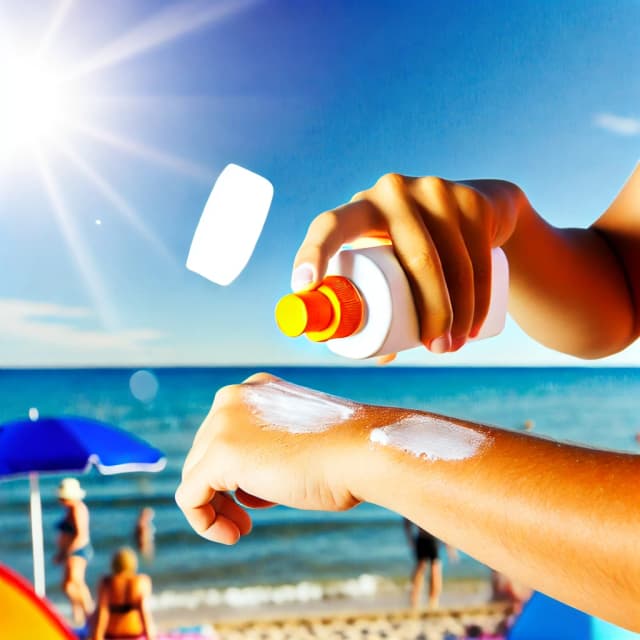
The American Academy of Dermatology recommends selecting sunscreen that is:
broad spectrum;
SPF 30 or higher;
water resistant.
Broad-spectrum protection addresses both UVA and UVB radiation.
Apply the product according to its label and reapply approximately every two hours while outdoors, and after swimming or heavy sweating as directed. [7]
Sunscreen is an important preventive tool, but no sunscreen provides total protection.
Other effective measures include:
long-sleeved clothing;
a wide-brimmed hat;
UV-protective sunglasses;
seeking shade;
reducing time outdoors when ultraviolet radiation is strongest.
The CDC Yellow Book emphasizes that UV exposure may be substantial during high-altitude activities, snow sports and travel, not just at beaches in summer. [8]
Staying hydrated is valuable in hot weather.
But a well-hydrated person can still receive a severe UV burn.
Sunburn prevention requires UV protection.
Heat illness prevention requires additional attention to temperature, physical activity, acclimatization, rest and hydration.
Some medical conditions, including lupus and certain inherited photosensitivity disorders, can make UV exposure particularly problematic.
People taking photosensitizing medications should ask whether they need additional precautions.
Yes. Sunburn is evidence of UV-related skin injury and is associated with increased risk of skin cancer.
A prospective analysis published in the American Journal of Epidemiology evaluated severe sunburn histories in two large cohorts involving 87,166 women and 32,959 men.
The investigators found associations between reported severe sunburn history and subsequent melanoma and other skin cancers, with differences by sex, body site and cancer type. [9]
Because this was observational epidemiology, the findings should not be interpreted as proving that a specific sunburn causes a specific future cancer.
The study nevertheless supports the broader evidence that avoiding excessive UV exposure and sunburn is an important prevention strategy.
A sunburn may heal visibly while the underlying history of UV exposure remains relevant to long-term risk.
“Sun poisoning” is not a toxin diagnosis.
Use a clinically meaningful description such as severe sunburn and evaluate associated symptoms separately.
Confusion after heat exposure is an emergency warning sign.
Do not label it as ordinary sunburn without considering heatstroke.
Hydration does not prevent UV injury.
Water intake is supportive care, not a substitute for UV protection.
Blistering changes the assessment.
Extensive blisters, severe pain or signs of infection warrant medical attention.
Topical steroids are not a proven cure.
A controlled human trial did not find clinically useful benefit when corticosteroids were started several hours after UV exposure.
Medication-related photosensitivity can mimic exaggerated sunburn.
Review the medication history when a reaction seems unusually severe.
Sunburn heals; UV risk accumulates.
Preventing repeated exposure matters even after symptoms resolve.
No. It is a common expression generally referring to severe sunburn. It does not mean that sunlight introduces a toxic chemical into the body.
Extensive blistering, marked swelling, severe pain, dehydration, fever or other significant systemic symptoms suggest the need for medical assessment.
Mild to moderate symptoms may respond to cool water, moisturizers, hydration and appropriate pain relief. Extensive blistering or systemic symptoms may require a clinician's assessment.
Sunburn and heatstroke may occur during the same period of sun exposure, but they are different conditions. Heatstroke results from dangerous heat stress and impaired thermoregulation, not simply from skin becoming sunburned.
Mild cases often improve over several days. Severe burns with swelling or blisters may take longer. Symptoms that worsen or fail to improve as expected should be assessed.
No. Do not deliberately exfoliate or pull off peeling skin. Allow the skin to shed naturally while keeping it comfortable and protected.
Use broad-spectrum SPF 30+ sunscreen, protective clothing and shade, and avoid excessive UV exposure. Reapply sunscreen as directed and take additional precautions if you use photosensitizing medication.
“Sun poisoning” is best understood as a nonmedical name for severe sunburn.
The immediate concern is UV-induced skin injury, which may cause significant pain, swelling and blistering.
Treatment is primarily supportive: leave the sun, cool the skin, use gentle moisturizers, maintain hydration, manage pain appropriately and protect blisters.
More serious symptoms require a different level of attention.
Confusion, seizures or loss of consciousness after heat exposure may indicate heatstroke or another medical emergency and should not be dismissed as a severe sunburn.
For long-term protection, the most effective approach combines broad-spectrum sunscreen, shade, protective clothing and awareness of personal photosensitivity risks.
© All copyright of this material is absolute to Medical toxicology
Dr. Omid Mehrpour (MD, FACMT) is a senior medical toxicologist and physician-scientist with over 15 years of clinical and academic experience in emergency medicine and toxicology. He founded Medical Toxicology LLC in Arizona and created several AI-powered tools designed to advance poisoning diagnosis, clinical decision-making, and public health education. Dr. Mehrpour has authored over 250 peer-reviewed publications and is ranked among the top 2% of scientists worldwide. He serves as an associate editor for several leading toxicology journals and holds multiple U.S. patents for AI-based diagnostic systems in toxicology. His work brings together cutting-edge research, digital innovation, and global health advocacy to transform the future of medical toxicology.
Keep reading
 Public Health and Poison Prevention
Omid Mehrpour
 Public Health and Poison Prevention
Omid Mehrpour
 Public Health and Poison Prevention

Sherika Whitelocke
 Public Health and Poison Prevention
Omid Mehrpour
We would like to use analytics and session-replay tools to understand how this site is used. They are optional and the site works fully without them. Signing in still needs its own cookie either way. Our Privacy Policy names each one.