Public Health and Poison Prevention
How to Get Rid of Poison Ivy Rash Fast: What Works
Omid Mehrpour
Post on 23 Aug 2024 · Updated 16 Nov 2026 · 11 min read
Omid Mehrpour
Post on 23 Aug 2024 · Updated 16 Nov 2026 · 11 min read
 Medical Toxicologymedicaltoxic.com
https://medicaltoxic.com/blogs/poison-ivy-rash-treatment-and-prevention
Poison ivy rash can cause intense itching, redness, swelling, and fluid-filled blisters. If you have just touched poison ivy, washing your skin promptly is the most important first step. Once a rash develops, treatment focuses on relieving symptoms and controlling inflammation rather than instantly removing the rash.
Most mild cases can be managed at home, but extensive or severe reactions may require prescription treatment. Evidence also matters: several popular remedies are marketed as fast cures despite limited clinical support. [1]
Situation | Recommended action |
|---|---|
Just touched poison ivy | Gently wash exposed skin with soap and water as soon as possible |
Mild localized itching | Try cool compresses or calamine; OTC hydrocortisone may provide relief, but evidence is limited |
Large or severe rash | Seek medical assessment for prescription corticosteroids |
Eye or genital involvement, marked facial swelling, or widespread blistering | Seek prompt medical care |
Difficulty breathing or swallowing | Seek emergency care immediately |
There is no reliable treatment that makes an established poison ivy rash disappear immediately. The most effective approach depends on how recently the exposure occurred and how severe the skin reaction has become. [1] [2]
Poison ivy, including Toxicodendron radicans, contains urushiol, an oily mixture that can trigger delayed allergic contact dermatitis in susceptible people.
Urushiol is present throughout the plant, including its leaves, stems, vines, and roots. Exposure can happen through direct contact or indirectly through contaminated clothing, gardening tools, equipment, and pet fur.
The reaction is mediated primarily by immune cells rather than histamine. This helps explain why common antihistamines do not reliably treat the underlying skin inflammation.
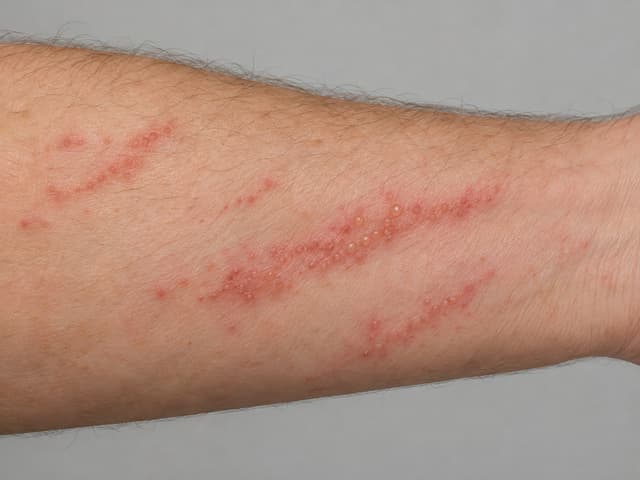
Typical findings include:
Intense itching
Redness or discoloration, which may be less obvious on darker skin
Swollen patches or raised bumps
Small fluid-filled blisters
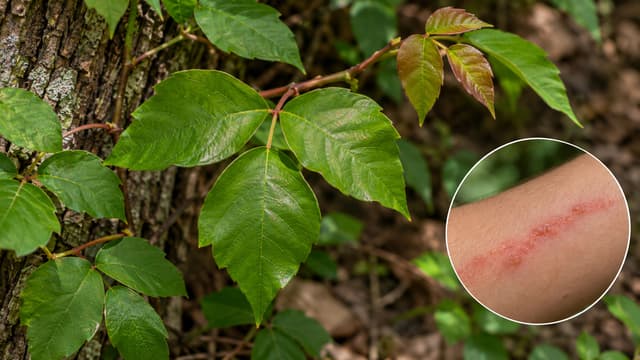
Linear or streak-like lesions where the plant brushed against the skin
People who have reacted previously often develop symptoms within 4–48 hours. A first recognized reaction may take considerably longer to appear. [3]
The appearance and timing of the rash, together with a plausible exposure history, usually guide diagnosis. Not every itchy or blistering rash is poison ivy.
If you think you have touched poison ivy, poison oak, or poison sumac, act promptly.
Gently wash the affected skin with soap and water, then rinse thoroughly. Do this as soon as the exposure is recognized.
Specialized plant-oil cleansers can also remove urushiol, but evidence does not establish that every branded cleanser works better than ordinary washing.
Avoid vigorous scrubbing, which can irritate the skin. Do not assume that washing becomes completely useless after a rigid 10- or 15-minute cutoff. Early washing works best, but removing any remaining oil is still sensible. [1] [4]
Urushiol can remain under fingernails and be transferred to other areas. Clean gently with soap and water.
Handle exposed clothing carefully and wash it with detergent. Use gloves if handling heavily contaminated items.
Urushiol can remain on gardening tools, footwear, gloves, outdoor equipment, and other objects.
Wash contaminated surfaces with appropriate cleaning products and water. If a pet may have brushed against the plant, avoid bare-handed contact with potentially contaminated fur.
Do not handle suspected poison ivy with unprotected skin, even if the plant has been cut down or appears dead.
Washing is a preventive measure. Once allergic dermatitis is established, repeated harsh washing will not reverse the immune reaction and may aggravate irritation. [4]

Mild, localized poison ivy dermatitis often improves without prescription medication. Several measures may reduce discomfort, but relief of itching does not necessarily mean the rash will heal faster.
Apply a clean, cool, damp cloth to the affected skin for short periods as needed.
Cool compresses may reduce the sensation of itching and provide temporary comfort. Evidence for an effect on overall healing time is limited.
Calamine lotion is commonly used to soothe itchy, irritated skin.
It may help with discomfort and mild weeping, but it should not be described as a proven way to make poison ivy blisters heal immediately.
A short, lukewarm bath with a commercially prepared colloidal oatmeal product may help soothe irritated skin.
Avoid very hot water, which can make itching more uncomfortable. These baths provide symptom relief rather than remove urushiol already bound within the skin.
Low-strength hydrocortisone is widely available without a prescription and may help some mild cases.
However, the 2024 American Heart Association and American Red Cross first-aid guideline found that evidence for over-the-counter topical corticosteroids in Toxicodendron dermatitis remains uncertain.
More potent prescription topical corticosteroids have stronger clinical support for appropriately selected localized disease.
Follow product instructions, and seek medical advice before treating sensitive areas such as the face or genitals with topical steroids. [1] [2]
Poison ivy dermatitis is not primarily a histamine-driven reaction, so oral antihistamines do not consistently control its inflammatory itching.
A sedating antihistamine may help some people sleep despite nighttime itching. However, these medicines can cause drowsiness and other adverse effects and are not appropriate for everyone.
Do not use sedating antihistamines before driving or operating machinery. Ask a clinician or pharmacist about use in children, older adults, pregnancy, or when taking other sedating medicines.
Avoid topical antihistamine creams, which can aggravate allergic contact dermatitis. [2]
A severe poison ivy rash may require clinician-prescribed treatment rather than continued use of over-the-counter products.
Medical assessment is especially important when the rash:
Covers a large area of the body
Causes extensive blistering or marked swelling
Involves the face, eyelids, hands, feet, or genital region
Causes intense itching that prevents sleep or normal activity
Appears infected
Continues to worsen or fails to improve as expected
For localized inflammatory dermatitis, a clinician may prescribe a medium- or higher-potency topical corticosteroid.
Selection depends on severity, body location, age, and skin condition. Strong steroids should not be used casually on the face, eyelids, skin folds, or genitals because these areas are more vulnerable to adverse effects.
Systemic corticosteroids are commonly considered for severe or extensive Toxicodendron dermatitis.
Clinicians often prescribe a longer course rather than a very brief treatment because of concerns about inadequate control or recurrent symptoms. The appropriate regimen must be individualized.
A 2014 randomized controlled trial compared short and longer oral prednisone regimens in 49 patients with severe poison ivy dermatitis.
Patients in the longer-course group required additional medications less often:
Longer course: 22.7%
Short course: 55.6%
However, the trial did not demonstrate statistically significant differences in rash healing time, time to improvement, or rash recurrence between the groups.
The study was small and not blinded. Its findings support considering treatment duration carefully, but they do not establish that a longer prednisone course cures every severe rash faster. [5]
Systemic steroids have important precautions, including effects on blood glucose, mood, sleep, infection risk, and other medical conditions. They should not be started or extended without appropriate medical supervision.
Treatment decisions for children, pregnant patients, and people with significant underlying illness require individualized assessment.
Seek emergency care immediately for difficulty breathing or swallowing, particularly after exposure to smoke from burning poisonous plants.
Prompt medical assessment is also warranted for:
Significant swelling around the eyes or face
Rash involving sensitive areas such as the eyes or genitals
Extensive blistering or a widespread reaction
Severe, uncontrolled itching
Fever, increasing pain, spreading warmth, or pus suggesting possible infection
Severe respiratory problems after burning-plant exposure require emergency evaluation rather than home treatment of the skin. [2] [6]
Most cases improve gradually over approximately one to three weeks, although severe reactions can persist longer.
The timeline depends on prior sensitization, exposure intensity, affected area, and the individual immune response.
New patches may appear on different days because the allergic reaction develops at different rates across exposed skin. This does not necessarily mean the rash is actively spreading through the body.
No. The rash itself is not contagious.
Blister fluid does not contain urushiol and does not spread the allergy.
However, urushiol remaining on contaminated clothing, skin, equipment, or other objects can cause additional exposures. Thorough cleaning helps prevent that transfer. [3] [6]
No. Leave blisters intact when possible.
If a blister opens naturally, gently clean the area and protect it with an appropriate nonstick dressing if needed. Avoid irritating chemicals and watch for signs of infection. [2]
Recognizing poison ivy is an important preventive skill.
Poison ivy usually has three leaflets attached to a single leaf stalk.
The leaflets can vary in size, shape, margin, and surface appearance. The central leaflet often has a longer stalk than the lateral leaflets.
The familiar phrase "Leaves of three, let it be" is a helpful warning, but it is not a definitive identification method.
Depending on species and location, poison ivy can appear as:
A climbing vine with hairy aerial roots
A trailing plant growing along the ground
A low shrub
Leaves may appear reddish when emerging, green during summer, and yellow, orange, or red in autumn.
Poison oak can also have groups of three leaflets, while poison sumac has a different leaf arrangement.
When gardening, hiking, clearing vegetation, or working outdoors:
Wear long sleeves, long pants, and suitable footwear.
Use protective gloves appropriate for the task.
Avoid direct contact with unfamiliar plants.
Clean contaminated clothing and equipment.
Never burn suspected poison ivy, poison oak, or poison sumac.
Smoke from burning poisonous plants can create a serious respiratory hazard. [6]
Some barrier products may reduce urushiol contact when applied before exposure, but they are not substitutes for avoiding the plant and wearing protective clothing.
A 1995 clinical study found that quaternium-18 bentonite lotion reduced experimentally induced poison ivy and poison oak reactions at treated skin sites.
This finding supports a preventive barrier effect for the studied formulation. It does not establish equivalent effectiveness for every product advertised as a poison ivy blocker. [7]
Popular remedies should not be confused with clinically established treatments.
There is insufficient direct clinical evidence that applying apple cider vinegar or witch hazel makes established poison ivy dermatitis heal faster.
Such products may also irritate already inflamed or broken skin. They should not be recommended as primary treatments.
Jewelweed has a long history of traditional use, and experimental studies have produced mixed findings depending on preparation.
A 2012 human experimental study found some preventive benefit from fresh jewelweed mash, but ordinary soap performed better. Jewelweed extracts were not effective, and jewelweed-containing soaps offered no clear advantage over comparable soaps without jewelweed.
These findings do not establish jewelweed as a superior treatment for an established poison ivy rash. [8]
Specialized cleansers can be useful for washing after exposure. However, evidence supporting urushiol removal should not be interpreted as proof that a particular cleanser reliably speeds healing once allergic dermatitis is established.
The 2024 first-aid guideline supports prompt washing and notes that available comparative studies have not demonstrated consistent superiority of branded decontamination products over ordinary cleansing methods. [1]
Avoid applying household chemicals, aggressive solvents, bleach, or other irritating products to a poison ivy rash.
Do not repeatedly scrub inflamed skin, deliberately open blisters, or attempt to build immunity by eating poison ivy.
For mild cases, cool compresses and soothing topical products may provide temporary relief. Prescription corticosteroids may be appropriate for more severe inflammation following medical assessment. No treatment is proven to eliminate an established rash immediately.
Scratching does not spread urushiol once the skin has been thoroughly cleaned. It can, however, damage the skin and increase infection risk. Remaining urushiol on nails or other surfaces can cause additional exposure.
Yes. A gentle shower is appropriate. Avoid very hot water and harsh scrubbing. After recent exposure, thorough washing helps remove residual urushiol.
Keep the skin clean and avoid unnecessary irritation. Cool moist compresses can relieve itching. If blisters are open, use appropriate wound care rather than trying to excessively dry or chemically irritate the skin.
No. Calamine may soothe itching and mild weeping, but it does not reverse the underlying delayed allergic immune reaction.
Yes. Urushiol can persist on contaminated objects until adequately removed. Wash clothing, gloves, equipment, and other exposed items to prevent further contact. [6]
The best way to manage poison ivy depends on the stage and severity of exposure.
Immediately after contact, gently wash away urushiol and clean contaminated items.
For mild dermatitis, use supportive measures that reduce discomfort while the skin heals.
For severe dermatitis, seek medical evaluation for appropriately selected prescription treatment.
Avoid claims of instant cures, unnecessary household remedies, and unproven commercial-product superiority. Early decontamination, symptom control, prevention, and recognition of serious reactions remain the foundation of evidence-informed poison ivy care.
© All copyright of this material is absolute to Medical toxicology
Dr. Omid Mehrpour (MD, FACMT) is a senior medical toxicologist and physician-scientist with over 15 years of clinical and academic experience in emergency medicine and toxicology. He founded Medical Toxicology LLC in Arizona and created several AI-powered tools designed to advance poisoning diagnosis, clinical decision-making, and public health education. Dr. Mehrpour has authored over 250 peer-reviewed publications and is ranked among the top 2% of scientists worldwide. He serves as an associate editor for several leading toxicology journals and holds multiple U.S. patents for AI-based diagnostic systems in toxicology. His work brings together cutting-edge research, digital innovation, and global health advocacy to transform the future of medical toxicology.
Keep reading
 Public Health and Poison Prevention
Omid Mehrpour
 Public Health and Poison Prevention
Omid Mehrpour
 Public Health and Poison Prevention

Sherika Whitelocke
 Public Health and Poison Prevention
Omid Mehrpour
We would like to use analytics and session-replay tools to understand how this site is used. They are optional and the site works fully without them. Signing in still needs its own cookie either way. Our Privacy Policy names each one.