
 Medical Toxicologymedicaltoxic.com
Xywav Toxicity: When a Prescription Sleep Medication Causes Profound CNS Depression
https://medicaltoxic.com/case-studies/xywav-toxicity
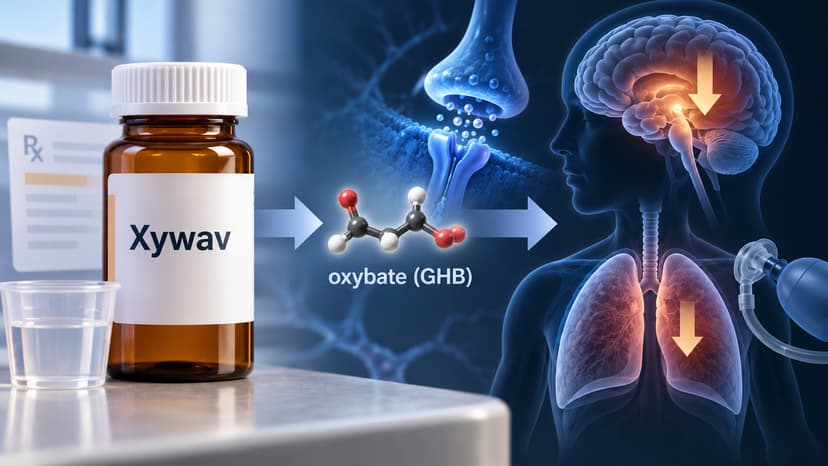
A woman in her early 60s weighing approximately 85 kg presented to an emergency department with nausea, vomiting, confusion, and progressive altered mental status.
Her family reported that she had recently started Xywav, but they could not determine exactly when she had taken her last dose or whether she had taken more than prescribed.
During evaluation, she became increasingly somnolent and hypoxemic and was intubated for airway and respiratory support.
Initial testing showed no major hepatic or renal abnormality. Ethanol was undetectable, and a routine urine drug screen was negative.
Which of the following best explains this patient's presentation?
A. Calcium toxicity caused by the calcium component of Xywav
B. Oxybate (GHB) toxicity causing CNS and respiratory depression
C. Serotonin syndrome caused by oxybate
D. Sodium-channel blockade caused by Xywav
Reveal the answer
Correct Answer
B. Oxybate (GHB) toxicity causing CNS and respiratory depression.
Why?
Xywav contains calcium, magnesium, potassium, and sodium oxybates, but the clinically important active moiety is oxybate, chemically gamma-hydroxybutyrate (GHB). Significant exposure can produce profound CNS depression, respiratory depression, apnea, vomiting, bradycardia, hypothermia, and coma. [1-3]
The combination of vomiting, progressive altered consciousness, hypoxemia, and sinus bradycardia is compatible with significant oxybate toxicity. Because the dose and timing were uncertain, however, Xywav could not be assumed to be the sole explanation, and co-ingestion remained an important consideration.
Why Not the Others?
A. Calcium toxicity
The name calcium oxybate can be misleading when it appears in an electronic medication record. Xywav contains four oxybate salts, and the toxicologic effects are driven primarily by the oxybate/GHB component rather than by calcium poisoning. [1]
C. Serotonin syndrome
Serotonin toxicity is typically characterized by findings such as clonus, hyperreflexia, agitation, diaphoresis, and hyperthermia. Profound CNS and respiratory depression with bradycardia is a different toxidromic pattern.
D. Sodium-channel blockade
Clinically important sodium-channel blockade is generally associated with QRS widening and, in severe cases, ventricular dysrhythmias. The QRS remained approximately 100 msec in this case.
Introduction
Xywav is a prescription CNS depressant used for cataplexy or excessive daytime sleepiness associated with narcolepsy and for idiopathic hypersomnia in adults. Its toxicology becomes easier to recognize once the medication name is translated into its active moiety:
Xywav → oxybate → gamma-hydroxybutyrate (GHB)
The current formulation contains 0.5 g/mL of total oxybate salts, equivalent to 0.413 g/mL of oxybate. Each milliliter contains 0.234 g calcium oxybate, 0.096 g magnesium oxybate, 0.13 g potassium oxybate, and 0.04 g sodium oxybate. [1]
This creates a practical medication-reconciliation trap. Some electronic records may display an individual component, such as calcium oxybate 0.234 g/mL, rather than making the total oxybate content immediately obvious.
Case Presentation
Initial Presentation
A woman in her early 60s weighing approximately 85 kg presented with nausea, vomiting, confusion, and progressive somnolence shortly after recently starting Xywav. Her family could not establish the exact timing or quantity of the most recent dose, and it was unclear whether an additional dose had been taken accidentally.
Her mental status worsened in the emergency department. She developed hypoxemia and was intubated for airway and respiratory support.
Laboratory and ECG Findings
Initial chemistry testing showed preserved renal and hepatic function without a major metabolic disturbance. Ethanol was undetectable, and a routine urine drug screen was negative. ECG demonstrated sinus bradycardia without marked QRS prolongation.
On later testing, mild hypernatremia and a mildly elevated anion gap were present, but neither finding adequately explained the degree of CNS depression.
Heart rate: 68 bpm initially; 55 bpm later
Blood pressure: 124/75 mmHg initially; 101/62 mmHg later
Respiratory rate: 18/min while mechanically ventilated
Pulse oximetry: 99% while intubated
Creatinine: 1.2 mg/dL initially; 1.1 mg/dL later
Glucose: 124 mg/dL initially; 72 mg/dL later
Calcium: 10.3 mg/dL
AST / ALT: 30 / 39 U/L
Sodium / chloride: 146 / 106 mEq/L on later testing
Bicarbonate / anion gap: 21 / 19 mEq/L on later testing
Ethanol: Undetectable
Routine urine drug screen: Negative
ECG: Sinus bradycardia; initial QRS 98 msec and QTc 443 msec; repeat QRS about 100 msec and QTc about 432 msec
Clinical Course
The patient remained intubated and sedated with fentanyl, midazolam, and propofol. Mild sinus bradycardia persisted, but blood pressure remained adequate. No specific antidote was recommended for Xywav itself. Management remained supportive, with continued assessment for possible co-ingestants.
Differential Diagnosis
Oxybate toxicity: Recent Xywav use together with CNS depression, hypoxemia, vomiting, and bradycardia makes oxybate toxicity an important possibility.
Opioid poisoning: Opioids can produce profound CNS and respiratory depression. Empiric naloxone may be reasonable in an undifferentiated patient when opioid exposure is possible, but lack of response would not exclude oxybate poisoning.
Sedative-hypnotic co-ingestion: Alcohol, benzodiazepines, sedating antipsychotics, sleep medications, and other CNS depressants can mimic or amplify the effects of oxybate.
Aspiration: Vomiting may occur during marked GHB-induced obtundation. Aspiration should be considered when hypoxemia accompanies depressed consciousness.
Metabolic or neurologic disease: Hypoglycemia, electrolyte disorders, hypercapnia, infection, seizure, stroke, intracranial hemorrhage, and other causes of altered mental status should be assessed according to the clinical context.
Working Diagnosis
Suspected Xywav-associated oxybate toxicity with CNS and respiratory depression.
The diagnosis remained suspected rather than proven because the exposure amount and timing were unknown and possible co-ingestion could not initially be excluded.
What Is Xywav?
Xywav is a mixture of calcium, magnesium, potassium, and sodium oxybates. The oral solution contains 0.5 g/mL of total salts, equivalent to 0.413 g/mL of oxybate. [1]
Calcium oxybate: 0.234 g/mL
Magnesium oxybate: 0.096 g/mL
Potassium oxybate: 0.13 g/mL
Sodium oxybate: 0.04 g/mL
The active moiety is oxybate, chemically gamma-hydroxybutyrate (GHB). For toxicologic interpretation, recognizing that relationship is more useful than focusing on the individual cation salts.
Pathophysiology
GHB is an endogenous compound and a metabolite of gamma-aminobutyric acid (GABA). At clinically relevant concentrations it produces CNS depressant effects, with GABA-B receptor activity contributing to the pharmacologic effects of oxybate. [1,2]
Oral GHB is rapidly absorbed and has nonlinear kinetics. In overdose it can cause abrupt progression from somnolence or disinhibition to profound coma and respiratory depression. The reported elimination half-life is approximately 20-60 minutes, although kinetics after large exposures can be more complex. [2]
Clinical Features of Oxybate/GHB Toxicity
Somnolence or profound coma
Confusion, agitation, or combativeness
Respiratory depression or apnea
Vomiting
Bradycardia
Hypothermia
Hypotonia
Myoclonus and, less commonly, seizures
Rapid fluctuation in consciousness is characteristic. A patient may appear deeply comatose and later become agitated or abruptly awaken as the drug is metabolized. Vomiting despite severe obtundation is particularly important because it increases aspiration risk. [2,3]
In a classic series of 88 GHB overdoses, 28% of patients presented with a Glasgow Coma Scale score of 3, 36% had bradycardia, and 30% experienced emesis. Patients generally regained consciousness spontaneously within about five hours of ingestion. [3]
Management
Airway and Ventilation
Treatment is primarily supportive. Supplemental oxygen, airway positioning, ventilation, and intubation should be based on the patient's respiratory and airway status. Severe respiratory depression, apnea, persistent hypoxemia, inability to maintain the airway, or substantial aspiration risk are reasonable indications for advanced airway management. [1,2]
A low Glasgow Coma Scale score alone does not necessarily mandate intubation in every uncomplicated GHB exposure. A retrospective emergency-department series found that selected patients with suspected GHB/GBL coma could be managed conservatively when major airway or respiratory complications were absent. [4]
Cardiovascular Support
Continuous vital-sign monitoring is appropriate in significant poisoning. Mild, hemodynamically tolerated sinus bradycardia often requires observation only. Clinically important bradycardia may respond to atropine when treatment is necessary. [1,2]
No Specific Antidote
There is no established pharmacologic reversal agent for Xywav toxicity. The prescribing information notes that naloxone and flumazenil are not expected to reverse the central depressant effects of oxybate. [1]
Naloxone may still be appropriate when opioid co-ingestion is plausible, but any response would address the opioid component rather than oxybate itself.
Gastrointestinal Decontamination
Routine gastrointestinal decontamination generally has a limited role because oxybate is rapidly absorbed and patients with significant CNS depression have substantial aspiration risk. Management should be individualized if clinically important co-ingestants are suspected. [2]
Evaluate for Co-ingestants
A new Xywav prescription is a clue, not proof of causality. Alcohol and sedative-hypnotics can substantially increase CNS and respiratory depression. Depending on the clinical context, an unknown or intentional ingestion may warrant bedside glucose, metabolic studies, acetaminophen and salicylate concentrations, ethanol testing, ECG, and other targeted evaluation.
A negative routine urine drug screen does not exclude oxybate exposure and should not be used to rule it out.
Discussion
This case illustrates a medication-name problem that can matter at the bedside. Xywav may appear in a record as a collection of unfamiliar mineral salts, yet its active drug is oxybate, chemically GHB. Recognizing that connection rapidly reframes the differential diagnosis toward CNS and respiratory depression, emesis, bradycardia, and a potentially short but severe intoxication.
The case also demonstrates why toxicologic pattern recognition should not become premature closure. The exposure history was incomplete. Xywav could explain the toxidrome, but alcohol, opioids, sedative-hypnotics, other medications, and non-toxicologic causes of altered mental status still required consideration.
Toxicology Pearl
When Xywav appears on the medication list of a patient with unexplained CNS depression, mentally translate:
Xywav → oxybate → GHB
Then ask:
When was the last dose?
How much could have been taken?
Could an extra or second dose have been taken?
Was alcohol or another CNS depressant involved?
Is the patient ventilating adequately and protecting the airway?
Learning Points
Xywav contains oxybate, chemically gamma-hydroxybutyrate (GHB).
Significant exposure can cause profound CNS and respiratory depression.
Vomiting despite marked obtundation creates an important aspiration risk.
Sinus bradycardia is a recognized accompanying finding in significant GHB intoxication.
Treatment is primarily supportive, with emphasis on airway and ventilation when clinically indicated.
Naloxone and flumazenil do not reverse oxybate toxicity itself.
A negative routine urine drug screen does not exclude GHB/oxybate exposure.
When the dose and timing are uncertain, continue evaluating for co-ingestants and alternative causes rather than attributing the entire presentation to a new medication.
Conclusion
Xywav is a prescription formulation of calcium, magnesium, potassium, and sodium oxybates, with oxybate/GHB as the active moiety. Significant exposure can produce profound CNS depression, respiratory depression, apnea, vomiting, bradycardia, hypothermia, and coma.
Management is predominantly supportive. Airway protection and ventilatory support should be guided by respiratory and airway status, and there is no specific antidote that reliably reverses oxybate toxicity. When the exposure history is uncertain, clinicians should also evaluate for co-ingestants and other causes of altered mental status.[1][2][3][4]
© All copyright of this material is absolute to Medical toxicology
Authors:
Bio:
As the Growth & Content Lead at MedicalToxic.com, I work on content strategy, development, and digital growth. My focus is on making MedicalToxic’s content clear, practical, and accessible, while helping expand the platform’s reach and strengthen its position as a trusted resource in clinical toxicology.
Bio:
Dr. Omid Mehrpour (MD, FACMT) is a senior medical toxicologist and physician-scientist with over 15 years of clinical and academic experience in emergency medicine and toxicology. He founded Medical Toxicology LLC in Arizona and created several AI-powered tools designed to advance poisoning diagnosis, clinical decision-making, and public health education. Dr. Mehrpour has authored over 250 peer-reviewed publications and is ranked among the top 2% of scientists worldwide. He serves as an associate editor for several leading toxicology journals and holds multiple U.S. patents for AI-based diagnostic systems in toxicology. His work brings together cutting-edge research, digital innovation, and global health advocacy to transform the future of medical toxicology.
References:
- XYWAV® (calcium, magnesium, potassium, and sodium oxybates) oral solution, prescribing information. DailyMed. Revised July 2025. https://dailymed.nlm.nih.gov/dailymed/drugInfo.cfm?setid=1e0ae43a-037f-42af-8e23-a0e51d75abe8
- Schep LJ, Knudsen K, Slaughter RJ, Vale JA, Mégarbane B. The clinical toxicology of γ-hydroxybutyrate, γ-butyrolactone and 1,4-butanediol. Clin Toxicol (Phila). 2012;50(6):458-470. doi:10.3109/15563650.2012.702218. https://doi.org/10.3109/15563650.2012.702218
- Chin RL, Sporer KA, Cullison B, Dyer JE, Wu TD. Clinical course of gamma-hydroxybutyrate overdose. Ann Emerg Med. 1998;31(6):716-722. https://pubmed.ncbi.nlm.nih.gov/9624311/
- van Helmond LPFM, Gresnigt FMJG. Safety of withholding intubation in gamma-hydroxybutyrate- and gamma-butyrolactone-intoxicated coma patients in the emergency department. Eur J Emerg Med. 2020;27(3):223-227. doi:10.1097/MEJ.0000000000000649. https://pubmed.ncbi.nlm.nih.gov/31815871/
Keep reading
Related Case Studies
 Clinical Toxicology
27 Nov 2024 · Updated 01 Oct 2026
Accidental hydrocodone-acetaminophen Ingestion
What is the most likely cause of the child’s recurrent clinical deterioration?
A) Acetaminophen-induced liver failure B) Co-ingestion of benzodiazepines C) Incomplete CNS penetration of naloxone D) Partial ago ...

Omid Mehrpour